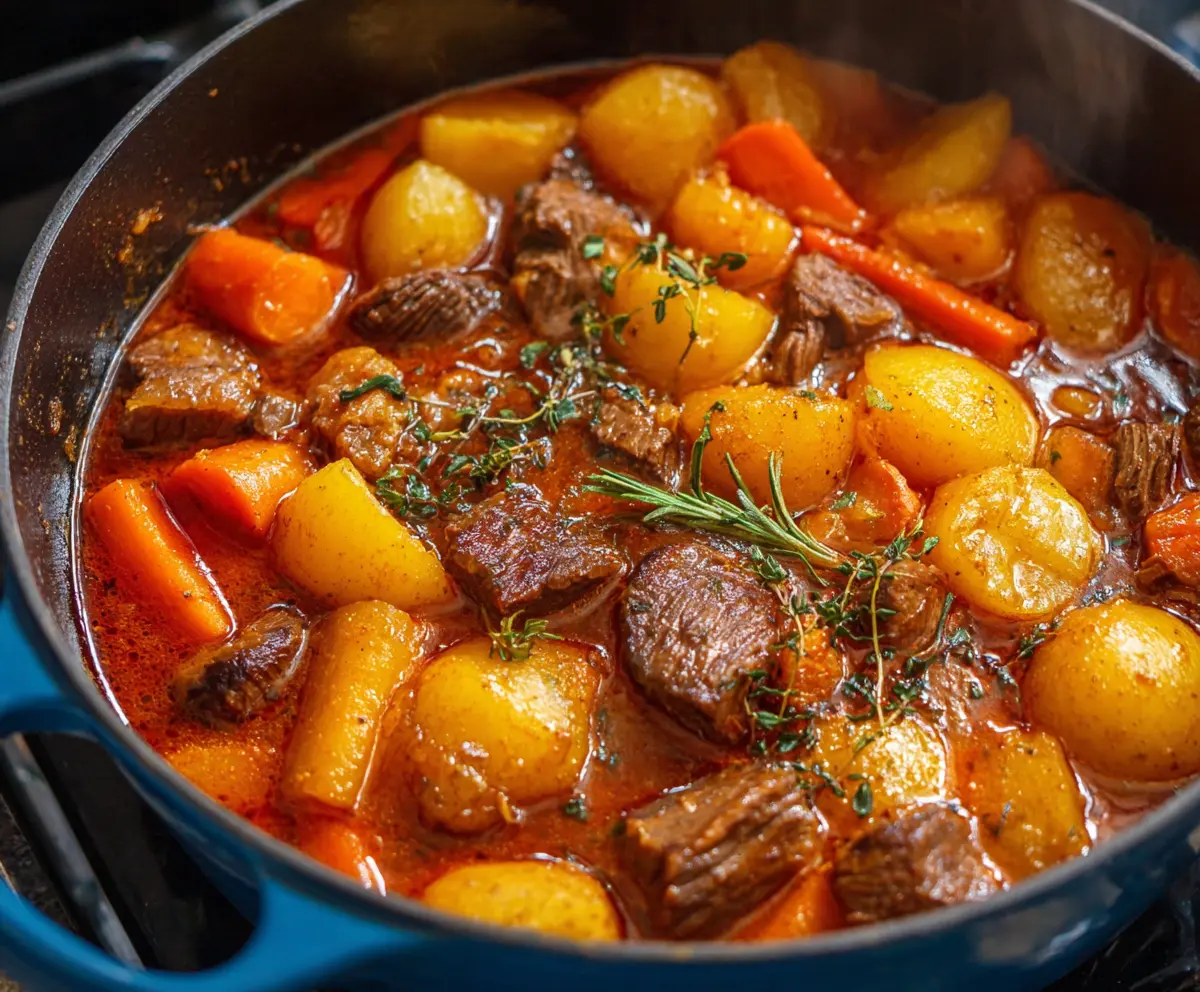
Beef and Potato Stew is a hearty, comforting dish that’s perfect for chilly days. It’s filled with tender chunks of beef, soft potatoes, and a rich, flavorful broth that warms you from the inside out. The stew bubbles away slowly, letting all the flavors blend into a delicious, satisfying meal.
I love making this stew when I want something simple but filling. One of my favorite things is how the potatoes soak up all the savory juices from the beef and spices, making every bite delicious. I usually add a bit of fresh herbs at the end, which gives the stew a fresh touch and makes it even more inviting.
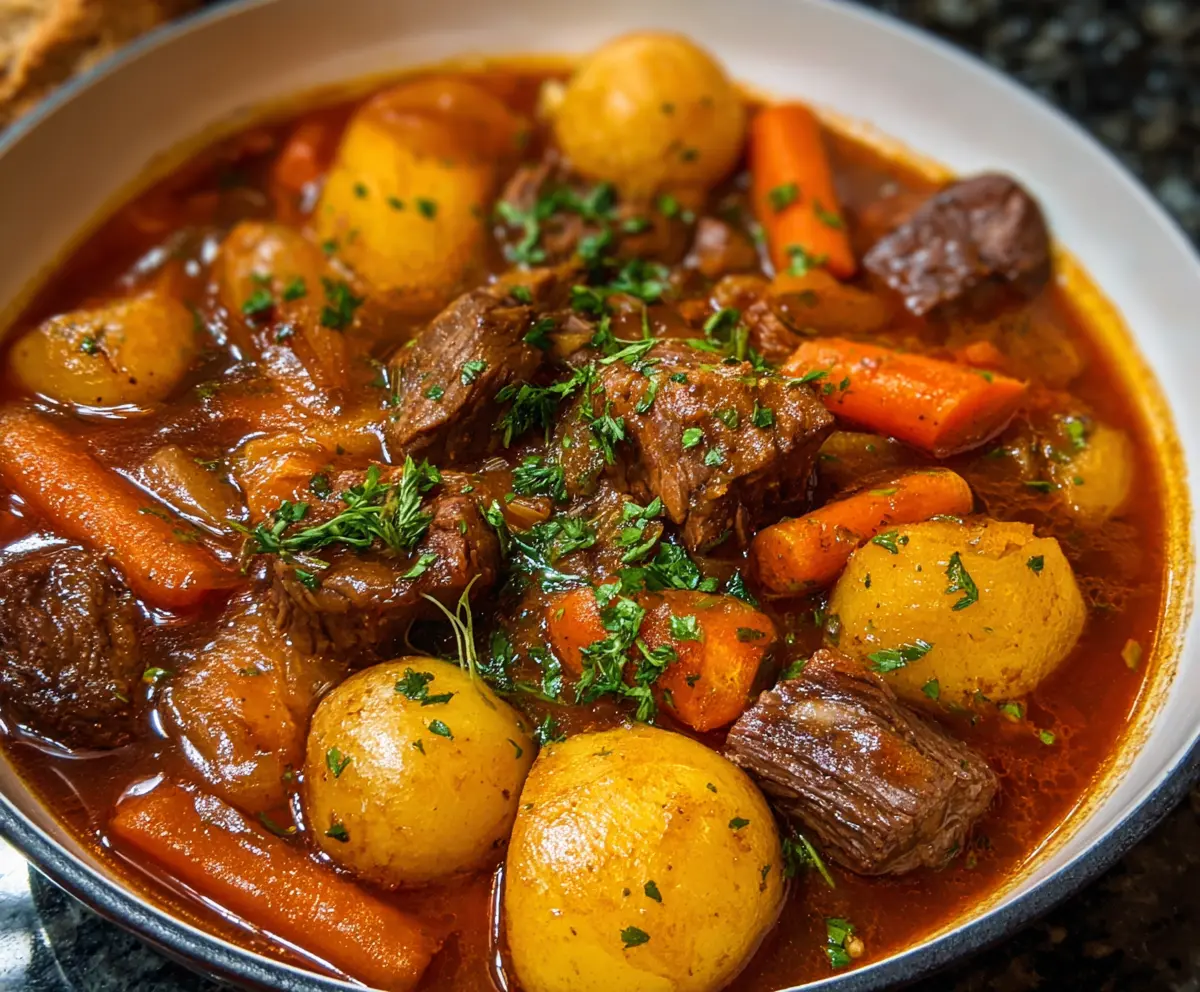
The best way I like to serve this stew is with some crusty bread on the side to mop up the sauce. It’s the kind of meal that brings everyone to the table and encourages conversation and smiles. Whenever I make it, I always end up thinking about how perfect it is for those cozy nights in.
Key Ingredients & Substitutions
Beef chuck: This cut is perfect for stew because it becomes tender and juicy after slow cooking. If you can’t find chuck, brisket or round steak works well too.
Potatoes: Baby potatoes hold their shape better when simmered longer. Yukon Gold or red potatoes are good alternatives. Avoid starchy potatoes like Russets as they may fall apart.
Broth and tomatoes: Beef broth gives deep flavor, but you can use vegetable broth for a lighter taste. Tomato sauce adds richness; crushed tomatoes or canned diced tomatoes are easy swaps.
Herbs: Fresh rosemary and thyme add a nice aroma. Don’t skip them! If fresh isn’t available, dried herbs will work but use less—about a third of the fresh amount.
How Can I Get Tender Beef and Perfect Potatoes in My Stew?
Getting tender beef and perfectly cooked potatoes is key. Here’s how:
- Brown the beef well: This seals in flavor and adds color. Do it in batches to avoid steaming.
- Simmer low and slow: After adding broth, keep the heat low and covered. This breaks down tough beef fibers without drying the meat.
- Add potatoes later if needed: If your beef is very tough, cook it longer before adding potatoes, so potatoes don’t get mushy.
- Check with a fork: Beef is done when fork-tender, and potatoes are soft but not falling apart.
Patience is your best friend here—slow cooking builds flavors and perfect textures.
Equipment You’ll Need
- Large Dutch oven or heavy-bottomed pot – it holds heat well and lets the stew simmer evenly for tender beef.
- Sharp chef’s knife – makes cutting meat and vegetables safer and easier.
- Wooden spoon – perfect for stirring without scratching your pot.
- Measuring cups and spoons – to keep your seasonings and liquids just right.
- Cutting board – essential for prepping ingredients cleanly and safely.
Flavor Variations & Add-Ins
- Swap beef for lamb chunks for a richer, slightly gamey taste that pairs well with rosemary.
- Add parsnips or turnips with the carrots for a sweet, earthy touch.
- Stir in a splash of Worcestershire sauce or soy sauce for an extra depth of flavor.
- Mix in chopped mushrooms near the end for an umami boost and extra texture.
How to Make Beef and Potato Stew?
Ingredients You’ll Need:
- 2 lbs (900 g) beef chuck, cut into 1.5-inch cubes
- 2 tbsp olive oil
- 1 large onion, chopped
- 3 cloves garlic, minced
- 4 large carrots, peeled and cut into chunks
- 1.5 lbs (700 g) baby potatoes, halved or quartered if large
- 3 cups beef broth
- 1 cup tomato sauce or crushed tomatoes
- 1 tbsp tomato paste
- 1 tsp smoked paprika
- 2 sprigs fresh rosemary
- 3-4 sprigs fresh thyme
- Salt and freshly ground black pepper, to taste
- Optional: 1 bay leaf
How Much Time Will You Need?
This beef and potato stew takes about 20 minutes to prepare and an additional 1.5 to 2 hours to simmer gently, allowing the beef to become tender and the potatoes to cook through perfectly. It’s mostly waiting time, so you can relax or prepare other things while the stew cooks.
Step-by-Step Instructions:
1. Brown the Beef:
Heat olive oil in a large heavy-bottomed pot over medium-high heat. Add the beef cubes in batches, making sure not to overcrowd the pot. Brown all sides well to lock in the flavor, then remove the beef and set it aside.
2. Cook Onions and Garlic:
In the same pot, add the chopped onion and garlic. Sauté for 3 to 4 minutes until the onions soften and become fragrant, scraping up any browned bits from the beef to add flavor.
3. Add Spices and Liquids:
Return the browned beef to the pot. Stir in tomato paste, smoked paprika, salt, and pepper. Cook for about a minute to bring out the spice’s flavors. Then pour in the beef broth and tomato sauce or crushed tomatoes, scraping the pot’s bottom to loosen any remaining flavorful bits.
4. Add Vegetables and Herbs:
Throw in the carrots, potatoes, rosemary sprigs, thyme sprigs, and bay leaf if you have one. Give everything a gentle stir to combine.
5. Simmer the Stew:
Bring the stew to a gentle boil, then reduce the heat to low. Cover the pot and let it simmer undisturbed for about 1.5 to 2 hours. The beef should be fork-tender and the potatoes cooked perfectly.
6. Final Seasoning and Serving:
Before serving, check the seasoning and adjust salt and pepper if needed. Remove the herb sprigs and the bay leaf. Serve the stew hot, garnished with fresh thyme or parsley if you like, alongside some crusty bread to soak up the delicious sauce.
Can I Use Frozen Beef for This Stew?
Yes, you can use frozen beef, but be sure to thaw it completely in the refrigerator overnight before cooking. This helps the beef brown evenly and prevents excess moisture in the stew.
Can I Make This Stew in a Slow Cooker?
Absolutely! After browning the beef and sautéing the onions, transfer everything to a slow cooker. Cook on low for 6 to 8 hours or on high for 3 to 4 hours until the beef is tender.
How Should I Store Leftovers?
Store any leftovers in an airtight container in the fridge for up to 3 days. Reheat gently on the stove or in the microwave until warmed through.
Can I Substitute Other Vegetables?
Yes! Root vegetables like parsnips, turnips, or even mushrooms can be great additions. Add them at the same time as the carrots and potatoes for even cooking.