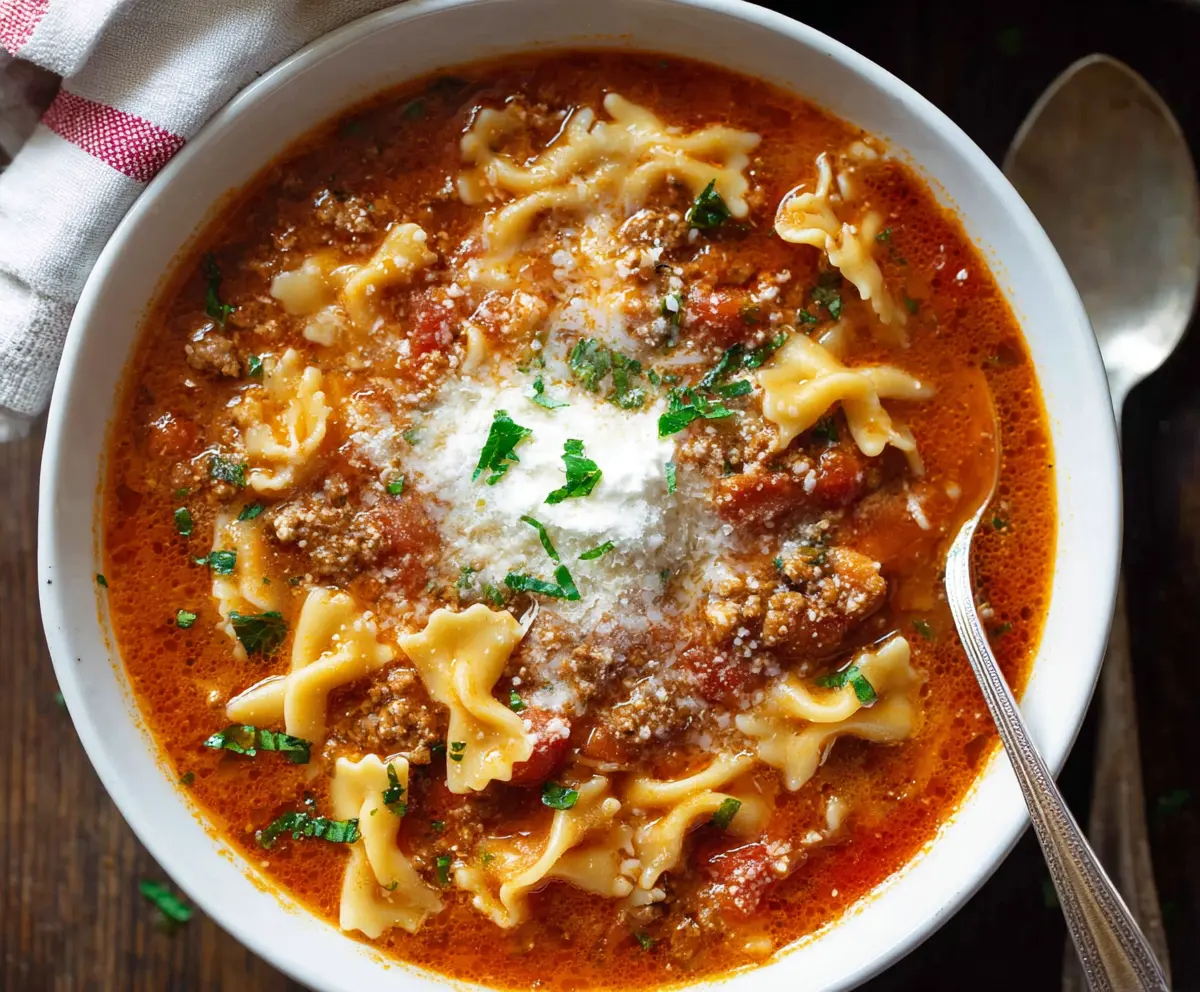
Lasagna Soup is like all the best parts of your favorite Italian dinner, but in a cozy bowl. It’s packed with ground beef, tender noodles, chunks of tomatoes, and a rich broth that tastes just like lasagna sauce. There’s also some gooey cheese melted right in, making every spoonful comforting and satisfying.
I love making this soup when I want something that feels like a big, warm hug but is easy to whip up on a weeknight. It’s a great way to have all those lasagna flavors without the long wait of baking a casserole. One tip I always follow is to use fresh herbs like basil and parsley on top—it really brightens the whole dish and gives it that fresh-from-the-oven vibe.
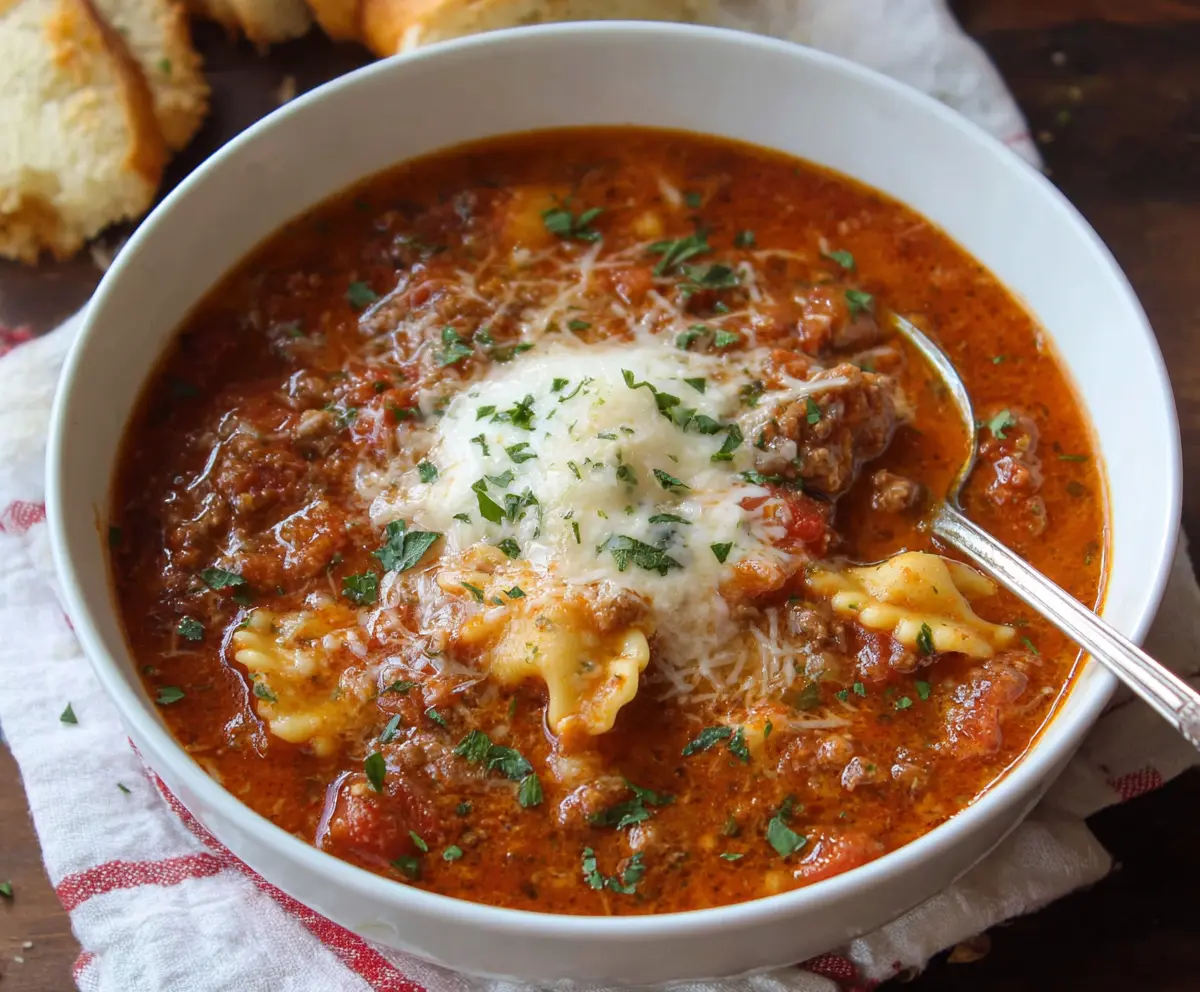
My favorite way to eat this soup is with a piece of crusty bread on the side, perfect for dipping and soaking up every bit of that delicious sauce. It’s a crowd-pleaser every time we have guests over, and it always brings back memories of family dinners where everyone ends up chatting longer just because they don’t want the meal to end.
Key Ingredients & Substitutions
Ground Beef: This gives your soup a rich, meaty flavor. For a twist, try mixing half beef and half Italian sausage — it adds extra spice and depth. For a lighter option, ground turkey or chicken work well too.
Lasagna Noodles: Mafalda noodles are perfect because they have ruffled edges like lasagna sheets. If you can’t find them, break regular lasagna noodles into smaller pieces. You can also use broken rigatoni or fusilli.
Ricotta Cheese: This adds creaminess and a mild tang. If you want to skip it or need a dairy-free alternative, try dolloping with plain vegan cream cheese or cashew cream.
Tomatoes & Broth: Crushed tomatoes give the soup a thick, rich base. Use high-quality canned tomatoes for best flavor. Beef broth adds depth; mix with chicken broth if you want something lighter.
How Do You Get the Noodles Just Right Without Overcooking?
The key is to add the noodles late in the cooking process, so they cook just enough in the hot soup and don’t become mushy. Here’s how:
- Break noodles into bite-sized pieces before adding.
- Add only when the soup has simmered and flavors are developed, usually in the last 10 minutes.
- Keep an eye on the noodles and cook until tender but still firm to the bite (al dente).
- If you plan to reheat leftovers, cook the noodles separately and add to the soup when serving to avoid mushiness.
Equipment You’ll Need
- Large pot or Dutch oven – perfect for browning meat and simmering the soup all in one place.
- Wooden spoon – great for stirring without scratching your pot.
- Chef’s knife – makes quick work of chopping onions and garlic.
- Cutting board – keeps your workspace clean and safe for chopping.
- Measuring spoons and cups – for precise seasoning and ingredient amounts.
Flavor Variations & Add-Ins
- Swap ground beef for ground turkey or chicken for a lighter soup that’s still hearty.
- Add chopped spinach or kale near the end for extra greens and nutrition.
- Stir in shredded mozzarella cheese on top for a melty, cheesy boost.
- Try red pepper flakes or a dash of Italian seasoning if you want a little more spice and aroma.
Lasagna Soup Recipe
Ingredients You’ll Need:
For The Soup:
- 1 tablespoon olive oil
- 1 medium onion, finely chopped
- 3 cloves garlic, minced
- 1 pound ground beef (or half beef, half Italian sausage for more flavor)
- 4 cups beef broth (or a mix of beef and chicken broth)
- 1 (28-ounce) can crushed tomatoes
- 2 tablespoons tomato paste
- 1 teaspoon dried basil
- 1 teaspoon dried oregano
- 1/2 teaspoon red pepper flakes (optional)
- Salt and black pepper to taste
- 8 ounces mafalda or broken lasagna noodles (or regular broken lasagna noodles if mafalda not available)
For Serving:
- 1 cup ricotta cheese
- 1/2 cup grated Parmesan cheese (plus extra for garnish)
- Fresh parsley or basil, chopped for garnish
How Much Time Will You Need?
This recipe takes about 10 minutes to prepare and 25 minutes to cook, for a total of around 35 minutes from start to finish. Perfect for a cozy dinner without long wait times!
Step-by-Step Instructions:
1. Cook the Aromatics and Meat:
Heat olive oil in a large pot over medium-high heat. Add the chopped onion and cook, stirring occasionally, until softened and translucent, about 3-4 minutes. Add the minced garlic and cook for another 30 seconds until fragrant. Next, add the ground beef and cook until browned and fully cooked through, breaking it up with a spoon as it cooks. If there’s excess fat, drain it off.
2. Add Tomatoes and Broth:
Stir in the crushed tomatoes, tomato paste, beef broth, dried basil, dried oregano, red pepper flakes (if using), salt, and pepper. Bring the soup to a boil, then reduce the heat and let it simmer for about 15 minutes. This helps all the flavors come together nicely.
3. Cook the Noodles:
Break the lasagna noodles into bite-sized pieces and add them to the simmering soup. Cook for about 10 minutes until the noodles are tender but not mushy. Stir occasionally so the noodles don’t stick to the bottom.
4. Serve with Cheese and Herbs:
Taste the soup and adjust seasoning with more salt or pepper if needed. Ladle the soup into bowls and add a generous dollop of ricotta cheese on top. Sprinkle with grated Parmesan cheese and chopped fresh parsley or basil. Enjoy hot, ideally with some crusty bread on the side!
Can I Use Frozen Meat for This Soup?
Yes! Just make sure to fully thaw the ground beef or sausage in the refrigerator overnight before cooking. This helps it brown evenly and cooks safely.
How Can I Make This Soup Vegetarian?
Replace the ground beef with your favorite plant-based meat substitute or sauté a mix of mushrooms and lentils for a hearty texture. Use vegetable broth instead of beef broth to keep it vegetarian.
What’s the Best Way to Store Leftovers?
Keep leftover soup in an airtight container in the refrigerator for up to 3 days. When reheating, add a splash of broth or water to loosen the noodles if they’ve absorbed too much liquid.
Can I Prepare This Soup in Advance?
Absolutely! Make the soup up to the point before adding noodles and refrigerate. Add and cook the noodles fresh when ready to serve to prevent them from overcooking and becoming mushy.