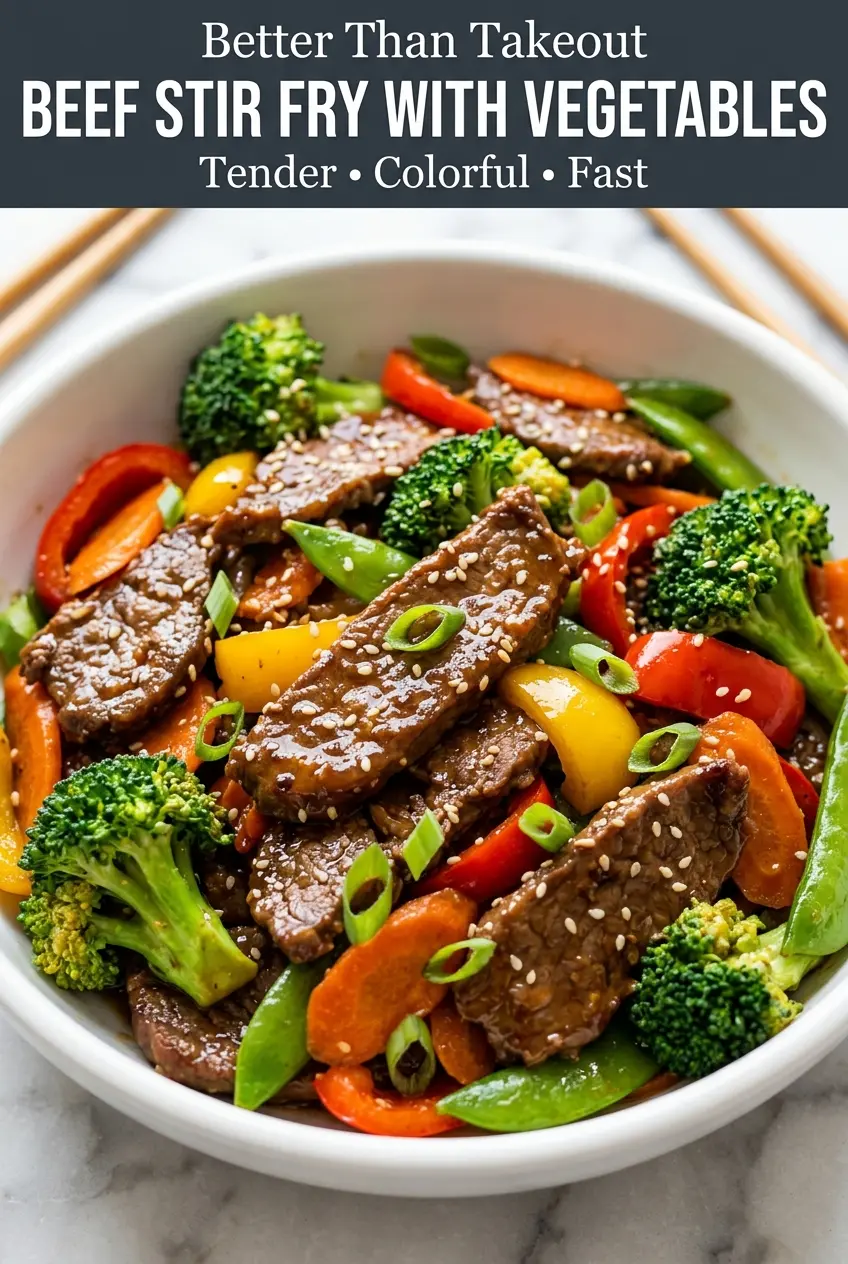
Beef stir fry with vegetables earns its keep when the beef stays tender, the vegetables keep a little bite, and the sauce turns glossy enough to cling to every piece instead of pooling at the bottom of the pan. The best versions don’t taste heavy or muddy. They taste sharp, savory, and clean, with enough body in the sauce to coat the rice without drowning it.
What makes this version work is a quick cornstarch toss on the beef before it ever hits the pan. That thin coating gives the meat a little protection from the high heat and helps the sauce latch on later. High heat matters here, too, because stir fry fails when the pan cools down and the vegetables start steaming in their own moisture instead of searing.
Below, I’ll walk through the timing that keeps the beef juicy, the vegetable order that protects the crunch, and a few smart swaps if you need to work with what’s already in your kitchen.
The beef stayed tender and the sauce thickened up exactly right once I added the slurry. I used broccoli and peppers, and the vegetables were still crisp instead of getting soggy. My husband asked if I could put this in the weekly rotation.
Love this glossy beef stir fry with vegetables? Save it to Pinterest for the nights when you want tender beef, crisp vegetables, and a sauce that comes together fast.
The Secret to Tender Beef and Crisp Vegetables in the Same Pan
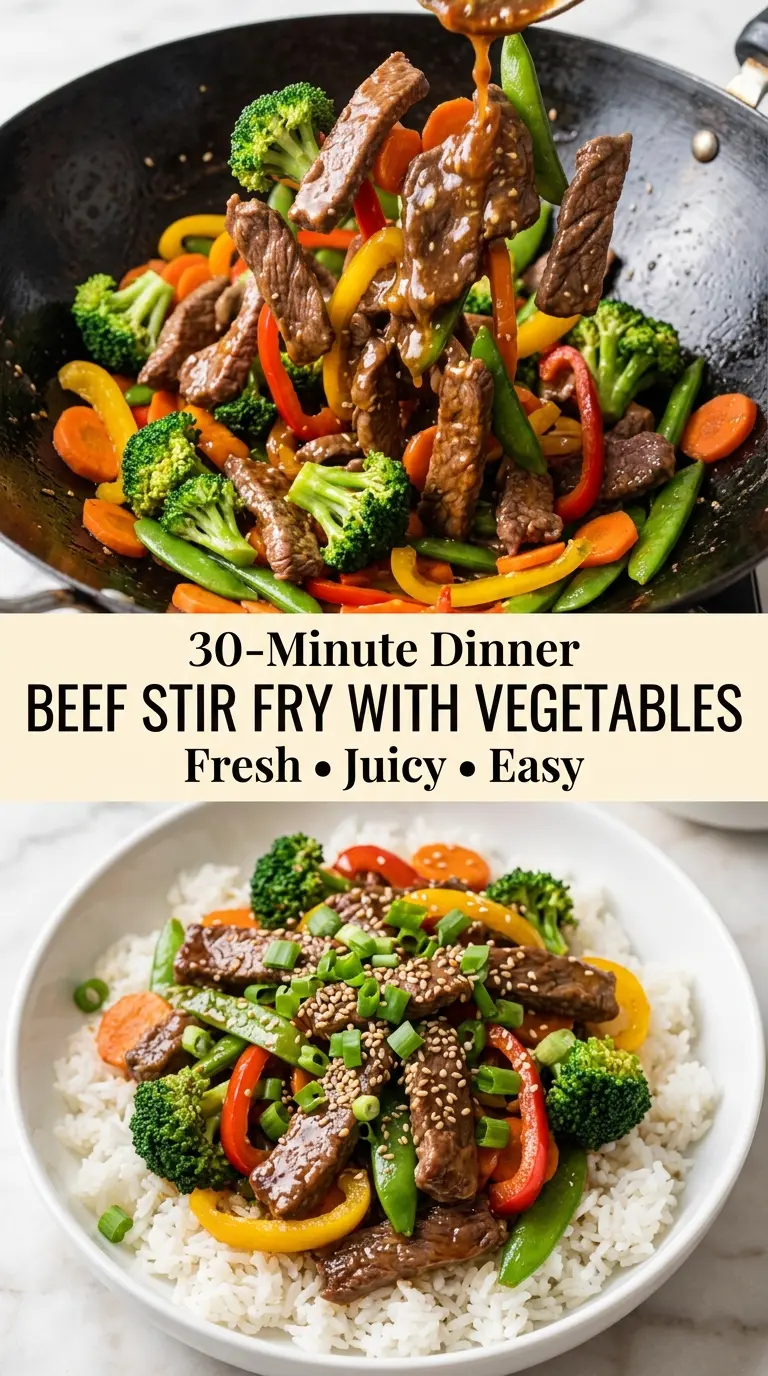
The biggest mistake in stir fry is crowding the pan. Once that happens, the beef dumps out moisture, the vegetables stop searing, and everything turns gray and soft. This recipe avoids that by cooking the beef in batches and giving the vegetables their own hot space before the sauce goes in.
The other key move is the cornstarch coating on the beef. It doesn’t just help with browning. It also gives the sauce something to cling to later, which is why the finished dish tastes integrated instead of like separate ingredients tossed together at the end. If the beef looks a little pale when it comes out of the pan, that’s fine. It finishes cooking when it goes back into the sauce.
- Flank steak — This cut stays tender when you slice it thinly against the grain. If you slice it with the grain, you’ll fight chewiness no matter how good the sauce is. Skirt steak works too, but it needs the same thin slicing and quick cooking.
- Cornstarch — A light coating helps protect the beef and thickens the sauce later. Don’t skip the resting time after tossing the meat, because that short pause helps the starch hydrate and cling more evenly.
- Broccoli, bell peppers, carrot, and snap peas — These vegetables give you a mix of textures, but they all need to stay crisp-tender. Cut the carrot thin so it cooks at the same pace as the broccoli florets and peppers. If you use harder vegetables, start them first and give them a head start.
- Garlic and ginger — These are the backbone of the sauce’s aroma. They go in near the end because they burn fast in a hot pan, and burnt garlic will take the whole dish with it.
- Soy sauce, oyster sauce, hoisin sauce, and brown sugar — This combination builds salt, depth, and a little sweetness. Low-sodium soy sauce is the safer choice here because the oyster and hoisin sauces already bring plenty of seasoning.
- Beef broth — Just enough liquid to loosen the sauce so it can coat the beef and vegetables without turning soupy. Water will work in a pinch, but broth gives the sauce a fuller taste.
Keep the Pan Hot, Keep the Sauce Moving
Coating the Beef First
Toss the sliced flank steak with cornstarch until every piece looks lightly dusted, not pasty. Let it sit for about 10 minutes so the coating hydrates. That short rest helps the meat brown better and keeps the final sauce from feeling thin. If the beef is wet when it goes into the pan, it will steam instead of sear.
Building the Sauce Before the Heat Gets Too High
Whisk the soy sauce, oyster sauce, hoisin, brown sugar, sesame oil, and beef broth together before you start cooking. Stir fry moves fast once the pan is hot, and a pre-mixed sauce keeps you from overcooking anything while you measure. The sauce should look smooth and dark, with no sugar clumps at the bottom.
Searing the Beef in Batches
Heat the oil until it shimmers, then add the beef in a single layer. You want browning on the edges, not a gray simmer. Pull the beef as soon as it loses most of its raw color; it will finish later, and overcooked beef turns tough fast in this dish.
Cooking the Vegetables to Crisp-Tender
Add the vegetables in the order of how long they need: broccoli and carrots first, then peppers, then snap peas near the end. The vegetables should brighten and soften slightly while keeping some snap. If you hear a loud sizzle and see steam flooding the pan, the heat is too low or the pan is overcrowded.
Finishing with Sauce and Slurry
Return the beef to the pan, pour in the sauce, and stir to coat everything evenly. Add the cornstarch slurry and keep the pan moving until the sauce turns glossy and lightly thickened. If it gets gluey, it cooked too long after thickening; pull it off the heat as soon as it coats the back of a spoon.
How to Adapt This Stir Fry Without Losing the Good Part
Gluten-Free Version
Use a gluten-free soy sauce or tamari, and check that your oyster sauce and hoisin are labeled gluten-free too. The texture stays the same, and the sauce still turns glossy, so this swap is almost invisible in the finished dish.
Vegetable Swap for What’s in the Crisper Drawer
Bok choy, mushrooms, snow peas, or zucchini all work here. Just group them by cooking time so the watery vegetables don’t go in too early. Mushrooms need enough heat to brown, while zucchini should go in late or it will go soft.
No Oyster Sauce
Add an extra tablespoon of soy sauce plus a teaspoon of brown sugar and a splash more broth. You lose a little savory depth, but the dish still tastes balanced. If you have fish sauce, a small splash can replace some of that missing richness.
Make-Ahead Storage
- Refrigerator: Store leftovers in an airtight container for up to 4 days. The vegetables soften a bit after chilling, but the flavor stays strong.
- Freezer: It freezes, but the vegetables lose their crispness. Freeze only if you don’t mind a softer texture, and thaw overnight in the fridge.
- Reheating: Reheat in a skillet over medium heat with a splash of broth or water. Microwaving works, but it can overcook the beef fast and make the sauce sticky.
Questions I Get Asked About This Recipe
Beef Stir Fry with Vegetables
Ingredients
Equipment
Method
- Toss the sliced flank steak with 2 tbsp cornstarch until evenly coated, then let it rest for 10 minutes.
- Whisk together low-sodium soy sauce, oyster sauce, hoisin sauce, brown sugar, sesame oil, and beef broth in a bowl, then set the sauce aside.
- Heat 1 tbsp vegetable oil in a large wok or skillet over high heat, then sear the beef in batches for 2–3 minutes until browned but not fully cooked and transfer to a plate.
- Add the remaining vegetable oil, then stir-fry broccoli, carrots, and red bell pepper and yellow bell pepper for 3–4 minutes.
- Add snap peas and cook for 2 minutes until the vegetables are crisp-tender.
- Stir in garlic and fresh ginger, then cook for 30 seconds until fragrant.
- Return the beef to the skillet, then pour in the prepared sauce and stir well to coat everything evenly.
- Add the cornstarch slurry and cook for 1–2 minutes, stirring constantly, until the sauce thickens and becomes glossy.
- Sprinkle with green onions and sesame seeds, then serve immediately over steamed rice or noodles.