As the broth simmers, the fennel and orange zest make the kitchen smell bright and savory before the seafood ever goes in. Bouillabaisse has a generous amount of seafood, but it’s the broth that gives every bowl its character, so I let the vegetables soften slowly instead of rushing them.
I build the base in layers: first onion, leek, fennel, and garlic, then tomatoes, herbs, orange, and saffron. A short simmer with white wine and fish stock gives those flavors time to settle together without turning the broth heavy.
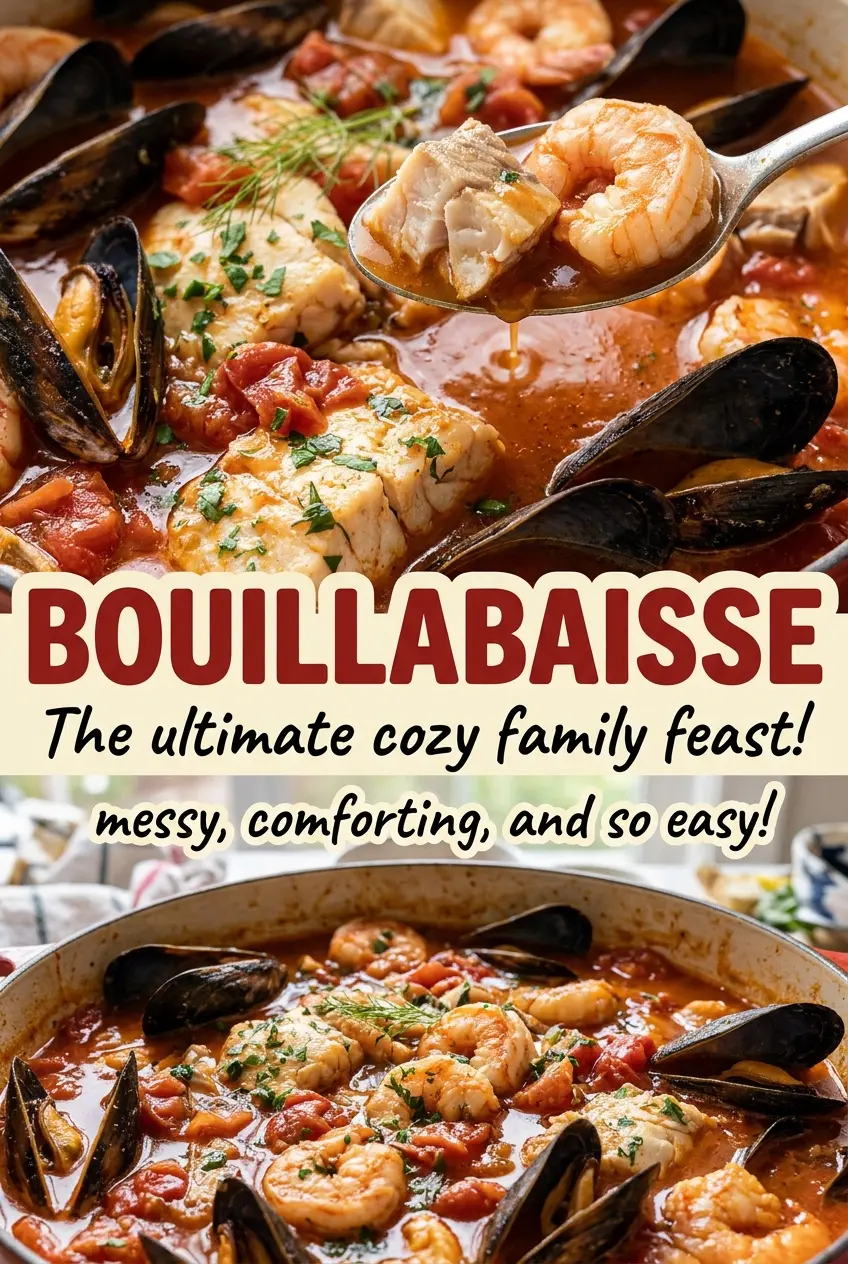
The fish, shrimp, and mussels go in at the end, each at the right point so they don’t spend the whole cooking time in the pot. Spoon the broth and seafood into bowls with crisp baguette and saffron rouille, and you get a meal that feels generous without being complicated.
Kitchen Note
Once the fish goes in, keep the broth at a gentle simmer rather than letting it boil hard. A rolling boil can knock the tender pieces against one another and break them up before they reach the bowls.
Save this bouillabaisse for a seafood supper with saffron broth, tender fish, and crisp baguette.
Why the Broth Gets Its Character Before the Seafood Goes In
In bouillabaisse, the broth isn’t just a cooking liquid for the fish. It’s the first part of the dish, and it needs enough flavor to stand beside several kinds of seafood without masking them. Onion, leek, and fennel soften into a sweet, savory base; tomatoes bring acidity and body, while tomato paste makes that base taste more concentrated.
The orange zest and saffron do a different job. Orange gives the broth a fragrant lift rather than a strong citrus taste, and saffron lends its distinct aroma and warm color. Keeping the zest free of white pith matters because the pith can bring bitterness where you want fragrance.
White wine adds brightness before the stock goes in. Letting it simmer briefly keeps the broth from tasting like raw wine, then the uncovered simmer gives the aromatics time to come together. That’s why I don’t try to make up for a rushed base by adding more seafood: the broth needs its own time to develop.
The Ingredients That Give Bouillabaisse Its Broth and Rouille

- Fennel, leek, and onion — These make the savory-sweet foundation of the broth. Rinse the sliced leek well, since grit can hide between its layers; a firm, fresh fennel bulb gives the broth its characteristic anise-like note.
- Tomatoes and tomato paste — Fresh chopped tomatoes bring a lighter, brighter taste, while tomato paste gives the broth a deeper base. Stir both in with the seasonings so the paste cooks briefly before the wine and stock go in.
- Orange zest and saffron — Use a wide strip of orange peel without white pith, not juice, for a clean aromatic note. Saffron threads are worth using here; turmeric can add color, but it won’t give the same aroma.
- Fish stock and dry white wine — A clean-tasting fish stock matters because it makes up most of the broth. A mild seafood stock works in the same quantity; replacing the wine with fish stock also works, though the broth will be less bright.
- Cod, halibut, shrimp, and mussels — Skinless fillets are easy to portion into even pieces, and medium shrimp cook quickly alongside the mussels. Buy mussels that are scrubbed and debeard them before cooking; shells add both flavor and the visual appeal of the finished bowls.
- Mayonnaise, lemon, garlic, and cayenne — Mayonnaise gives the rouille its creamy body without needing to make an egg emulsion from scratch. Fresh lemon keeps it lively, and the garlic and cayenne make the sauce assertive enough to stand up to the broth.
- Baguette — A sturdy baguette toasts into crisp slices that can hold a swipe of rouille. A day-old loaf is fine; it crisps well in the oven and doesn’t need to be especially fresh.
Build the Broth First, Then Cook the Seafood Gently
Soften the Aromatics Without Browning Them
Heat the olive oil in a 6-quart Dutch oven over medium heat. Add the onion, leek, fennel, and four minced garlic cloves, then cook for 8–10 minutes, stirring occasionally, until the vegetables have softened. Keep the heat moderate; you want them tender, not browned. Browning the garlic can push the broth toward a bitter, roasted taste.
Layer in the Tomato, Wine, and Stock
Stir in the tomatoes, tomato paste, orange zest, bay leaves, thyme, a portion of the saffron, salt, and black pepper, and cook for 3 minutes. Pour in the wine and simmer for 2–3 minutes. Add the fish stock and bring everything to a simmer, then cook uncovered for 20 minutes. Lift out and discard the bay leaves, thyme sprigs, and orange zest before adding seafood.
Bloom the Saffron for the Rouille
Crush the remaining saffron in a small bowl, stir in a teaspoon of hot broth, and leave it to stand for 5 minutes. This gives the threads time to release their color and aroma into the liquid. Whisk in the mayonnaise, the last minced garlic clove, lemon juice, and cayenne until the rouille is smooth. Keep it ready to serve alongside the hot bowls.
Toast the Baguette Until Crisp
Heat the oven to 400°F while you prepare the bread. Arrange the baguette slices in a single layer on an 18×13-inch rimmed baking sheet so they toast evenly. Bake for 8–10 minutes, until crisp and lightly golden; pull them before the edges turn dark.
Add the Fish Before the Shrimp and Mussels
Bring the broth back to a gentle simmer if it has cooled, then add the cod and halibut. Simmer uncovered for 3 minutes before adding the shrimp and mussels. Cover the pot and simmer for 4–6 minutes, until the fish and shrimp reach 145°F and the mussels have opened; discard any mussels that stay closed. Ladle the seafood and broth into bowls and serve with the toasted baguette and rouille.
Two Practical Ways to Adapt This Bouillabaisse
Make the Baguette Gluten-Free
Use a gluten-free baguette in place of the regular one, slice it 1/2 inch thick, and toast it on the same baking sheet at 400°F. Choose gluten-free fish stock and mayonnaise as well. The bread may have a slightly different crumb, but it still gives you a crisp base for the rouille.
Use Cod for Both Fish Portions
If halibut isn’t available, use 2 pounds of cod in place of the cod and halibut portions. Cut it into even 2-inch pieces and keep the same order of adding the fish before the shrimp and mussels. The broth will still be full of seafood flavor, with a slightly less buttery texture than the version with halibut.
Storage and Reheating
- Refrigerator: Cool and refrigerate leftovers within 2 hours, then keep them in an airtight container for 3–4 days. The seafood will firm up as it chills.
- Freezer: Freeze the broth before adding seafood in airtight containers for up to 3 months. Thaw it in the refrigerator, then cook the seafood fresh; the fish and mussels lose texture when frozen in the finished stew.
- Reheating: Warm leftovers gently in a covered saucepan, stirring carefully, until they reach 165°F. Avoid a hard boil, which can toughen the seafood; toast fresh baguette separately for the best crunch.
Questions I Get Asked About Bouillabaisse
Bouillabaisse
Ingredients
Equipment
Method
- Heat the olive oil in a 6-quart Dutch oven over medium heat. Add the onion, leek, fennel, and 4 minced garlic cloves; cook for 8–10 minutes, stirring occasionally, until the vegetables soften.
- Stir in the tomatoes, tomato paste, orange zest, bay leaves, thyme, 1/4 teaspoon saffron, salt, and black pepper; cook for 3 minutes.
- Pour in the wine and simmer for 2–3 minutes.
- Add the fish stock and bring to a simmer. Cook uncovered for 20 minutes, then remove and discard the bay leaves, thyme sprigs, and orange zest.
- Crush the remaining 1/4 teaspoon saffron in a small bowl, stir in 1 teaspoon hot broth, and let stand for 5 minutes. Whisk in the mayonnaise, remaining minced garlic, lemon juice, and cayenne pepper.
- Heat the oven to 400°F.
- Arrange the baguette slices in a single layer on an 18x13-inch rimmed baking sheet and bake for 8–10 minutes, until crisp and lightly golden.
- Bring the broth back to a gentle simmer if needed, then add the cod and halibut; simmer uncovered for 3 minutes.
- Add the shrimp and mussels, cover, and simmer for 4–6 minutes, until the fish and shrimp reach 145°F and the mussels open; discard any mussels that remain closed.
- Ladle the seafood and broth into bowls and serve with the toasted baguette and rouille.