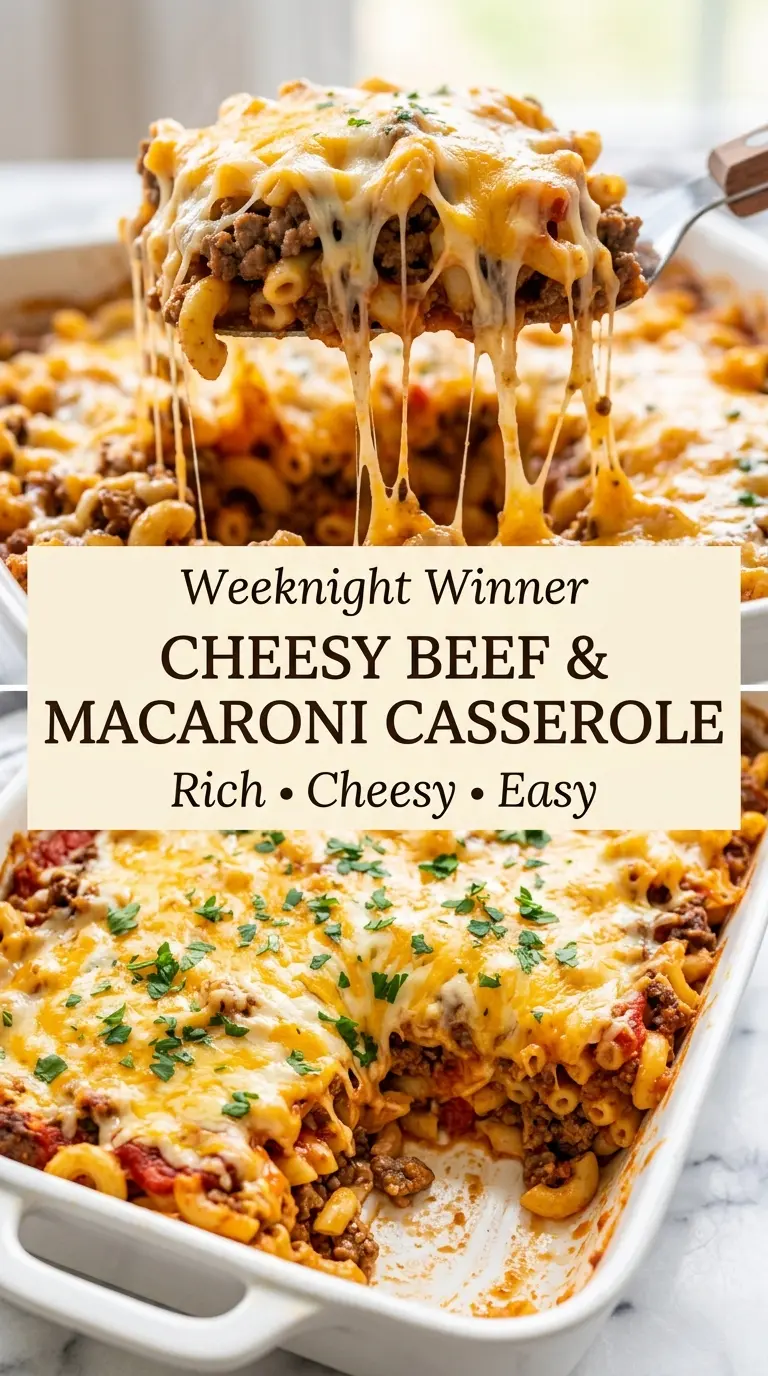
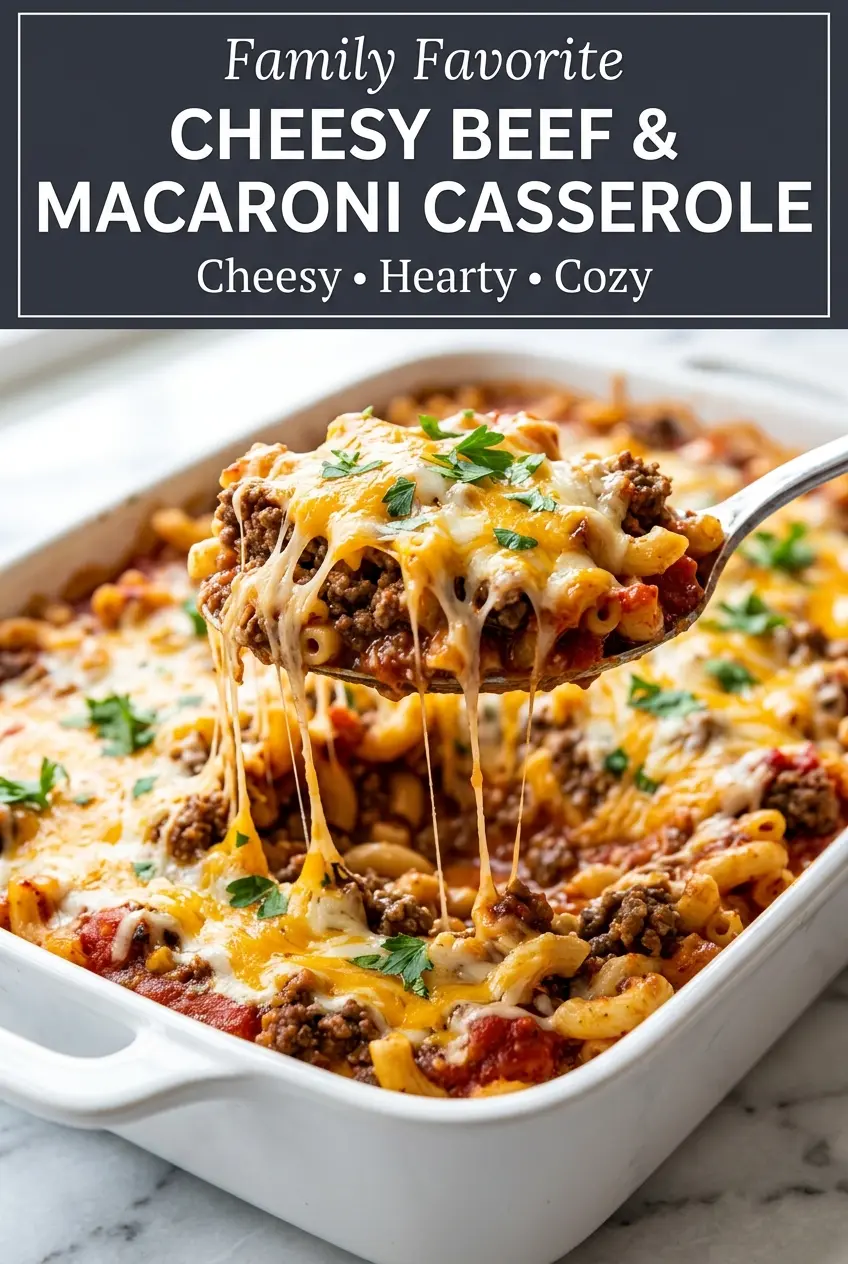
Cheesy beef and macaroni casserole lands on the table with the kind of comfort that makes people go back for a second scoop before the dish has even cooled. The pasta stays tender without turning mushy, the beef sauce clings to every noodle, and the cheese on top bakes into a bubbling lid with those browned edges everybody fights over. It’s hearty without feeling heavy, and it tastes like the kind of dinner that was planned on purpose, even when it was pulled together on a busy night.
The trick is keeping the pasta just shy of fully done before it goes into the oven. It finishes cooking in the sauce, which lets it soak up flavor instead of sitting there tasting like plain macaroni under a blanket of cheese. I also like building the sauce with tomato paste and a short simmer; that little bit of concentration keeps the casserole from tasting thin or watery after baking.
Below, I’ll walk through the spots that matter most, plus the swaps that still keep the casserole rich and satisfying. If you’ve ever had a baked pasta dry out on you, the timing notes here will help.
The macaroni stayed tender and the sauce thickened up perfectly in the oven. I loved that it wasn’t watery at all, and my kids picked the crispy cheese off the top first.
Save this cheesy beef and macaroni casserole for the nights when you want a bubbling baked dinner with minimal fuss and maximum comfort.
The Sauce Needs to Be Thicker Than You Think
One of the easiest ways to wreck a baked pasta casserole is to stop the sauce too early. If it looks perfect in the skillet but still seems loose, it will spread out and get watery in the oven. This dish works because the tomato base is reduced just enough to coat the beef and cling to the macaroni before baking starts.
The other trap is overcooking the pasta. Elbow macaroni should still have a little bite after boiling because it keeps cooking once it’s mixed with the hot sauce and baked under cheese. If you take it all the way to soft in the pot, the casserole turns dense and a little gummy instead of creamy and spoonable.
- Tomato sauce — This gives the casserole its smooth, cohesive base. Canned tomato sauce is fine here because it bakes down with the beef and seasoning, but don’t swap in plain diced tomatoes alone unless you want a looser, chunkier result.
- Tomato paste — This is the quiet fix that keeps the filling from tasting flat. It deepens the tomato flavor and helps the sauce thicken fast, which matters in a casserole that needs to hold its shape.
- Sharp cheddar — Sharp cheddar brings the strongest flavor, so it still tastes cheesy after baking. Mild cheddar works, but the casserole will lean softer and less defined.
- Mozzarella — Mozzarella gives you that stretchy top and smooth melt. Use low-moisture mozzarella, not fresh, or you’ll add extra liquid to the dish.
- Parmesan — Parmesan adds a salty, nutty finish on top. A small amount goes a long way, and this is one place where the real cheese is worth it.
Building the Beef, Pasta, and Cheese Without Ending Up With a Dry Pan
Brown the Beef First
Start with a hot skillet and let the beef sit long enough to pick up color before breaking it down completely. That browning adds depth to the casserole, and if the pan looks pale, the whole dish will taste flat. Once the meat is cooked through, drain off excess grease if there’s a lot of it; too much fat can make the sauce sit on top instead of soaking into the pasta.
Cook the Aromatics Until They Smell Sweet
Add the onion and give it a few minutes to soften before the garlic goes in. You want the onion to lose its crunch and look a little glossy, not browned and bitter. Garlic only needs a short hit of heat; once it smells fragrant, move straight to the tomatoes so it doesn’t taste sharp.
Let the Tomato Sauce Tighten Up
Stir in the tomato sauce, diced tomatoes, tomato paste, and seasonings, then simmer until the mixture looks thick and cohesive. You’re aiming for a sauce that mounds slightly on a spoon, not one that runs across the pan. This is the point where people usually rush, and it shows later as a watery casserole.
Fold in the Pasta and Cheese While Everything Is Hot
Add the cooked macaroni while the sauce is still warm so it can absorb flavor right away. Stir in some of the cheddar and mozzarella before the dish goes to the oven; that melted cheese inside the casserole helps bind everything together. If the mixture seems a little loose, that’s normal. The oven finish thickens it and the top layer seals in moisture.
Bake Until the Edges Bubble Hard
Once the casserole is in the dish, scatter the remaining cheese over the top and bake until you see active bubbling around the edges and a few golden spots across the surface. If it comes out too early, the center stays slack and the cheese never gets that baked-in finish. Let it rest for a few minutes before serving so the sauce settles and the casserole slices cleanly.
How to Adapt This Casserole for Different Kitchens and Different Nights
Gluten-Free Swap
Use your favorite gluten-free elbow macaroni and cook it just to al dente, since GF pasta can go soft faster in the oven. The sauce and cheese are naturally gluten-free, so the texture of the pasta is the only thing you need to watch closely.
Make It Lighter Without Losing the Comfort
Use lean ground beef and drain off any excess fat after browning. You can also cut the mozzarella back a little and lean on the sharp cheddar for flavor, which keeps the casserole rich without turning greasy.
Make-Ahead Dinner for Busy Weeks
Assemble the casserole up to the baking step, cover it tightly, and refrigerate it for later the same day or the next day. Add a few extra minutes in the oven if it goes in cold, and wait to add the final garnish of parsley until after baking so it stays fresh and bright.
Vegetarian Version
Swap the beef for a plant-based ground that browns well, or use sautéed mushrooms and lentils for a deeper, earthier filling. The result will be a little less rich, but the tomato base and cheese still give you that same baked casserole feel.
Storage and Reheating
- Refrigerator: Store leftovers in an airtight container for up to 4 days. The pasta will firm up a bit as it chills, but the flavor holds well.
- Freezer: This casserole freezes well after baking. Cool completely, wrap tightly, and freeze for up to 2 months. Thaw in the fridge before reheating for the most even texture.
- Reheating: Reheat covered in a 350°F oven until hot in the center, or warm individual portions in the microwave with a splash of water to loosen the sauce. The common mistake is blasting it uncovered until the cheese dries out and the noodles turn tough.
Answers to the Questions Worth Asking
Cheesy Beef & Macaroni Casserole
Ingredients
Equipment
Method
- Preheat the oven to 375°F and lightly grease a 9×13-inch baking dish.
- Bring a large pot of salted water to a boil and cook the elbow macaroni for 7–8 minutes until al dente; drain and set aside.
- Heat the olive oil in a large skillet over medium-high heat, then add the ground beef and cook for 6–8 minutes, breaking it apart until browned and no pink remains.
- Stir in the diced onion and cook for 3–4 minutes until softened, then add the minced garlic and cook for 30 seconds until fragrant.
- Mix in the tomato sauce, diced tomatoes, tomato paste, Italian seasoning, paprika, garlic powder, kosher salt, and black pepper, then simmer for 5 minutes until slightly thickened.
- Fold the cooked macaroni into the beef mixture, then stir in 1 cup of the cheddar cheese and ½ cup of the mozzarella cheese until evenly combined.
- Transfer the mixture to the prepared baking dish and sprinkle the remaining cheddar cheese, mozzarella cheese, and Parmesan cheese evenly over the top.
- Bake for 20–25 minutes until the cheese is melted, bubbling, and lightly golden.
- Let the casserole rest for 5 minutes, then garnish with chopped parsley and serve warm.