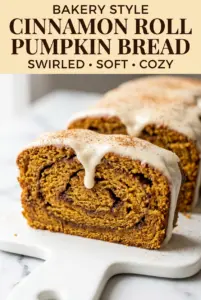
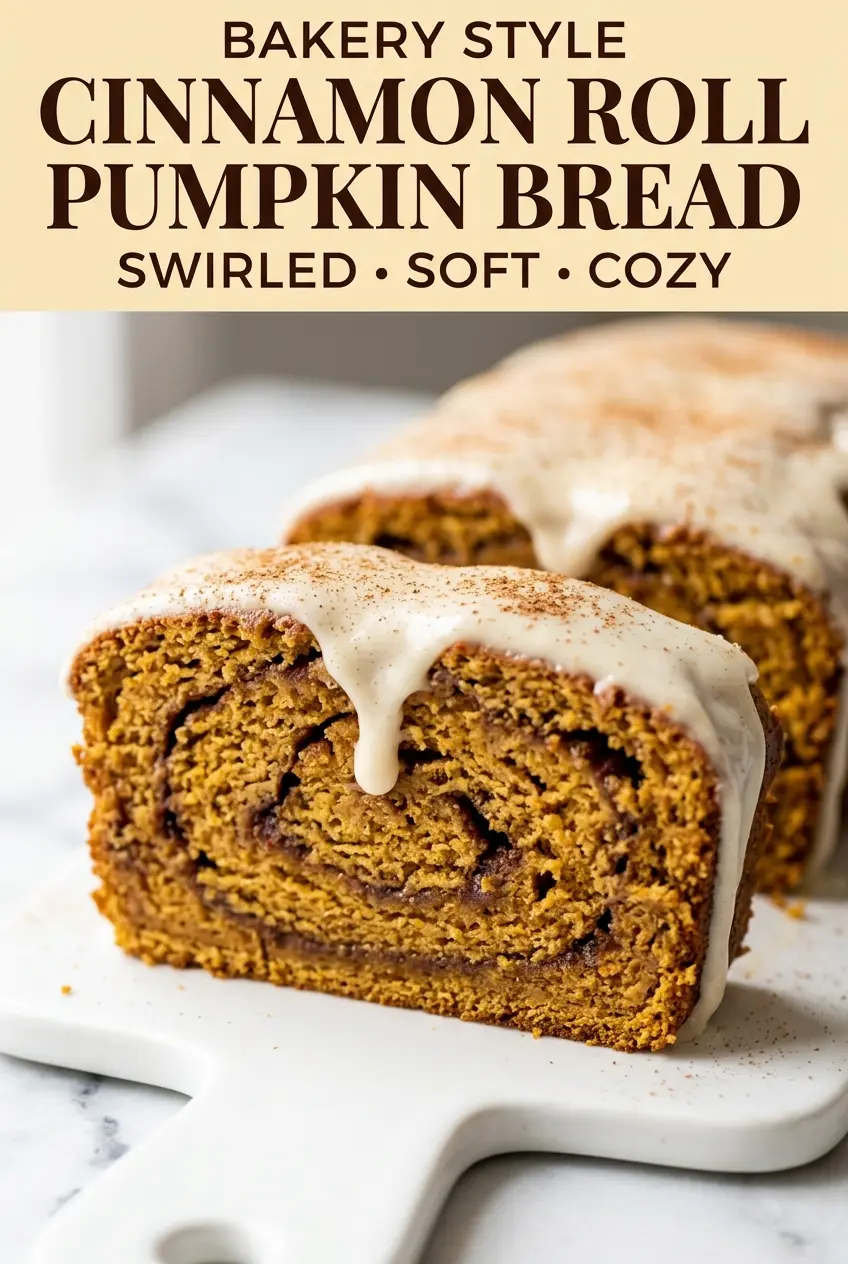
Cinnamon Roll Pumpkin Bread lands somewhere between a tender pumpkin loaf and the sticky center of a cinnamon roll, and that’s exactly why it disappears fast. The crumb stays soft and moist, the cinnamon swirl melts into little pockets of brown sugar, and the vanilla glaze finishes each slice with just enough sweetness to taste bakery-made without turning heavy.
What makes this version work is the balance. Pumpkin purée brings moisture and body, while sour cream keeps the loaf plush instead of dense. The cinnamon swirl is mixed with melted butter, so it sinks into the batter in ribbons instead of clumping up dry on top, and that means every slice gets real contrast instead of a single sugary layer.
Below you’ll find the small details that matter most: how to keep the loaf from turning gummy in the middle, how to swirl it without overworking the batter, and what to do if you want a thicker glaze or a lighter finish.
The cinnamon ribbon stayed perfectly swirled through the loaf and the glaze set just enough that the slices held together cleanly. I baked it for my book club and everyone asked for the recipe before dessert was over.
Save this Cinnamon Roll Pumpkin Bread for the days when you want soft pumpkin loaf, a real cinnamon swirl, and a sweet glaze in one slice.
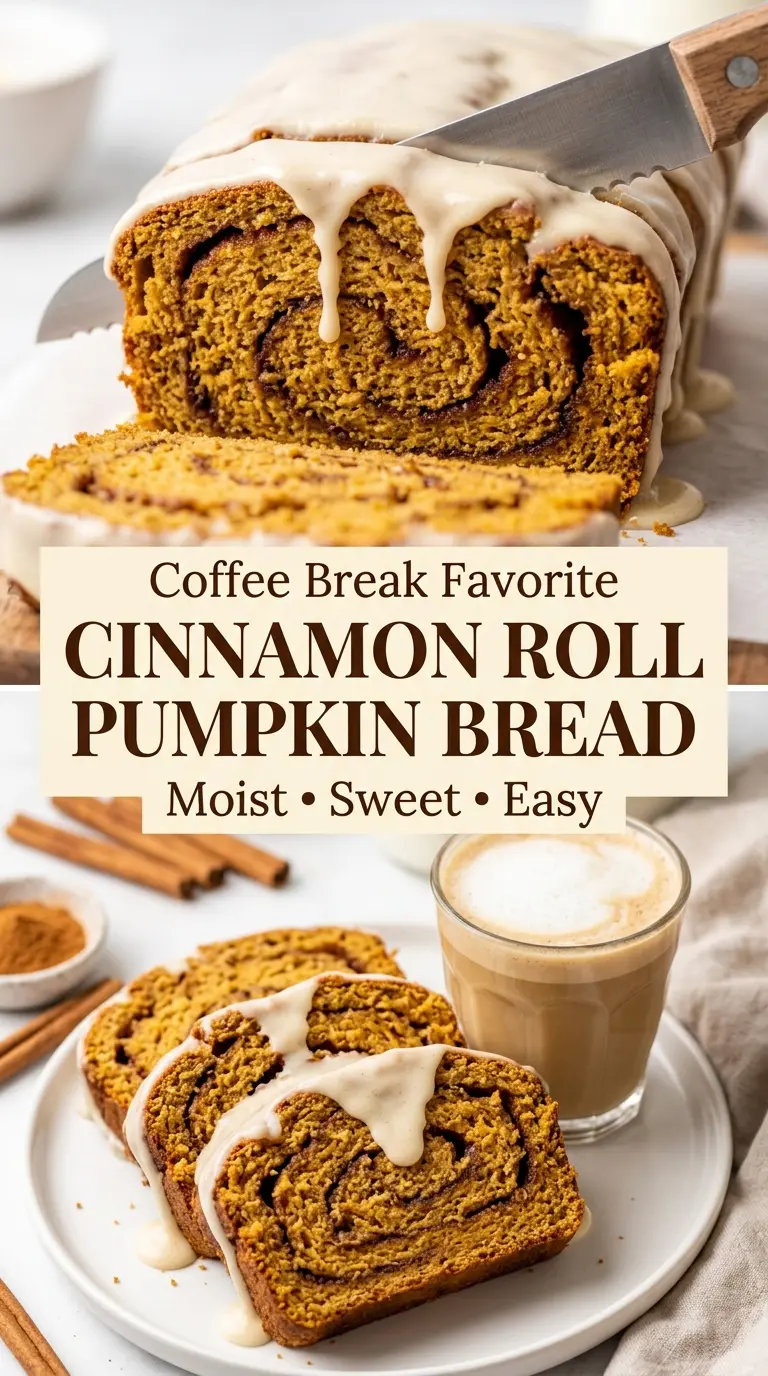
The Reason the Swirl Stays Distinct Instead of Sinking Away
The biggest mistake with swirled quick breads is dumping in a loose filling that melts straight into the batter. This version avoids that by combining brown sugar, cinnamon, and melted butter into a thick, spoonable paste. It holds its shape long enough to create visible ribbons, then softens into a gooey layer as the loaf bakes.
Overmixing is the other thing that ruins the texture. Once the dry ingredients go in, the batter only needs to be folded until the flour disappears. If you keep stirring, the loaf tightens up and loses that soft, almost cake-like crumb that makes this bread so good warm from the pan.
- Pumpkin purée — Use plain pumpkin purée, not pumpkin pie filling. Pie filling already contains sugar and spices, which throws off both the flavor and the texture.
- Sour cream — This adds richness and keeps the loaf tender. Plain Greek yogurt works in a pinch, but the crumb will be a touch firmer and a little less plush.
- Light brown sugar — Brown sugar deepens the pumpkin flavor and helps the loaf stay moist. Dark brown sugar can be used if that’s what you have, but it will give the bread a stronger molasses note.
- Vegetable oil — Oil keeps the loaf soft even after chilling. Melted butter tastes great, but it makes the crumb a little less moist the next day.
- Butter in the swirl — The melted butter helps the cinnamon sugar cling to the batter and gives the swirl that cinnamon-roll-style richness. Don’t skip it or the filling turns sandy.
Building the Batter Without Losing the Tender Crumb
Mix the dry ingredients first
Whisk the flour, baking soda, baking powder, pumpkin pie spice, cinnamon, and salt together until the color looks even. That keeps the leavening and spices from clumping in one spot, which matters because pumpkin batter is thick and doesn’t mix itself evenly once the wet ingredients go in.
Bring the wet ingredients together smoothly
Whisk the eggs and sugars until the mixture looks glossy and a little lighter in color, then add the pumpkin, oil, sour cream, and vanilla. The batter should look thick and silky, not oily or separated. If the sour cream is cold from the fridge, let it sit out briefly first so it blends without streaks.
Fold, don’t beat
Add the dry ingredients in stages and fold only until no dry flour remains. A few small streaks are fine because they disappear in the oven, but heavy stirring will overdevelop the flour and make the loaf dense. This is the point where people usually overwork quick bread, and you can taste the difference in the finished slice.
Layer and swirl with a light hand
Spread half the batter into the pan, sprinkle on half the cinnamon mixture, then repeat with the remaining batter and topping. Drag a knife through the layers just a few times to create a loose swirl. If you go too deep or swirl too much, the filling sinks and the top bakes up muddy instead of marbled.
Know when the loaf is done
Bake until the center is set and a toothpick comes out with a few moist crumbs, not raw batter. The top should spring back when pressed gently, and the edges will pull slightly from the pan. If the top browns before the middle is done, tent it loosely with foil for the last part of the bake.
Three Ways to Adapt This Loaf Without Losing the Good Parts
Dairy-Free Version That Still Stays Soft
Swap the sour cream for unsweetened dairy-free yogurt and use plant-based butter in the swirl and glaze. The loaf still bakes up moist, though the glaze may need a splash more cream substitute to reach a drizzle consistency. Use a neutral-tasting yogurt so the spice blend stays front and center.
Gluten-Free Adjustment
Use a 1:1 gluten-free baking blend that already includes xanthan gum. The loaf will still be tender, but it may need the full bake time and a longer cooling period so it sets cleanly before slicing. Let it cool all the way or the center can seem gummy even when it’s baked through.
Thicker Cinnamon Swirl
If you want more distinct cinnamon pockets, add an extra tablespoon of brown sugar to the swirl mixture. That gives you a gooier ribbon and a slightly stickier top crust. Go too heavy on the swirl, though, and the loaf can collapse in the middle, so keep the extra sugar modest.
Storage and Reheating
- Refrigerator: Store slices in an airtight container for up to 5 days. The crumb stays moist, and the swirl gets a little denser after chilling.
- Freezer: This freezes well. Wrap the cooled loaf or individual slices tightly in plastic, then place in a freezer bag for up to 2 months.
- Reheating: Warm a slice in the microwave for 10 to 15 seconds or in a low oven until just heated through. Don’t overheat it or the glaze melts off and the crumb turns dry at the edges.
Answers to the Questions Worth Asking
Cinnamon Roll Pumpkin Bread
Ingredients
Equipment
Method
- Preheat the oven to 350°F (175°C). Grease and line a 9×5-inch loaf pan with parchment paper.
- Whisk together the all-purpose flour, baking soda, baking powder, pumpkin pie spice, ground cinnamon, and salt in a medium bowl.
- In a large bowl, whisk together the eggs, granulated sugar, and light brown sugar until smooth.
- Add the pumpkin purée, vegetable oil, sour cream, and vanilla extract, then mix until fully combined.
- Gradually fold the dry ingredients into the wet ingredients until just combined, keeping the batter thick and not overmixed.
- Mix the light brown sugar, ground cinnamon, and melted unsalted butter for the swirl until evenly combined.
- Spread half of the batter into the prepared loaf pan, sprinkle with half the cinnamon mixture, then add remaining batter and the rest of the cinnamon mixture.
- Use a butter knife to gently swirl the cinnamon filling through the batter so streaks form throughout.
- Bake at 350°F (175°C) for 55–65 minutes, until a toothpick in the center comes out clean or with a few moist crumbs.
- Cool the loaf in the pan for 15 minutes, then transfer it to a wire rack to cool completely.
- Whisk powdered sugar, heavy cream, and vanilla extract until smooth, then drizzle generously over the cooled loaf.