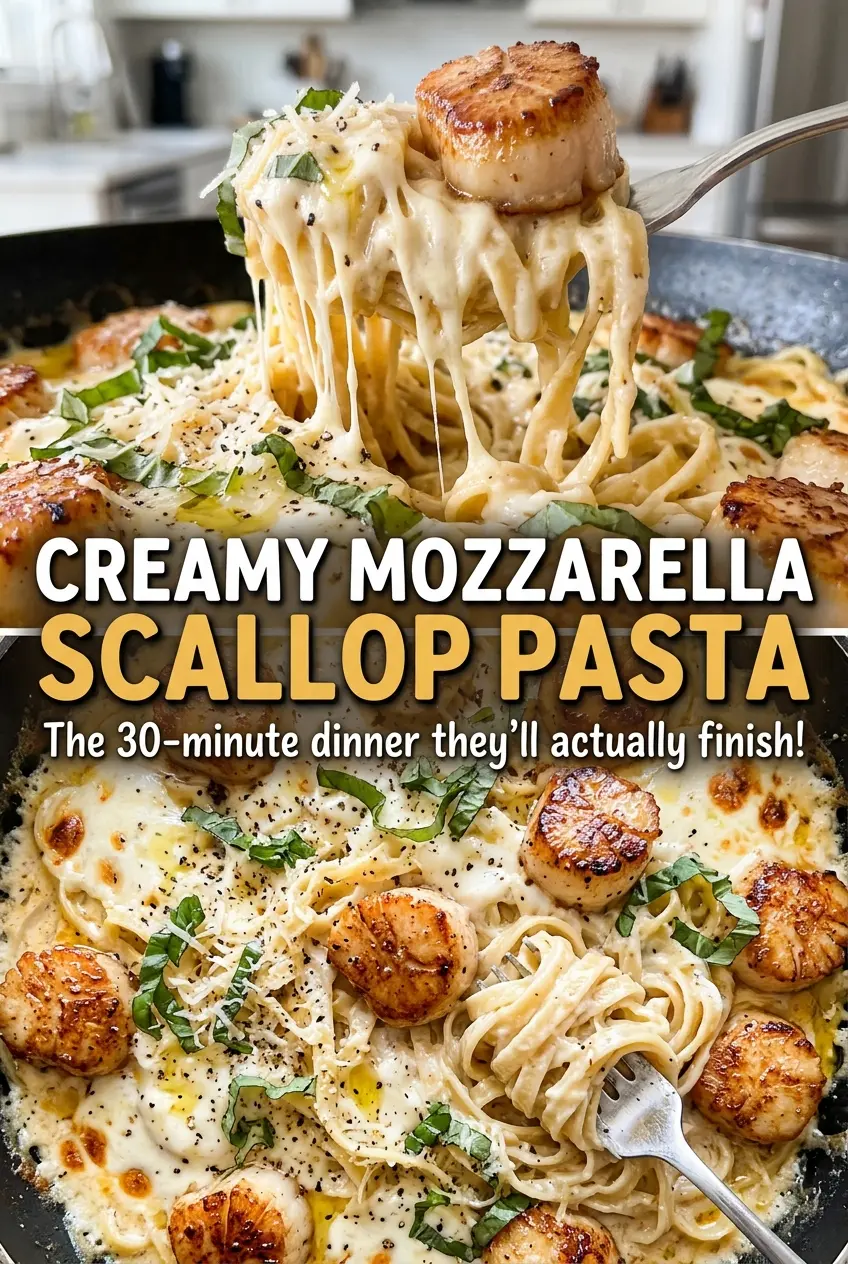
The oil should shimmer before the scallops go into the skillet; otherwise, they release moisture before they have a chance to brown. I keep an eye on that first sizzle because it sets up the contrast in Creamy Mozzarella Scallop Pasta: golden scallops against silky linguine, with a rich sauce that clings instead of pooling at the bottom of the bowl.
I cook the linguine while the scallops are prepped, then use the same skillet for the garlic-and-cream sauce. That keeps the cooking sequence manageable and lets the sauce pick up the savory bits left behind by the scallops. Low-moisture mozzarella gives the pasta its stretchy, creamy finish, while Parmesan brings a sharper edge. Each forkful has tender pasta, a smooth coating of cheese, and a scallop with a browned outside.
Kitchen Note
I set the cream beside the skillet before the butter melts. Minced garlic only needs 30 seconds before the cream goes in, and having it ready keeps those small pieces from browning while you reach for the next ingredient.
Save Creamy Mozzarella Scallop Pasta for a dinner with browned scallops, silky linguine, and a mozzarella-Parmesan sauce that clings to every strand.
Why Mozzarella Needs Pasta Water, Not More Cream
Mozzarella melts into a stretchy, rich coating, but it doesn’t behave like a pourable cheese sauce on its own. The reserved pasta water brings starch into the skillet, which helps the melted cheese and cream coat the linguine instead of sitting in a heavy layer around it. Parmesan has a different job: its sharper, saltier character keeps the mozzarella from making the whole dish taste one-note.
That balance depends on adding the cheeses gradually and keeping the skillet over low heat. A sudden pile of cheese or too much heat can leave you with clumps and strings rather than a smooth coating. The pasta water gives you a way to loosen the sauce without diluting it with extra cream. Tossing the linguine as the cheese melts helps distribute everything evenly, so the sauce feels creamy on the pasta instead of thick in the pan.
Dry-Packed Scallops and Low-Moisture Mozzarella Do Different Jobs
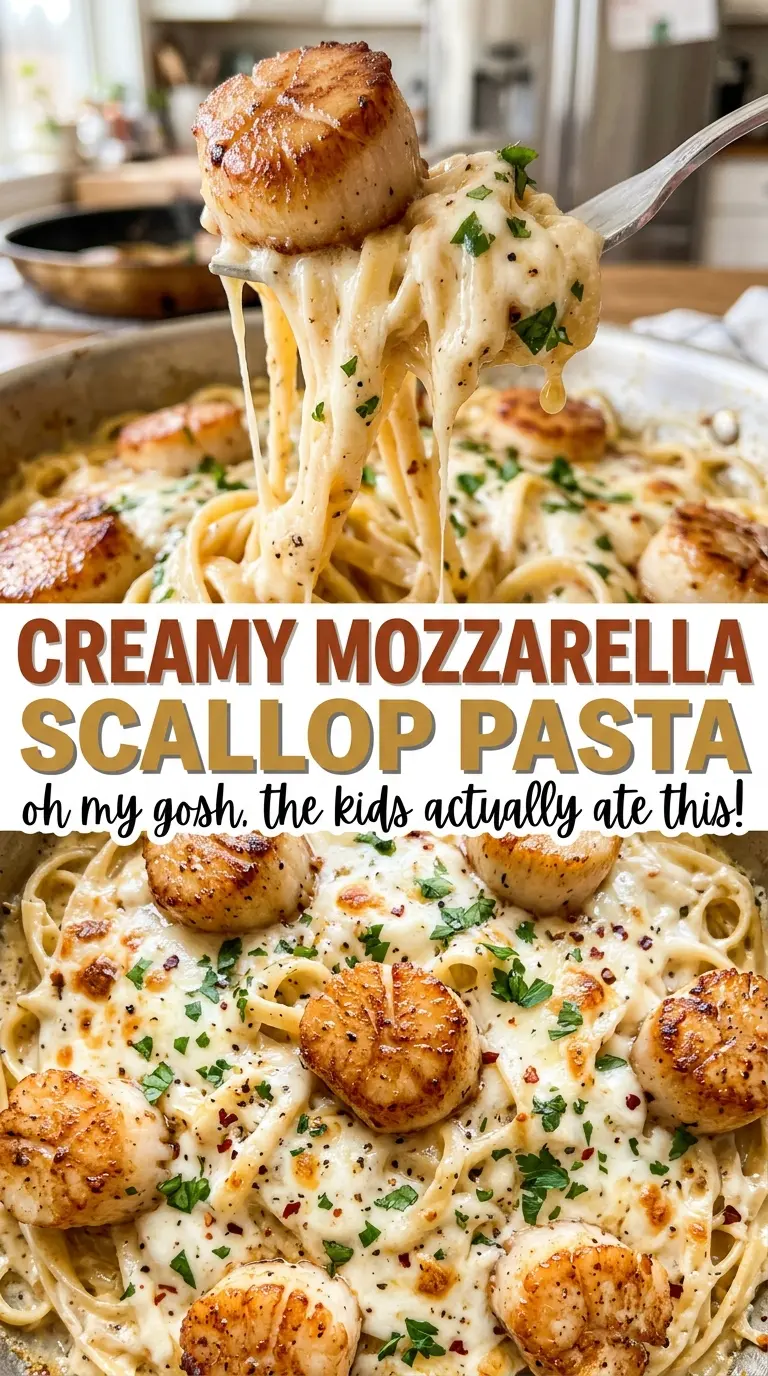
- Dry-packed sea scallops — These are the right choice for a quick skillet sear because they brown more readily than scallops treated with added moisture. Look for large scallops with a fresh, mild smell, and have the side muscles removed before cooking. The dry surface matters more than buying the most expensive scallops.
- Low-moisture mozzarella — It melts into the creamy, stretchy texture this pasta needs without adding the extra water that fresh mozzarella carries. Shredding it yourself gives you pieces that melt evenly; fresh mozzarella isn’t a direct substitute here because its moisture can loosen the sauce.
- Parmesan — Grated Parmesan adds a savory, salty counterpoint to the mild mozzarella. A finely grated cheese melts more readily than large shreds, but there’s no need to seek out an especially aged variety for this sauce.
- Heavy cream — Its higher fat content helps create a rich, cohesive sauce. Milk is not a like-for-like swap; it makes the sauce thinner and less forgiving when the cheese is added.
- Linguine — The long, flat strands give the sauce plenty of surface to cling to. Choose a package you enjoy eating; the package’s al dente timing is more useful than paying extra for a particular brand.
From a Dry Sear to a Sauce That Clings to Linguine
Cook the Linguine and Save Its Water
Bring a large pot of water to a boil, add the tablespoon of kosher salt, then cook the linguine according to the package directions until al dente, usually 8 to 10 minutes. Before draining, reserve half a cup of the pasta cooking water; it’s easy to forget once the noodles are ready. Drain the linguine and keep it close by while you cook the scallops. Don’t rinse it, since the starch on the noodles helps the sauce cling.
Build a Golden Crust on the Scallops
Pat the scallops very dry, remove any side muscles, then season both sides with the remaining kosher salt and black pepper. Heat the olive oil in a 12-inch skillet over medium-high heat until it shimmers, and add the scallops in a single layer. Sear for about 2 minutes per side, until they’re browned, opaque throughout, and 145°F in the center. Transfer them to a plate once they reach that point rather than leaving them in the skillet while you make the sauce.
Make the Garlic Cream Base
Reduce the skillet heat to medium and melt the butter, leaving the browned bits in the pan. Add the minced garlic and cook for 30 seconds, then pour in the heavy cream. Bring it to a gentle simmer and cook for 2 minutes; a gentle simmer means small, steady bubbles, not a hard boil. If the cream is boiling vigorously, lower the heat before moving on.
Melt the Cheese and Finish the Pasta
Reduce the heat to low, add the linguine and reserved pasta water, and toss to coat. Add the mozzarella and Parmesan a handful at a time, tossing between additions until the cheese melts and the sauce coats the strands. Return the scallops and any juices on the plate to the skillet, then gently toss to coat them. Serve right away, while the sauce is loose and the scallops are tender.
Two Useful Changes Without Losing the Scallop-and-Mozzarella Balance
Use gluten-free linguine
Swap in the same amount of gluten-free linguine for a gluten-free version. Cook it according to its package directions and reserve the same amount of cooking water; the texture may be a little less springy than wheat linguine, but the scallops and cheese sauce stay the focus.
Plate the scallops whole on top
For a more composed presentation, leave the scallops on their plate while you toss the linguine with the sauce, then arrange them over the pasta just before serving. You’ll keep the scallops intact and make each portion easy to arrange, though they won’t be coated as evenly as they are when gently tossed through the sauce.
Storage and Reheating
- Refrigerator: Refrigerate leftovers within 2 hours and eat them within 3 to 4 days. The mozzarella sauce will firm up as it chills, and the scallops will be less tender after reheating.
- Freezer: Freezing isn’t recommended. The cream-and-cheese sauce can turn grainy after thawing, and scallops tend to become tough.
- Reheating: Warm leftovers gently in a skillet over low heat with a small splash of water, stirring until hot throughout and 165°F. High heat can make the sauce separate and the scallops rubbery.
Questions That Come Up With Scallop Pasta
Creamy Mozzarella Scallop Pasta
Ingredients
Equipment
Method
- Bring a large pot of water to a boil, add 1 tablespoon of the salt and the linguine, and cook according to package directions until al dente, usually 8 to 10 minutes; reserve 1/2 cup pasta water, then drain.
- While the pasta cooks, pat the scallops very dry and season both sides with the remaining 1/2 teaspoon salt and the black pepper.
- Heat the olive oil in a 12-inch skillet over medium-high heat until shimmering; sear the scallops in a single layer for about 2 minutes per side, until browned, opaque throughout, and 145°F in the center, then transfer to a plate.
- Reduce the skillet heat to medium and melt the butter; add the garlic and cook for 30 seconds, then pour in the heavy cream and bring to a gentle simmer for 2 minutes.
- Reduce the heat to low, add the linguine and reserved pasta water, and toss; add the mozzarella and Parmesan a handful at a time, tossing until melted and the sauce coats the pasta.
- Return the scallops and any accumulated juices to the skillet and gently toss to coat, then serve immediately.