Silky Alfredo clings to every strand of fettuccine, and the salmon stays tender in big, flaky pieces instead of disappearing into the sauce. That’s what makes this version worth making: you get a rich, restaurant-style bowl of pasta, but the fish still tastes like fish, not like it was cooked as an afterthought. The pan-seared crust on the salmon gives you contrast against the cream sauce, and the whole dish lands with enough depth to feel special without turning into a project.
The key is treating the salmon and the sauce as two parts of the same dish, not separate recipes. The salmon gets seasoned before it hits the pan, then cooked just long enough to flake easily without drying out. The Alfredo builds in the same skillet, which pulls in the browned bits from the fish and adds a little more savory backbone to the cream and Parmesan. Freshly grated cheese matters here because pre-shredded Parmesan can leave the sauce grainy instead of smooth.
Below, you’ll find the technique that keeps the sauce from breaking, the ingredient swap that makes this work if you need a lighter dairy option, and a few answers to the questions that come up when people make salmon pasta for the first time.
The Alfredo turned out silky and thick, and the salmon stayed in big pieces instead of getting mushy when I folded it in. My husband went back for seconds and asked if I could make the same sauce with chicken next time.
Creamy Salmon Alfredo with tender salmon, smooth Parmesan sauce, and fettuccine worth pinning for later.
The Reason This Alfredo Stays Smooth Instead of Turning Grainy
Most broken Alfredo sauces start the same way: the heat is too high when the cheese goes in, and the Parmesan seizes into tiny clumps instead of melting into the cream. This version avoids that by building the sauce gently after the garlic has had just enough time to perfume the butter. Once the cream is in, the goal is a lazy simmer, not a boil. You want the sauce warm enough to thicken and marry with the cheese, but calm enough that the dairy doesn’t separate.
The salmon also matters more than people expect. If it’s overcooked before it goes back into the pasta, it flakes into dry crumbs when you toss everything together. Pull it from the pan when it still has a little translucency in the center; the carryover heat finishes it once it’s folded into the sauce. That leaves you with distinct pieces of fish and a pasta that eats like a finished dish, not leftovers mixed together.
What Each Ingredient Is Actually Doing in This Dish
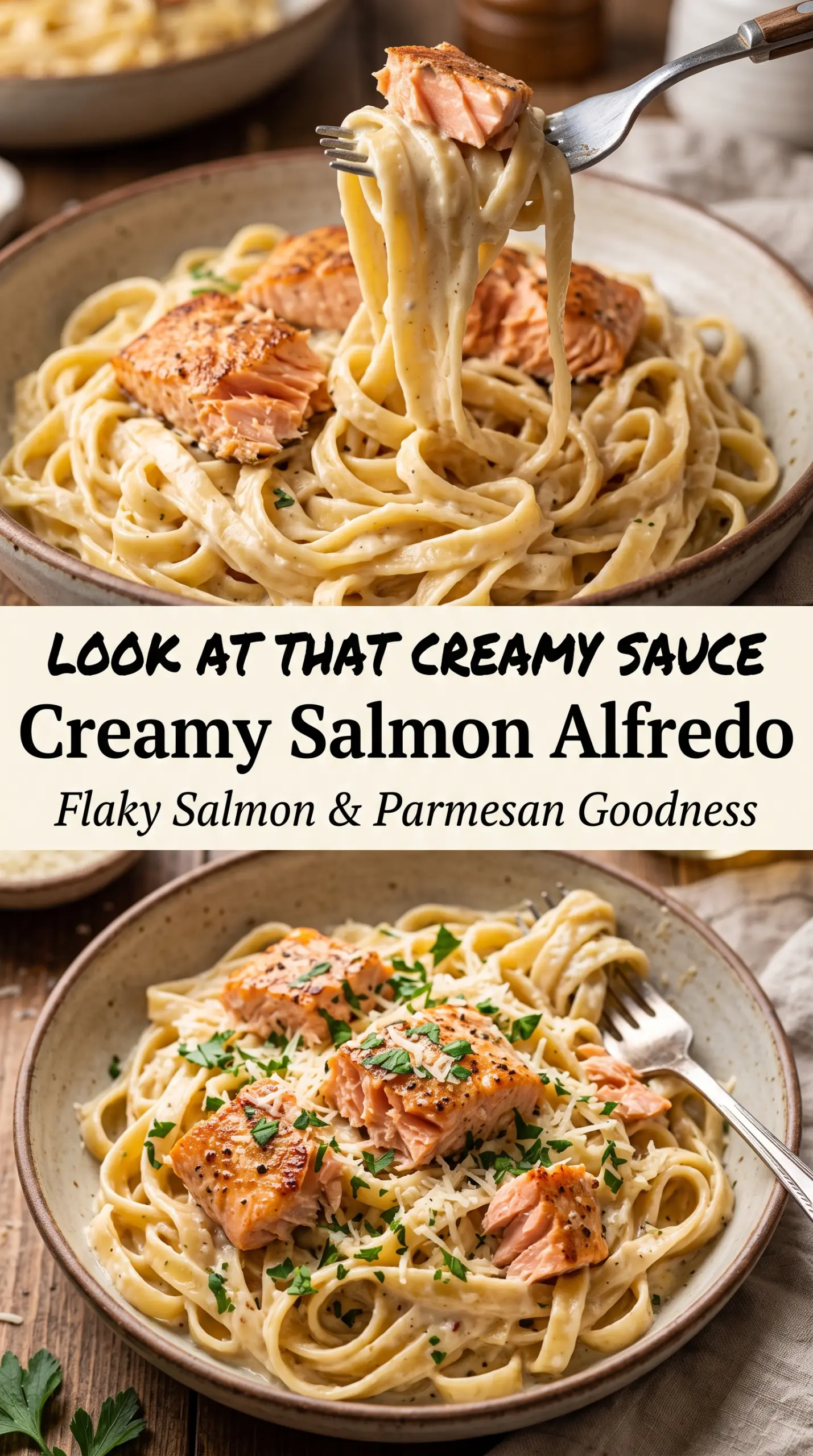
- Salmon fillets — Use fillets that are similar in thickness so they cook at the same pace. Fresh or thawed frozen salmon both work, but if the fish is very wet, pat it dry well or you’ll steam the surface instead of getting a good sear.
- Freshly grated Parmesan — This is the difference between a velvety sauce and one that feels sandy. Pre-grated cheese often has anti-caking starches that fight smooth melting, so grate it yourself if you want the sauce to coat the pasta cleanly.
- Heavy cream — It gives the sauce the body Alfredo needs without reducing for ages. Half-and-half can work in a pinch, but the sauce will be thinner and more delicate, so you’ll need a gentler simmer and a little extra patience.
- Fettuccine — The wide noodles catch the sauce better than thin pasta. If you swap in linguine or spaghetti, the dish will still work, but the sauce won’t cling with the same richness.
- Pasta water — The starch in it helps loosen the sauce without watering it down. Add it a splash at a time if the pasta looks tight or the sauce starts to seize after the Parmesan goes in.
Building the Salmon and Sauce in the Right Order
Seasoning and Searing the Salmon
Pat the salmon dry, then coat it with the paprika, garlic powder, onion powder, salt, and pepper. When it hits the hot oil, it should sizzle immediately; if it just sits there, the pan isn’t ready and the fish won’t brown properly. Cook it until the edges look opaque and the flesh releases easily from the pan, then flip once. If it sticks, give it another half minute — forcing it early tears the crust.
Using the Same Skillet for the Sauce
Take the salmon out and leave the browned bits in the pan. Melt the butter, stir in the garlic for about 30 seconds, then pour in the cream and Italian seasoning. Keep the heat low enough that the cream trembles at the edges instead of boiling hard. That gentle heat is what keeps the sauce stable and gives the Parmesan time to melt evenly.
Bringing the Pasta and Fish Together
Whisk in the Parmesan gradually until the sauce turns glossy and smooth, then add the drained pasta. Toss until every ribbon is coated, adding a little reserved pasta water if the sauce feels too tight. Fold in the salmon pieces at the very end so they stay in chunks. Finish with parsley and more Parmesan while the sauce is still hot so the cheese melts lightly over the top.
Three Ways to Adapt Creamy Salmon Alfredo Without Losing the Point
Dairy-Free Version With a Softer Sauce
Use a full-fat unsweetened oat cream or cashew cream in place of heavy cream, then finish with a dairy-free Parmesan-style alternative. The sauce won’t have the exact same sharpness or silkiness, but it still clings well if you keep the heat low and add the cheese alternative gradually.
Lighter Pasta With the Same Salmon
Swap the fettuccine for zucchini noodles or steamed broccoli if you want to cut the starch without losing the salmon-and-Alfredo contrast. Just keep the sauce a little thicker before tossing, since vegetables release moisture and thin it out faster than pasta does.
Making It With Chicken Instead of Salmon
Boneless chicken cutlets work well if you want a more familiar Alfredo-style dinner. Cook them through before building the sauce, then slice and fold them in just like the salmon. You lose the buttery richness that salmon brings, but you gain a milder dish that still stands up to the Parmesan.
Storage and Reheating
- Refrigerator: Store leftovers in an airtight container for up to 3 days. The sauce will thicken as it chills, and the salmon may firm up a little.
- Freezer: Freezing isn’t ideal. Cream sauces can split after thawing, and the pasta softens enough to lose its bite.
- Reheating: Warm gently on the stovetop over low heat with a splash of cream or milk. High heat is the mistake here — it pushes the sauce toward separation and dries out the salmon fast.
Answers to the Questions Worth Asking
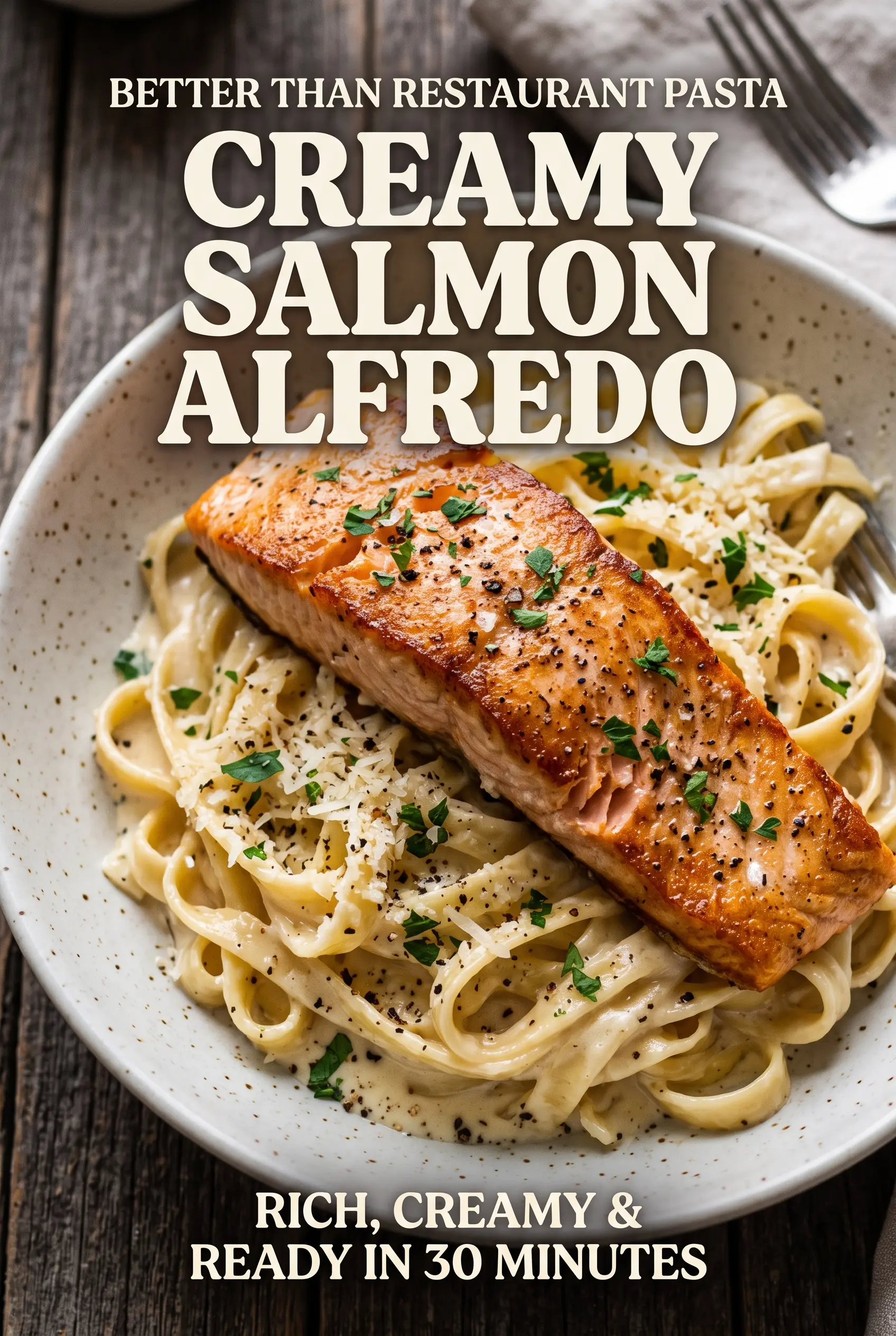
Creamy Salmon Alfredo
Ingredients
Equipment
Method
- Cook the fettuccine according to package directions in boiling water until al dente, then drain and reserve 1/2 cup pasta water.
- Season the salmon fillets with paprika, garlic powder, onion powder, salt, and black pepper until evenly coated.
- Heat the olive oil in a large skillet over medium-high heat until shimmering.
- Cook the salmon for 4–5 minutes per side over medium-high heat until flaky, then remove and break into large pieces.
- Melt the butter in the same skillet and sauté the minced garlic for about 30 seconds over medium heat until fragrant.
- Stir in the heavy cream and Italian seasoning, then simmer for 2–3 minutes over medium heat until slightly thickened.
- Gradually whisk in the Parmesan cheese until smooth and fully melted, with no grainy bits.
- Add the cooked fettuccine to the sauce and toss until evenly coated, loosening with reserved pasta water as needed.
- Fold in the salmon pieces carefully so they stay large and flaky, then heat through briefly.
- Garnish with chopped parsley and extra Parmesan before serving.