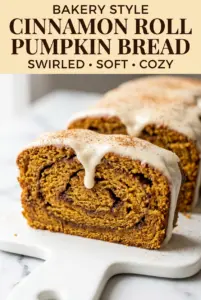
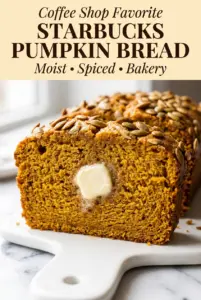
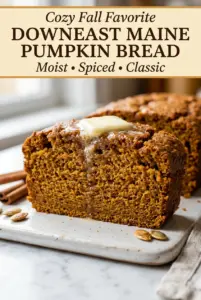
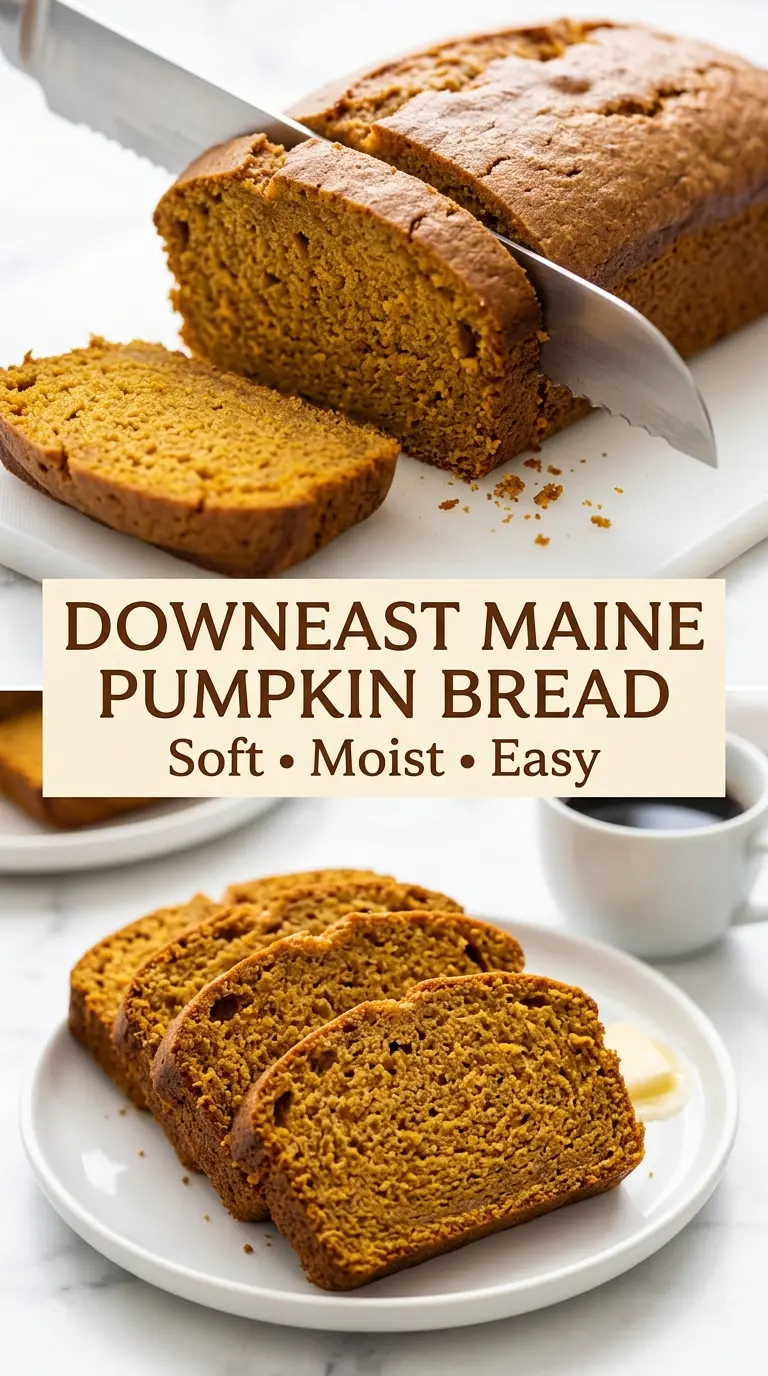
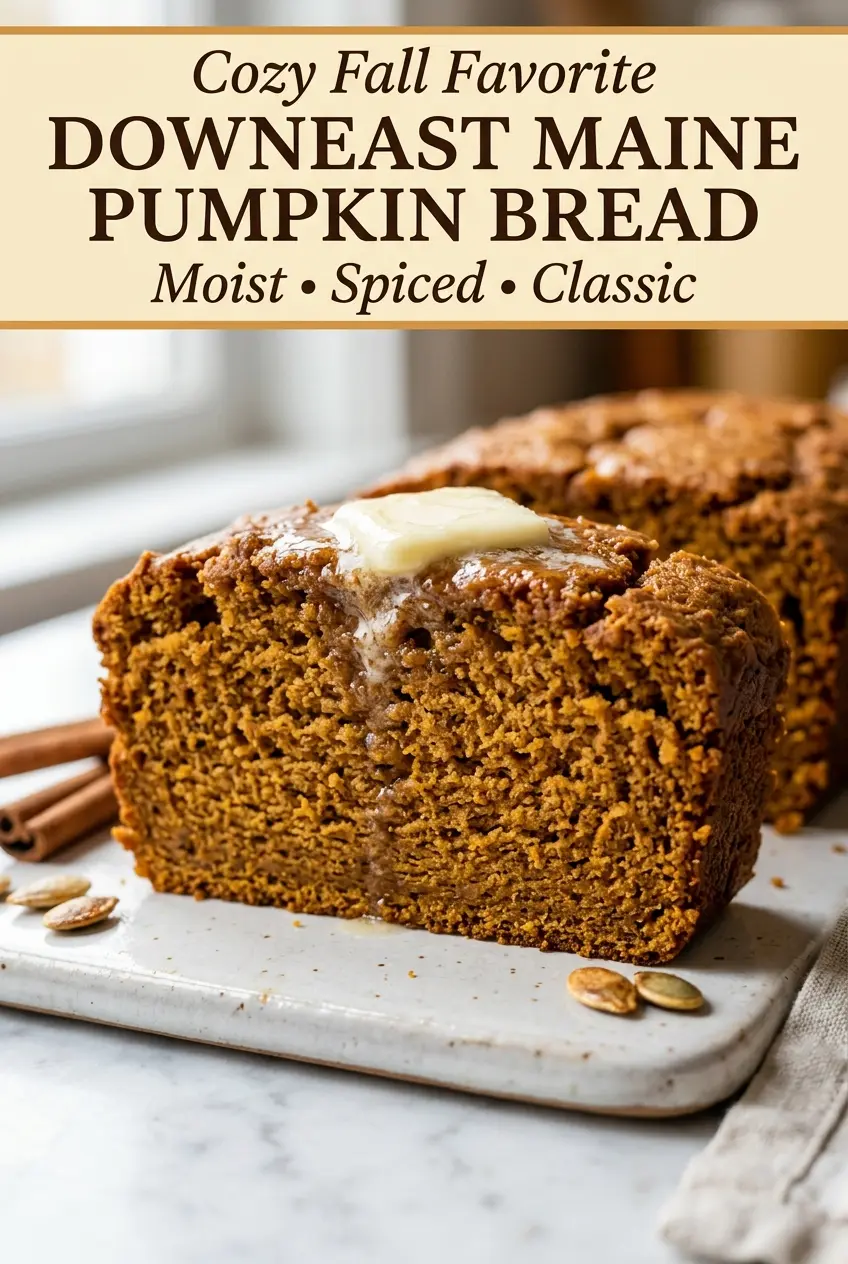
Downeast Maine Pumpkin Bread comes out with a tight, tender crumb, a deep pumpkin color, and that old-fashioned spice warmth that makes the kitchen smell like you’ve been baking all afternoon. The loaf stays moist for days without turning heavy, which is what makes it the kind of quick bread people keep coming back to slice after slice. A thin sugary top and a little crunch from pumpkin seeds give it just enough contrast to keep every bite interesting.
What makes this version work is the balance. Pumpkin purée brings moisture and body, but applesauce keeps the loaf soft without making it greasy. The spice blend leans classic — cinnamon, nutmeg, cloves, and pumpkin pie spice — so the pumpkin flavor still comes through instead of getting buried under sweetener. The batter also uses both granulated sugar and brown sugar, which gives the loaf a clean sweetness plus a hint of molasses depth.
Below, I’m walking through the part that matters most: how to mix the batter just enough, how to tell when the loaf is actually done, and how to keep that rich texture intact for days after baking.
The crumb stayed so soft and moist for days, and the top got that little crackly sugar crust I was hoping for. I baked it for 58 minutes and it came out perfect with just a few moist crumbs on the tester.
Save this Downeast Maine Pumpkin Bread for the days when you want a soft, spiced loaf with a crackly top and no mixer.
The Trick to Keeping Pumpkin Bread Moist Without Making It Dense
Pumpkin bread fails most often in one of two ways: it bakes up dry, or it turns gummy in the center. The fix here is balance, not extra pumpkin. Pumpkin purée adds moisture, but too much of it can weigh the loaf down, so the applesauce carries some of that softness without flooding the batter.
The other trap is overmixing. Once the flour goes in, stop as soon as the dry streaks disappear. If you beat the batter smooth, you’ll build too much gluten and end up with a loaf that slices neatly but eats like it’s been compressed. A few lumps are fine. A streak of flour is not.
What Each Ingredient Is Actually Doing in This Loaf
- Pumpkin purée — This is the backbone of the bread. It brings moisture, color, and that earthy pumpkin flavor. Use plain pumpkin purée, not pumpkin pie filling, or the loaf will come out overly sweet and spiced in the wrong way.
- Applesauce — This keeps the crumb soft and tender without needing extra fat. Unsweetened applesauce works best. If you don’t have it, mashed banana can replace it, but the loaf will taste different and the pumpkin flavor won’t stay as clean.
- Oil — Oil gives this bread its long-lasting moisture better than butter does. Butter adds flavor, but it firms up as it cools. If you want a dairy-free loaf, keep the oil exactly as written.
- Brown sugar — This adds depth and helps the bread stay soft. The molasses note works especially well with the spices. You can use all granulated sugar in a pinch, but the loaf will taste a little flatter.
- Warm spices — Cinnamon, nutmeg, cloves, and pumpkin pie spice layer the flavor so it tastes like a proper spiced loaf, not just sweet pumpkin bread. Fresh spices matter here because old spices go dusty fast, especially cloves and nutmeg.
Mixing, Baking, and Knowing When to Pull the Loaf
Whisk the Dry Ingredients First
Start by whisking the flour, baking soda, baking powder, salt, and spices together until the color looks even. That step keeps the leavening and spice from clumping in one spot, which is how you end up with bitter pockets or uneven rise. The batter depends on the dry mix being fully distributed before it ever meets the wet ingredients.
Build the Wet Base Until It Looks Smooth
Whisk the eggs and sugars until the mixture loosens and looks glossy, then add the pumpkin, oil, applesauce, and vanilla. It should look thick but fluid, with no streaks of egg or oil floating on top. If the batter looks separated, keep whisking for a few more seconds; once the dry ingredients go in, that cohesion matters.
Fold, Don’t Beat
Add the dry ingredients in stages and fold with a spatula just until the flour disappears. The batter will be thick, and that’s normal. Overmixing is the fastest way to lose the tender crumb this bread is known for, so stop as soon as you don’t see dry patches at the bottom of the bowl.
Watch the Center, Not the Clock Alone
Bake the loaf until a toothpick inserted in the center comes out clean or with a few moist crumbs. The top should be set and lightly cracked, and the loaf should spring back when you press the center gently. If the top browns too quickly before the center is done, tent it loosely with foil for the last part of baking.
How to Adapt This for Different Kitchens and Diets
Dairy-Free as Written
This loaf is naturally dairy-free if you use unsweetened applesauce and plain oil. That means you don’t need any special swaps, and the texture stays soft instead of turning firm from butter. It’s one of the easiest quick breads to serve to a mixed crowd without changing a thing.
Make It a Little Less Sweet
Cut the granulated sugar back by 1/4 cup if you want a loaf that leans more breakfast than dessert. The bread will still be moist and flavorful, but the spices and pumpkin come forward a little more. Don’t reduce the brown sugar too much or you’ll lose some of the soft texture.
Add Nuts or Chocolate Without Ruining the Crumb
Fold in up to 3/4 cup chopped walnuts, pecans, or chocolate chips at the very end. Toss them with a spoonful of flour first so they don’t sink to the bottom. Walnuts keep the loaf classic, while chocolate makes it read more like a snack cake.
Storage and Reheating
- Refrigerator: Store wrapped or in an airtight container for up to 4 days. The crumb may feel a little firmer straight from the fridge.
- Freezer: Freeze the whole loaf or individual slices tightly wrapped for up to 3 months. Thaw at room temperature while still wrapped so condensation doesn’t make the crust soggy.
- Reheating: Warm slices in a toaster oven or microwave just until the crumb loosens. Overheating dries out the edges fast, so use short bursts if you’re warming it from chilled.
Answers to the Questions Worth Asking
Downeast Maine Pumpkin Bread
Ingredients
Equipment
Method
- Preheat the oven to 350°F. Grease and line a 9×5-inch loaf pan with parchment paper.
- Whisk together the flour, baking soda, baking powder, cinnamon, pumpkin pie spice, nutmeg, cloves, and salt in a medium bowl.
- Whisk the eggs, granulated sugar, and brown sugar until smooth in a large mixing bowl. Add the pumpkin purée, vegetable oil, applesauce, and vanilla extract, then mix until fully combined.
- Gradually fold the dry ingredients into the wet ingredients until no dry streaks remain, taking care not to overmix.
- Pour the batter into the prepared loaf pan and smooth the top. Sprinkle with pumpkin seeds and coarse sugar if using.
- Bake for 55–65 minutes at 350°F, until a toothpick inserted into the center comes out clean or with a few moist crumbs attached.
- Cool the bread in the pan for 15 minutes, then transfer to a wire rack to cool completely before slicing.
- Store tightly wrapped at room temperature for up to 4 days, or freeze for up to 3 months.