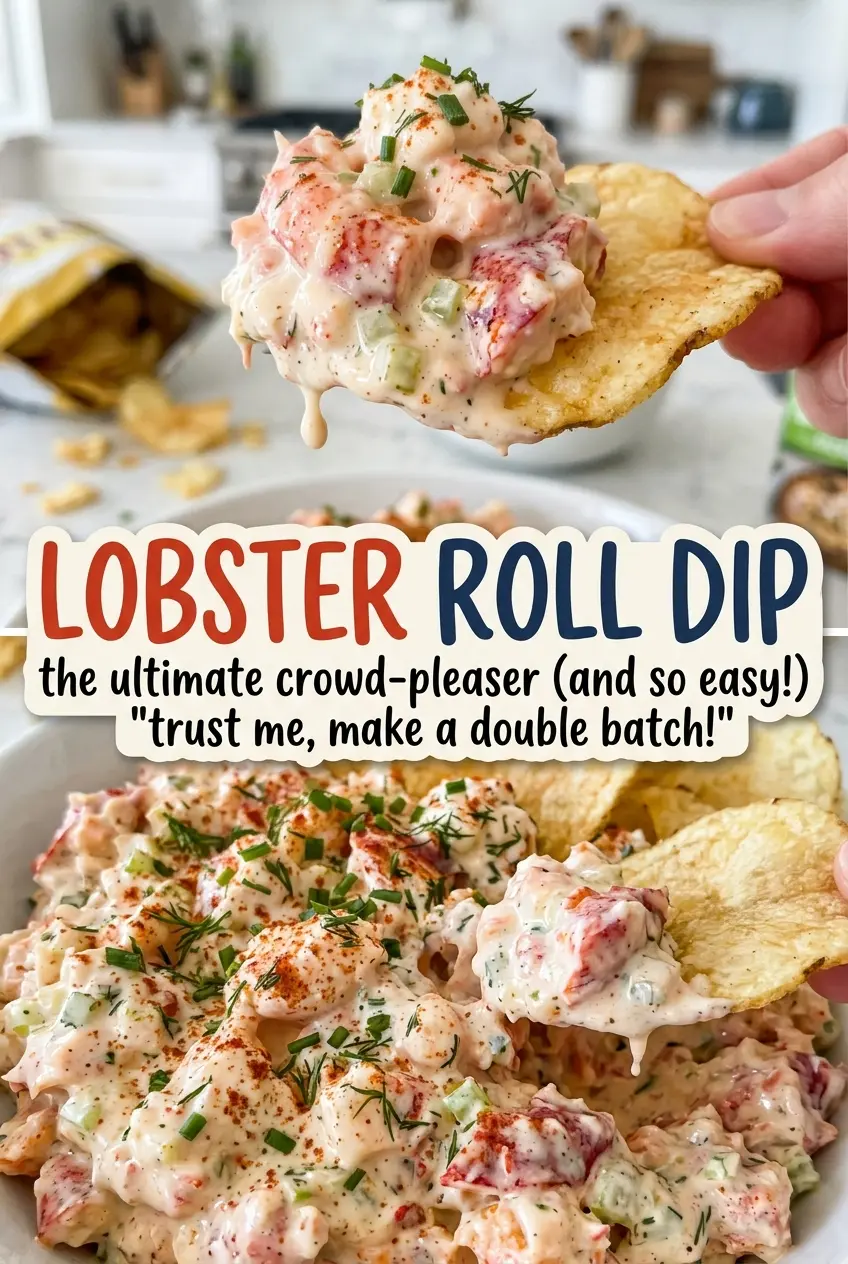
At the oven door, the dip may be bubbling around the edges while the middle still looks quiet. That edge-to-center lag is normal with a thick, cream-cheese-based bake, and it’s why I pay attention to the center rather than judging by the surface alone. Lobster roll dip brings the bright, creamy character of a lobster roll to the table in a warm scoop, with buttery toasted bun strips ready to catch every bit.
I soften the cream cheese before mixing and beat it until smooth before adding anything else. That gives the lemon, Old Bay, and other seasonings a lump-free base to blend into, while the lobster goes in later so it keeps its distinct pieces. The celery adds a crisp little bite against the warm, rich dip, and chives keep each scoop fresh-tasting. Serve it while it’s warm, with the toasts piled alongside.
Kitchen Note
Turn the bun strips once halfway through baking so both cut sides get a chance to toast. Pull them when they’re golden and crisp; pale strips soften quickly once they’re dipped.
Save this warm lobster roll dip for a gathering when you want creamy seafood dip with crisp, buttery bun toasts.
Why the Lobster Should Stay in Pieces, Not Disappear Into the Base
A lobster roll is recognizable because you get a real bite of lobster, not just a seafood-flavored sauce. That same distinction matters here. If the lobster gets stirred aggressively into the cream cheese mixture, the pieces break down and the dip loses the contrast between its smooth base and its seafood center.
I mix the creamy ingredients first, then fold in the lobster with the celery and chives. The lobster pieces should stay visible and coated, not mashed into the bowl. Cutting them into even, bite-size pieces helps every scoop hold together without making the seafood disappear. The result still feels like a dip, but it has the generous, chunky character that makes lobster roll flavors worth serving warm.
That texture also helps the toasted buns do their job. A scoop has enough creamy base to cling to a strip, with lobster and celery in the same bite. There’s no need to beat the seafood into the mixture; reserve the beating for the cream cheese before the additions go in.
What Gives This Dip Its Lobster-Roll Character
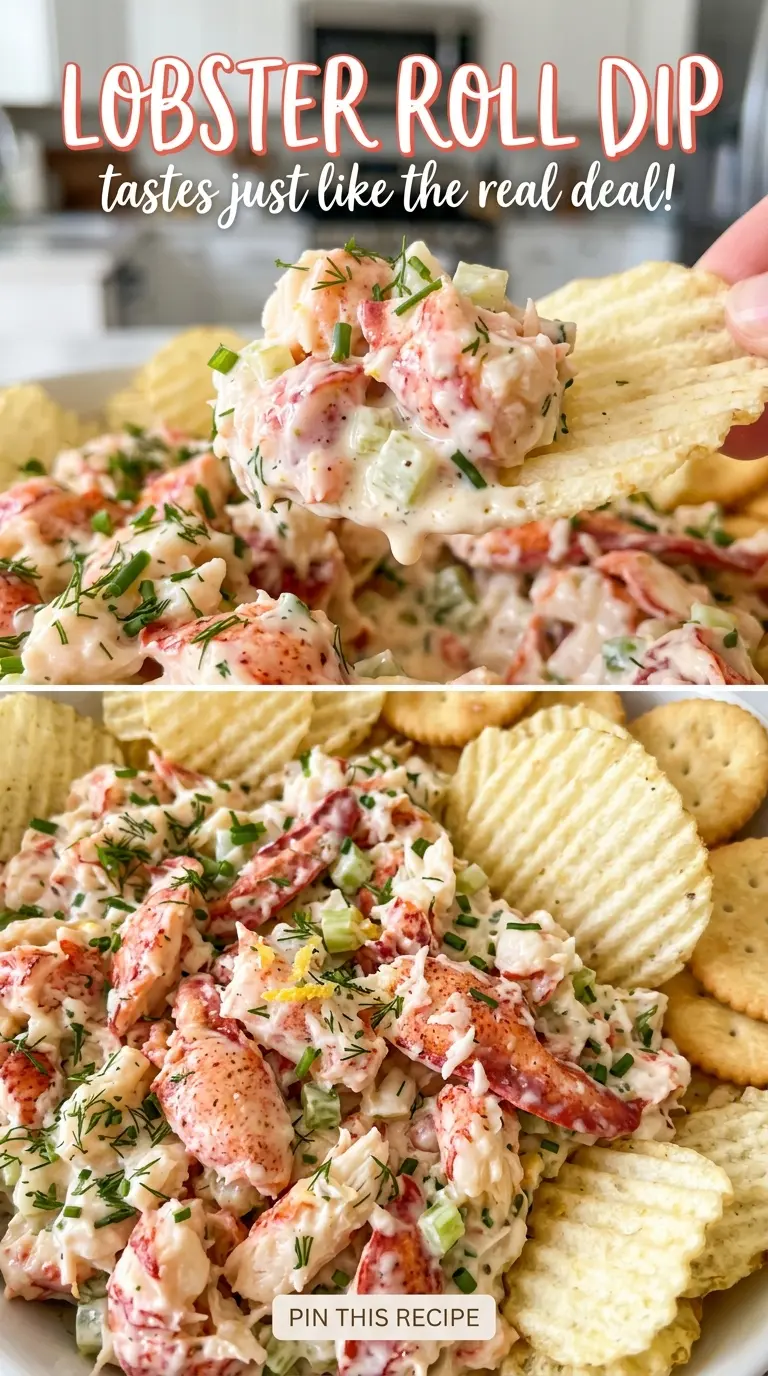
- Cooked lobster meat — This is the centerpiece, so choose good-quality cooked meat with a clean, fresh smell and no shell fragments. Keep the pieces substantial enough to notice; a less expensive mix of lobster cuts works well because everything is folded into the creamy base.
- Cream cheese — It gives the dip its body and helps it hold together as it bakes. Use regular cream cheese softened at room temperature; whipped cream cheese has a lighter, airier texture that won’t give the same dense base.
- Mayonnaise and sour cream — Together, they loosen the cream cheese and add the familiar tang of a lobster roll dressing. The mayonnaise brings richness, while sour cream keeps the mixture from tasting too heavy.
- Lemon juice and zest — The juice brings acidity, and the finely grated zest gives the dip a brighter citrus aroma. Fresh zest is worth using because juice alone won’t contribute that fragrant lemon note.
- Old Bay and black pepper — Old Bay gives the mixture its recognizable savory seafood seasoning, while black pepper adds a mild bite. Keep the Old Bay evenly mixed through the base so one scoop doesn’t carry all the seasoning.
- Celery and chives — Finely diced celery brings a crisp texture; fresh chives add a gentle onion note without taking over. Cut the celery small enough to distribute through the dip rather than leaving large, watery chunks.
- Split-top hot dog buns — Their shape makes sturdy strips that are easy to brush with butter and dip. Unsalted butter lets the bread toast without adding a competing salty note.
How to Toast the Buns and Bake the Dip Without Losing the Texture
Toast the Cut Sides Until Crisp
Set a rack in the center of the oven and preheat to 375°F. Arrange the bun strips on a rimmed baking sheet, then brush the cut sides with melted butter. Bake for 8–10 minutes, turning once halfway through, until golden and crisp. Keep an eye on the color near the end; the strips should be toasted, not dark at the edges.
Beat a Smooth, Even Base
In a large bowl, beat the softened cream cheese until it looks smooth, with no firm lumps around the sides. Stir in the mayonnaise, sour cream, lemon juice, lemon zest, Old Bay, and black pepper until the mixture is evenly blended. Scrape the sides of the bowl as you stir so the seasoning doesn’t stay in a concentrated streak. A smooth base now makes it easier to coat the lobster evenly later.
Fold in the Lobster and Celery
Add the lobster, celery, and chives to the bowl. Fold gently until the creamy mixture coats the pieces throughout, stopping once everything is distributed. If you keep stirring after that point, the lobster can break into smaller shreds. Transfer the mixture to a 1 1/2-quart baking dish and smooth the top without pressing it down firmly.
Bake Until the Center Is Hot, Then Rest
Bake at 375°F for 25–30 minutes, until the edges are bubbling and the center reaches 165°F. The edges may bubble first, so check the center rather than pulling the dish as soon as you see activity around the sides. Let the dip rest for 5 minutes before serving; it will settle slightly and be easier to scoop. Bring it to the table warm with the crisp bun strips.
Two Simple Ways to Adapt Lobster Roll Dip
Make It Gluten-Free With Gluten-Free Hot Dog Buns
Use gluten-free hot dog buns in place of the split-top buns, then cut them into strips and brush the cut sides with the melted butter as usual. The dip itself stays the same; gluten-free bread can be more fragile, so turn the strips carefully and watch their color as they toast.
Swap the Lobster for Cooked Crab
Replace the lobster with an equal amount of cooked crab meat, checking it for shell before folding it in. Crab has a softer, flakier texture, so fold gently and expect less distinct chunks in the finished dip. The lemon, celery, chives, and Old Bay still suit the seafood well.
Storage and Reheating
- Refrigerator: Refrigerate leftovers within 2 hours and keep them covered; use within 3 days. The dip firms up when cold.
- Freezer: I don’t recommend freezing it. The cream cheese base can turn grainy or separate, and the lobster can lose its pleasant texture.
- Reheating: Warm the dip, covered loosely with foil, in a 375°F oven until hot throughout. Reheat only the portion you plan to serve, and keep the bun toasts separate so they don’t soften.
Questions About Making Lobster Roll Dip
Lobster Roll Dip
Ingredients
Equipment
Method
- Preheat the oven to 375°F with a rack in the center.
- Arrange the bun strips on a rimmed baking sheet and brush the cut sides with melted butter. Bake for 8–10 minutes, turning once halfway through, until golden and crisp.
- In a large bowl, beat the cream cheese until smooth, then stir in the mayonnaise, sour cream, lemon juice, lemon zest, Old Bay, and black pepper.
- Fold in the lobster, celery, and chives until evenly coated.
- Spoon the mixture into a 1 1/2-quart baking dish and bake at 375°F for 25–30 minutes, until bubbling at the edges and 165°F in the center.
- Rest the dip for 5 minutes.
- Serve warm with the toasted buns.