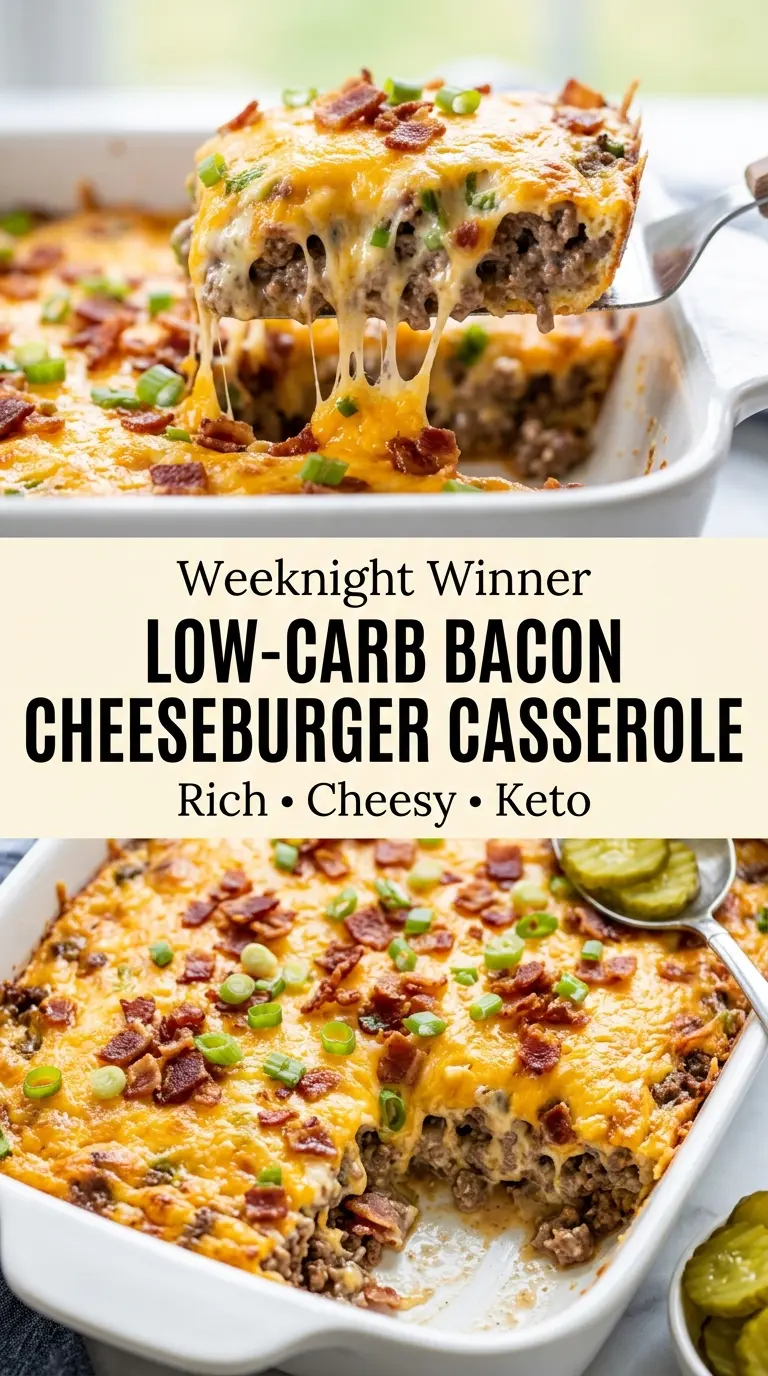
Low-carb bacon cheeseburger casserole hits the table with all the salty, beefy, cheesy comfort of a diner burger, just without the bun to get in the way. The best versions hold together in clean squares, stay creamy in the middle, and still taste like something you’d happily eat straight from the pan. This one does that by leaning on a rich egg-and-cream bake instead of trying to mimic a loaf or a mashed-up skillet mess.
The key is building the beef layer like a proper burger filling before the casserole goes in the oven. Browning the meat first gives you those deeper savory bits, and the cream cheese melts into the seasoned beef so the whole base stays juicy instead of dry and crumbly. The bacon adds smoky crunch, while the eggs and heavy cream set into a custardy binder that makes each slice feel complete.
Below, you’ll find the small details that matter here, from how to keep the eggs from turning rubbery to the best way to use pickles and mustard without throwing off the texture. There are also a few smart swaps if you want to make it dairy-free, pack it for meal prep, or stretch it for a bigger crowd.
The casserole set up beautifully and sliced clean after a short rest. The bacon stayed crisp on top, and the pickle bits gave it that real cheeseburger taste my husband kept talking about.
Love the cheesy, bacon-packed layers in this low-carb bacon cheeseburger casserole? Save it to Pinterest for the nights when you want burger flavor without the bun.
The Reason This Casserole Slices Clean Instead of Turning Soupy
The mistake with cheeseburger casseroles is treating them like a skillet dinner and forgetting they need structure. If the beef mixture goes into the pan too wet, the eggs can’t set properly and you’ll end up with a loose, greasy middle instead of neat squares. Cooking the onion down before it meets the baking dish matters too, because raw onion can release moisture and keep the casserole from tightening up in the oven.
The other thing that helps here is the cream cheese. It doesn’t just add richness; it helps the beef layer cling together so the casserole isn’t all separate crumbles once it’s baked. The eggs and cream then act like a binder, and that only works if the pan rests long enough after baking for the center to firm up.
- Ground beef — Lean beef works best because too much fat can pool at the bottom of the dish. If your beef is on the fattier side, drain it well before adding the cream cheese.
- Cream cheese — This is what gives the base that burger-dip richness and helps the filling hold together. Soften it first or it will stay in little lumps.
- Eggs and heavy cream — These set the casserole into a sliceable bake. Half-and-half can work in a pinch, but the finished texture will be a little less custardy.
- Sharp cheddar — Sharp cheddar carries the cheeseburger flavor better than mild cheese. Pre-shredded is fine here, though freshly shredded melts a touch smoother.
- Bacon and pickles — The bacon adds the smoky, salty bite, and the pickles wake up the whole dish. If you skip the pickles, add a little extra mustard at serving so it still tastes like a burger.
Building the Burger Layer Before the Eggs Go In
Browning the Beef Properly
Cook the beef until it has real color, not just until the pink disappears. That browned fond is what gives the casserole its burger depth. If there is a lot of liquid in the pan, keep cooking until it evaporates before you add the seasonings, or the filling will taste flat.
Letting the Onion and Garlic Melt Into the Meat
Add the onion after the beef has started to brown so it softens without steaming the meat. The garlic goes in at the end of that stage because it burns fast and turns bitter. You want the onion sweet and translucent, not crunchy, since it has to disappear into the final slice.
Turning the Filling Creamy Before Baking
Stir the cream cheese into the hot beef until it melts completely and coats everything in a glossy layer. That is the point where the filling stops looking loose and starts looking like it belongs in a casserole dish. Spread it evenly in the pan, then add the bacon and cheese so every bite gets the same balance.
Setting the Egg Custard Without Overbaking It
Whisk the eggs and heavy cream until there are no streaks left, then pour it evenly over the casserole so it sinks between the beef pockets. Bake until the center is just set and no longer sloshes when you move the pan. If the top browns before the middle sets, tent it loosely with foil for the last few minutes.
Three Ways to Adjust This Without Losing the Cheeseburger Feel
Dairy-Free Version That Still Tastes Rich
Use a dairy-free cream cheese, a plain unsweetened non-dairy cream, and a good melting dairy-free cheese blend. The texture will be a little less lush than the original, but the casserole still sets well if you keep the egg ratio the same. Choose a cheese that melts, not one that just sits there in shreds.
Keto-Friendly Serving Ideas
The base recipe is already low in carbs, so the main thing is keeping the toppings keto as well. Use mustard, chopped pickles, or a no-sugar ketchup instead of a sweet burger sauce. That keeps the flavor on track without adding hidden sugar.
Making It Ahead for Meal Prep
Bake it, cool it, and cut it into portions once it has fully rested. The flavor holds up well for lunches, and the texture stays best when you reheat individual pieces instead of the whole pan. Add fresh green onions after reheating so they stay bright.
Stretching It for a Bigger Pan
You can add another half pound of beef and one extra egg if you need a thicker, more filling casserole. Keep the cheese layers proportional so the top doesn’t get overloaded before the center sets. If you go bigger than a standard 9×13, watch the bake time closely because a deeper pan needs a few extra minutes.
Storage and Reheating
- Refrigerator: Store covered for up to 4 days. The eggs firm up a bit more in the fridge, but the casserole still reheats nicely.
- Freezer: It freezes well in individual portions. Wrap tightly and freeze for up to 2 months, then thaw in the fridge before reheating.
- Reheating: Warm slices in the oven at 325°F or in the microwave at medium power until heated through. High heat makes the eggs tough and can cause the cheese to separate.
Answers to the Questions Worth Asking
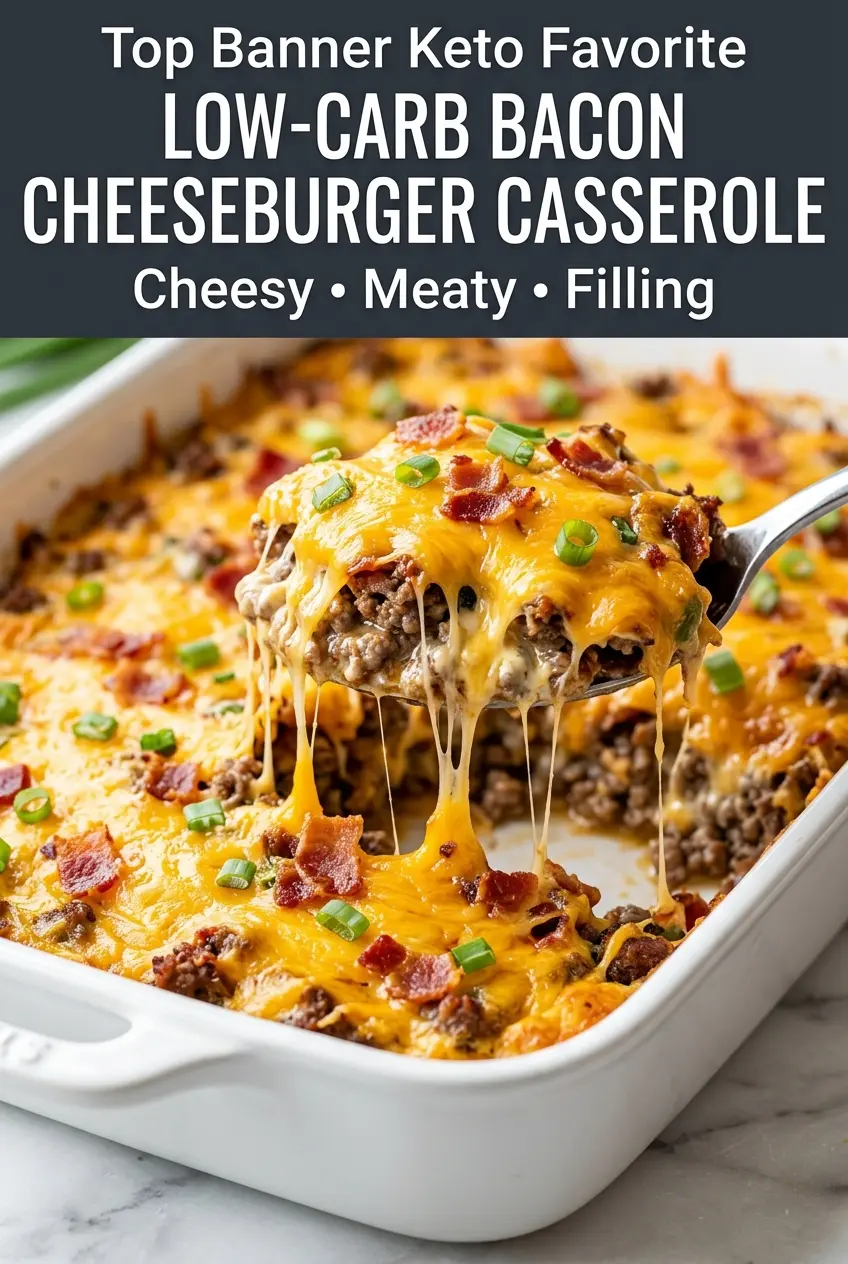
Low-Carb Bacon Cheeseburger Casserole
Ingredients
Equipment
Method
- Preheat the oven to 375°F, and lightly grease a 9×13-inch baking dish so the casserole releases cleanly.
- Heat the olive oil in a large skillet over medium-high heat, then add the ground beef and cook for 7–8 minutes, breaking it into crumbles until browned with no pink remaining.
- Add the diced onion and cook for 3–4 minutes until softened, then stir in the minced garlic and cook for 30 seconds until fragrant.
- Stir in the garlic powder, onion powder, smoked paprika, Worcestershire sauce, kosher salt, and black pepper, then mix in the cream cheese until melted and creamy with no lumps.
- Transfer the beef mixture to the prepared baking dish, then sprinkle in the cooked bacon, 1½ cups of the cheddar cheese, the mozzarella cheese, and the chopped dill pickles if using.
- Whisk together the eggs and heavy cream until smooth, then pour the mixture evenly over the casserole so it reaches the edges.
- Sprinkle the remaining ½ cup cheddar cheese over the top for a bubbly, lightly golden finish.
- Bake for 25–30 minutes until the eggs are set, the cheese is melted and bubbly, and the top is lightly golden.
- Let the casserole rest for 5–10 minutes so it slices neatly, then garnish with chopped green onions and serve with sugar-free ketchup, mustard, or dill pickle slices if desired.