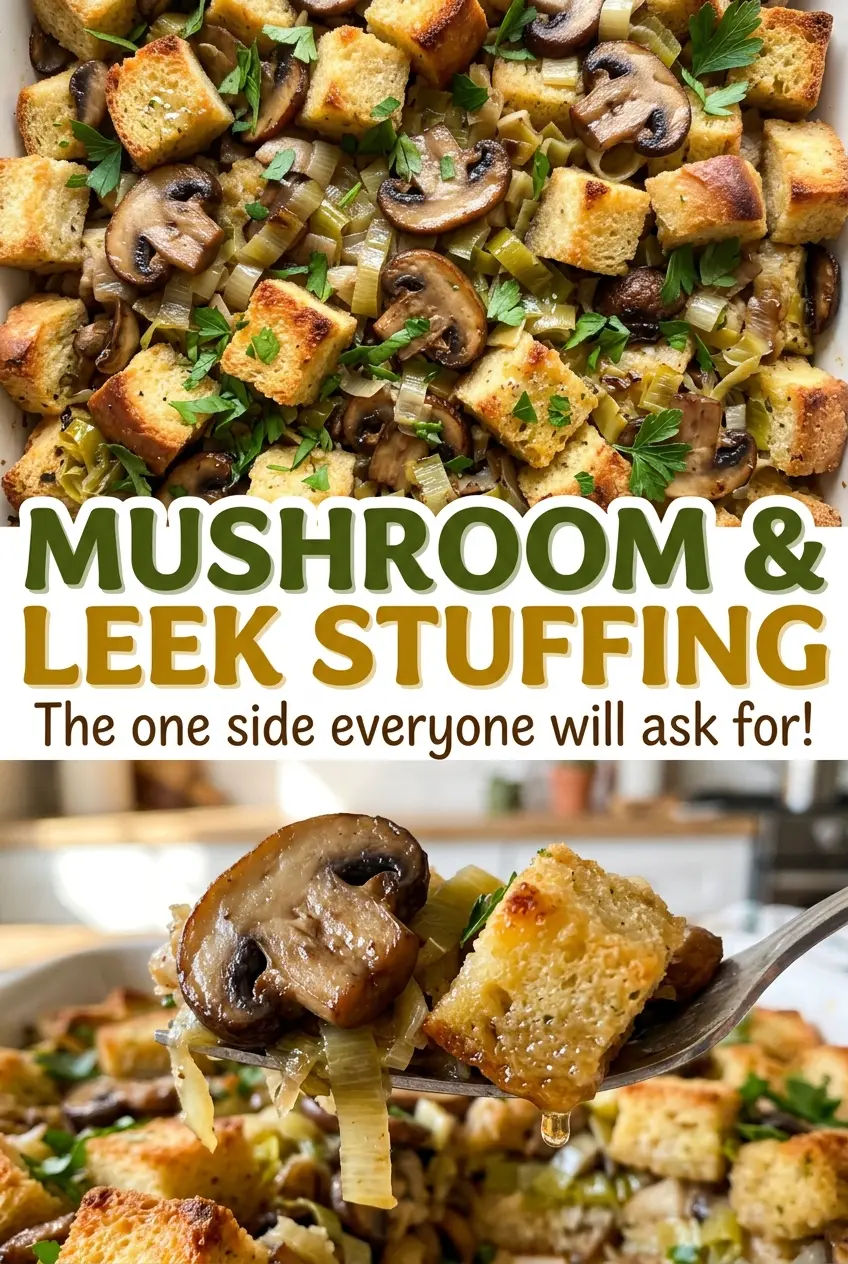
The bread cubes should be crisp before they meet the vegetables, not just a little stale. That dry surface gives the broth and eggs somewhere to go, so the finished stuffing holds together without turning dense. In this mushroom and leek stuffing, the bread stays soft in the middle while the top bakes up golden.
I like how the leeks soften into the butter while the mushrooms bring a deeper, earthy taste. The vegetables make a generous base, but they don’t take over; every forkful still has that familiar savory bread stuffing feel. It’s a good fit for a holiday table, and it’s just as welcome alongside a simple roast dinner.
Kitchen Note
Leeks can hide grit between their layers, even when they look clean. Slice them first, then rinse well and separate the pieces with your fingers so the sandy bits wash away before they reach the skillet.
Save this mushroom and leek stuffing for its buttery vegetables, tender bread center, and crisp golden top.
Why the Egg-and-Broth Mixture Goes on Last
It’s easy to think of the broth as something to pour over the bread and the eggs as a separate binder. Whisking them together first gives you a more even coating: the egg is distributed through the liquid before it reaches the bread, rather than landing in a few concentrated patches. That matters in a dish with lots of cubes and vegetables, because uneven pockets can bake up firmer than the rest.
The liquid needs to reach all the bread, but the mixture shouldn’t be mashed into a paste. Toss gently and give the cubes a moment to absorb what’s on them. A sturdy crusty loaf can take on the broth without collapsing, while the egg sets during baking and helps the stuffing hold its shape when you spoon it out. Think of the goal as evenly moistened cubes, not a puddle at the bottom of the bowl.
This balance is what makes the texture feel like stuffing rather than a savory bread pudding. If a few cubes sit above the vegetables, turn them through the mixture instead of pressing them down hard; keeping the bread intact gives the finished dish a better contrast between the tender center and browned top.
Why Crusty Bread and Low-Sodium Broth Matter Here
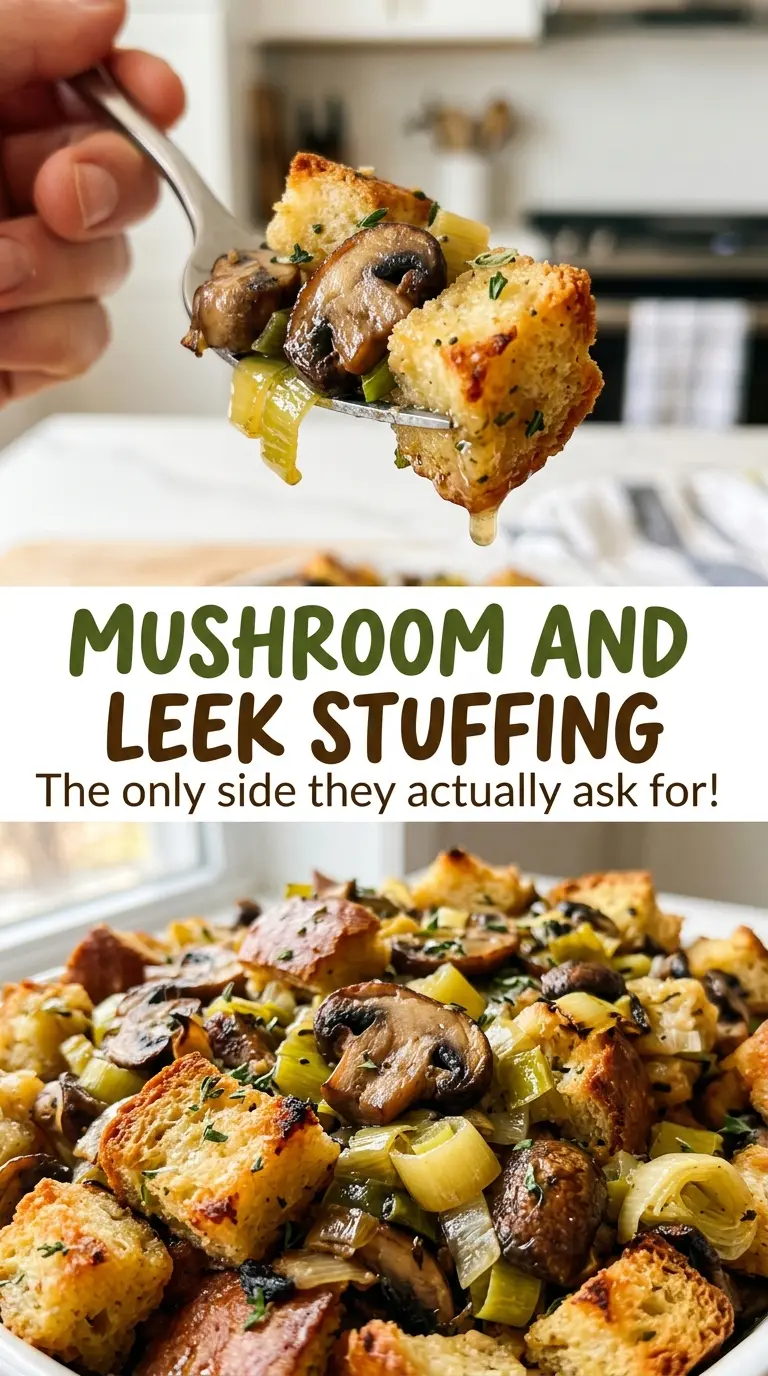
- Crusty bread — A firm crumb holds up better than soft sandwich bread once the broth goes in. A bakery loaf is fine; it doesn’t need to be fancy, but choose one with enough structure to cut into even cubes.
- Leeks — The white and light-green parts turn mellow and sweet as they soften in butter. Look for firm leeks with crisp leaves; the darker green tops are tougher and aren’t used here.
- Cremini mushrooms — Their earthy flavor gives the stuffing a savory backbone. Fresh, firm mushrooms are the priority, but there’s no need to seek out a specialty variety.
- Unsalted butter — It carries the vegetables’ flavor and gives the bread a rich, rounded taste. Unsalted butter also leaves the seasoning easier to control than salted butter.
- Celery, garlic, thyme, and sage — Celery adds a little savory crunch before baking, while garlic and dried herbs season the buttery vegetable mixture. Dried thyme and sage are handy here because they distribute easily through the skillet.
- Vegetable broth and eggs — Low-sodium broth moistens the bread without overwhelming the seasoning, and the eggs help the baked mixture set. If you use a higher-sodium broth, expect a saltier result.
From Crisp Bread Cubes to a Golden Stuffing
Dry the Bread Until the Centers Feel Crisp
Heat the oven to 300°F and spread the bread cubes on a rimmed baking sheet. Bake for 25–35 minutes, tossing once, until the cubes are dry and crisp. They should feel firm rather than squishy when you press one. Keep the pieces in an even layer so they dry at the same pace.
Soften the Leeks and Celery in Butter
Increase the oven temperature to 350°F and grease a 9×13-inch baking dish with 1 tablespoon of butter. Melt the remaining 7 tablespoons in a 12-inch skillet over medium heat, then add the leeks and celery. Cook for 6–8 minutes, stirring occasionally, until both are softened; if the leeks begin to brown quickly, lower the heat slightly so they soften without scorching.
Cook Away the Mushroom Liquid
Add the sliced mushrooms and cook for 7–9 minutes, stirring occasionally, until softened and their released liquid has mostly evaporated. The mushrooms should look tender, and the skillet shouldn’t have a pool of liquid underneath them. Stir in the garlic, thyme, sage, salt, and pepper, then cook for 1 minute to bring the seasonings together.
Coat the Bread Without Crushing It
Transfer the toasted bread to a large bowl and add the cooked vegetables, tossing to combine. In a medium bowl, whisk the vegetable broth and eggs together, pour the mixture over the bread, and toss until evenly moistened. Use a broad spoon or your hands and turn the cubes gently; pressing them into the bowl makes it harder to keep their shape.
Bake Covered, Then Let the Top Brown
Transfer the mixture to the prepared dish and cover it tightly with foil. Bake for 30 minutes, then uncover and bake for 20–25 minutes, until the top is golden and the center reaches at least 160°F. Rest the stuffing for 10 minutes before serving so it settles enough to scoop neatly.
Simple Ways to Adapt This Mushroom and Leek Stuffing
Make It Gluten-Free
Use a 16-ounce gluten-free crusty loaf in place of the regular bread. Keep the cubes around the same size and judge the toasting by their dry, crisp texture, since gluten-free loaves vary in how quickly they dry. The stuffing keeps its vegetable-and-herb character, though the bread’s crumb may be a little more delicate.
Make It Dairy-Free
Replace the butter with a solid dairy-free butter-style spread, using the same total amount and dividing it between greasing the dish and cooking the vegetables. The result will still be rich and savory, though it may have a slightly less buttery taste than the original.
Make a Leek-and-Celery Version
Leave out the mushrooms for a milder, less earthy stuffing that lets the leeks come forward. Cook the leeks and celery until softened, then continue with the garlic and dried herbs. With less vegetable moisture in the skillet, the flavor will be lighter and more straightforward.
Storage and Reheating
- Refrigerator: Refrigerate leftovers within 2 hours and keep them for 3–4 days. The crisp top will soften as the stuffing sits.
- Freezer: Freeze cooled portions in an airtight container for up to 3 months for best quality. Thaw in the refrigerator before reheating.
- Reheating: Warm covered in a 350°F oven until the center reaches 165°F, then uncover near the end if you want to bring back some crispness. Reheating uncovered from the start can dry the bread before the middle is hot.
Questions That Come Up When Making This Stuffing
Mushroom and Leek Stuffing
Ingredients
Equipment
Method
- Heat the oven to 300°F and spread the bread cubes on a rimmed baking sheet.
- Bake the bread cubes for 25–35 minutes, tossing once, until dry and crisp.
- Increase the oven temperature to 350°F and grease a 9x13-inch baking dish with 1 tablespoon of the butter.
- Melt the remaining 7 tablespoons butter in a 12-inch skillet over medium heat.
- Add the leeks and celery and cook for 6–8 minutes, stirring occasionally, until softened.
- Add the mushrooms and cook for 7–9 minutes, stirring occasionally, until softened and their released liquid has mostly evaporated.
- Stir in the garlic, thyme, sage, salt, and pepper and cook for 1 minute.
- Transfer the toasted bread to a large bowl and add the cooked vegetables, tossing to combine.
- Whisk the vegetable broth and eggs in a medium bowl.
- Pour the broth and egg mixture over the bread mixture and toss until evenly moistened.
- Transfer the mixture to the prepared baking dish, cover tightly with foil, and bake for 30 minutes.
- Uncover and bake for 20–25 minutes, until golden on top and at least 160°F in the center.
- Rest the stuffing for 10 minutes before serving.