Oven baked salmon in foil comes out with the kind of texture people hope for but don’t always get: flaky, moist, and tender all the way through without drying out at the edges. The foil packet acts like a gentle steam chamber, so the fish cooks in its own buttery juices with garlic and lemon working their way into every bite. It’s one of those dinners that looks polished on the plate and still leaves you with barely any dishes to wash.
The trick is keeping the packet sealed and not overbaking the fish. Salmon doesn’t need a long time in the oven, and once it goes past that just-cooked point, the texture turns chalky fast. A little lemon juice, a handful of garlic, and a few pats of butter are enough here because the foil traps everything that would normally drip away in a roasting pan.
Below, you’ll find the timing that keeps the salmon moist, the ingredient choices that matter most, and a few easy ways to adapt it when you want something a little different.
The salmon stayed so moist in the foil packet, and the lemon butter pooled at the bottom was perfect spooned over rice. I pulled it at 16 minutes and it flaked beautifully without falling apart.
Save this oven baked salmon in foil for a fast lemon-garlic dinner with flaky fish and almost no cleanup.
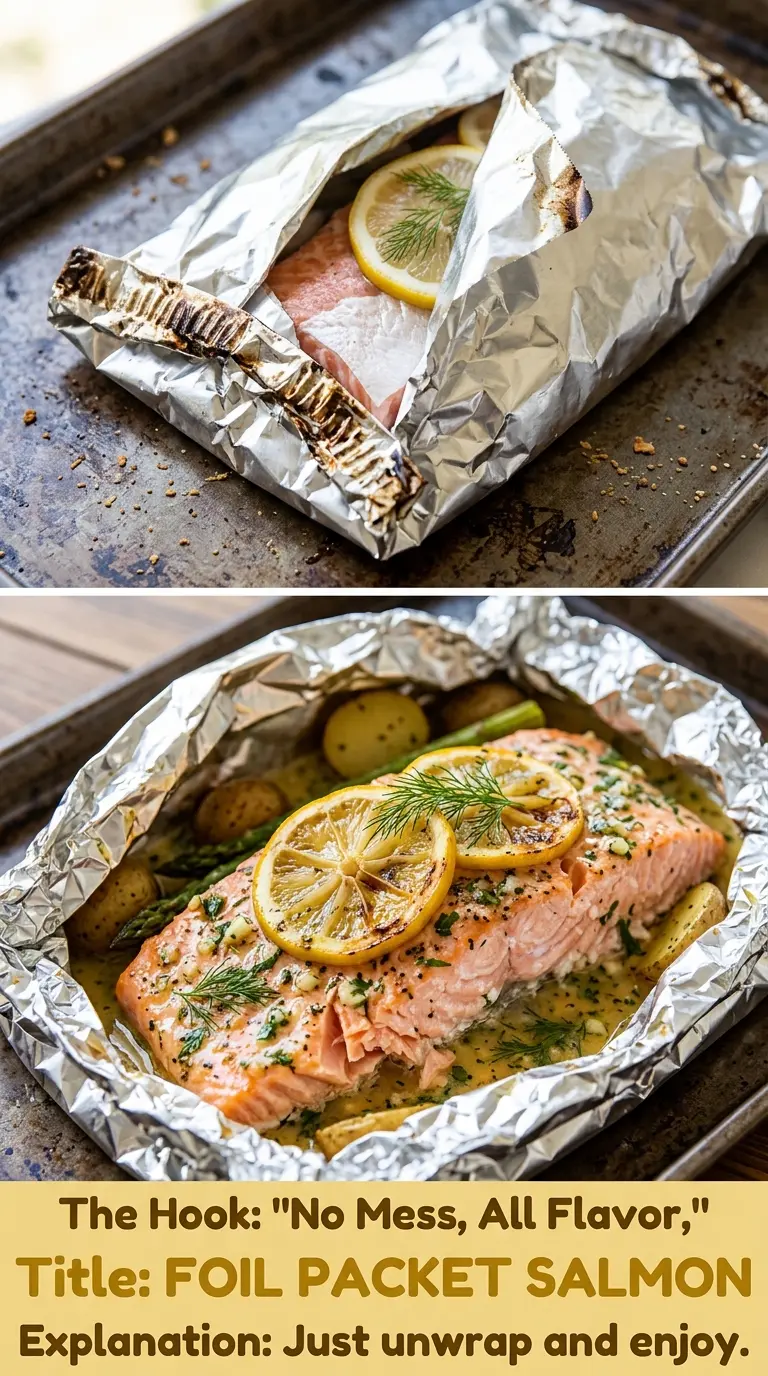
The Reason Foil-Baked Salmon Stays Moist Instead of Drying Out
Salmon dries out when it gets too much direct heat for too long. Foil changes that by trapping steam and butter around the fillets, which keeps the surface from overcooking before the center is done. That gentle environment matters even more if you’re using thinner fillets, because they can go from perfect to dry in a narrow window.
The other thing this method fixes is flavor loss. In an open pan, the garlic, lemon, and butter tend to slide off and caramelize on the tray. In foil, those pan juices stay with the fish, so every spoonful has the same bright, savory finish.
- Skin-on salmon — The skin helps protect the flesh from direct heat and makes the fillets easier to lift out of the foil after baking. Skinless salmon works too, but it’s a little less forgiving.
- Butter — This carries the garlic and lemon and adds richness to the pan juices. Olive oil can work in a pinch, but you’ll lose some of that lush finish.
- Lemon juice and slices — The juice seasons the fish throughout, while the slices perfume the packet as it bakes. Fresh lemon matters here; bottled juice tastes flatter and harsher.
- Dill — Dried dill is fine if that’s what you have, but fresh dill gives the salmon a cleaner, brighter edge. If you swap in another herb, use parsley or tarragon rather than anything woody.
- Garlic — Mince it finely so it softens in the butter instead of staying sharp and raw. Garlic powder won’t give the same texture in the sauce, though it can stand in if that’s what’s available.
How to Seal the Packet So the Salmon Steams, Not Boils
Setting Up the Foil
Lay the foil out wide enough that you can fold it over the fish with room to spare on all sides. The packet needs space for steam to circulate, but it also has to be sealed tightly enough that the butter and lemon don’t leak out. If the foil tears easily, double it before you add the salmon.
Seasoning and Layering
Place the salmon skin-side down in the center and season it before adding the butter mixture. The salt and dill should touch the fish directly, not just sit in the sauce on top. Lay the lemon slices over the fillets after the butter goes on so they can perfume the salmon without blocking the seasonings underneath.
Watching the Bake Time
Bake at 400°F for 15 to 18 minutes, depending on thickness. The fish is done when it flakes at the thickest part and still looks moist in the center, not dry or chalky. If your fillets are especially thin, start checking at 12 minutes, because a few extra minutes is all it takes to lose that tender texture.
Opening the Packet Safely
Let the salmon rest for 2 minutes before opening the foil, then crack it open slowly because the steam is hot. Spoon the buttery pan juices over the top right before serving. That last step matters because those juices are where the garlic, lemon, and dill settle after baking.
How to Adapt the Lemon-Garlic Salmon for Different Meals
Dairy-Free Version
Swap the butter for olive oil or melted dairy-free butter. The salmon will still steam beautifully, but you’ll get a lighter pan sauce with less richness and a cleaner finish from the lemon.
Herb Swap for a Different Finish
Use fresh dill, parsley, chives, or tarragon instead of dried dill if you want a brighter herb note. Dill leans classic with salmon, while parsley keeps it fresher and tarragon adds a slightly sweeter edge.
Lower-Carb Dinner Plate
Serve the salmon with roasted asparagus, green beans, or cauliflower rice instead of potatoes or bread. The foil packet already gives you a built-in sauce, so the meal stays satisfying without needing a starchy side.
Make It Spicy
Add the red pepper flakes listed in the recipe or increase them slightly if you want more heat. The spice blooms in the butter as the salmon bakes, so the heat feels rounded rather than sharp.
Storage and Reheating
- Refrigerator: Store leftovers in an airtight container for up to 3 days. The texture stays best when the salmon is cooled quickly and kept with a little of the pan juices.
- Freezer: You can freeze cooked salmon, but the texture softens a bit after thawing. Wrap it tightly and freeze for up to 1 month if you want to use it in salads, rice bowls, or pasta later.
- Reheating: Warm it gently in a covered skillet over low heat with a splash of water or extra lemon butter. High heat dries salmon out fast, so the goal is just to take the chill off, not cook it again.
Answers to the Questions Worth Asking
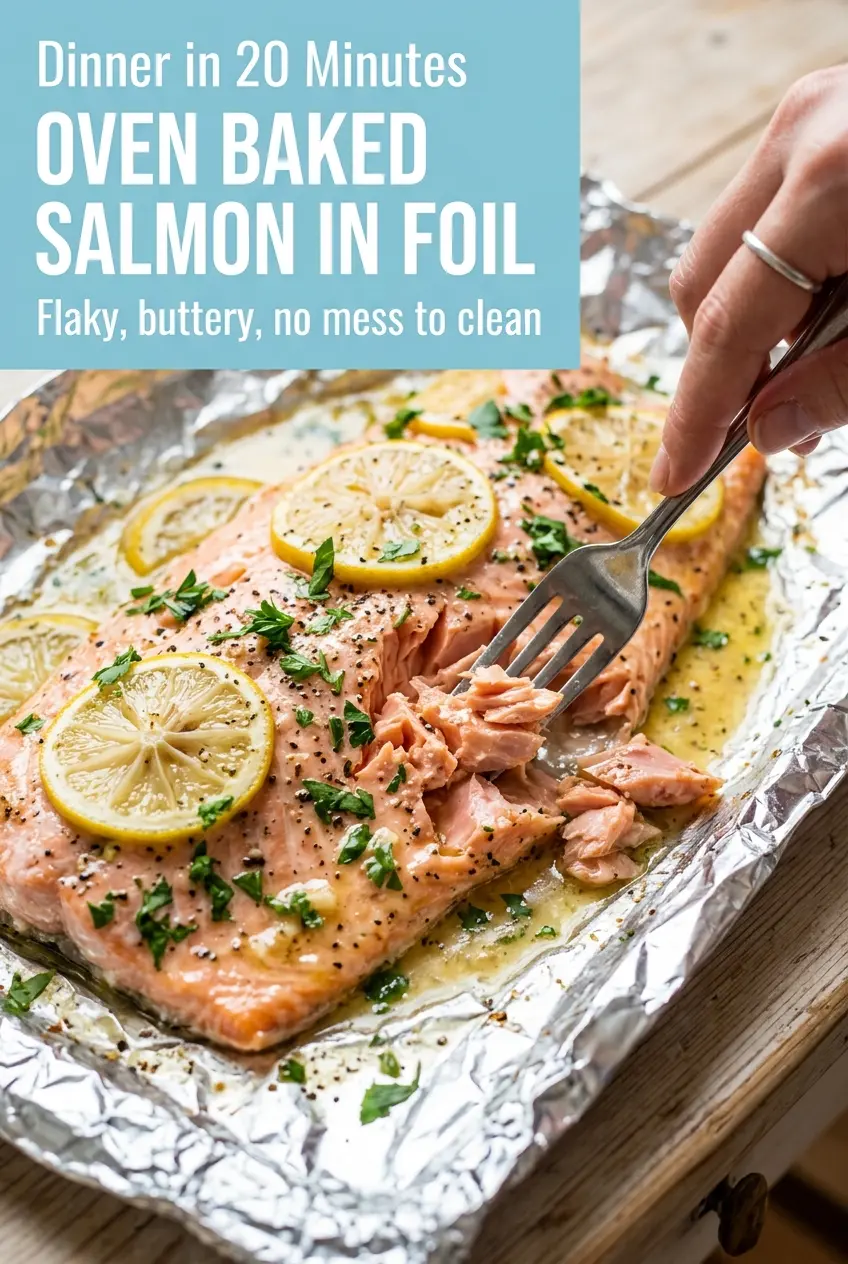
Oven Baked Salmon in Foil
Ingredients
Equipment
Method
- Preheat oven to 400°F. Lay out a large sheet of foil, big enough to fully enclose the salmon.
- Place salmon fillets skin-side down in the center of the foil. Season with kosher salt, black pepper, and dried dill.
- Whisk together melted unsalted butter, minced garlic, lemon juice, and red pepper flakes if using. Drizzle evenly over the salmon fillets.
- Lay lemon slices over each fillet. Arrange so the slices sit on top rather than sliding off.
- Fold the foil up and over the salmon, sealing the edges tightly to form a closed packet. Leave a little room for heat to circulate.
- Bake for 15–18 minutes at 400°F. Bake until the salmon flakes easily with a fork and reaches an internal temperature of 145°F.
- Carefully open the foil so steam escapes. Let rest for 2 minutes, then garnish with fresh parsley and serve with the pan juices spooned over top.