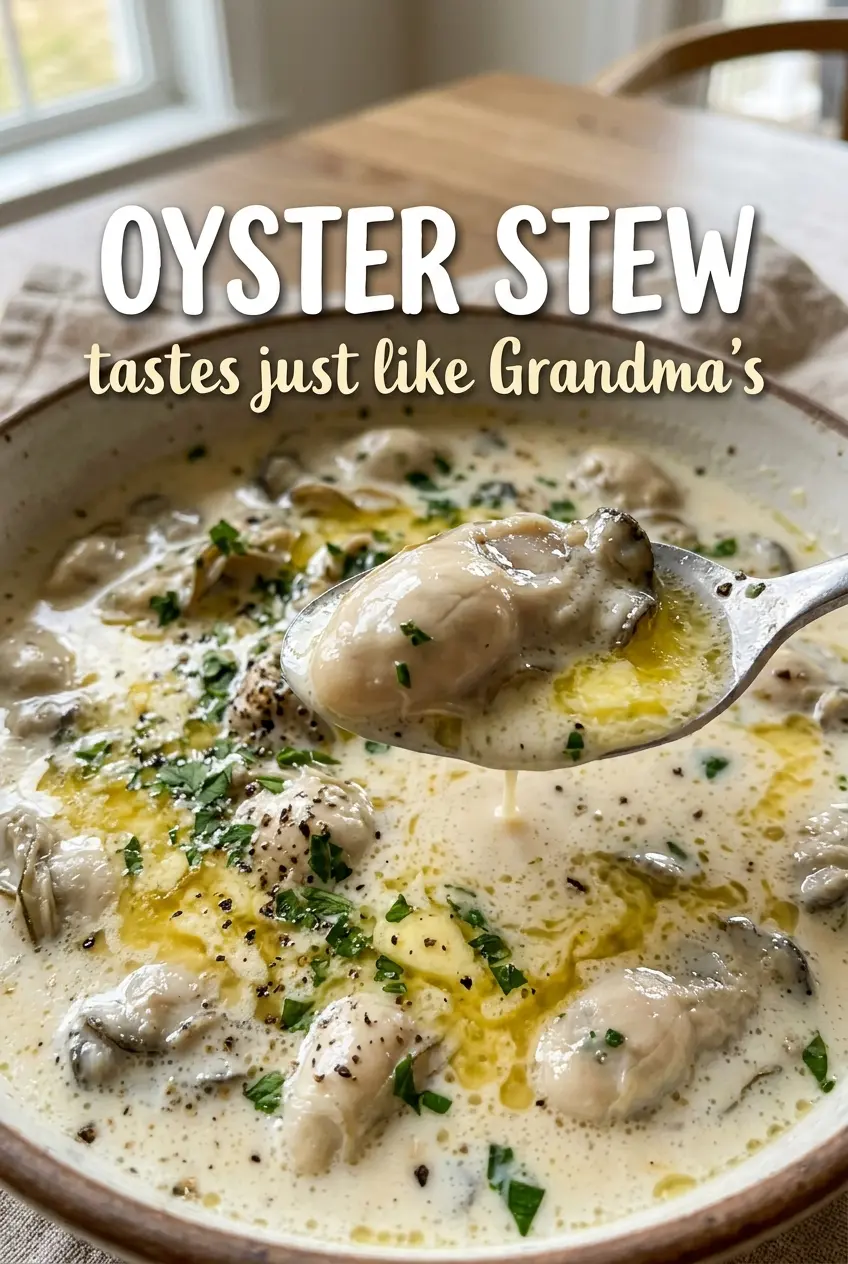
Milk should steam quietly in the saucepan, not bubble around the edges. That gentle heat is what keeps oyster stew smooth and gives the oysters a chance to cook without turning tough. I keep the milk warm in a bowl while the butter melts, then bring everything together for a short finish.
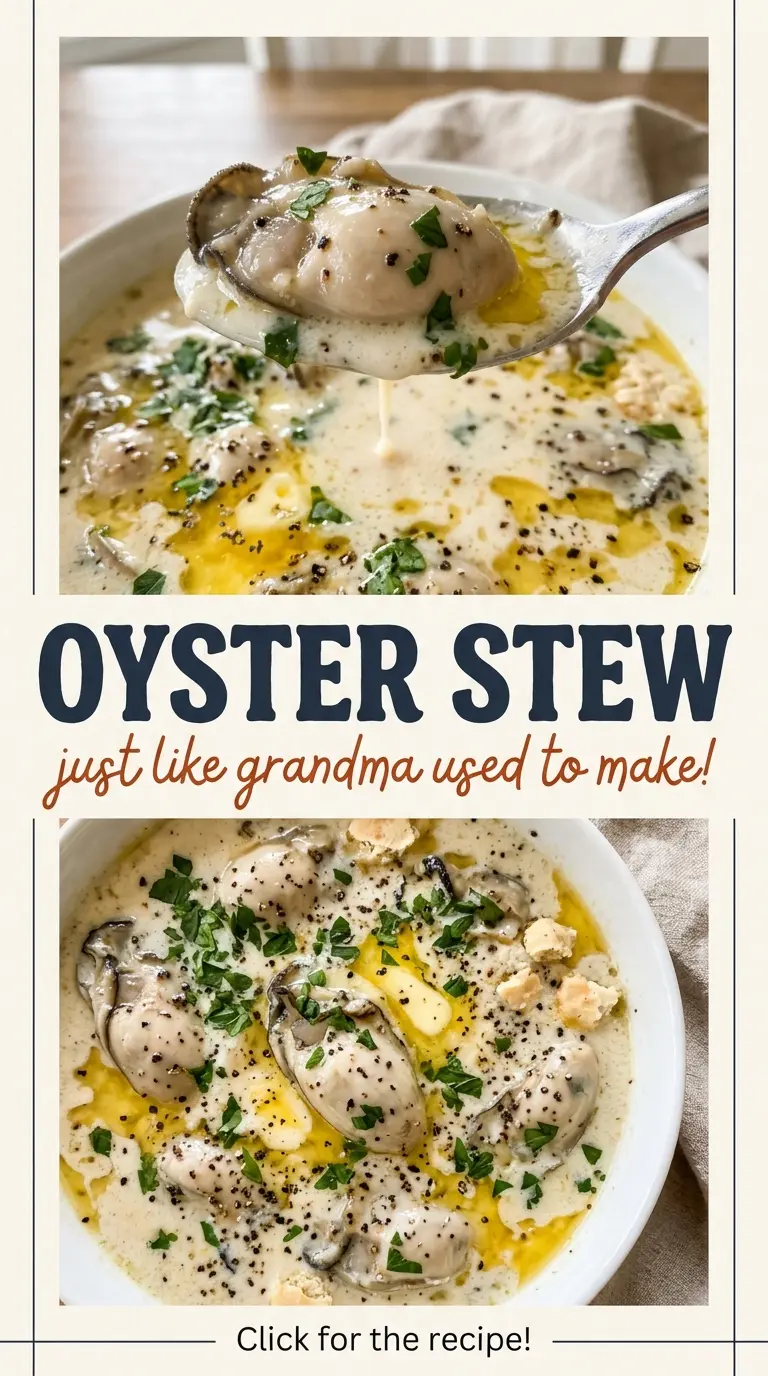
For this oyster stew, the oysters cook gently in their own liquor and butter before the warm milk goes back into the pan. The result is a light, savory broth with plump oysters rather than a thick chowder. A little black pepper brings the bowl into focus, and the whole pot comes together in one saucepan.
Kitchen Note
Stir the oysters with a light hand, not a whisk. You want to move them through the buttery liquor without breaking the tender pieces apart.
Save this oyster stew for a quiet supper: tender oysters in a warm, buttery milk broth.
Why Warm Milk Goes In After the Oysters
Oyster stew has a short cooking window, and the order of the ingredients helps you use it well. The milk warms on its own first, while the oysters cook in butter and their liquor. Once the oysters are opaque and curled, the warm milk can join them without cooling the pan sharply.
Starting with cold milk at that point would make the saucepan work back up to temperature. That means more time heating the oysters, which are delicate and can turn firm when they stay on the heat too long. Warming the milk separately also lets you keep the oyster stage gentle: medium-low heat, careful stirring, and enough time to check the largest oyster before moving on.
Keep the milk steaming rather than boiling at both stages. A rolling boil isn’t needed to bring the stew together, and it can make the milk taste cooked while the oysters lose their tender texture. The finished pot should be hot and giving off steam, with the oysters still distinct in the broth.
Why Whole Milk, Oyster Liquor, and Unsalted Butter Belong Together
- Whole milk — It gives this stew its soft, rounded body without a flour thickener. Use fresh milk and keep it below a boil; lower-fat milk makes a thinner broth, so whole milk gives the intended texture.
- Shucked oysters with their liquor — The liquor carries the oysters’ briny flavor into the butter and milk. Add both the oysters and the liquid from the container; draining it away would leave the broth less oyster-forward.
- Unsalted butter — Butter gives the oysters a gentle base to cook in, while the unsalted kind leaves the measured kosher salt in control. A fresh package matters more here than an expensive brand, since the butter’s flavor stays delicate.
- Kosher salt and black pepper — These season the milk broth without covering the oysters. Add them with the warm milk so they disperse through the full pot rather than sitting on the oysters alone.
Three Gentle Stages for Tender Oyster Stew
Warm the Milk Without Scalding It
Pour the whole milk into a 3-quart saucepan and warm it over medium-low heat for 4 to 6 minutes, stirring occasionally. Watch for steam rising from the surface; the milk shouldn’t boil or form a ring of active bubbles at the edge. Pour the steaming milk into a heatproof bowl, then use the same saucepan for the oysters. If you see bubbling, lower the heat rather than letting the milk simmer.
Cook the Oysters in Butter and Liquor
Melt the unsalted butter in the saucepan over medium-low heat, then add the shucked oysters and all their liquor. Cook gently for 3 to 5 minutes, stirring carefully so the pieces stay intact. They should turn opaque and develop curled edges; check the largest oyster, which needs to reach 145°F. If the oysters still look translucent, give them a little more time within the cooking range and check again.
Bring the Broth Together
Stir the warm milk back into the saucepan along with the kosher salt and black pepper. Heat gently for 1 to 2 minutes, just until steam rises from the surface. Don’t let the stew boil; a steady, quiet heat is all it needs at this point. Take it off the heat once the whole pot is steaming.
Small Changes That Keep the Stew’s Character
Choose whole oysters for plumper spoonfuls
A pint of whole shucked oysters gives the stew distinct, tender bites. If your container has chopped oysters, they’ll still work with the same quantity, but the pieces will be smaller and more of them will mingle into the broth; keep an eye on doneness because small pieces cook quickly.
Make the black pepper more fragrant
Use freshly ground black pepper in place of finely ground pepper, keeping the listed amount the same. The coarser grind gives you sharper little bursts of pepper in the mild milk broth. If you prefer an even seasoning throughout, finely ground pepper is the better fit.
Storage and Reheating
- Refrigerator: Cool leftovers promptly and refrigerate them in a covered container within 2 hours. Use within 3 to 4 days; the oysters may firm up after chilling.
- Freezer: Freeze in an airtight container for up to 2 to 3 months. The milk broth may separate or look grainy after thawing, so the texture won’t be quite as smooth.
- Reheating: Warm gently in a saucepan, stirring often, until the leftovers reach 165°F. Don’t let the stew boil or leave it simmering; prolonged heat can make the oysters rubbery.
Questions That Come Up With Oyster Stew
Oyster Stew
Ingredients
Equipment
Method
- Warm 4 cups whole milk in a 3-quart saucepan over medium-low heat for 4 to 6 minutes, stirring occasionally, until steaming but not boiling.
- Pour the warm milk into a heatproof bowl.
- Melt 2 tablespoons unsalted butter in the same saucepan over medium-low heat.
- Add 1 pint shucked oysters with their liquor and cook gently for 3 to 5 minutes, stirring carefully, until the oysters are opaque with curled edges and the largest oyster reaches 145°F.
- Stir in the warm milk, 1/4 teaspoon kosher salt, and 1/4 teaspoon black pepper, and heat gently for 1 to 2 minutes until steaming; do not let the stew boil.