The pastry starts lifting at the edges before the asparagus is ready, which is why the first few minutes in the oven can make these bundles look deceptive. I watch for the pastry to turn deep golden, then check a spear with a knife; a tender center matters as much as those crisp, flaky layers. That balance is what makes these prosciutto asparagus puff pastry bundles work as a warm appetizer without turning the asparagus limp.
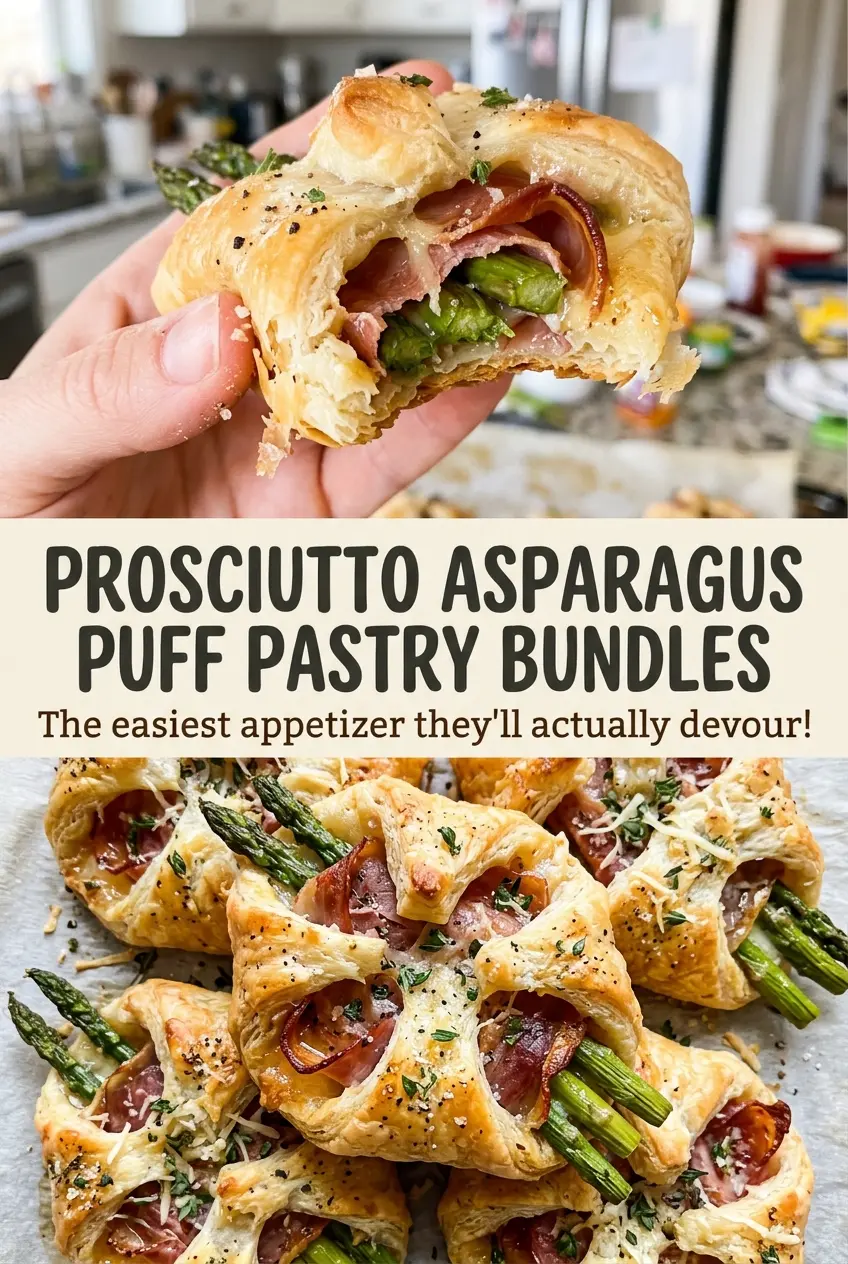
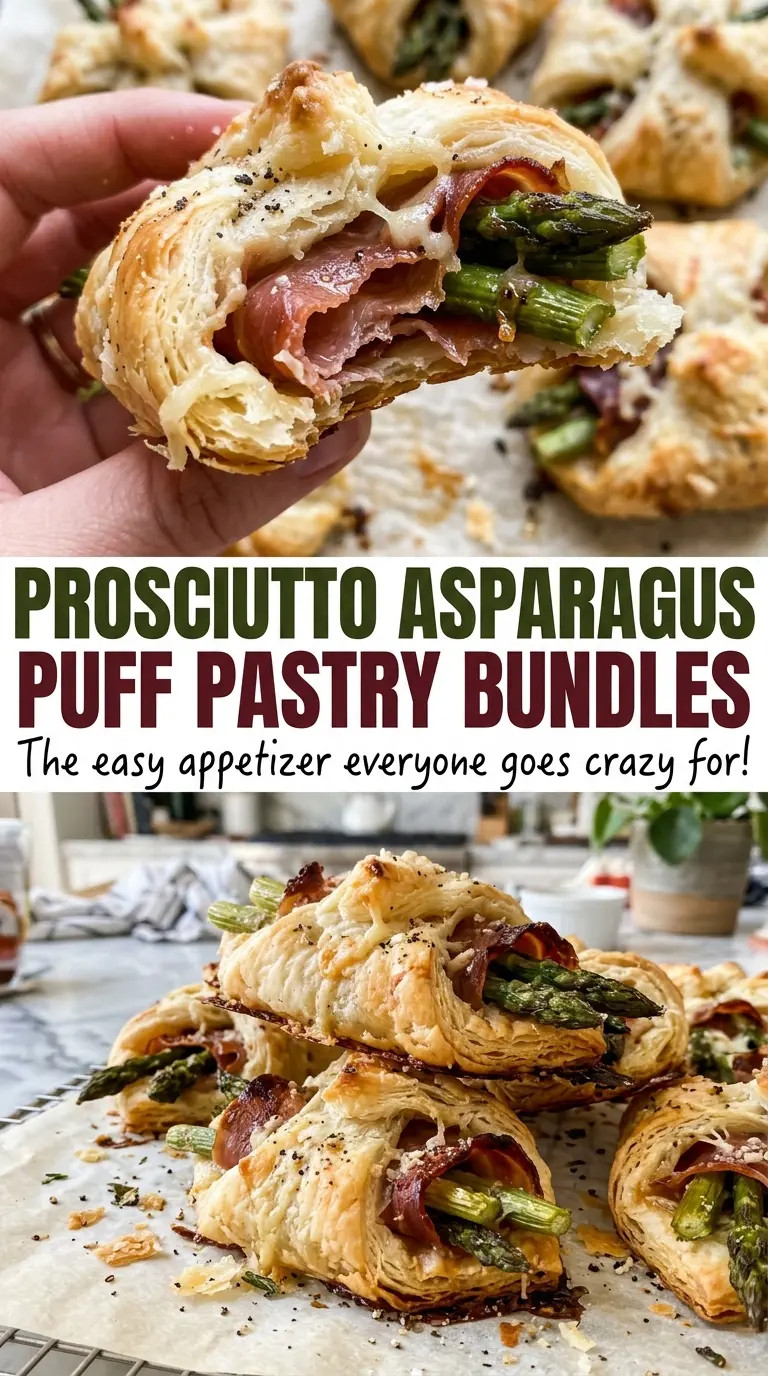
Each bundle has three medium asparagus spears, a band of prosciutto, and a loose spiral of pastry brushed with Dijon and Parmesan. The prosciutto brings savory richness, while the mustard and cheese sit inside the pastry instead of being left on the outside to brown too quickly. I like that every bundle feels substantial, but the asparagus tips and ends still show, so you can see what’s cooking rather than guessing through a sealed pastry shell.
They’re easiest to serve after a short pause on the baking sheet, when the pastry has settled enough to lift without coming apart. Expect a crisp, buttery outside, a tangy layer tucked inside, and asparagus that gives easily under the knife.
Kitchen Note
Give the bundles the full 5-minute rest on the baking sheet before lifting them. The pastry is fragile straight from the oven, and that brief pause helps each bundle hold together when you move it.
Save these prosciutto asparagus puff pastry bundles for a crisp, savory appetizer with tender asparagus and a tangy Dijon-Parmesan center.
Why These Bundles Need a Loose Spiral, Not a Pastry Cocoon
Puff pastry needs room to expand as it bakes. A tight wrap can press the layers together and leave you with a dense band instead of a flaky spiral. Wrapping the strip loosely lets the pastry puff while still holding the asparagus bundle in place. The seam-down position keeps the end from lifting as the layers rise.
The open ends matter, too. The asparagus isn’t hidden inside a sealed pastry packet, so heat can reach the spears while the pastry browns around them. Using medium spears and grouping three together gives each bundle a similar shape, which helps them cook at a similar pace. If the asparagus is much thicker in one bundle than another, don’t expect every spear to become tender at exactly the same moment.
There’s also a reason the Dijon and Parmesan go on the pastry before it’s wrapped. That layer stays protected from direct oven heat, so the cheese doesn’t dry out on top of the pastry while the asparagus cooks. You get a savory middle without needing a sauce on the side.
What the Asparagus, Prosciutto, and Pastry Each Bring
- Asparagus — Medium spears are a good fit for the short bake: they stay distinct in the bundle and turn tender as the pastry browns. Trim off the woody ends and pat the spears dry; extra surface water can make the pastry damp. There isn’t a close substitute that keeps the same shape and timing, so I’d stick with fresh asparagus here.
- Puff pastry — Use one thawed sheet from a 17.3-ounce package. Its layered structure gives the bundles their lift, and a different dough won’t make the same flaky wrap. Store-brand pastry works well; the practical detail is having a single sheet that can be cut into eight strips and wrapped around the bundles.
- Dijon mustard and Parmesan — Dijon adds a sharp, mellow tang, while finely grated Parmesan spreads across the pastry without forming thick, heavy patches. A wedge of Parmesan grated finely at home has a fresher flavor, but packaged finely grated Parmesan is convenient. If you leave out the Dijon, the center will taste less tangy; if you leave out the Parmesan, you’ll lose some salty, nutty depth.
- Prosciutto — Thin slices bend around the asparagus without needing to be stretched, and their savory saltiness balances the pastry. The slices don’t need to be expensive or especially thick; thin, flexible pieces are easiest to wrap. For a vegetarian version, leave it out and wrap the pastry directly around the asparagus.
- Egg — Beaten with water, the egg gives the exposed pastry a glossy, golden finish. If you’re avoiding egg, skip the wash rather than adding a substitute; the pastry will still bake, but it won’t have the same sheen.
Build the Bundles Without Squeezing the Pastry
Dry and Divide the Asparagus
Heat the oven to 400°F and line an 18×13-inch rimmed baking sheet with parchment paper. Pat the asparagus dry, then divide it into eight bundles of three spears each. Season the bundles with the black pepper. Drying the spears is worth the few seconds it takes; damp asparagus can release moisture as it cooks.
Make the Mustard-and-Parmesan Strips
Unfold the thawed puff pastry and cut it into eight strips about 1 1/4 inches wide. Brush one side of each strip with Dijon mustard, then sprinkle that side with finely grated Parmesan. Keep the coating on one face so you can orient it toward the asparagus when you wrap. If the pastry cracks as you unfold it, it needs a little more time to thaw before you handle it.
Wrap Each Bundle in a Loose Spiral
Wrap one slice of prosciutto around the middle of each three-spear bundle. Take one pastry strip and spiral it loosely around the bundle, with the cheese side facing inward. Set each bundle seam-side down on the parchment-lined baking sheet. Don’t pull the pastry tight around the asparagus; a relaxed spiral leaves room for the pastry to puff.
Brush, Bake, and Rest
Beat the egg with the water in a small bowl, then brush the exposed pastry with the egg wash. Bake for 20 to 25 minutes, until the pastry is puffed and deep golden. Pierce an asparagus spear with a knife to check that it’s tender; pastry color alone can’t tell you whether the center is ready. Rest the bundles on the baking sheet for 5 minutes before serving.
Two Easy Ways to Adapt These Asparagus Bundles
Make Them Vegetarian
Leave out the prosciutto and wrap the pastry directly around each asparagus bundle. You’ll lose the salty, savory layer and the pastry won’t have that middle band to hold it snugly, but the mustard and Parmesan still give the center plenty of character. Keep the pastry spiral loose and place its seam underneath.
Turn Them Into Smaller Appetizer Pieces
After the baked bundles have rested, cut each one crosswise in half for smaller, easy-to-pick-up portions. This makes 16 pieces instead of 8 full bundles, with a little asparagus visible at each cut end. Use a sharp knife and a gentle sawing motion so you don’t crush the flaky pastry.
Storage and Reheating
- Refrigerator: Store leftovers in an airtight container for up to 3 days. The pastry softens in the refrigerator, and the asparagus won’t be quite as crisp.
- Freezer: These are best fresh and don’t freeze well after baking; thawed asparagus tends to lose its firm texture, and the pastry can turn soft.
- Reheating: Reheat on a baking sheet in a 400°F oven until the pastry is crisp and the centers are hot. The microwave warms them quickly but leaves the pastry soft.
Questions That Come Up Before Baking These Bundles
Prosciutto Asparagus Puff Pastry Bundles
Ingredients
Equipment
Method
- Heat the oven to 400°F.
- Line an 18x13-inch rimmed baking sheet with parchment paper.
- Pat the asparagus dry.
- Divide the asparagus into 8 bundles of 3 spears.
- Season the bundles with the black pepper.
- Unfold the puff pastry and cut it into 8 strips about 1 1/4 inches wide.
- Brush one side of each pastry strip with Dijon mustard.
- Sprinkle the pastry strips with Parmesan.
- Wrap one slice of prosciutto around the middle of each asparagus bundle.
- Wrap a pastry strip around each bundle in a loose spiral, with the cheese side facing inward.
- Set the bundles seam-side down on the baking sheet.
- Beat the egg with the water in a small bowl.
- Brush the exposed pastry with the egg wash.
- Bake for 20 to 25 minutes, until the pastry is puffed and deep golden and the asparagus is tender when pierced with a knife.
- Rest the bundles on the baking sheet for 5 minutes before serving.