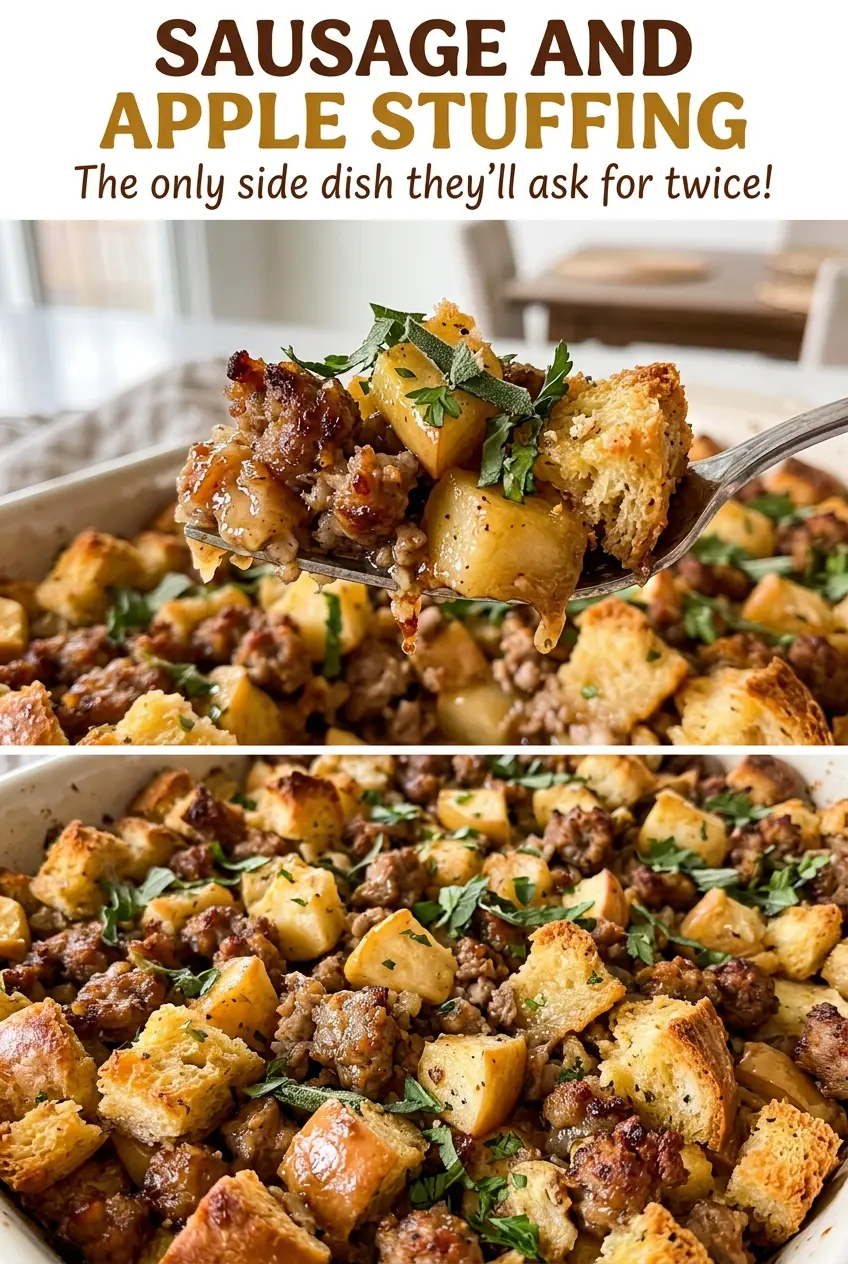
The sausage gets its browned edges in the skillet, then the onion and celery soften in the same buttery pan. By the time the apples and herbs go in, the kitchen smells savory with just a little sweetness in the background. That’s the start of this sausage and apple stuffing, and it’s a good sign you’re building flavor before the bread ever hits the baking dish.
I dry the bread cubes in the oven first instead of relying on bread that’s been sitting out. That gives them a sturdy surface to soak up the broth and eggs without collapsing into a heavy, wet layer. The apples soften as the stuffing bakes, while the sausage brings a savory bite to every scoop.
After a covered bake, the foil comes off so the top can turn golden. Underneath, the bread stays tender and the apple pieces hold their shape. It’s the kind of stuffing that has a crisp top, a soft middle, and plenty of sausage in every serving.
Kitchen Note
Give the baked stuffing its full 10-minute rest before serving. The center settles during that pause, so scoops hold together better instead of sliding apart while they’re still piping hot.
Save this sausage and apple stuffing for its golden top, tender bread, and savory-sweet bites of apple.
Why the Bread Has to Be Dry Before the Broth Goes In
Fresh bread seems like it ought to make a softer stuffing, but it’s more likely to turn gummy. Moist bread has less room to take in the broth, and the cut surfaces can break down as you toss everything together. Drying the cubes first gives them structure and lets the broth and beaten eggs coat the bread more evenly.
That doesn’t mean you’re aiming for browned croutons. The cubes should feel dry and crisp after their time in the oven, not deeply toasted. Once they’re mixed with the sausage, vegetables, broth, and eggs, they soften as they bake. That contrast is what gives you a tender center instead of a dense, damp mass.
The bread also affects how much liquid the finished dish seems to have. A sturdy loaf can take on the full broth-and-egg mixture while still holding its shape. If you start with soft bread or skip drying it, the texture can lean mushy even when the top looks nicely browned. Give the cubes space across two baking sheets and stir them once so they dry evenly.
The Ingredients That Keep the Apples, Sausage, and Bread in Balance
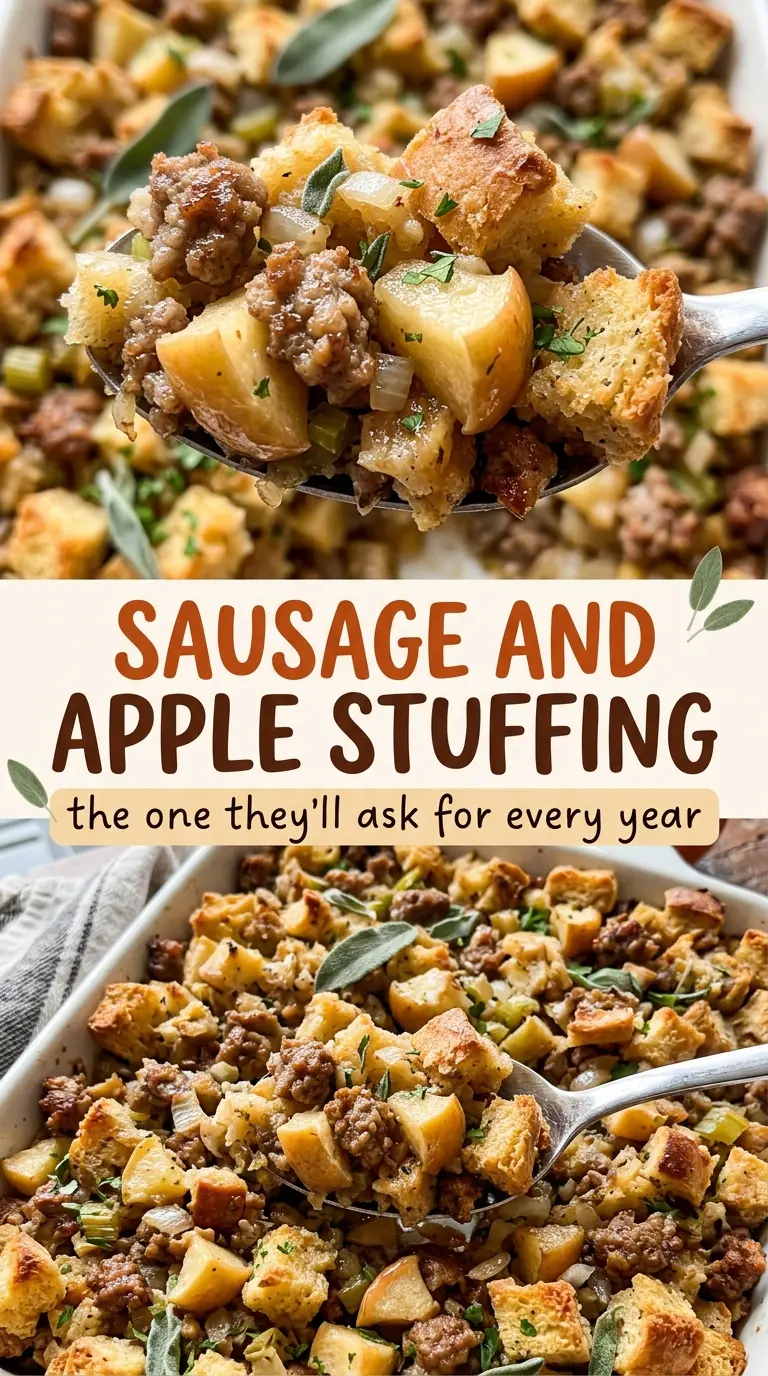
- Sturdy white bread — Choose a loaf with enough structure to keep its shape when tossed with liquid. A basic, sturdy loaf works well; paying extra for an artisan loaf isn’t necessary. The important prep detail is cutting it into cubes and drying them until crisp.
- Bulk pork sausage — Sausage supplies the deepest savory flavor, so choose one you like the taste of on its own. Bulk sausage is convenient here because it breaks into small pieces in the skillet. A leaner sausage may make the mixture taste less rich.
- Apples — Firm apples keep distinct pieces in the finished stuffing. A tart variety gives a sharper contrast to the sausage, while a sweeter apple makes the fruit taste more noticeable. Core and dice them so the pieces soften in the skillet and oven.
- Fresh sage and dried thyme — Fresh sage has a soft, woodsy aroma that fits the pork, while dried thyme brings a steady herbal note through the whole dish. Fresh parsley adds a brighter finish. Use fresh sage as listed rather than swapping in dried sage without adjusting the amount.
- Low-sodium chicken broth and eggs — The broth moistens the bread, and the eggs help the baked stuffing hold together. Low-sodium broth leaves room for the sausage and measured salt to season the dish without making it too salty. Whisk the eggs into the broth before pouring it over the bread.
- Unsalted butter — Butter softens the onion and celery and helps carry the sage and thyme through the skillet mixture. Unsalted butter also gives you more control over seasoning than salted butter.
Dry the Cubes, Build the Skillet Flavor, Then Bake in Two Stages
Dry the Bread Until Crisp
Heat the oven to 300°F and spread the bread cubes over two rimmed baking sheets. Bake for 25–35 minutes, stirring once halfway through, until the cubes feel dry and crisp. Let them cool before mixing them with the other ingredients. If the cubes still feel soft in the middle, give them more time in the oven rather than counting on the casserole to dry them out.
Brown the Sausage and Prepare the Dish
Raise the oven temperature to 350°F and grease a 9×13-inch baking dish with 1 tablespoon of butter. In a 12-inch skillet over medium heat, break the bulk pork sausage into small pieces as it cooks. Brown it for about 8–10 minutes, until it reaches 160°F, then transfer it to a 6-quart mixing bowl. Breaking up larger pieces as they cook gives you a more even mix of sausage throughout the stuffing.
Soften the Vegetables in the Buttered Skillet
Melt the remaining butter in the same skillet, then add the diced onion and celery. Cook for 5–7 minutes, until both have softened; they should look translucent in spots rather than browned and crisp. Add the apples, sage, thyme, parsley, salt, and pepper, and cook for 3–4 minutes, stirring occasionally. The apples should begin to soften but still look like pieces, not sauce.
Moisten, Cover, and Brown the Top
Add the cooked vegetables and dried bread cubes to the bowl with the sausage. Whisk the broth and eggs together, pour the mixture over the bread, and toss until the cubes are evenly moistened. Transfer everything to the greased dish, cover tightly with foil, and bake for 30 minutes at 350°F. Remove the foil and bake for another 20–25 minutes, until the top is golden and the center reaches 165°F.
Easy Ingredient Swaps That Keep the Stuffing Balanced
Choose a Tart Apple for More Contrast
Use a tart, firm apple instead of a sweeter one, keeping the same amount and preparation. Its sharper taste stands out against the pork and herbs, while a sweeter apple makes the stuffing taste fruitier.
Try a Sturdy Country-Style White Loaf
A sturdy country-style white loaf works in place of a standard white loaf and gives the stuffing a more open, rustic texture. Keep the cubes about the same size and dry them until crisp; a very soft loaf won’t hold up as well when tossed with the broth.
Make It Dairy-Free with Plant-Based Butter
Replace the unsalted butter with the same amount of plant-based butter. Choose a firm butter-style product rather than a soft spread so it melts into the skillet in a similar way; the finished stuffing may taste a little less buttery.
Storage and Reheating
- Refrigerator: Store leftovers covered for 3–4 days. The top will soften in the fridge.
- Freezer: Freeze cooled portions in airtight containers for up to 2 months for best quality. Thaw in the refrigerator before reheating.
- Reheating: Warm in a covered baking dish at 350°F until hot throughout. Uncover near the end if you’d like to crisp the top again; leaving it uncovered for the whole reheat can dry out the bread.
Questions That Come Up When Making Sausage and Apple Stuffing
Sausage and Apple Stuffing
Ingredients
Equipment
Method
- Preheat the oven to 300°F. Spread the bread cubes across 2 rimmed baking sheets and bake for 25–35 minutes, stirring once halfway through, until dry and crisp; let cool.
- Increase the oven temperature to 350°F and grease a 9x13-inch baking dish with 1 tablespoon of the butter.
- Cook the sausage in a 12-inch skillet over medium heat, breaking it into small pieces, until browned and it reaches 160°F, about 8–10 minutes; transfer it to a 6-quart mixing bowl.
- Melt the remaining 4 tablespoons butter in the skillet, then add the onion and celery and cook for 5–7 minutes until softened. Add the apples, sage, thyme, parsley, salt, and pepper and cook for 3–4 minutes, stirring occasionally.
- Add the cooked vegetables and dried bread cubes to the bowl with the sausage. Whisk the broth and eggs together, pour over the mixture, and toss until the bread is evenly moistened.
- Transfer the stuffing to the prepared baking dish, cover tightly with foil, and bake at 350°F for 30 minutes. Remove the foil and bake for 20–25 minutes more, until the top is golden and the center reaches 165°F.
- Let the stuffing rest for 10 minutes before serving.