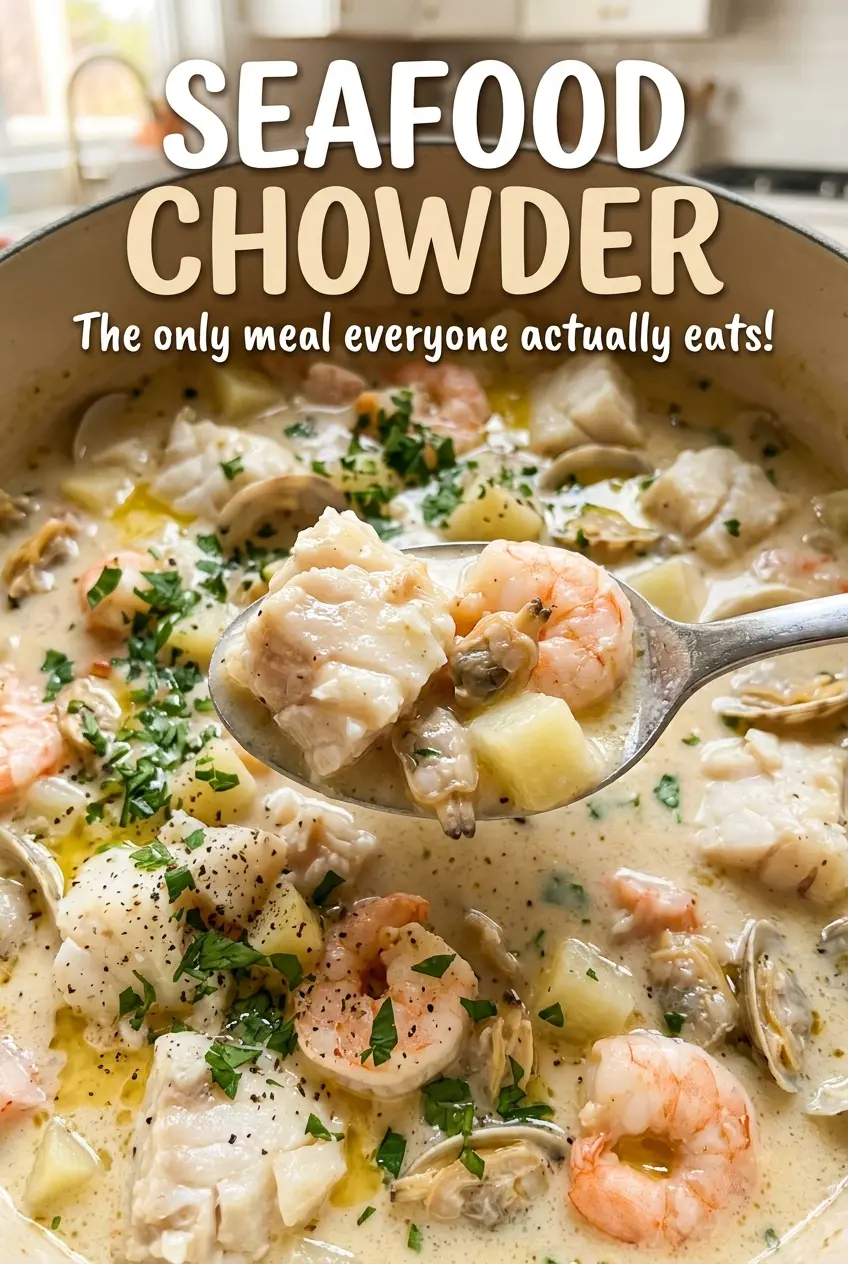
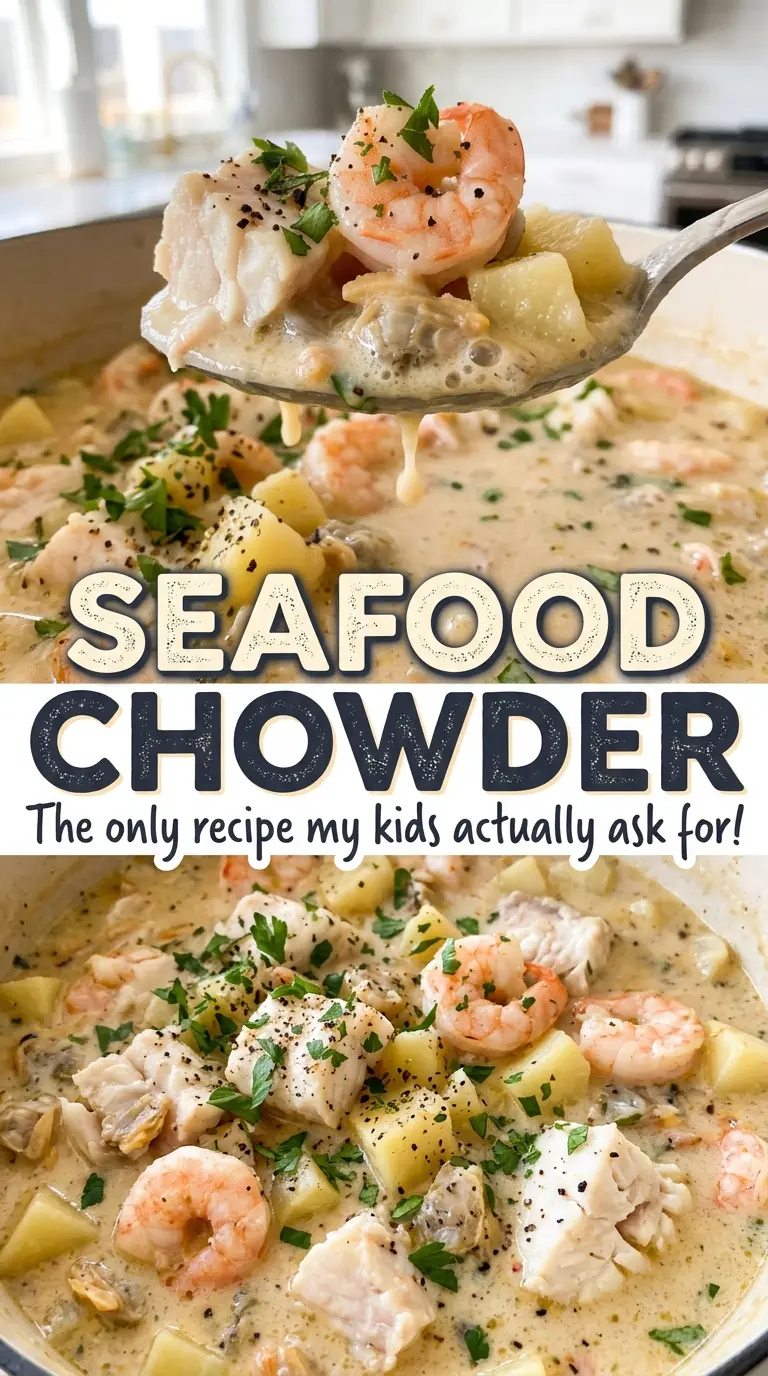
The bacon gets crisp around the edges first, and its drippings leave a savory layer in the bottom of the pot. That’s the start of this Seafood Chowder: a creamy broth with tender potatoes, cod, shrimp, and clams, without a heavy roux or a long simmer.
I build the base in stages so the potatoes have time to turn tender before the seafood goes in. Cod and shrimp need only a few gentle minutes; add them too early and they can overcook while the potatoes finish. Once everything is in the bowl, the broth is rich but still lets the seafood come through.
The finished chowder rests for five minutes before serving, which gives the broth a moment to settle around the potatoes and seafood. You’ll get a spoonful of creamy broth, soft Yukon Golds, and just enough crisp bacon in each bowl.
Kitchen Note
Whisk the clam juice and broth in gradually after the flour has cooked for a minute. Adding the liquid in a steady stream while whisking keeps the base smooth instead of leaving little flour lumps behind.
Save this Seafood Chowder for a cozy dinner with creamy potatoes, crisp bacon, and seafood that stays tender.
Why the Seafood Goes In After the Potatoes
It’s easy to think of chowder as one pot of ingredients that can simmer together until supper. That works for potatoes, but cod and shrimp need a much shorter window. The potatoes simmer in the seasoned broth until a fork slips in easily; only then do the milk and cream warm through, followed by the seafood.
This order gives each ingredient the time it needs. Potatoes start firm and take 12–15 minutes to become tender, while the cod and shrimp cook gently in just 4–6 minutes. The clams are already cooked, so they go in at the end with the bacon and need only a minute to heat through. If you put all the seafood in with the potatoes, the shrimp can turn firm and the cod can break into flakes before the potatoes are ready.
Keep the heat gentle once the dairy is in. A rolling boil isn’t useful here: the goal is a hot, creamy broth that cooks the seafood without roughing up its texture. Watch the pot rather than walking away during the finish, since those last few minutes make the difference between tender pieces and overcooked ones.
What Gives This Chowder Its Creamy Body and Briny Depth
- Clam juice and chicken broth — Bottled clam juice brings the briny seafood note, while low-sodium chicken broth fills out the base without overwhelming it. The regular, inexpensive bottles of clam juice work well here; if you’re out, use more chicken broth, knowing the chowder will taste less ocean-forward.
- All-purpose flour — Cooking the flour briefly in the butter and bacon drippings thickens the broth without making it pasty. For a gluten-free version, use a cup-for-cup gluten-free flour blend in its place; the texture may vary slightly by blend.
- Yukon Gold potatoes — Their creamy texture helps the chowder feel substantial while the cubes hold their shape. Yukon Golds are worth choosing for this balance; peeled russets can stand in, but they soften more readily and may make the broth less smooth.
- Whole milk and heavy cream — Milk keeps the broth from feeling overly rich, and cream gives it body. Use fresh dairy and keep the heat low after adding it; replacing both with a single lighter dairy product will make a thinner chowder.
- Cod, shrimp, and chopped clams — Cod gives you mild, flaky pieces, shrimp adds a firmer bite, and canned clams bring concentrated brininess. Choose cod fillets without a strong fishy smell and shrimp that are peeled and deveined to save prep; haddock can replace cod in the same cut size, though its flavor is a little more pronounced.
- Bacon — The chopped bacon seasons the pot as it cooks, and the crisp pieces add contrast at the end. There’s no need for specialty bacon; an ordinary smoky sliced bacon is a good fit. The unsalted butter rounds out the cooking fat and helps soften the vegetables.
The Order That Keeps the Potatoes Tender and the Seafood Juicy
Render the Bacon, Then Soften the Vegetables
Cook the chopped bacon in a 5-quart Dutch oven over medium heat for 6–8 minutes, stirring occasionally, until browned and crisp. Lift it out with a slotted spoon and leave the drippings in the pot. Add the butter, diced onion, and diced celery, then cook for 5–7 minutes, stirring, until the vegetables have softened; they shouldn’t need to brown.
Build a Smooth, Seasoned Base
Stir the flour into the vegetables and cook it for 1 minute, then whisk in the clam juice and chicken broth gradually until the mixture is smooth. Add the cubed potatoes, bay leaf, dried thyme, salt, and black pepper. Bring the pot to a simmer, cover it partially, and cook for 12–15 minutes; test a potato with a fork rather than guessing from the surface of the broth.
Warm the Dairy Without Boiling
Stir in the whole milk and heavy cream, then heat gently for 3–5 minutes. The broth should be hot and lightly steaming, not bubbling hard around the edges. If it starts to boil, lower the heat; a gentle temperature protects the creamy texture as the chowder heats through.
Cook the Seafood and Let the Pot Rest
Add the cod pieces and shrimp, then simmer gently for 4–6 minutes. The cod should reach 145°F, and the shrimp should be opaque and cooked through; avoid stirring hard enough to break up the fish. Stir in the drained clams and reserved bacon for 1 minute, remove the bay leaf, and mix in the parsley. Rest the chowder for 5 minutes before serving.
Three Practical Ways to Adapt This Seafood Chowder
Make It Gluten-Free
Swap the all-purpose flour for the same amount of cup-for-cup gluten-free flour blend and cook it in the pot with the vegetables before adding the liquids. The chowder will still thicken, though the exact finish depends on the blend, so whisk the broth in steadily to keep the base even.
Let the Seafood Take Center Stage
Leave out the bacon and begin by melting the butter before cooking the onion and celery. You’ll lose the smoky note and crisp garnish, but the cod, shrimp, and clams will taste more direct; keep the rest of the method and seasonings the same.
Give the Broth a Thicker, More Rustic Finish
After the potatoes are tender, press a few cubes against the side of the pot with a spoon before adding the milk and cream. The broken potato thickens the broth naturally and makes the chowder feel heartier, with fewer distinct potato cubes in each spoonful.
Storage and Reheating
- Refrigerator: Store leftovers in a covered container for 3–4 days. The potatoes may soften and the broth may thicken as it chills.
- Freezer: I don’t recommend freezing the finished chowder. The dairy can separate and the potatoes can turn grainy after thawing.
- Reheating: Warm leftovers gently on the stovetop, stirring often, until they reach 165°F. Avoid a hard boil, which can make the seafood tough and the creamy broth less smooth.
Questions That Come Up When Making Seafood Chowder
Seafood Chowder
Ingredients
Equipment
Method
- In a 5-quart Dutch oven over medium heat, cook the bacon for 6–8 minutes, stirring occasionally, until browned and crisp.
- Transfer the bacon to a plate with a slotted spoon, leaving the drippings in the pot.
- Add the butter, onion, and celery to the pot and cook for 5–7 minutes, stirring, until softened.
- Stir in the flour and cook for 1 minute.
- Gradually whisk in the clam juice and chicken broth until smooth.
- Stir in the potatoes, bay leaf, thyme, salt, and black pepper, and bring the chowder to a simmer.
- Cover partially and simmer for 12–15 minutes, until the potatoes are tender when pierced with a fork.
- Stir in the milk and heavy cream and heat gently for 3–5 minutes, without letting the chowder boil.
- Add the cod and shrimp and simmer gently for 4–6 minutes, until the cod reaches 145°F and the shrimp are opaque and cooked through.
- Stir in the drained clams and cooked bacon and heat for 1 minute.
- Remove the bay leaf and stir in the parsley.
- Let the chowder rest for 5 minutes before serving.