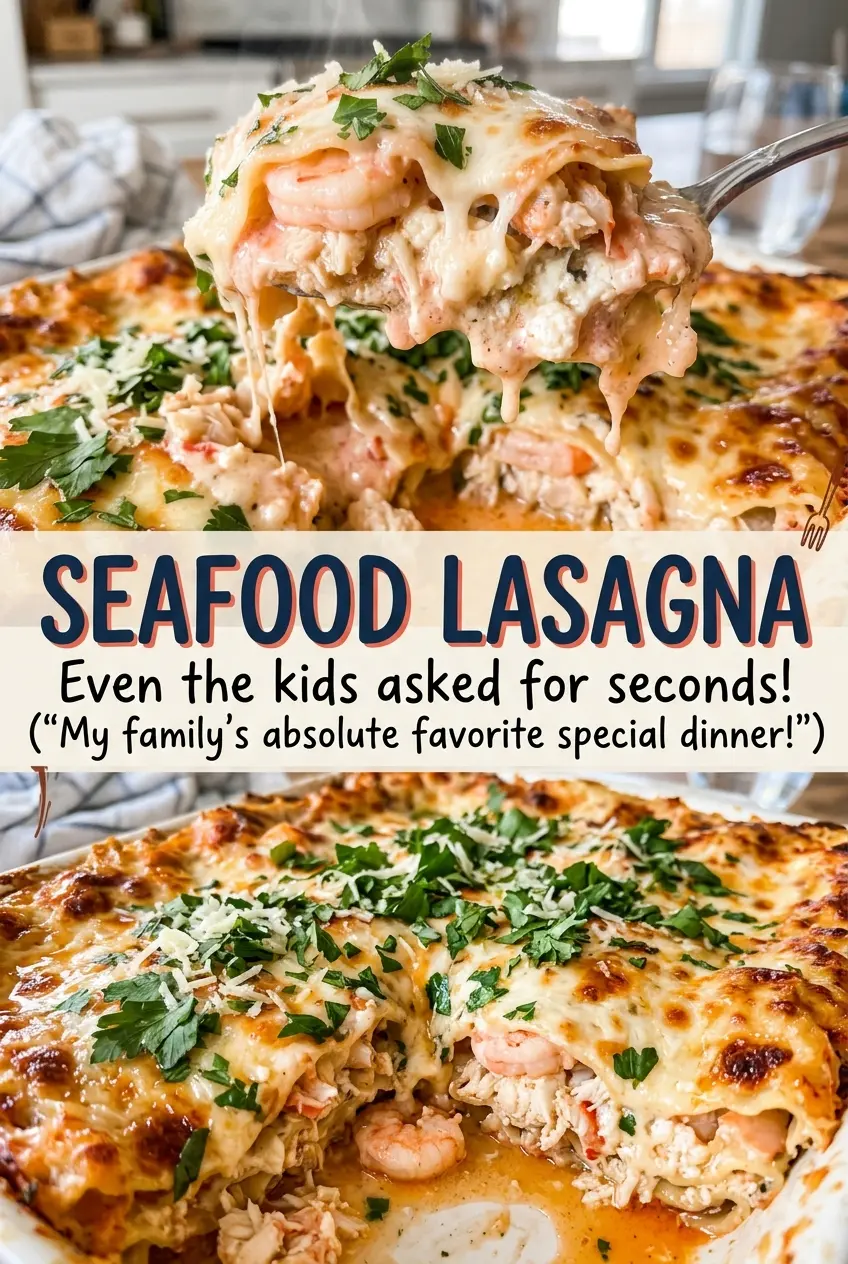
The seafood should be barely cooked before it ever reaches the oven. Shrimp and scallops that look fully done in the skillet can turn firm after another 45 to 50 minutes of baking, so I take them off the heat when the edges are just starting to turn opaque. They finish gently between the noodles and creamy white sauce.
This seafood lasagna has four noodle layers, tender shrimp and scallops, and lump crab folded into a ricotta filling. I build the sauce from butter, flour, and whole milk, then let it thicken until it clings to a spoon. That gives the layers enough moisture to bake together without leaving a puddle in the dish. After a short rest, each slice holds its shape, with bubbling sauce and melted mozzarella around the edges.
Kitchen Note
The shrimp and scallops need only about a minute per batch in the skillet. Pull them when the edges are just turning opaque; the oven takes care of the rest without drying them out.
Save this seafood lasagna for a special dinner: tender shrimp, scallops, and crab tucked between creamy sauce and golden mozzarella.
Why a Thick White Sauce Makes Seafood Lasagna Slice Cleanly
Seafood gives off moisture as it bakes, and the noodles also soften inside the covered dish. A loose sauce can leave the bottom layer watery and make each slice slide apart. I cook the butter-and-flour base long enough to lose its raw flour taste, then whisk in the milk gradually and simmer until the sauce coats the back of a spoon. That texture matters: it’s thick enough to cling to the noodles, but still loose enough to spread through all the layers.
The first cup of sauce goes on the bottom of the baking dish, not over the first noodles. It keeps the pasta from sticking while the lasagna bakes. Between the filling layers, spoon on enough sauce to cover the seafood and ricotta without drowning them; the remaining sauce belongs on top, where it protects the noodles beneath the mozzarella. If you rush the sauce and leave it thin, the baked lasagna will still taste good, but it won’t cut as neatly.
What the Seafood, Ricotta, and Two Cheeses Each Bring
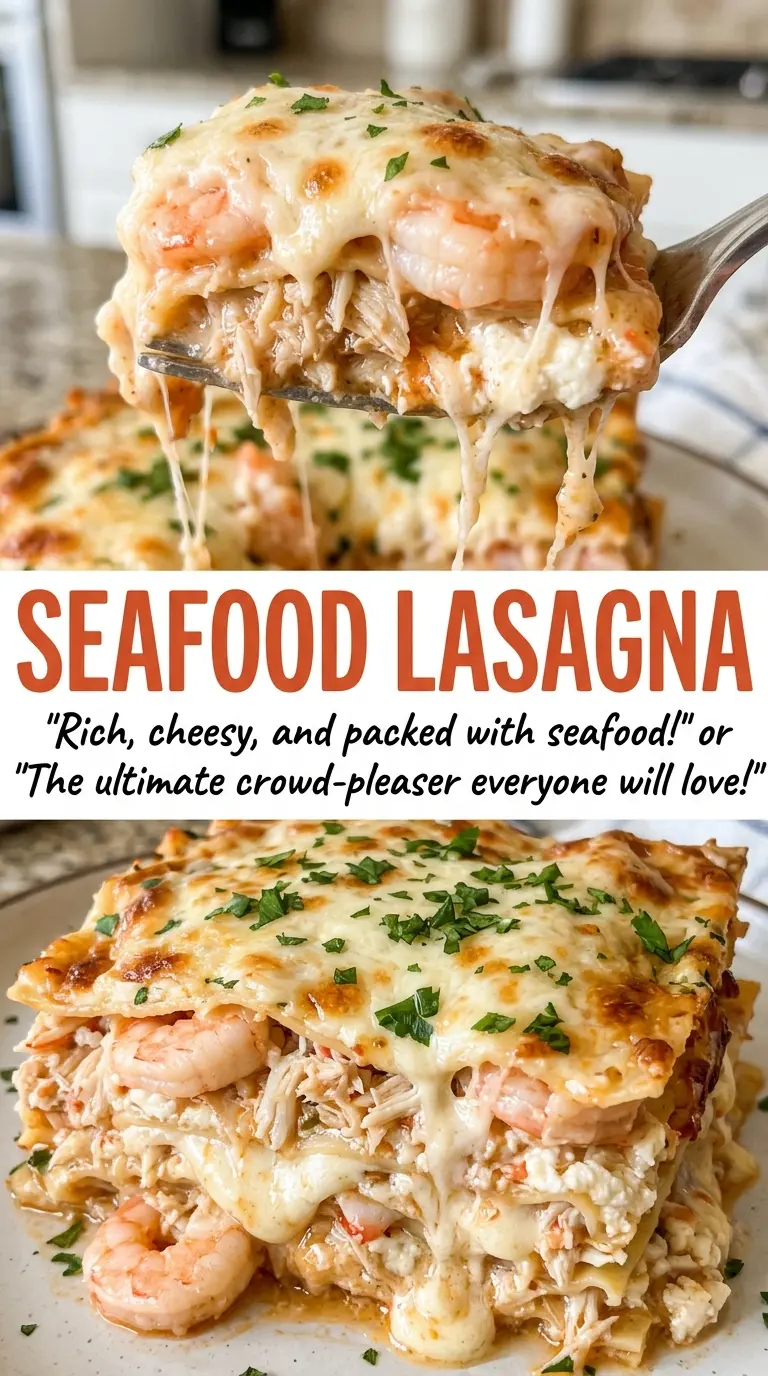
- Shrimp and sea scallops — Raw seafood is the right choice here because it cooks briefly in the skillet and finishes in the oven. Frozen raw shrimp and scallops work well once fully thawed; drain them, and pat the scallops dry so they don’t bring extra water into the layers. Fresh seafood is lovely, but careful thawing and drying matter more than paying a premium.
- Lump crabmeat — Its soft, sweet flakes give the filling a different texture from the shrimp and scallops. Pick through it carefully for shell fragments and fold it in gently so the larger pieces stay intact. Refrigerated or canned lump crab both work; drain canned crab well before using it.
- Whole milk and all-purpose flour — Together they make the creamy sauce that holds the pasta layers together. Whole milk gives the sauce body; lower-fat milk can leave it less rich and thinner. Whisking the milk in gradually is more important than choosing an expensive brand of flour.
- Ricotta and egg — Ricotta keeps the middle layers soft, while the egg helps the filling set as it bakes. Choose ricotta that isn’t sitting in excess liquid; if yours looks wet, drain it briefly before mixing. The egg is part of the structure, so don’t leave it out.
- Low-moisture mozzarella and Parmesan — Low-moisture mozzarella melts into a stretchy top without releasing as much water as fresh mozzarella. Parmesan adds a salty, savory edge to both the ricotta and the top layer. A finely grated Parmesan melts more evenly than large shreds.
Building the Layers Without Overcooking the Seafood
Boil the Noodles Just to Al Dente
Bring the water and the noodle-boiling portion of the kosher salt to a boil in an 8-quart pot. Cook the lasagna noodles according to the package directions until al dente, then drain them. They’ll soften further in the oven, so don’t cook them until floppy. Lay them out carefully after draining to keep them from sticking together.
Give the Seafood a Brief Sear
Heat the olive oil in a 12-inch skillet over medium-high heat, add the minced garlic, and cook it for 30 seconds. Cook the shrimp and scallops in two batches, about 1 minute per batch, until the edges are just beginning to turn opaque. Transfer them to a bowl, season with the remaining seafood salt and pepper, and gently fold in the crab. Crowding the skillet slows the cooking and releases moisture, so keep to two batches.
Whisk a Smooth Sauce and Mix the Ricotta
Melt the butter in a 3-quart saucepan over medium heat, whisk in the flour, and cook for 1 minute. Gradually whisk in the milk, then bring the sauce to a gentle simmer, whisking often; after 5 to 7 minutes, it should coat the back of a spoon. Stir in the remaining sauce salt and pepper along with the nutmeg. In a separate bowl, stir together the ricotta, egg, half of the Parmesan, and chopped parsley.
Layer, Cover, Then Brown the Top
Heat the oven to 375°F and spread 1 cup of white sauce in a 9×13-inch baking dish. Arrange 3 noodles over it, then layer on one-third of the ricotta, one-third of the seafood, 2 ounces of mozzarella, and some sauce; repeat that filling sequence twice. Finish with the last 3 noodles, all the remaining sauce, the remaining mozzarella, and the remaining Parmesan. Cover tightly with foil and bake for 30 minutes, then uncover and bake for 15 to 20 minutes, until the edges bubble and the center reaches 160°F; rest for 15 minutes before cutting.
Easy Changes for Different Tables and Diets
Make It Gluten-Free
Use gluten-free lasagna noodles and replace the all-purpose flour with the same measure of a cup-for-cup gluten-free flour blend that works for thickening sauces. Follow the noodle package directions, since gluten-free noodles can be more delicate when drained. The sauce and seafood layers stay the same, though the noodles may give the slices a slightly different bite.
Use Shrimp Instead of Scallops
Replace the scallops with the same weight of additional raw shrimp, cut into pieces. Cook the shrimp in batches so the skillet stays hot and the pieces don’t steam. The finished lasagna will have a more uniform, pleasantly firm seafood texture and less of the scallops’ delicate sweetness.
Leave Out the Crab
For a simpler seafood lasagna, omit the crab and keep the shrimp and scallops as they are. The layers will be a little less full, but the ricotta and white sauce still make a cohesive casserole. Don’t add extra sauce to compensate; keep the same layering approach.
Storage and Reheating
- Refrigerator: Cover leftovers and refrigerate for 3 to 4 days. The seafood firms up a little after chilling, but the sauce keeps the pasta moist.
- Freezer: Freeze individual portions in airtight containers for up to 2 to 3 months. Thaw overnight in the refrigerator for more even reheating.
- Reheating: Reheat covered in a 350°F oven until hot throughout, or warm a single portion in the microwave in short intervals. Don’t leave it uncovered in the oven for the whole reheating time; the seafood can dry out before the center is warm.
Questions That Come Up When Making Seafood Lasagna
Seafood Lasagna
Ingredients
Equipment
Method
- Preheat the oven to 375°F.
- Bring the water and 1 tablespoon kosher salt to a boil in an 8-quart pot.
- Cook the noodles according to package directions until al dente.
- Drain the noodles.
- Heat the olive oil in a 12-inch skillet over medium-high heat.
- Add the garlic and cook for 30 seconds.
- Cook the shrimp and scallops in two batches, about 1 minute per batch, until just starting to turn opaque at the edges.
- Transfer the seafood to a bowl and season with 1/2 teaspoon kosher salt and 1/4 teaspoon black pepper.
- Gently fold in the crabmeat.
- Melt the butter in a 3-quart saucepan over medium heat.
- Whisk in the flour and cook for 1 minute.
- Gradually whisk in the milk and bring to a gentle simmer, whisking often, until thick enough to coat the back of a spoon, 5 to 7 minutes.
- Stir in 1 teaspoon kosher salt, 1/4 teaspoon black pepper, and the nutmeg.
- Stir together the ricotta, egg, 1/2 cup Parmesan, and parsley in a medium bowl.
- Spread 1 cup of white sauce in a 9x13-inch baking dish.
- Arrange 3 noodles on top.
- Spread one-third of the ricotta over the noodles.
- Add one-third of the seafood and 2 ounces of mozzarella, then spoon over some sauce.
- Repeat the noodle, ricotta, seafood, mozzarella, and sauce layers twice, using all the ricotta and seafood.
- Top with the last 3 noodles, all the remaining sauce, the remaining 6 ounces of mozzarella, and the remaining 1/2 cup Parmesan.
- Cover the dish tightly with foil and bake for 30 minutes.
- Uncover and bake for 15 to 20 minutes, until bubbling around the edges and 160°F in the center.
- Rest the lasagna for 15 minutes before cutting and serving.