Crispy-edged salmon, fluffy rice, and tender vegetables make this one of those dinners that disappears fast and never feels like a compromise. The salmon picks up a savory, lightly sweet crust in the air fryer while staying flaky and moist inside, and the vegetables keep enough bite to hold their own next to the rice. It lands on the plate looking like you worked harder than you did.
What makes this version work is the balance of timing and heat. The salmon cooks hot and fast at 400°F, which gives you that caramelized exterior before the inside dries out, and the vegetables are handled separately so they roast instead of steaming. A little honey in the salmon seasoning helps the spices cling and encourages browning, while the lemon juice keeps the finish bright.
Below, you’ll find the exact timing that keeps the rice fluffy, the salmon juicy, and the vegetables tender-crisp. There’s also a few smart swaps if you want to change up the grain, use a different vegetable mix, or work with what’s already in your kitchen.
The salmon came out with a crisp little crust and stayed flaky in the middle, and the veggies were still tender with browned edges instead of soggy. I made extra rice and my husband had the leftovers for lunch the next day.
Pin this air fryer salmon with rice and veggies for a fast dinner with crisp salmon, tender-crisp vegetables, and fluffy rice on one plate.
The Reason the Salmon Stays Crisp Instead of Steaming
Salmon goes soft when it sits in a crowded basket or starts with too much surface moisture. Patting it dry matters more than almost anything else here, because the spice mix can only brown if it touches the fish directly. Skin-side down gives the fillet a bit of protection from the hot air, and the honey in the coating helps create that thin lacquered crust without burning at this temperature.
The other mistake is trying to cook everything together in one pile. The vegetables and salmon need different timing, and the vegetables need room for the edges to catch. If the basket is packed, the broccoli and zucchini will steam before they char, and the salmon will lose the contrast that makes the plate interesting.
What Each Ingredient Is Actually Doing in This Dish
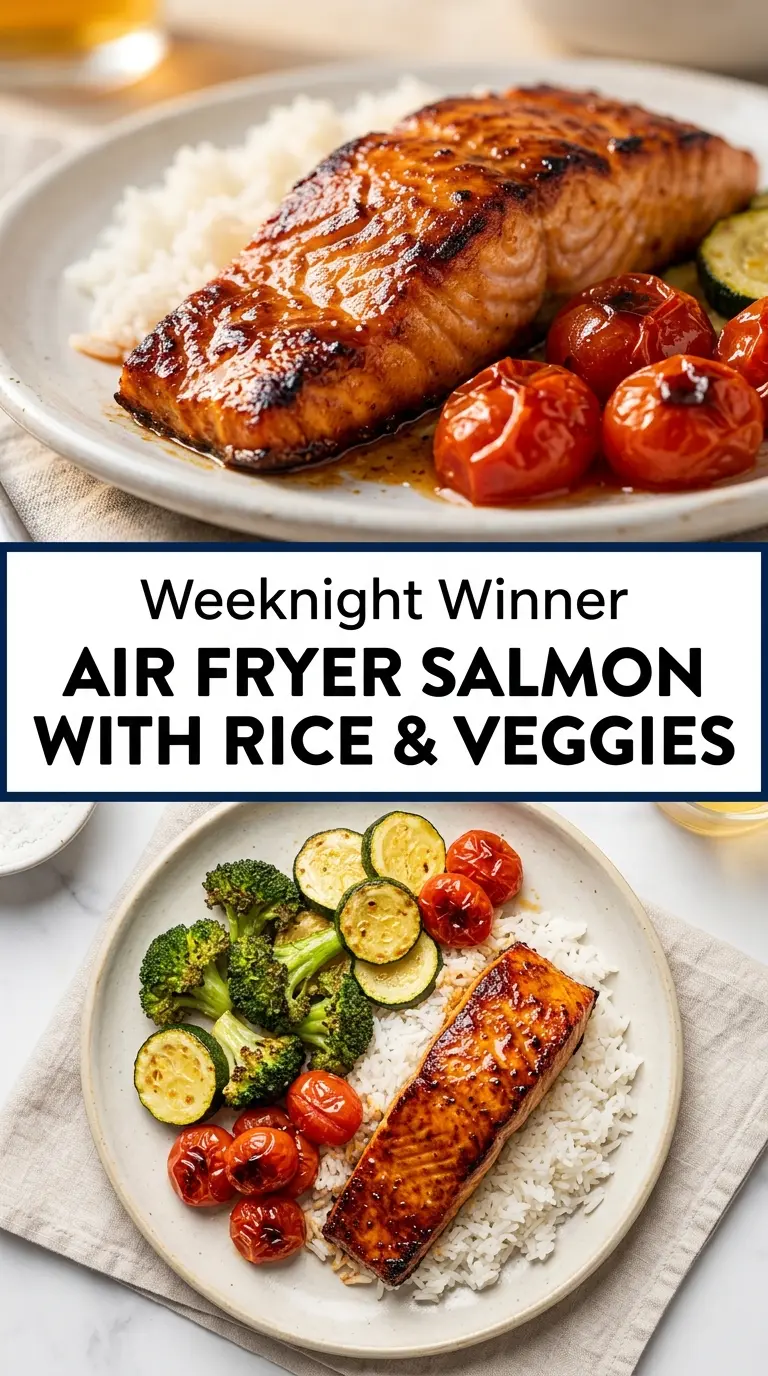
- Salmon fillets — Skin-on fillets hold together better in the air fryer and stay juicier than skinless pieces. If you use frozen salmon, thaw it completely and dry it well or the seasoning slides right off.
- Olive oil — This helps the spice rub coat the fish and vegetables evenly and encourages browning. A neutral oil also works, but olive oil gives the finished dish a little more depth.
- Smoked paprika — This adds color and a subtle charred note that makes the salmon taste like it came off a grill. Regular paprika will work in a pinch, but you’ll lose some of that warm, smoky edge.
- Honey and lemon juice — The honey helps the crust caramelize, while the lemon keeps the salmon from tasting heavy. Don’t add too much lemon early or the fish can start to cure on the surface before it cooks.
- Broccoli, zucchini, and cherry tomatoes — This mix gives you structure, sweetness, and a little burst of juiciness. If you swap vegetables, stick with ones that roast in a similar amount of time, like bell peppers or asparagus.
- Long-grain white rice — It stays fluffy and separate, which balances the crisp salmon and the roasted vegetables. Jasmine rice is a good substitute if that’s what you keep on hand.
The Timing That Keeps Everything Done at the Same Time
Getting the rice started first
Start the rice before you heat the air fryer so it has time to simmer and rest while the rest of the meal cooks. Rinse it until the water runs less cloudy, then cook it covered over low heat once it reaches a boil. If you lift the lid early, the steam escapes and the grains stay underdone in the center.
Seasoning the salmon for a thin crust
Whisk the oil, spices, lemon juice, and honey into a smooth coating, then brush it on generously. You want the salmon lightly slicked, not dripping, because too much wet seasoning delays browning. The fillets should look evenly coated with a deep orange-red sheen before they go into the basket.
Cooking the vegetables so they roast, not steam
Keep the vegetables in a single layer and cook them apart from the fish if you can. Shake the basket halfway through so the tomatoes blister and the broccoli edges darken. If the vegetables look pale and wet at the end, the basket was too full or the temperature was too low.
Finishing the salmon at the right doneness
Pull the salmon when it flakes easily and still looks glossy in the thickest part. An internal temperature of 145°F is the target, but the visual cue matters too: the center should separate in clean layers without turning dry and chalky. Let it rest for a minute before serving so the juices settle back into the flesh.
How to Change It Without Losing the Balance
Make it gluten-free without changing the texture
This recipe is already naturally gluten-free as written, so there’s nothing special to replace. Just check that your broth, if you use it for the rice, is certified gluten-free so the whole plate stays safe.
Swap the rice for cauliflower rice
If you want a lower-carb plate, cauliflower rice works well, but it needs a different approach. Cook it quickly in a skillet or microwave and season it lightly at the end so it doesn’t turn watery under the salmon and vegetables.
Use different vegetables based on what roasts well
Bell peppers, asparagus, green beans, and red onion all fit the same roasting window. Avoid watery vegetables like mushrooms in a crowded basket unless you’re okay with softer edges and less browning.
Make the salmon dairy-free as written, or add butter at the end
The recipe is already dairy-free if you use olive oil instead of butter in the rice. If you want a richer finish, a small pat of butter over the hot rice after cooking adds gloss and flavor without changing the salmon or vegetables.
Storage and Reheating
- Refrigerator: Store leftovers in an airtight container for up to 3 days. The salmon stays good, but the vegetables soften a bit.
- Freezer: The salmon and rice freeze better than the vegetables. Freeze in portions for up to 2 months and expect the veggies to lose some texture after thawing.
- Reheating: Reheat gently in the microwave at 50% power or in a covered skillet over low heat. High heat dries out salmon fast, so short bursts are better than blasting the whole container at once.
Answers to the Questions Worth Asking
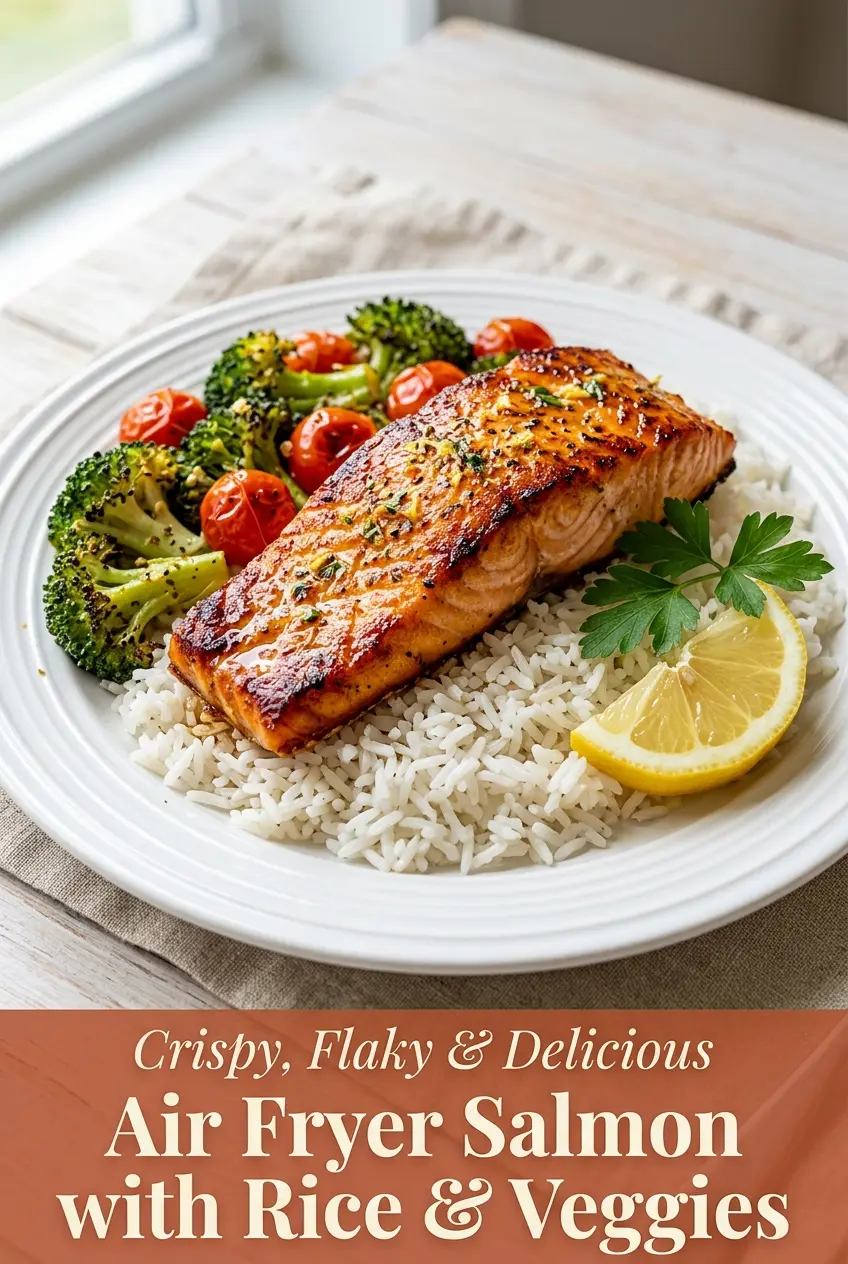
Air Fryer Salmon with Rice & Veggies
Ingredients
Equipment
Method
- Rinse the long-grain white rice under cold water, then combine it with water or chicken broth, salt, and butter in a medium saucepan. Bring to a boil over high heat, then reduce to low, cover, and simmer for 18 minutes until the water is absorbed (visual cue: steam should be mostly gone and rice looks tender).
- Remove the saucepan from the heat and fluff the rice with a fork. Let it stand briefly off the burner while you cook the salmon and veggies.
- Preheat the air fryer to 400°F for 3 minutes (visual cue: basket heats up before cooking).
- Pat the salmon fillets dry with paper towels. This helps the skin get golden and the surface crisp.
- Whisk together olive oil, garlic powder, smoked paprika, onion powder, salt, black pepper, lemon juice, and honey. Brush generously over the salmon (visual cue: a thick, orange-gold coating).
- Toss the broccoli florets, zucchini, and cherry tomatoes with olive oil, garlic powder, salt, and black pepper. Spread them so they have space for airflow.
- Place the salmon fillets skin-side down in the air fryer basket. Air fry at 400°F for 10–12 minutes until the salmon flakes easily and reaches an internal temperature of 145°F with a golden, slightly caramelized crust (visual cue: edges look browned and surface blisters slightly).
- After the salmon starts, add the veggies to a second air fryer basket (or cook in batches after the salmon). Air fry at 380°F for 8–10 minutes, shaking halfway through, until edges are golden and tender-crisp (visual cue: broccoli tips are lightly browned and zucchini has softened but holds shape).
- Plate a scoop of fluffy rice, place a salmon fillet alongside, and arrange the roasted vegetables. Garnish with lemon wedges and fresh parsley and serve immediately.