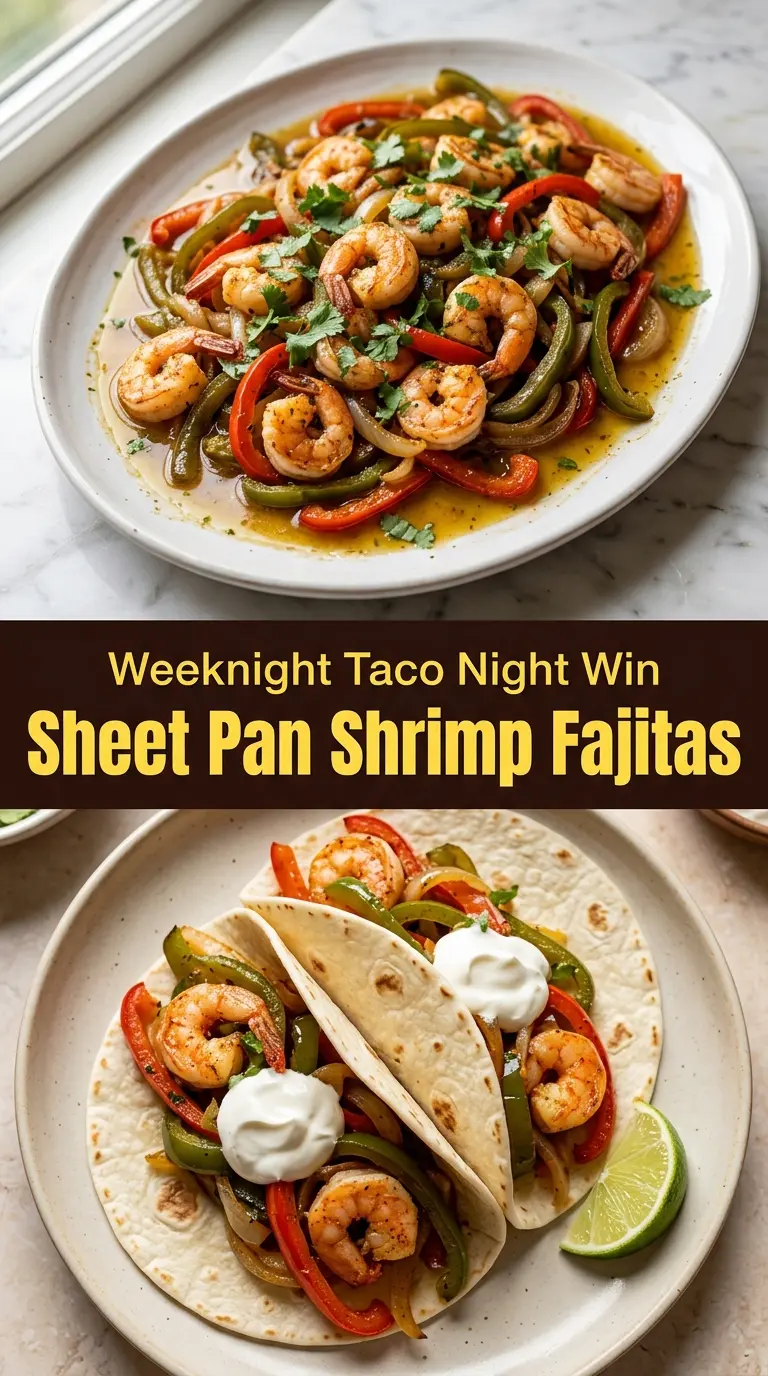
Sheet pan shrimp fajitas hit the table with the kind of smoky, sizzling flavor that makes weeknight dinner feel like an event, but without the stovetop juggling act. The shrimp stay juicy, the peppers soften just enough to pick up charred edges, and the onions turn sweet and silky in the oven. Everything cooks on one pan, which means the cleanup is almost as satisfying as the first bite.
The trick is giving the vegetables a head start. Peppers and onions need more time than shrimp, and if you throw everything on the pan at once, the shrimp turn tough before the vegetables get any real color. Roasting the vegetables first builds that fajita flavor, then the shrimp finishes fast in the hot oven with just enough time to curl and turn opaque.
Below, you’ll find the timing that keeps the shrimp tender, the seasoning blend that actually tastes like fajitas, and a few smart swaps if you want to change up the filling or stretch it for leftovers.
The shrimp stayed juicy and the peppers got those browned edges without turning mushy. I loved that I could throw the tortillas on a dry skillet while the pan came out of the oven, and dinner was on the table in under 30 minutes.
Save these sheet pan shrimp fajitas for the nights when you want smoky vegetables, juicy shrimp, and taco-night payoff with almost no cleanup.
The Shortcut That Keeps Shrimp Tender Instead of Rubbery
Most sheet pan shrimp recipes run into the same problem: the vegetables still need time when the shrimp are already done. Shrimp cook fast, and once they go past opaque and curled, they get bouncy in a hurry. The fix is simple, but it matters: roast the peppers and onions first so they soften and pick up color, then add the shrimp for the final few minutes.
This also gives the seasoning time to bloom on the vegetables before the shrimp go in. The spices cling to the oil, the onions sweeten as they roast, and the pan develops that fajita-style depth without needing a skillet or grill.
- Bell peppers — Use a mix of colors if you can. Red and yellow bring sweetness, while green adds that sharper fajita bite. Slice them thin so they roast instead of steam.
- Yellow onion — Yellow onions soften and sweeten in the oven, which balances the spices. A white onion works too, but it stays a little sharper.
- Large shrimp — Bigger shrimp hold up better in the hot oven. If yours are medium, cut the final roast time by a minute or two and pull them as soon as they turn pink and opaque.
- Smoked paprika — This is the ingredient that gives you that classic fajita-like depth without needing a grill. Regular paprika won’t bring the same smoky note.
- Lime juice — Add it at the end, not before roasting. Acid before heat can make the shrimp tighten too early, and fresh lime over the finished pan brightens everything.
Building the Pan in the Right Order
Mix the seasoning with oil first
Stir the oil and spices together before the vegetables go in. That turns the seasoning into a loose paste that coats the peppers and onions evenly instead of leaving dry patches on the pan. If the spices clump, keep mixing until the oil looks brick red and smooth.
Roast the vegetables until the edges brown
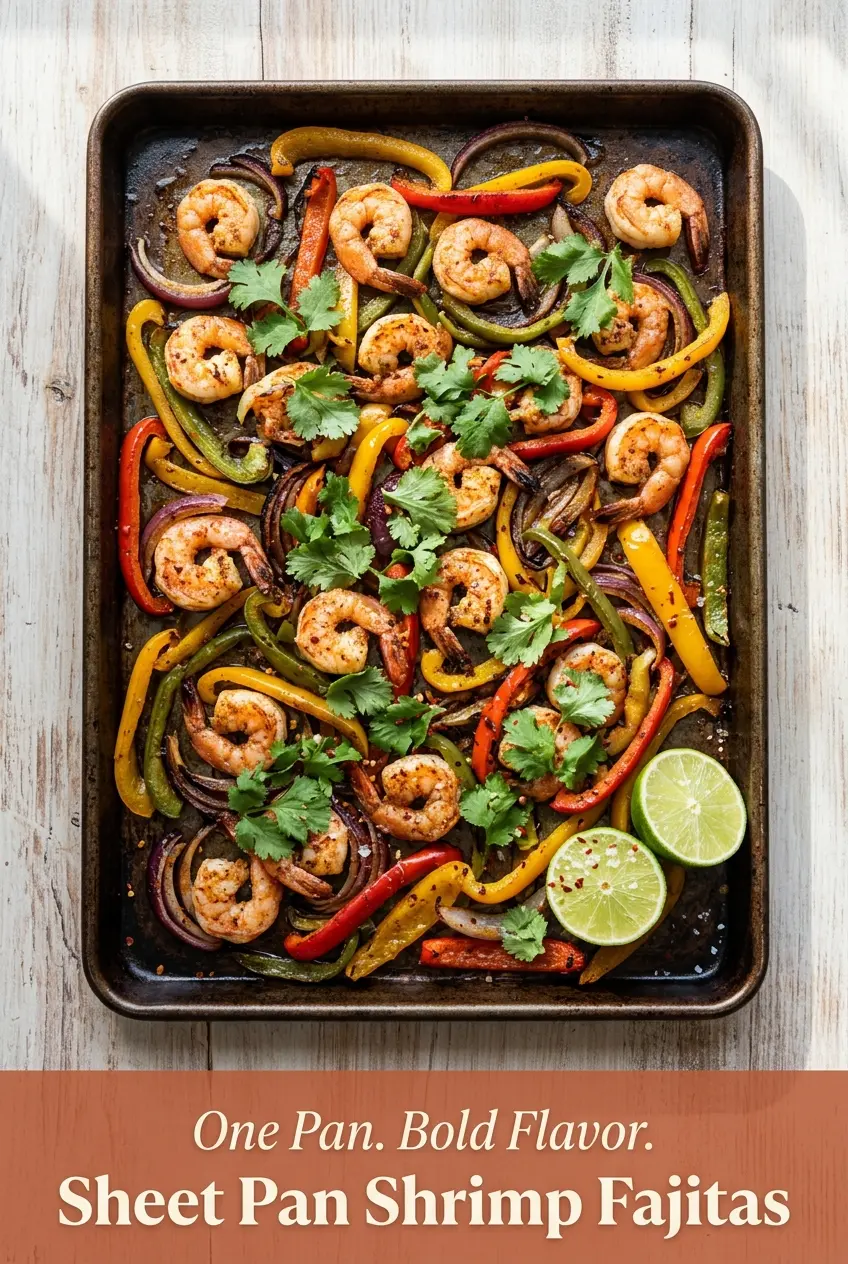
Spread the peppers and onions in a single layer and give them their full 12 minutes. You want softened slices with a few charred edges, not limp vegetables swimming in their own steam. If the pan is overcrowded, they’ll soften without browning, so use a large sheet pan and keep them in one layer.
Add the shrimp only for the last stretch
Push the vegetables aside and tuck the shrimp into the center of the pan. They only need about 6 to 8 minutes, just until they’re pink, opaque, and curled into a loose C shape. If they curl into a tight O, they’ve gone too far.
Finish with lime after the oven
Squeeze the lime over the whole pan once it comes out of the oven. The juice wakes up the spices and cuts through the sweetness of the roasted onions. If you add it too early, the brightness gets cooked away before it can do its job.
How to Adapt These Fajitas for the Pantry You Have
Make it dairy-free and naturally gluten-free
The fajita filling itself is already dairy-free and gluten-free. Serve it with corn tortillas and skip the cheese, or use a dairy-free sour cream if you want that cool, creamy finish. The seasoning and roasting method stay exactly the same.
Swap the shrimp for chicken
Thinly sliced chicken breast or thigh works if shrimp isn’t in the plan. Chicken needs more time, so roast it with the vegetables from the start and keep going until it reaches 165°F. You lose the quick-cooking shrimp texture, but you get a heartier fajita filling.
Turn it into a low-carb fajita bowl
Skip the tortillas and spoon the shrimp and vegetables over cauliflower rice or shredded lettuce. The pan juices become the sauce, so don’t drain them off. That keeps the bowl from tasting dry and gives you the same smoky fajita flavor in a lighter format.
Storage and Reheating
- Refrigerator: Store the shrimp and vegetables in an airtight container for up to 3 days. The peppers will soften a bit more after chilling, but the flavor holds up well.
- Freezer: The filling can be frozen, but the shrimp texture gets a little firmer after thawing. Freeze in a flat, sealed container for up to 2 months, then thaw overnight in the refrigerator.
- Reheating: Warm gently in a skillet over medium-low heat or in the oven at 325°F until just heated through. Don’t blast it in the microwave for too long or the shrimp will turn rubbery and the vegetables will collapse.
Questions I Get Asked About This Recipe
Sheet Pan Shrimp Fajitas
Ingredients
Equipment
Method
- Preheat the oven to 425°F and line a large sheet pan with parchment paper or foil.
- In a large bowl, combine olive oil, chili powder, smoked paprika, cumin, garlic powder, onion powder, cayenne, salt, and black pepper; stir until evenly mixed.
- Add the sliced bell peppers and onion to the bowl and toss to coat, then spread them evenly across the sheet pan.
- Roast at 425°F for 12 minutes, until peppers and onions begin to soften and char at the edges.
- Push the vegetables to the sides of the pan and add the shrimp to the center, tossing them with any remaining seasoning from the bowl.
- Return to the oven and roast at 425°F for 6–8 minutes, until shrimp are pink, opaque, and curled, reaching 145°F internal temperature.
- Remove from the oven and squeeze the lime juice over the entire pan to distribute flavor across the peppers and shrimp.
- Warm tortillas directly on a gas flame or in a dry skillet for 30 seconds per side until slightly charred.
- Serve the shrimp and fajita veggies in warm tortillas with sour cream, guacamole, fresh cilantro, lime wedges, and shredded cheese as desired.