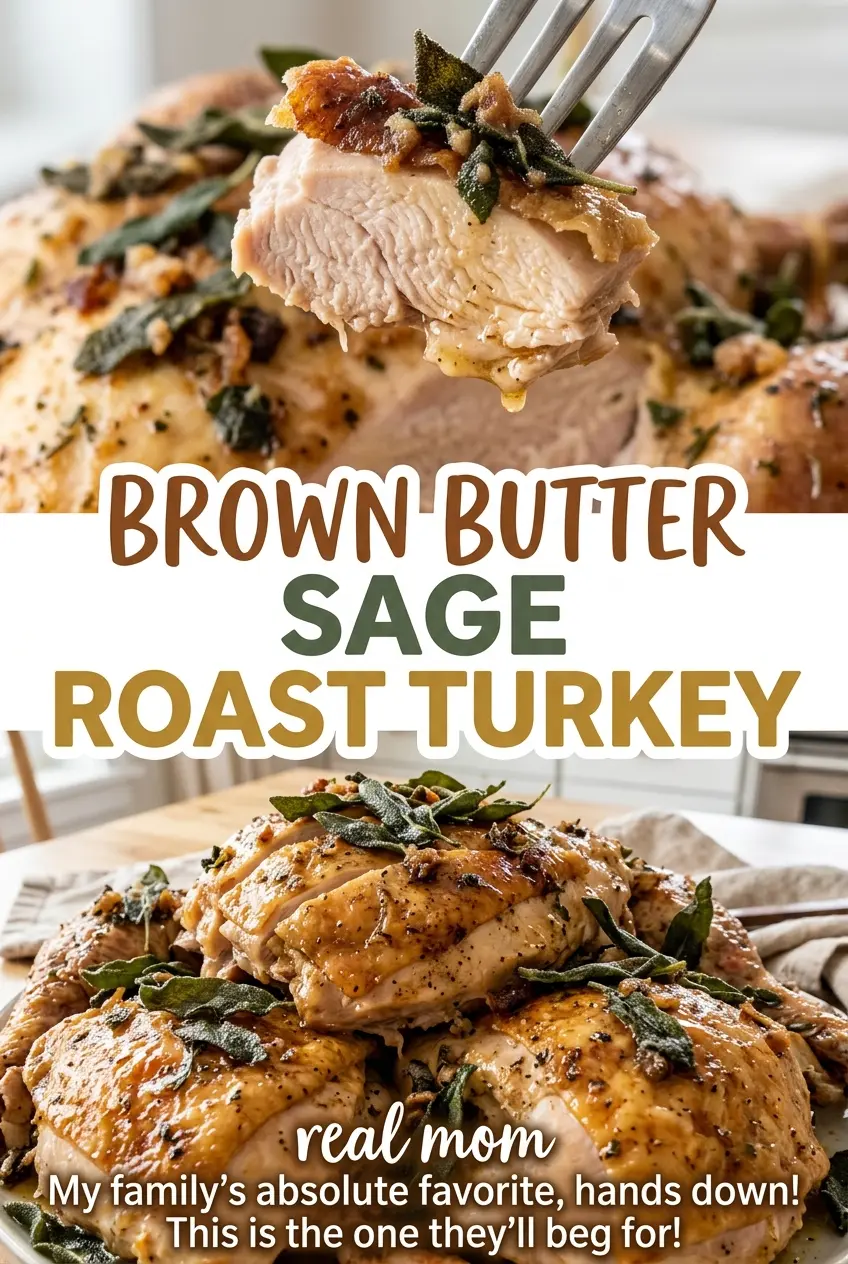
When butter starts foaming in the saucepan, stay close: the pale solids can turn golden and nutty in just a few minutes. That browned butter is what gives this roast turkey its warm, savory aroma, while fresh sage brings a clean, woodsy note instead of tasting heavy.
I spread most of the sage butter beneath the skin, where it seasons the breast and thighs directly, then rub the rest over the outside. A 12- to 14-pound turkey roasts at a steady 325°F, and a thermometer—not the color of the skin or the clock alone—tells you when it’s ready.
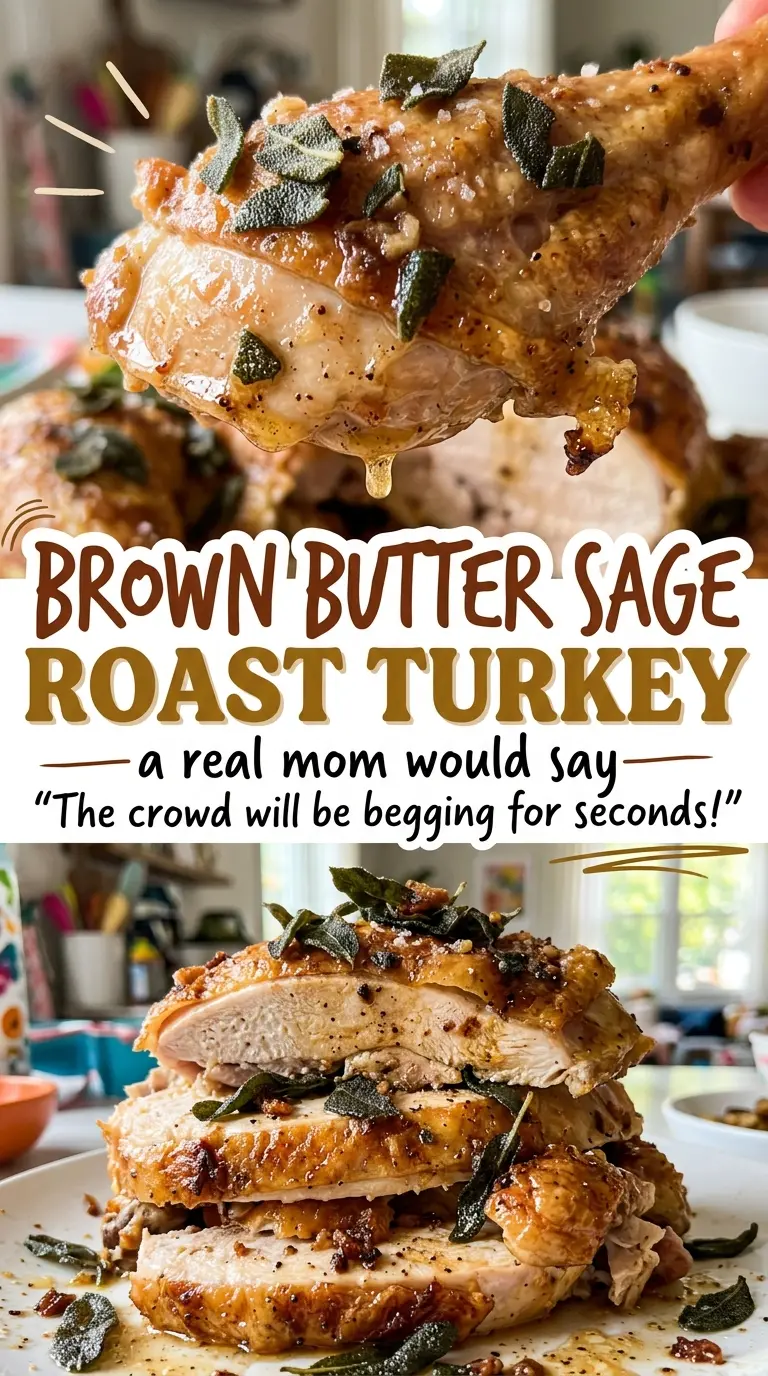
The cavity aromatics are kept loose, and the finished bird gets a full 30-minute rest before carving. The result is crisp, deeply browned skin and tender turkey with brown butter and sage in every slice.
Kitchen Note
Use your fingertips to loosen the skin gently over the breast and thighs. If you feel it pulling tightly, ease back and work from another spot rather than forcing it; intact skin gives you room to spread the butter underneath.
Save this brown butter sage roast turkey for a golden-skinned centerpiece with fragrant herbs tucked under the skin.
Why the Sage Butter Belongs Under the Skin, Not Just on It
Butter rubbed only over the outside has to work through the skin before it can season the meat. That outside coating still matters: it helps create the browned surface and carries the sage aroma as the turkey roasts. But putting most of the butter beneath the skin gives the breast and thighs direct contact with the seasoned fat.
It’s a small change in placement, but it makes the seasoning more useful. The skin remains in place as a cover over the meat, while the butter is spread where you want its sage and pepper flavor. The outside gets the remaining butter, so you still get that appealing browned finish.
- Breast: The broad surface makes it easy to spread butter beneath the skin without leaving one section bare.
- Thighs: Loosening the skin here gives the darker meat its share of the sage butter, too.
- Outside: A coating over the skin helps the surface brown, but it doesn’t replace the butter underneath.
Fresh Sage and Unsalted Butter Set the Flavor Before the Turkey Roasts
- Whole turkey — Use a fully thawed bird in the listed 12- to 14-pound range so the roasting window fits. A smaller or larger turkey won’t necessarily follow the same timing.
- Unsalted butter — Unsalted butter lets the measured salt season the turkey without guessing how much salt is already in the butter. The browned milk solids provide the nutty aroma, so ordinary fresh butter works well; there’s no need for a specialty brand.
- Fresh sage — Fresh leaves provide the herbal fragrance in the butter and the cavity. Dried sage won’t give the same fresh aroma or texture here, so keep the fresh sage if you want the intended flavor.
- Onion, lemon, and garlic — These aromatics scent the cavity as the turkey roasts rather than acting as a bread stuffing. Quarter the onion and lemon, and halve the garlic crosswise so they fit loosely inside the bird.
Brown the Butter First, Then Build the Roast
Dry the Turkey Before Seasoning
Set the oven rack in the middle and heat the oven to 325°F. Remove the neck and giblets, then pat the turkey dry inside and out with paper towels. A dry surface gives the butter a better chance to cling instead of slipping over damp skin. Keep the cavity clear for the aromatics that go in just before roasting.
Take the Butter to Golden, Not Dark
Melt the butter in a small saucepan over medium heat, swirling the pan as it cooks for 5 to 7 minutes. Watch the milk solids at the bottom; they should turn golden brown, and the butter should smell nutty. Pull the pan off the heat at that point, before the solids turn very dark and bitter. Stir in the chopped sage and fine salt, then add the ground black pepper; let the mixture cool for 15 to 20 minutes until spreadable.
Spread the Seasoning Under and Over the Skin
Gently loosen the skin over the breast and thighs. Spread about two-thirds of the sage butter beneath the skin, working it over the meat, then rub the rest across the outside. If the butter is still runny, wait a little longer; a spreadable consistency is easier to control under the skin and less likely to run off the turkey.
Roast Until Both Checks Reach Temperature
Put the quartered onion and lemon loosely in the cavity. Add the halved garlic and sage sprigs, then set the turkey breast-side up on a rack in a large roasting pan. Roast for 3 to 3 1/2 hours, loosely tenting with foil if the skin browns too quickly. Check the thickest part of the breast and the inner thigh with a thermometer, keeping it clear of bone; both spots should read 165°F.
Rest Before You Carve
Transfer the turkey to a cutting board and leave it undisturbed for 30 minutes before carving. That rest gives the juices time to settle rather than running across the board as soon as you cut. If you start carving right away, the slices are more likely to lose moisture.
When You Want Less Sage or Need to Skip Dairy
A dairy-free butter swap
Replace the unsalted butter with an equal amount of dairy-free butter sticks. Choose a stick-style product that softens enough to spread under the skin; tub-style spreads can be too loose to handle neatly. The turkey will still carry sage, but it won’t have the same toasted milk-solid flavor as browned dairy butter.
A gentler sage finish
Keep the chopped sage in the butter, but leave the sage sprigs out of the cavity. You’ll still get sage in the seasoning under the skin, with a quieter herbal aroma from the finished roast.
Storage and Reheating
- Refrigerator: Refrigerate carved turkey within 2 hours and use it within 3 to 4 days. The skin softens in storage, though the meat stays tender when covered.
- Freezer: Freeze carved portions in airtight containers or well-sealed freezer bags for 2 to 6 months for best quality. Thaw in the refrigerator before reheating.
- Reheating: Warm slices covered in the microwave or a low oven until steaming hot throughout. Avoid leaving them uncovered in the oven for a long stretch, which dries out the lean meat.
Questions That Come Up Before the Turkey Goes in the Oven
Brown Butter Sage Roast Turkey
Ingredients
Equipment
Method
- Set a rack in the middle of the oven and heat the oven to 325°F.
- Remove the turkey’s neck and giblets, then pat the turkey dry inside and out with paper towels.
- Melt the butter in a small saucepan over medium heat, swirling the pan, for 5 to 7 minutes, until the milk solids are golden brown and the butter smells nutty.
- Remove the butter from the heat and stir in the chopped sage, salt, and pepper.
- Cool the butter mixture for 15 to 20 minutes until spreadable.
- Gently loosen the skin over the turkey breast and thighs.
- Spread about two-thirds of the butter mixture under the skin and rub the rest over the outside of the turkey.
- Put the onion, lemon, garlic, and sage sprigs loosely in the cavity.
- Set the turkey breast-side up on a rack in a large roasting pan.
- Roast for 3 to 3 1/2 hours, loosely tenting the turkey with foil if it browns too quickly, until a thermometer inserted into the thickest part of the breast and inner thigh, without touching bone, reads 165°F.
- Transfer the turkey to a cutting board and rest for 30 minutes before carving.