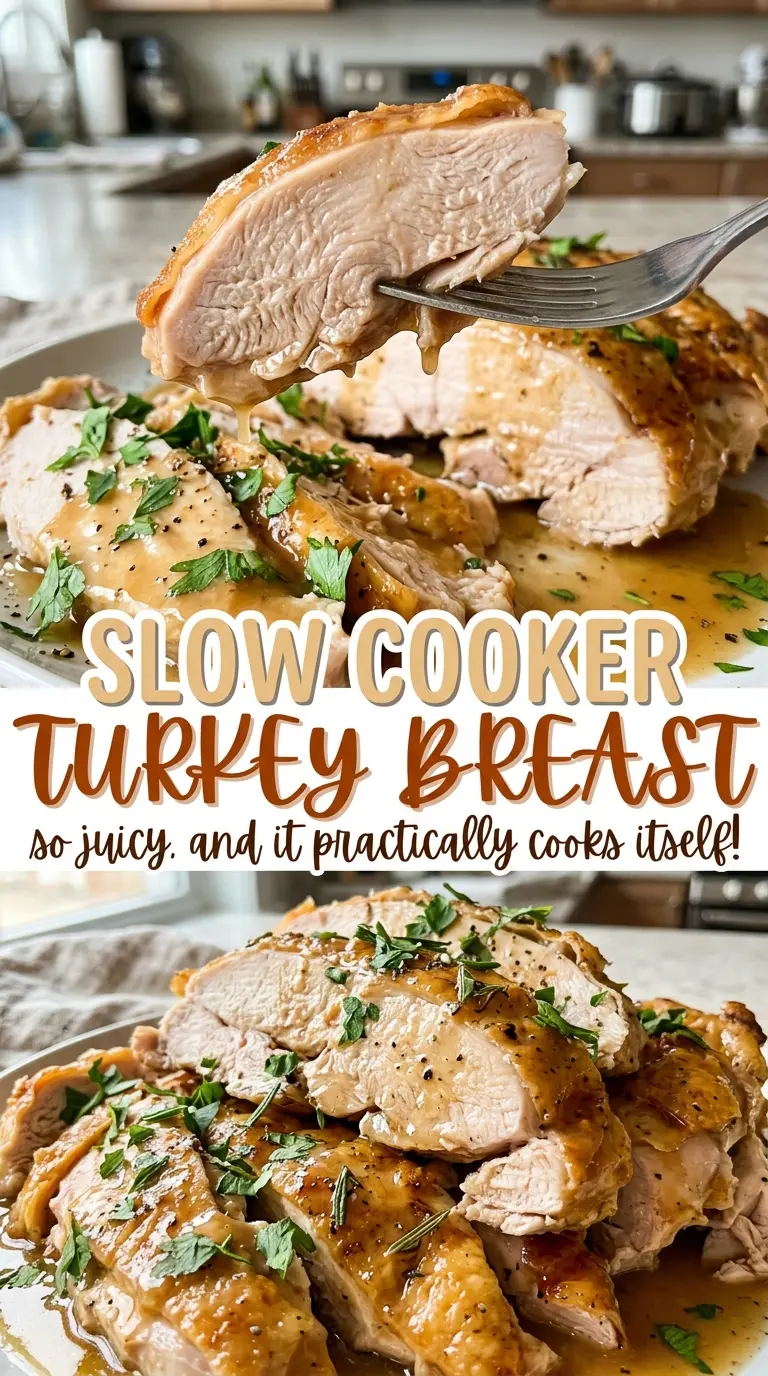
The lid comes off and the turkey looks different from an oven roast: the skin is soft, and there’s a little savory broth beneath the breast. That’s exactly what I expect from this slow cooker turkey breast. The bone-in cut stays tender in the covered cooker, and the gentle thyme-and-garlic seasoning lets the turkey taste like turkey. It’s a useful way to make a centerpiece for eight while keeping the oven free.
I use a fully thawed, bone-in, skin-on breast and give it a thorough coat of softened butter mixed with the seasonings. The butter helps the rub spread across the surface and beneath the skin where it lifts easily. Onion and celery make a simple base, while a measured amount of chicken broth keeps the bottom of the cooker moist without turning the turkey into a pot of soup. Once it’s cooked through and rested, the breast is ready to carve into generous slices.

Kitchen Note
Slide some of the butter mixture beneath the skin where it separates easily, but don’t tug or force it. That way, the meat gets seasoned too, instead of leaving all the flavor on the outside.
Save this slow cooker turkey breast for tender slices seasoned with thyme, garlic, and butter.
Why the Turkey Sits Above the Broth, Not in It
The onion and celery form a bed under the breast, and the chicken broth goes beneath that bed. The turkey isn’t meant to be submerged. Keeping it above most of the liquid gives the cooker room to build a moist, enclosed cooking environment while the vegetables flavor the broth at the bottom.
Adding extra broth might seem like insurance against dry turkey, but it changes the balance: more liquid won’t make the breast juicier, and it can leave you with a larger amount of diluted cooking liquid. The breast itself cooks under the slow cooker’s lid, so it doesn’t need to sit in a deep pool. Arrange the vegetables across the bottom and set the turkey on top. That small bit of layering is what separates this from simmering turkey in broth.
The liquid and vegetables are there to support the turkey, not to replace the meat’s own doneness cues. The bone-in breast cooks gently above the base, and the cooking liquid picks up savory notes as it goes. Think of the bottom of the cooker as an aromatic base rather than a bath; the difference is simple, but it helps set expectations for both the texture of the turkey and the amount of liquid you’ll have afterward.
What the Butter, Broth, and Bone-In Breast Bring
- Bone-in, skin-on turkey breast — The bone-in cut is the one this timing is built around, and the skin gives the butter rub a surface to cling to. Choose a fully thawed breast in the listed size range. A plain supermarket turkey breast works well; there’s no need to seek out a specialty brand.
- Softened butter — Soft butter blends smoothly with the salt, pepper, thyme, and garlic powder, so you can spread the seasoning over the breast. It also adds richness that a dry seasoning rub won’t provide. If you need a dairy-free adaptation, the butter can be omitted; the seasoning will be less rich and won’t cling as evenly.
- Low-sodium chicken broth — This adds savory flavor to the base without bringing as much salt as standard broth. Store-brand broth is fine here. Regular chicken broth will work, but the finished cooking liquid and turkey will taste saltier because the rub contains salt too.
- Yellow onion and celery — These aromatics flavor the liquid and create the vegetable bed beneath the breast. Fresh, firm vegetables are a good choice, but there’s no need for premium produce. If one is missing, leaving it out is a better choice than adding an unlisted replacement; the broth will simply have a less rounded aromatic flavor.
- Dried thyme and garlic powder — Dried thyme gives the butter mixture a steady herbal note, and garlic powder spreads evenly through it. Ordinary pantry versions work well. If you don’t have thyme, leave it out rather than guessing at a fresh-herb swap; the turkey will have a simpler garlic-and-pepper seasoning.
Getting the Slow Cooker Timing Right for Turkey Breast
Set Up the Aromatic Bed
Arrange the quartered onion and celery pieces across the bottom of a 6-quart slow cooker, then pour in the chicken broth. Keep the vegetables spread out so the breast has a stable place to rest on top. The broth should stay beneath the turkey rather than covering it. This base cooks alongside the meat and gives the bottom of the cooker a savory aroma.
Dry and Season the Breast
Pat the fully thawed turkey breast dry before you add the butter mixture. Mix the softened butter with the salt, black pepper, dried thyme, and garlic powder until the seasoning is distributed through it. Rub it over the turkey, working some beneath the skin where possible. If the surface is damp, the butter mixture can slide instead of coating the breast evenly.
Cook Until the Thickest Part Is Done
Set the turkey on top of the vegetables, cover the cooker, and choose LOW for 5 to 6 hours or HIGH for 3 to 4 hours. Insert a thermometer into the thickest part of the breast without touching bone; it should read 165°F. The time window helps you plan, but the thermometer reading is what tells you the breast is cooked. Don’t let the probe rest against the bone, since that can give you a misleading reading.
Rest Before Carving
Transfer the cooked breast to a cutting board and let it rest for 15 minutes before carving. This pause gives the juices time to settle rather than spilling across the board as soon as you cut. Keep the rest on the board, not in the slow cooker, so the breast isn’t continuing to cook in the hot cooker. Then carve into slices for serving.
Two Simple Ways to Adapt the Seasoning
A Dairy-Free, Butter-Free Breast
For a dairy-free version, leave out the butter and rub the salt, pepper, thyme, and garlic powder directly over the turkey, including under the skin where it separates easily. The meat will still cook in the same vegetable-and-broth base, but the surface will be less rich and the dry seasonings won’t spread as smoothly.
A Garlic-and-Pepper Seasoning
Leave out the dried thyme and keep the other listed seasonings in the butter mixture for a more straightforward garlic-and-pepper taste. The result is less herbal but still savory, and the cooking method stays the same. This is a useful small change if thyme isn’t your favorite or you want the turkey’s flavor to come through more plainly.
Storage and Reheating
- Refrigerator: Refrigerate the turkey within 2 hours, in a covered container, and use it within 3 to 4 days. Slices may firm up as they chill.
- Freezer: Freeze carved portions in an airtight container for up to 2 to 3 months for best texture. A little of the cooking liquid packed with the slices helps protect them from drying out.
- Reheating: Warm slices covered in the microwave or in a covered skillet with a little cooking liquid until steaming hot throughout. Avoid prolonged high heat, which can dry out lean turkey breast.
Questions That Come Up When Cooking Turkey Breast
Slow Cooker Turkey Breast
Ingredients
Equipment
Method
- Arrange the onion and celery in the bottom of a 6-quart slow cooker.
- Pour in the chicken broth.
- Pat the turkey breast dry.
- Mix the butter, salt, pepper, thyme, and garlic powder.
- Rub the mixture over the turkey, including under the skin where possible.
- Place the turkey breast on top of the vegetables.
- Cover and cook on LOW for 5 to 6 hours or HIGH for 3 to 4 hours, until a thermometer inserted into the thickest part without touching bone reads 165°F.
- Transfer the turkey to a cutting board.
- Rest for 15 minutes before carving.