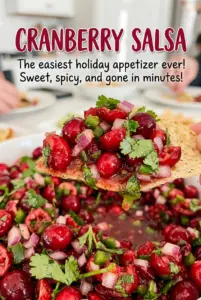
Fresh cranberries are firm enough to bounce around the food processor before they finally break into little ruby pieces. A few extra seconds can take them from a lively chop to a wet mash, so I stay close and watch the bowl. This cranberry salsa has that bright, tart cranberry flavor with green onion, cilantro, lime, and a little jalapeño heat.
The fruit is raw, not cooked down, so the salsa keeps a fresh, crisp edge instead of turning jammy. Granulated sugar rounds out the cranberries, while lime juice and herbs give the mixture a savory lift. I like how each spoonful lands between tart and sweet, with enough texture to make it feel like salsa rather than relish.
The first taste straight from the processor can be sharper than you expect. Give the covered salsa time in the refrigerator before deciding whether the balance needs adjusting; the flavors settle together as it rests. Once chilled, it’s bright, tangy, and ready to bring a little color to the table.
Kitchen Note
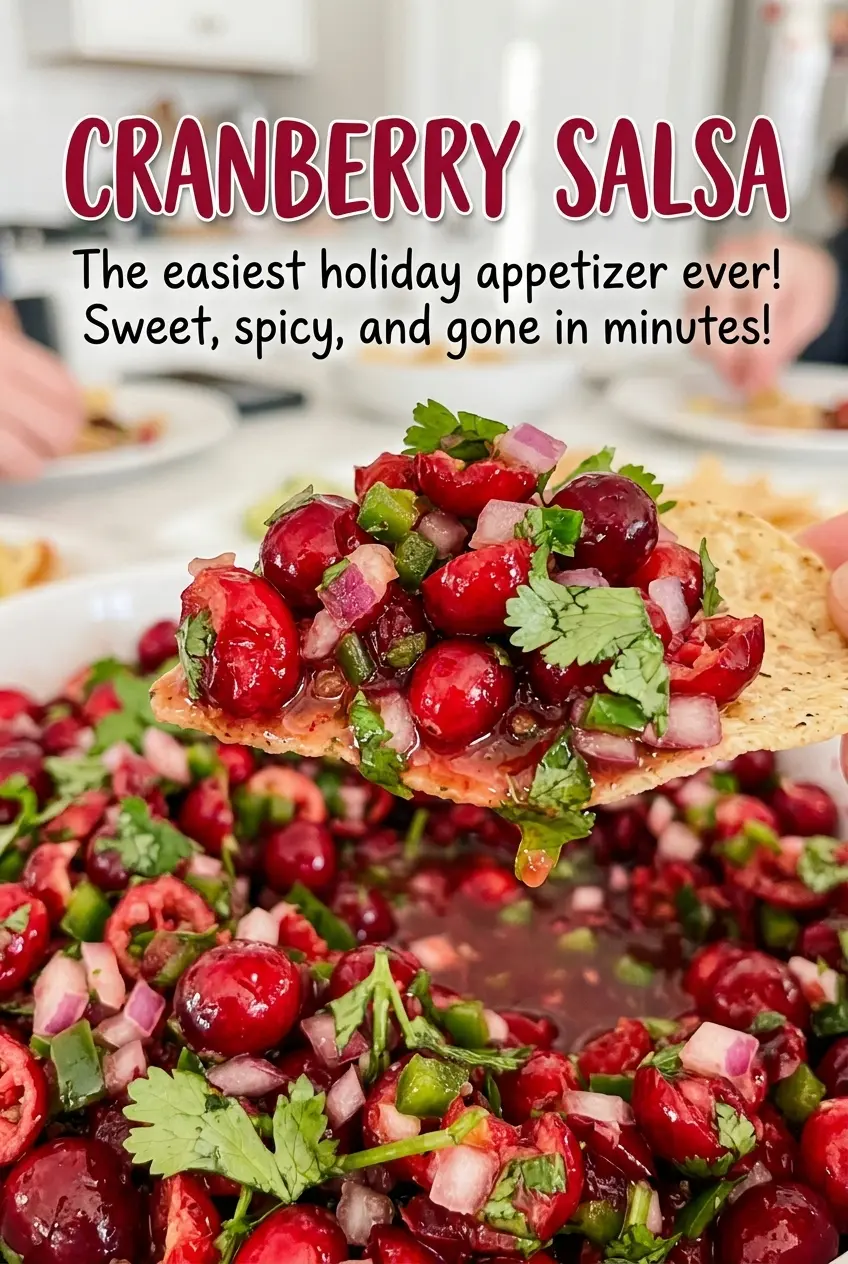
Stem and seed the jalapeño before it goes into the processor. That keeps the chile’s heat in the background, where it can perk up the cranberries without taking over the bowl.
Save this cranberry salsa for a fresh, tart appetizer with a little jalapeño warmth and plenty of bright color.
Give the Cranberries an Hour Before You Decide It Needs More Sugar
Right after chopping, the first thing you notice is often the cranberries’ sharp, mouth-puckering edge. That doesn’t mean the salsa needs another spoonful of sugar. The fruit, lime, herbs, and sugar have just been combined; they need their chill time to settle into a more balanced bite.
Refrigerate the covered salsa for at least an hour before serving. The rest gives the flavors time to meld, and it lets you judge the sweetness after the lime and cilantro have had a chance to mingle with the cranberries. This matters especially with fresh cranberries, which can vary in tartness from bag to bag.
If you taste too soon and keep correcting the sweetness, the finished salsa can tip overly sweet once it has rested. Let the bowl chill first, then taste it at serving time. The target is still unmistakably tart cranberry, with sugar smoothing the edges rather than hiding the fruit.
Fresh Cranberries Bring the Bite; These Ingredients Fill In Around Them
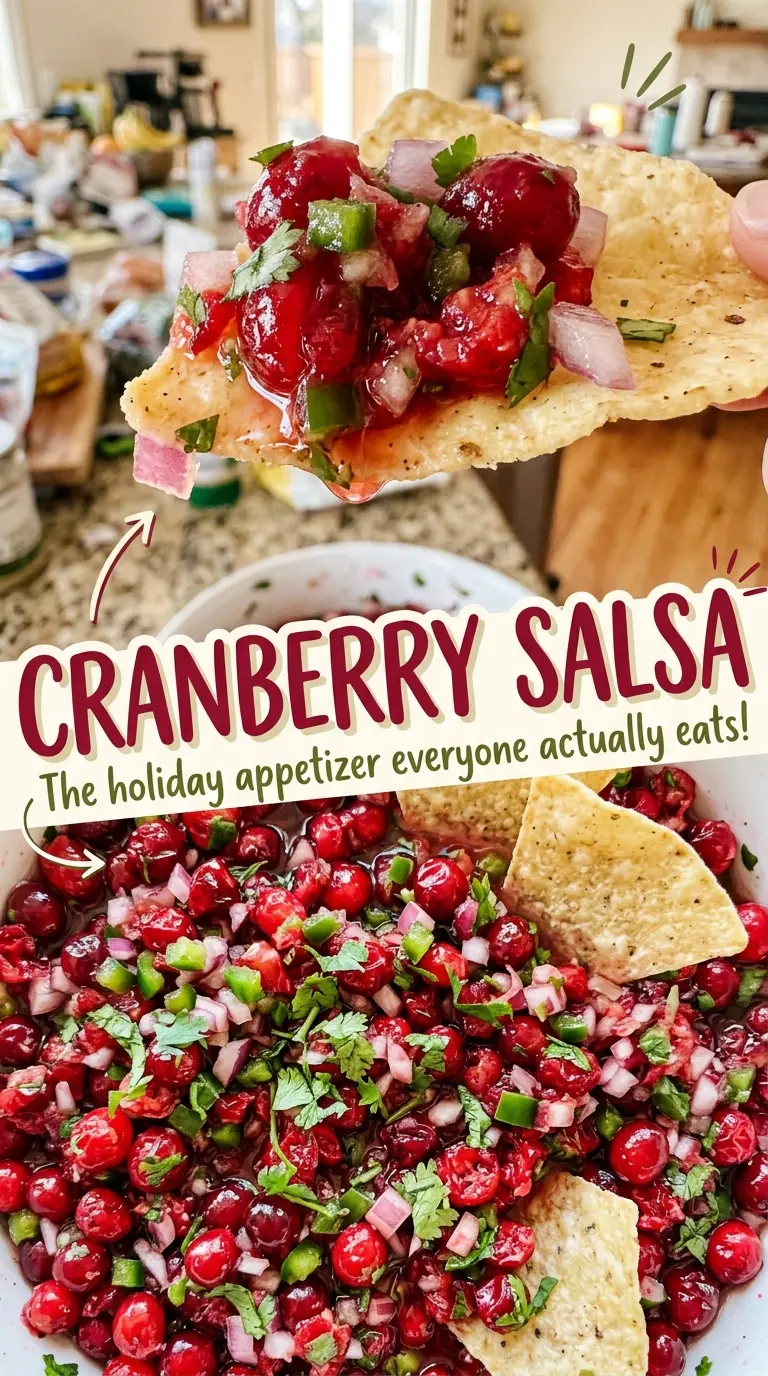
- Fresh cranberries — Their firm texture gives the salsa its characteristic tart bite and keeps it from tasting like a cooked cranberry sauce. Pick through them and discard any that are soft or damaged. Fresh is the right choice here; dried cranberries don’t bring the same juicy, sharp base.
- Jalapeño — It adds a green, peppery note that keeps the fruit from tasting one-dimensional. A fresh pepper has a cleaner flavor than a dried chile, and stemming and seeding it gives you a gentler heat without losing that fresh chile taste.
- Green onions — They bring a mild onion flavor without the heavier bite of a full-size raw onion. Trim them and cut them into pieces before processing so they chop evenly with the cranberries.
- Fresh cilantro — The leaves contribute a lively, herbal note that makes the salsa taste fresh rather than purely sweet-tart. Choose perky green leaves; limp or yellowing cilantro won’t give the same lift.
- Fresh lime juice — Lime sharpens the fruit and helps carry the green, savory flavors through the mixture. Freshly squeezed juice has a brighter aroma than bottled juice, which is noticeable in a no-cook salsa.
- Granulated sugar — Sugar softens the cranberries’ natural acidity without changing the salsa into a cooked preserve. It’s worth keeping the granulated sugar for this version because it blends readily into the chopped fruit and juice.
How to Chop the Salsa Without Losing Its Fresh Texture
Pick Through and Load the Processor
Sort the cranberries before adding them, removing any that are soft or spoiled. Stem and seed the jalapeño, trim the green onions, and cut them into 1-inch pieces so they’re ready to process. Add the cranberries, jalapeño, green onions, cilantro, lime juice, sugar, and salt to the food processor. Keeping everything in the bowl together lets the herbs and seasonings distribute through the fruit as it’s chopped.
Pulse to a Fine, Textured Chop
Use short pulses and watch the cranberries closely as they break down. You’re looking for small, distinct pieces, not a smooth puree; if the mixture starts looking wet and uniform, stop processing. Scrape down the bowl once if ingredients cling to the sides instead of joining the chop. A few visible flecks of cranberry and herb give the finished salsa its appealing texture.
Chill the Covered Salsa
Transfer the chopped mixture to a covered container and refrigerate it for at least an hour before serving. Covering the bowl keeps the fresh ingredients protected while the flavors meld. The salsa should still look colorful and textured when it comes out of the refrigerator, not cooked or jammy. Give it a taste after the rest rather than judging the balance straight from the processor.
Make the Heat or Sweetness Fit Your Table
A Milder Batch Without Jalapeño
Leave out the jalapeño for a chile-free version that puts the cranberry, lime, and herbs up front. You’ll lose the pepper’s fresh warmth, but the salsa will still have its sweet-tart character and green onion savoriness.
A Lower-Sugar, Lower-Carb Version
Use less granulated sugar for a lower-sugar batch. The cranberries will taste sharper and more puckery, so this change suits anyone who prefers a bolder tartness; the salsa remains plant-based and gluten-free.
Storage and Reheating
- Refrigerator: Keep the salsa covered and refrigerated for 3 to 4 days. It may release a little liquid as it sits, and the texture will soften over time.
- Freezer: Freezing isn’t recommended. The chopped herbs and cranberries tend to lose their fresh texture and turn watery after thawing.
- Reheating: This salsa is served cold, so it doesn’t need reheating. Take out only what you plan to serve and keep the rest covered in the refrigerator.
Questions That Come Up When Making Cranberry Salsa
Cranberry Salsa
Ingredients
Equipment
Method
- Add the cranberries, jalapeño, green onions, cilantro, lime juice, sugar, and salt to a food processor.
- Pulse until finely chopped but still textured.
- Scrape down the bowl once if needed.
- Transfer the salsa to a covered container.
- Refrigerate for at least 1 hour before serving so the flavors meld.