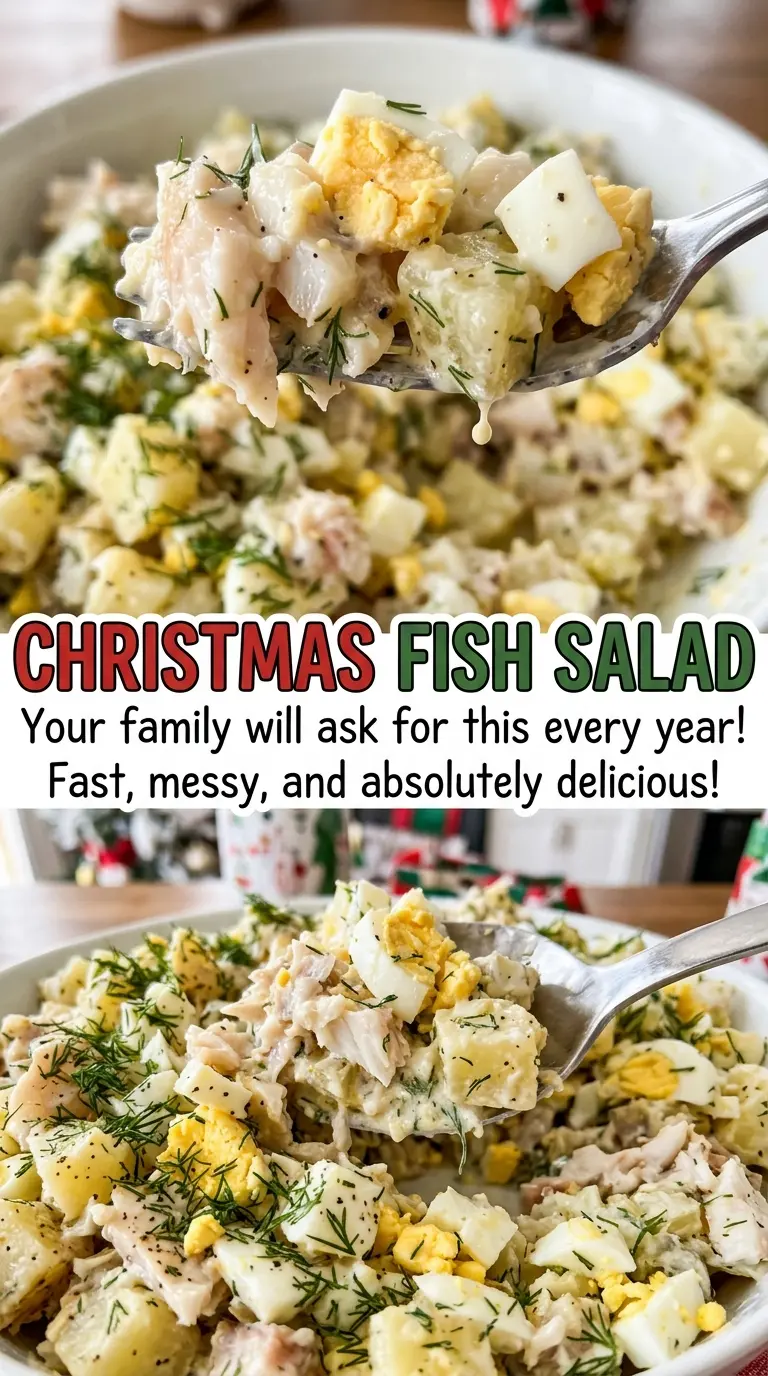
The first time I hurried these potatoes into the dressing while they were still warm, the creamy mixture turned thin and the pieces started to break apart. Letting them cool completely changed the whole bowl. This Christmas fish salad brings chilled salmon together with tender red potatoes, peas, crisp vegetables, capers, and a lemony Dijon dressing.
I bake the salmon and cook the potatoes separately, then give both time to get cold before they meet the dressing. That small pause keeps the salad creamy instead of slick, and it makes it much easier to fold in the salmon without turning it into shreds. After an hour in the refrigerator, the dill and capers have settled into the dressing, while the vegetables still bring a little crunch to each forkful.

Kitchen Note
Keep the salmon in generously sized flakes when you fold it in. A few gentle turns are enough; stirring until every piece is small takes away the lovely contrast between the fish and the potato salad.
Save this Christmas fish salad for a holiday table that needs a cool, creamy centerpiece with flaky salmon and bright dill.
Why Warm Potatoes Make This Creamy Salad Go Loose
Warm potatoes can be useful in some dressed salads, but they work against the texture I want here. They take up dressing quickly, and their heat loosens the mayonnaise and sour cream before the other ingredients are folded in. The result can feel heavy and slick rather than cool and creamy.
Cooling the potatoes all the way through gives the dressing a chance to cling to their surfaces instead of disappearing into the warm centers. It also helps the quartered pieces stay intact when you toss them with the celery, pepper, peas, and green onions. The timing matters: a short rest after draining lets excess heat escape, but the refrigerator is what brings the potatoes fully cold. Don’t rush that part just because the outside of a potato feels cool; the centers need to be cold, too. Then the salad holds its shape and the dressing stays distinct around each bite.
What Gives This Fish Salad Its Briny, Fresh Balance
- Skinless salmon — A boneless, skinless fillet is easy to bake and break into broad, tender flakes. Even thickness helps it cook at a similar pace from end to end; if one end is much thinner, watch that side as it bakes. Frozen fillets work once fully thawed.
- Red potatoes — Their waxy texture helps the quarters keep their shape after simmering and tossing. Small Yukon Gold potatoes are a practical substitute; they’ll be a little creamier, so handle them gently once cooked. Cut the pieces evenly so they become fork-tender together.
- Peas, celery, and red bell pepper — These bring a sweet pop and crisp bite against the soft potato and salmon. Thaw the peas before tossing them in; excess ice can water down the dressing. Finely diced celery and pepper spread their crunch through the bowl instead of landing in oversized bites.
- Capers and fresh dill — Capers give the salad a salty, briny edge, while fresh dill keeps the fish and creamy dressing tasting bright. Drain the capers well so their brine doesn’t thin the dressing. Fresh dill has a cleaner, more delicate aroma than dried, so it’s worth choosing a bunch with fragrant, green sprigs.
- Mayonnaise, sour cream, Dijon, and lemon — Mayonnaise gives the dressing body, sour cream adds tang, and Dijon and lemon keep it from tasting flat. A good-quality mayonnaise is noticeable in a simple dressing, but any familiar brand works. For a dairy-free bowl, use vegan mayonnaise and unsweetened dairy-free sour cream in place of their dairy counterparts.
Getting the Salmon and Potatoes Cold Before They Meet
Bake the salmon until just cooked through
Heat the oven to 400°F and line a rimmed baking sheet with parchment. Set the skinless salmon on the sheet, rub it with olive oil, and sprinkle it with black pepper. Bake for 12–16 minutes, checking the thickest part for 145°F; a thin fillet will finish sooner than a thick center-cut piece. Transfer the salmon to a plate and refrigerate it until cold before flaking.
Simmer the potatoes without letting them fall apart
Put the quartered red potatoes in a 3-quart saucepan and cover them with cold water by 1 inch. Bring the water to a boil, then lower the heat and simmer for 10–15 minutes. Start checking with a fork near the early end of that range: it should slide into a piece without the potato crumbling. Drain the potatoes, cool them for 15 minutes, then refrigerate until cold.
Whisk a dressing that coats instead of pools
In a 5-quart serving bowl, whisk the mayonnaise, sour cream, Dijon mustard, lemon juice, and kosher salt until smooth. Scrape around the bottom and sides of the bowl so no streaks of sour cream or mustard remain. The finished dressing should look cohesive, with the lemon and mustard mixed evenly through the creamy base. Whisk it directly in the bowl you’ll use for the salad to save a dish.
Fold the vegetables and salmon in gently
Add the cold potatoes, thawed peas, diced celery, diced red bell pepper, sliced green onions, drained capers, and chopped dill to the dressing. Toss gently until the vegetables and potatoes are coated. Flake the chilled salmon into large pieces, then fold it through with just a few careful turns. Refrigerate the finished salad for at least 1 hour before serving so the flavors can settle together.
Three Simple Ways to Adapt the Salad
Make it dairy-free without losing the creamy dressing
Replace the mayonnaise with vegan mayonnaise and the sour cream with unsweetened dairy-free sour cream, using the same amounts. The dressing stays creamy, though its tang and richness will depend on the brands you choose.
Leave out the capers for a milder bowl
Skip the capers if you prefer a less briny salad. The dressing and dill will still bring plenty of character, but the finished bowl will taste gentler and less salty around the edges.
Arrange the salmon on top
For a more composed presentation, toss the potatoes and vegetables with the dressing first, then arrange the salmon flakes over the top instead of folding them in. You’ll get more visible pieces of fish in each serving, and the flakes are less likely to break during mixing.
Keeping This Salad Cold
- Refrigerator: Store the covered salad for up to 3 days. The potatoes soften a little and the dressing may loosen as it sits.
- Freezer: Freezing isn’t a good fit; mayonnaise and sour cream can separate, and potatoes often turn grainy after thawing.
- Serving: Keep the bowl refrigerated between servings and don’t leave it at room temperature for more than 2 hours.
Questions That Come Up When Making Christmas Fish Salad
Christmas Fish Salad
Ingredients
Equipment
Method
- Heat the oven to 400°F and line a rimmed baking sheet with parchment.
- Set the salmon on the sheet, rub with olive oil, and sprinkle with black pepper.
- Bake for 12–16 minutes, until the thickest part registers 145°F.
- Transfer the salmon to a plate and refrigerate until cold.
- Put the potatoes in a 3-quart saucepan and cover with cold water by 1 inch.
- Bring to a boil, then simmer for 10–15 minutes, until fork-tender.
- Drain the potatoes, cool for 15 minutes, and refrigerate until cold.
- In a 5-quart serving bowl, whisk together the mayonnaise, sour cream, Dijon mustard, lemon juice, and kosher salt.
- Add the cold potatoes, peas, celery, bell pepper, green onions, capers, and dill to the dressing and toss gently.
- Flake the chilled salmon into large pieces and fold it into the salad.
- Refrigerate for at least 1 hour before serving.