Lump crab doesn’t need much handling; a few firm stirs can turn those distinct pieces into a fine, stringy mix before you even notice. I make this Crab Salad by stirring the dressing together first, then folding in the crab just until it’s coated. That keeps the larger pieces visible in the bowl and on the plate.
The dressing is creamy without hiding the crab, and the celery gives each bite a crisp edge. Lemon and Dijon cut through the mayonnaise, while Old Bay brings a savory seafood-seasoning note. Fresh parsley and black pepper keep the finish bright. This makes four servings, with the crab front and center in every forkful.

Kitchen Note
Check the crab gently for shells before it goes into the dressing. Once the meat is coated, it’s harder to inspect closely without breaking up those larger pieces.
Save this Crab Salad for a cool, savory lunch with tender lump crab and a crisp celery bite.
Why the 20-Minute Chill Changes the Whole Bowl
Freshly mixed crab salad can taste like separate parts: the mayonnaise is forward, the lemon stands out, and the seasoning hasn’t had time to settle into the crab. A short rest in the refrigerator gives those flavors a chance to come together. It also lets the dressing cling to the meat instead of seeming like a separate layer around it.
Twenty minutes is the minimum I give it before serving. That pause doesn’t turn the salad into something heavily seasoned or overly soft; it lets the restrained dressing do its job. The crab still tastes like crab, with the celery’s crunch and the lemon’s lift in the background. If you taste it immediately after mixing, the contrast may seem sharper than it will after chilling, so give the bowl its rest before deciding the balance needs changing.
What the Crab and Dressing Each Bring to the Bowl
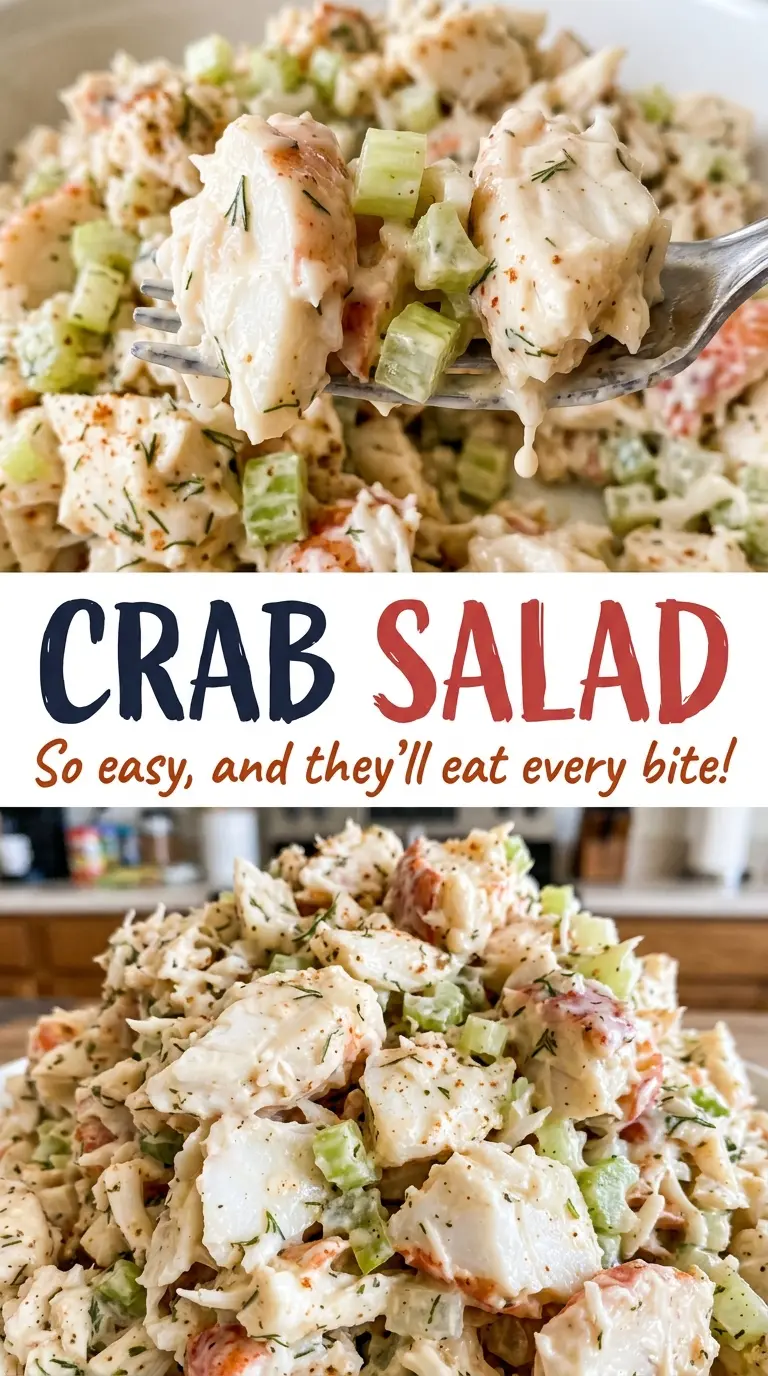
- Lump crab meat — The larger pieces are the point here: they give the salad its tender, distinct texture. Choose crab that smells clean and briny, not sharply fishy. Claw meat is the closest swap; it has smaller pieces and a more assertive flavor, so the finished salad won’t look quite as chunky.
- Mayonnaise — It binds the dressing and coats the crab without needing another liquid. A familiar, affordable mayonnaise works well; choose one whose taste you enjoy because it’s a noticeable part of the finished salad.
- Celery — Finely chopped celery provides the crisp contrast that keeps each spoonful from feeling uniformly soft. Cut it small so it distributes evenly, rather than leaving large pieces that overpower the crab.
- Lemon juice — Its acidity brightens the rich mayonnaise. Fresh juice gives the cleanest flavor, but bottled lemon juice works when that’s what you have; use the same amount called for in the recipe.
- Dijon mustard — Dijon adds a gentle tang and a little complexity to the dressing. Yellow mustard can stand in at the same amount, though it brings a sharper, more straightforward mustard taste.
- Old Bay, parsley, and black pepper — Old Bay supplies the recognizable savory seasoning, while parsley keeps the dressing from tasting heavy and black pepper adds a quiet bite. Fresh parsley has a fresher finish than dried, so use it when you can.
Mix the Dressing First, Then Fold Without Crushing the Crab
Inspect the Lump Meat
Gently check the crab for any remaining shells and set it aside. Move through the meat carefully rather than squeezing or mashing it; the larger pieces are what give this salad its texture. Keep the crab separate while you prepare the dressing so you won’t need to stir it repeatedly later.
Stir Together the Dressing
In a medium bowl, stir the mayonnaise, celery, lemon juice, Dijon mustard, Old Bay, parsley, and black pepper until evenly combined. Look for an even, lightly speckled mixture with the celery distributed throughout. Getting the dressing uniform before adding the crab means you won’t have to work the delicate meat while trying to blend in seasonings.
Fold, Cover, and Chill
Add the crab to the bowl and fold gently until it’s just combined. Use slow turns, lifting from the bottom so the dressing coats the meat without breaking all the lumps into small flakes. Stop as soon as the mixture looks evenly dressed; continued stirring makes the salad denser. Cover the bowl and refrigerate for at least 20 minutes before serving.
Three Small Changes That Give Crab Salad a Different Spin
Make It Egg-Free
Replace the mayonnaise with the same amount of egg-free mayonnaise. The salad stays creamy, though the exact tang and thickness vary by brand.
Use Chives for a Savory Herb Note
Swap the parsley for an equal amount of finely chopped fresh chives. Their mild onion flavor makes the salad a little more savory without covering up the crab.
Trade Lemon for Lime
Use the same amount of fresh lime juice in place of lemon juice. It gives the dressing a more pointed citrus note while keeping the same bright contrast to the mayonnaise.
Storage and Reheating
- Refrigerator: Keep the salad covered at 40°F or below and use it within 1 to 2 days. The celery softens a little as it sits.
- Freezer: Freezing isn’t recommended. The mayonnaise can separate as it thaws, and the crab’s texture turns softer.
- Reheating: Don’t reheat this salad; it’s meant to be served cold. Keep it chilled rather than warming it, which can make the dressing separate and the crab lose its delicate texture.
Questions That Come Up When Making Crab Salad
Crab Salad
Ingredients
Method
- Gently check the crab meat for any remaining shells and set it aside.
- In a medium bowl, stir together the mayonnaise, celery, lemon juice, Dijon mustard, Old Bay seasoning, parsley, and black pepper.
- Add the crab and fold gently until just combined, keeping the larger pieces intact.
- Cover and refrigerate for at least 20 minutes before serving.