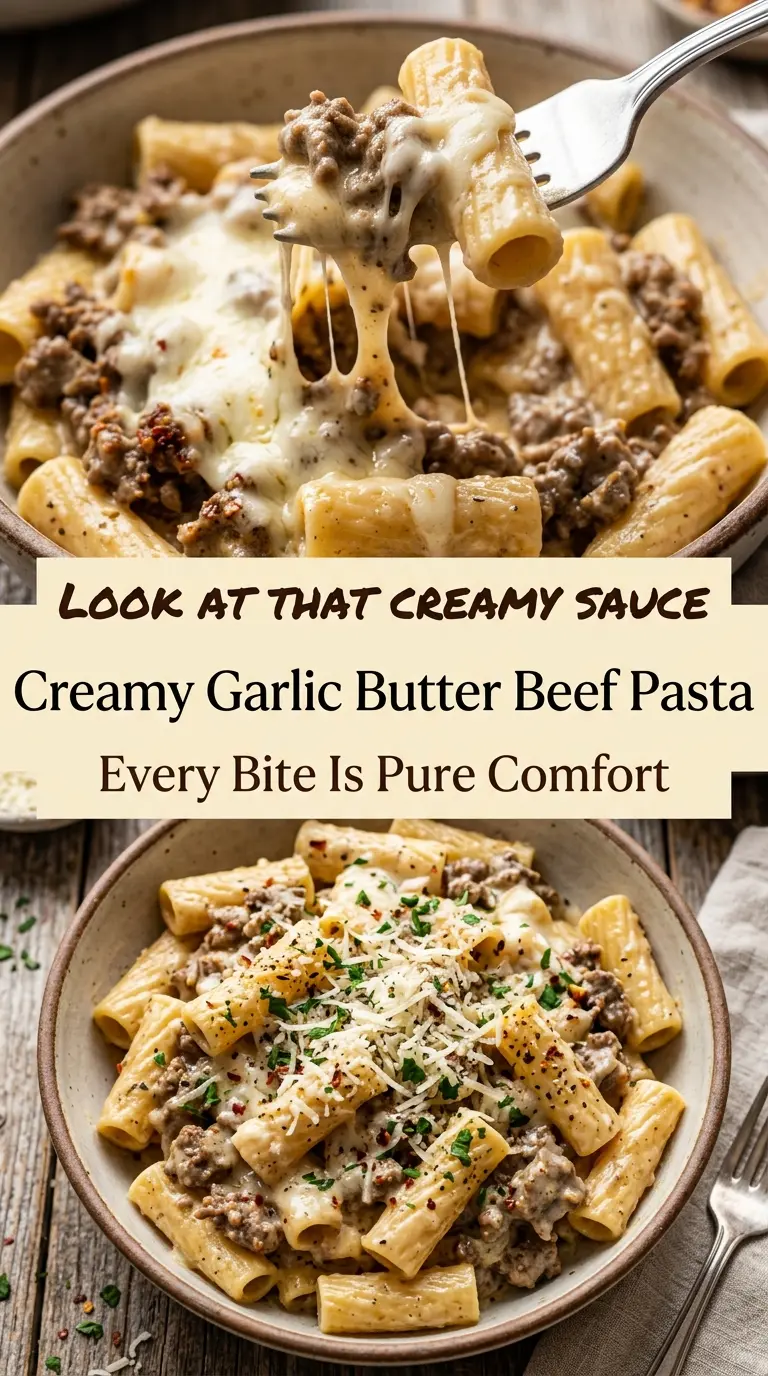
Creamy garlic butter beef pasta lands on the table with the kind of rich, clingy sauce that makes people go quiet for the first few bites. The beef stays savory, the garlic butter gives the whole dish depth without tasting heavy, and the Parmesan-mozzarella blend melts into a sauce that coats every ridge of the pasta. It tastes like a skillet dinner that took more effort than it did.
The trick is building the sauce in layers instead of dumping everything in at once. Browning the beef well gives you the base flavor, then the garlic and spices bloom in the fat before the broth loosens up the browned bits from the pan. A little Dijon might not sound traditional, but it sharpens the sauce just enough to keep the cream and cheese from tasting flat.
Below, I walk through the part that matters most: keeping the sauce smooth, not grainy, and using the pasta water in the right amount so the final dish turns glossy instead of heavy. I also included a few swaps and storage notes, because this one reheats better than most creamy pastas if you handle it right.
The sauce stayed silky and coated the pasta perfectly, and the little hit of Dijon kept it from tasting too heavy. My husband went back for seconds before I even sat down.
Save this creamy garlic butter beef pasta for the nights when you want a rich, cheesy skillet dinner with almost no cleanup.
The Reason the Sauce Stays Creamy Instead of Turning Greasy
The common failure with beef-and-cream pasta is rushing the heat. If the pan is too hot when the cream goes in, the fat separates and the sauce starts looking slick instead of smooth. This version keeps the beef browned first, then drops the heat before the dairy goes in, which gives the cheese time to melt into the liquid instead of seizing up.
The other thing that matters is the broth. It loosens the browned bits from the skillet and gives the cream something to emulsify with, so the sauce tastes like more than just dairy. If the sauce looks thick before the pasta goes in, that’s the stage where a splash of reserved pasta water fixes it without thinning the flavor.
What Each Ingredient Is Actually Doing in This Dish
- Ground beef — Use lean ground beef so the sauce doesn’t turn oily. If yours is fattier, drain off most of the excess after browning, but leave a little behind for flavor.
- Butter and olive oil — The butter carries the garlic and spices, while the olive oil keeps the butter from browning too fast at the start. That combination gives you a richer base than oil alone.
- Garlic and onion — These build the savory backbone of the sauce. Dice the onion finely so it softens fast and disappears into the dish instead of staying crunchy.
- Heavy cream — This is what makes the sauce coat the pasta instead of just pooling at the bottom of the bowl. Half-and-half can work in a pinch, but it won’t thicken as richly and it can look a little thinner once the pasta sits.
- Parmesan and mozzarella — Parmesan brings salt and nutty depth, while mozzarella gives the sauce that stretchy, glossy finish. Grate the Parmesan yourself if you can; pre-grated cheese can make the sauce gritty.
- Dijon mustard — You don’t taste mustard in the finished dish. It sharpens the cream and cheese so the sauce tastes balanced instead of dull.
- Reserved pasta water — The starch in the water helps the sauce cling to the pasta and smooths out any tight, cheesy spots. Add it a tablespoon at a time so you stop as soon as the sauce turns silky.
The 20 Minutes That Matter Most
Browning the Beef First
Cook the beef with the onion until the meat has real color on it, not just gray crumbles. That browning is where the deep savory flavor comes from, and it also leaves browned bits in the pan that become part of the sauce. If the pan looks watery, the heat is too low or the skillet is too crowded, and the beef will steam instead of sear.
Waking Up the Garlic and Spices
Stir in the garlic, Italian seasoning, paprika, onion powder, salt, and pepper for about a minute, just until the garlic smells fragrant. Garlic burns fast, and burned garlic turns bitter in a dish like this. You want the spices to bloom in the fat so they smell warm and rounded before the liquid goes in.
Building the Sauce Without Breaking It
Pour in the broth and let it simmer briefly before adding the cream and Dijon. That short simmer scrapes up the good stuff from the pan and gives the sauce a savory base. Lower the heat before the cheese goes in, then stir until it melts smoothly; high heat at this stage is the fastest way to get a grainy sauce.
Finishing With Pasta Water
Once the pasta goes in, toss until every piece looks coated and glossy. If the sauce seems too thick, loosen it with reserved pasta water a tablespoon or two at a time. You’re looking for a sauce that clings to the pasta instead of turning soupy at the bottom of the skillet.
Three Ways to Adjust This Pasta Without Losing the Point
Make It Gluten-Free
Use your favorite gluten-free short pasta and cook it just to al dente, because it can go soft fast once it sits in the sauce. The rest of the recipe stays the same, but save a little extra pasta water in case the GF pasta absorbs more sauce than standard pasta.
Make It Lighter Without Losing the Creamy Texture
Swap the heavy cream for half-and-half and expect a slightly looser sauce with less richness. It still works, but you’ll rely more on the Parmesan and pasta water to help it thicken, so keep the heat gentle and don’t rush the cheese.
Add Vegetables Without Diluting the Sauce
Stir in sautéed mushrooms, spinach, or steamed broccoli near the end so they fold into the sauce instead of watering it down. Raw vegetables release moisture as they cook, which can thin out the cream sauce and pull flavor away from the beef.
Storage and Reheating
- Refrigerator: Store in an airtight container for up to 4 days. The sauce will thicken as it chills, so expect the pasta to look a little less glossy on day two.
- Freezer: It freezes, but the cream sauce can lose some smoothness after thawing. Freeze in portions for up to 2 months if you don’t mind a slightly softer texture on reheating.
- Reheating: Warm it gently on the stovetop or in the microwave with a splash of milk, cream, or broth. The biggest mistake is blasting it with high heat, which can make the sauce separate and the pasta turn dry at the edges.
Answers to the Questions Worth Asking
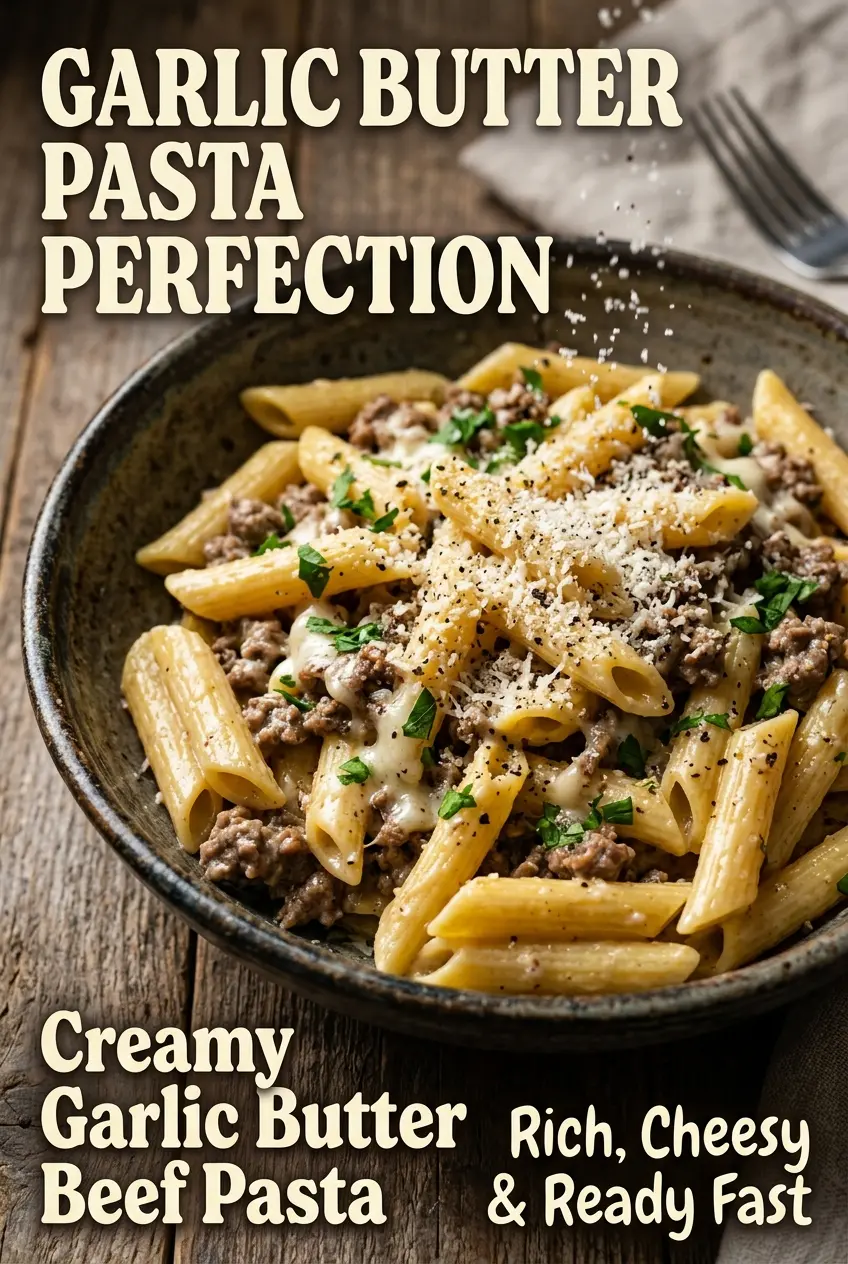
Creamy Garlic Butter Beef Pasta
Ingredients
Equipment
Method
- Cook the penne or rotini pasta according to the package directions until al dente, then drain and reserve 1/2 cup pasta water.
- Keep the pasta warm while you make the beef sauce so it stays ready to toss.
- Heat the olive oil and 2 tablespoons butter in a large skillet over medium-high heat until butter is melted and shimmering.
- Add the ground beef and diced onion and cook until the beef is browned, stirring as needed for even color.
- Stir in the minced garlic, Italian seasoning, paprika, onion powder, salt, and black pepper and cook for 1 minute until fragrant.
- Add the beef broth and simmer for 2 minutes, letting the liquid reduce slightly.
- Stir in the heavy cream and Dijon mustard and heat until the mixture is smooth and gently bubbling.
- Add the Parmesan and mozzarella and stir continuously until the cheeses melt into a smooth sauce.
- Add the cooked pasta and toss until fully coated in the creamy cheese sauce.
- Add a little reserved pasta water only if needed to loosen the sauce into a silkier consistency.
- Garnish with fresh parsley, extra Parmesan, and cracked black pepper before serving.