Juicy chicken, crisp-tender vegetables, and a savory herb finish all come together in one skillet without turning into a soggy pile at the end. That matters here, because the difference between a good chicken-and-vegetable dinner and a forgettable one usually comes down to whether the chicken gets browned first and whether the vegetables are cooked in the right order. When those two things happen, you get separate, defined pieces of food with actual texture instead of steam-softened everything.
The seasoning blend does more than add flavor on the surface. Paprika, Italian seasoning, oregano, and garlic powder coat the chicken before it hits the pan, so the meat carries seasoning all the way through instead of relying on a sauce to rescue it later. Butter goes in after the chicken comes out, which gives the vegetables a richer base without burning the oil from the first stage. A little lemon juice at the end wakes up the whole pan and keeps the skillet from tasting flat.
Below, I’ve included the timing that keeps the zucchini from collapsing, the one substitution that still gives you good color, and the storage notes that matter if you’re cooking once and eating twice.
The chicken stayed juicy and the vegetables had actual bite, not that soft mush you get when everything goes in the pan at once. I loved that the lemon at the end made the whole skillet taste fresh without needing a sauce.
Save this chicken and vegetables skillet for a one-pan dinner with juicy chicken, crisp-tender vegetables, and a bright lemon finish.
The Difference Between Crisp-Tender and Watery Is the Order You Use
Chicken and vegetables in the same skillet can go sideways fast if the pan gets crowded or the vegetables go in too early. Chicken needs direct contact with the hot pan to brown first. Vegetables need staggered timing so the firmer ones start cooking before the quick-cooking ones join in. If everything enters together, the pan drops in temperature and the vegetables steam in their own moisture instead of picking up color.
The second thing that matters is when the garlic goes in. Garlic burns fast, and burnt garlic will take over the whole dish. That’s why it gets added at the end, after the vegetables have softened a bit and just before the chicken returns to the pan. The lemon juice also goes in at the end, where it can brighten the skillet without cooking off.
What Each Ingredient Is Doing in This Skillet
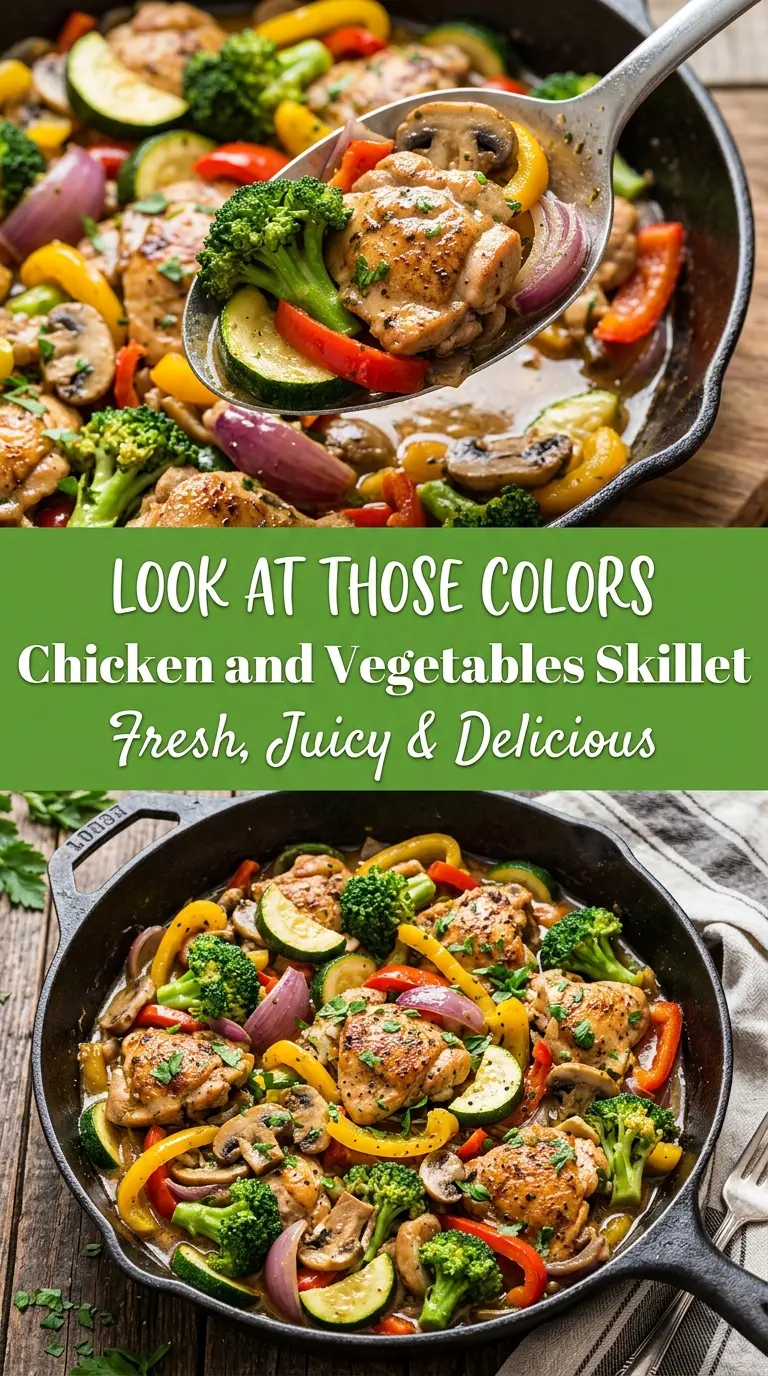
- Chicken breasts — Bite-sized pieces cook quickly and brown on more surface area than whole cutlets. If you swap in chicken thighs, you’ll get a little more richness and a bit more forgiveness if you overcook them by a minute.
- Olive oil — This starts the sear and handles the first round of heat. A neutral oil works too, but olive oil gives the skillet a better base flavor.
- Zucchini — This is the ingredient most likely to go soft, so it goes in after the firmer vegetables have had a head start. Cut it into thicker half-moons if your zucchini tends to collapse in the pan.
- Bell peppers, broccoli, mushrooms, and red onion — These build the body of the dish. The onion and broccoli need the earliest start, mushrooms bring a meaty savoriness, and peppers stay sweeter when they only cook until crisp-tender.
- Butter — This adds roundness to the vegetables after the chicken is removed. If you need a dairy-free version, use another tablespoon of olive oil, but the finish will taste cleaner and less rich.
- Lemon juice and parsley — These are the finishing touches that keep the skillet from tasting heavy. The lemon sharpens the seasoning, and the parsley gives the dish a fresh edge right before serving.
The 20 Minutes That Actually Matter
Getting the Chicken Browned Before the Vegetables Join In
Heat the olive oil over medium-high until it shimmers, then add the seasoned chicken in a single layer. If the pan looks crowded, cook it in two batches; packed chicken steams before it browns. You want light browning on the outside and no pink in the center, but stop short of pushing it too far because it goes back into the skillet later. Pull it out once it’s cooked through and leave the browned bits behind.
Cooking the Vegetables in the Right Order
Add the butter, then start with onion, mushrooms, and broccoli. They need the longest head start because they’re firmer and release moisture as they cook. After a few minutes, add zucchini and bell peppers, then keep cooking just until the edges soften and the colors stay bright. If the pan starts looking wet, keep the heat up so that moisture evaporates instead of pooling.
Finishing With Garlic and Lemon
Stir in the garlic for only about 30 seconds. You’re looking for a fragrant hit, not color. Return the chicken, add the lemon juice, and toss everything until the skillet looks glossy and evenly coated. The final result should taste savory first, then fresh at the end, with each vegetable still holding its shape.
Three Ways to Change It Without Losing What Makes It Work
Dairy-Free Skillet Finish
Swap the butter for another tablespoon of olive oil. You’ll lose a little of the round, silky finish that butter gives the vegetables, but the skillet still stays bright and clean. This is the easiest change if you’re cooking for someone who avoids dairy.
Chicken Thigh Version
Use boneless skinless thighs instead of breasts if you want a juicier, slightly richer result. They take a minute or two longer to cook, but they’re more forgiving if the pan runs hot. The rest of the method stays the same.
Gluten-Free by Default
This skillet is naturally gluten-free as written, as long as your seasoning blend doesn’t contain any added wheat-based fillers. That’s one reason it works well for mixed households: nobody has to lose texture or flavor to make it fit the table.
Turning It Into a Bigger Meal
Serve it over rice, quinoa, or buttered noodles if you want something more filling. The skillet has enough seasoning to carry a grain or pasta, and the pan juices cling well without needing extra sauce. Add a splash of broth if you want to stretch it farther.
Storage and Reheating
- Refrigerator: Store in an airtight container for up to 4 days. The vegetables soften a bit as they sit, but the flavor holds well.
- Freezer: It freezes, though the zucchini and peppers will be softer after thawing. Freeze in portions if you plan to use it for bowls or wraps later.
- Reheating: Warm it in a skillet over medium heat with a small splash of water or broth. The most common mistake is blasting it in the microwave until the chicken turns dry and the vegetables collapse.
Questions I Get Asked About This Recipe
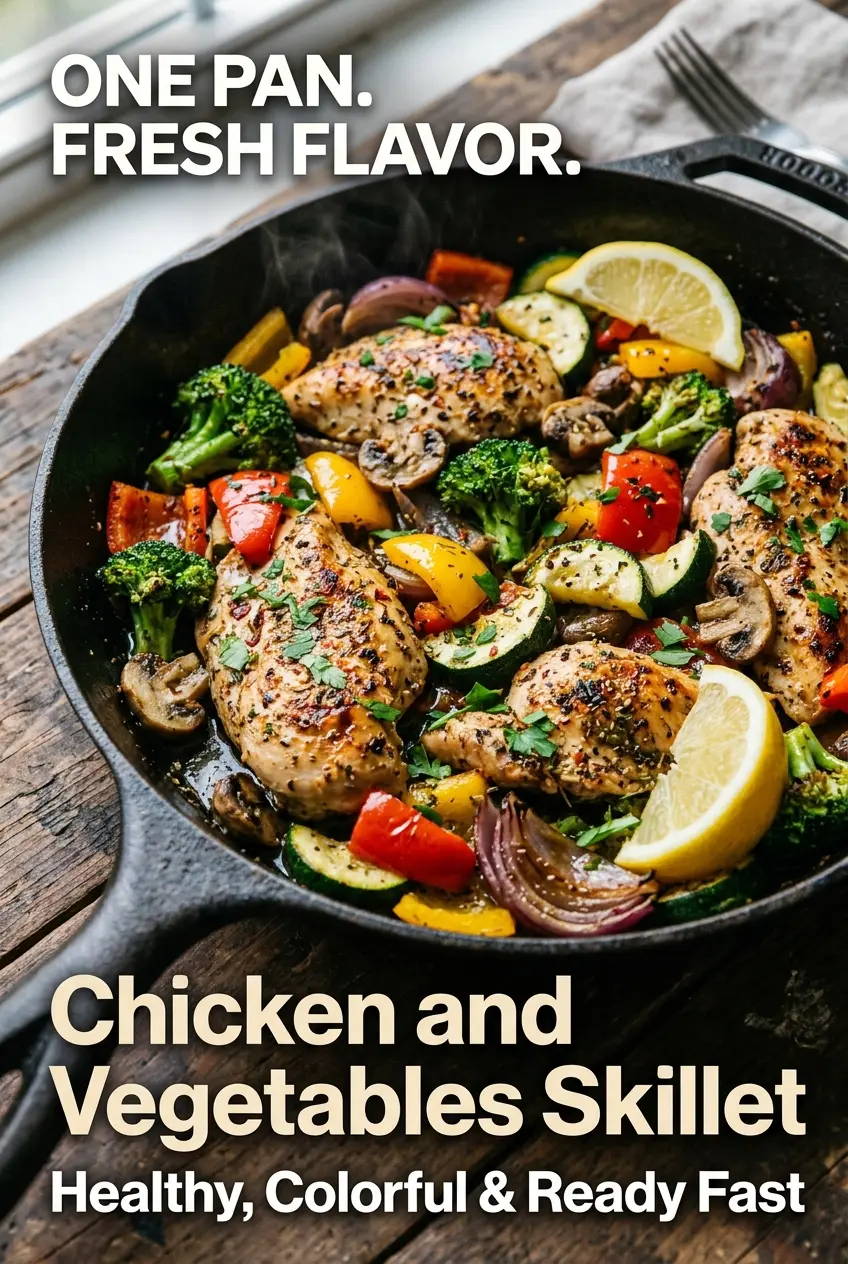
Chicken and Vegetables Skillet
Ingredients
Equipment
Method
- Heat 2 tbsp olive oil in a large skillet over medium-high heat until shimmering.
- Season the bite-sized chicken with Italian seasoning, paprika, onion powder, garlic powder, dried oregano, salt, and black pepper.
- Cook the chicken for 6–7 minutes, stirring occasionally, until lightly browned and cooked through.
- Remove the chicken from the skillet and set aside.
- Add 1 tbsp butter to the skillet and let it melt.
- Cook the sliced red onion, sliced mushrooms, and broccoli florets for 3 minutes.
- Add the sliced zucchini and chopped red and yellow bell peppers.
- Cook for another 4–5 minutes until the vegetables are crisp-tender.
- Stir in the minced garlic and cook for 30 seconds, just until fragrant.
- Return the cooked chicken to the skillet and toss to combine with the vegetables.
- Add 1 tbsp fresh lemon juice and toss everything together until evenly coated.
- Garnish with chopped fresh parsley and serve immediately.