Oven-baked salmon gets a lot better when the topping does more than sit there. The Dijon and garlic mixture here turns into a thin, savory crust that clings to the fish, keeps the surface from drying out, and gives every bite a sharp, buttery edge. The salmon stays tender in the center, flakes cleanly, and comes off the pan without the kind of overcooked, chalky texture that ruins an otherwise good dinner.
The trick is using just enough honey and lemon to round out the Dijon without thinning it into a runny sauce. Olive oil carries the garlic and paprika across the fillets, while the mustard helps the coating set up in the oven instead of sliding off. That balance matters. Too much acid and the topping gets loose; too much heat and the fish goes from silky to dry in a minute.
Below, I’ve included the timing that keeps salmon moist, the ingredient swap that works if you’re out of Dijon, and a few variations for different diets and sides.
The Dijon-garlic topping baked into a perfect little crust and the salmon stayed so moist. I pulled it at 13 minutes and it flaked beautifully without falling apart.
Pin this Dijon salmon for a fast dinner with a crisp mustard crust and barely any cleanup.

The Salmon Mistake That Makes the Coating Slip Right Off
The coating only works if the salmon is dry on the surface before it goes on the pan. Any moisture left on the fillet turns the mustard mixture loose, and instead of a tidy crust you get a watery layer that never really sets. Pat the fish dry, then spread the topping in a thin, even coat so it can cling and bake into the surface.
Salmon also cooks faster than most people expect, especially if the fillets are on the thinner side. Pulling them at the right moment matters more than the exact minute count. You want the thickest part to flake with gentle pressure, but the center should still look slightly glossy when it comes out of the oven. It will finish cooking from the residual heat while it rests.
- Salmon fillets — Center-cut fillets cook most evenly because the thickness stays consistent. If yours have skin, leave it on; it helps protect the fish and lifts off more cleanly once baked.
- Dijon mustard — This is the backbone of the coating. Regular yellow mustard tastes sharper and more one-note, while whole-grain mustard gives a chunkier finish. Dijon has the best balance of tang and body here.
- Garlic — Fresh minced garlic gives the topping its bite, but it can burn if the pieces are too large. Mince it finely so it softens into the mustard instead of tasting harsh.
- Honey — Just a small amount rounds out the mustard and helps the top color without turning sweet. Maple syrup works in a pinch, though it gives a slightly deeper, less sharp finish.
- Lemon juice — Fresh lemon brightens the whole dish and keeps the mustard from tasting flat. Bottled juice works in a pinch, but fresh gives a cleaner finish.
- Paprika — This adds color more than heat. Smoked paprika is a good swap if you want a little extra depth, but use it lightly so it doesn’t dominate the fish.
How to Bake the Salmon So It Stays Moist and Flaky
Mixing the Mustard-Garlic Coating
Stir the Dijon, garlic, olive oil, lemon juice, honey, paprika, salt, and pepper until the mixture looks smooth and spreadable. It should be thick enough to sit on top of the salmon without running off the sides. If it looks too loose, the fish will steam under the topping instead of baking with a defined crust. A spoon is fine for mixing, but don’t skip tasting the coating before it goes on the fish.
Setting the Salmon Up for the Oven
Line the baking sheet with parchment so the mustard glaze doesn’t glue itself to the pan. Place the fillets a little apart from each other so hot air can move around them. If they’re crowded together, they trap steam and the tops stay soft instead of lightly caramelized. Spread the topping over each fillet in a thin layer right to the edges, but don’t pile it on so thick that it slides into the pan.
Watching for the Right Doneness
Bake at 400°F until the salmon flakes easily at the thickest point, usually 12 to 15 minutes depending on thickness. A deeper pink center is fine if the fish is still translucent-looking in the middle, because it will carry over as it rests. If the top starts browning hard before the fish is done, the oven is running hot or the fillets are very thin. Pull them early rather than waiting for the surface to look fully firm.
Finishing with Parsley and Lemon
Let the salmon sit for a minute, then scatter on the parsley and add lemon slices at the table. That last hit of freshness keeps the mustard from tasting heavy. If you squeeze lemon over the fish straight from the oven, the acid wakes up the garlic and the whole dish tastes cleaner. Serve it while the edges are still warm and the center is tender.
What to Change When You Want a Different Finish
Make it dairy-free as written
This recipe already fits a dairy-free meal plan, which is part of why it lands so well on a weeknight table. Keep the olive oil in the coating so the top stays glossy and the garlic spreads evenly. There’s no cream or butter here to replace, so the flavor stays clean and the salmon stays light.
Use whole-grain mustard for a more rustic look
Whole-grain mustard gives you a speckled coating and a little more texture on top of the fish. The flavor is slightly softer than Dijon, so the dish reads less sharp and a bit more earthy. It’s a good swap if you want the salmon to look a little more casual and less streamlined.
Swap the lemon for orange when you want something softer
Orange juice and orange slices make the glaze rounder and less bracing. The fish will taste gentler, with a slightly sweeter finish that works well if you’re serving it with rice or roasted carrots. Keep the amount small, since too much juice loosens the topping.
How to store and reheat leftovers
- Refrigerator: Store cooked salmon in an airtight container for up to 3 days. The coating softens a little, but the fish stays flavorful.
- Freezer: It freezes best if wrapped tightly and stored without the lemon garnish. Thaw overnight in the fridge before reheating so the texture doesn’t turn dry.
- Reheating: Warm it gently at 300°F until just heated through, or use low power in the microwave in short bursts. High heat is what turns leftover salmon chalky, so stop as soon as the center loses its chill.
Answers to the Questions Worth Asking
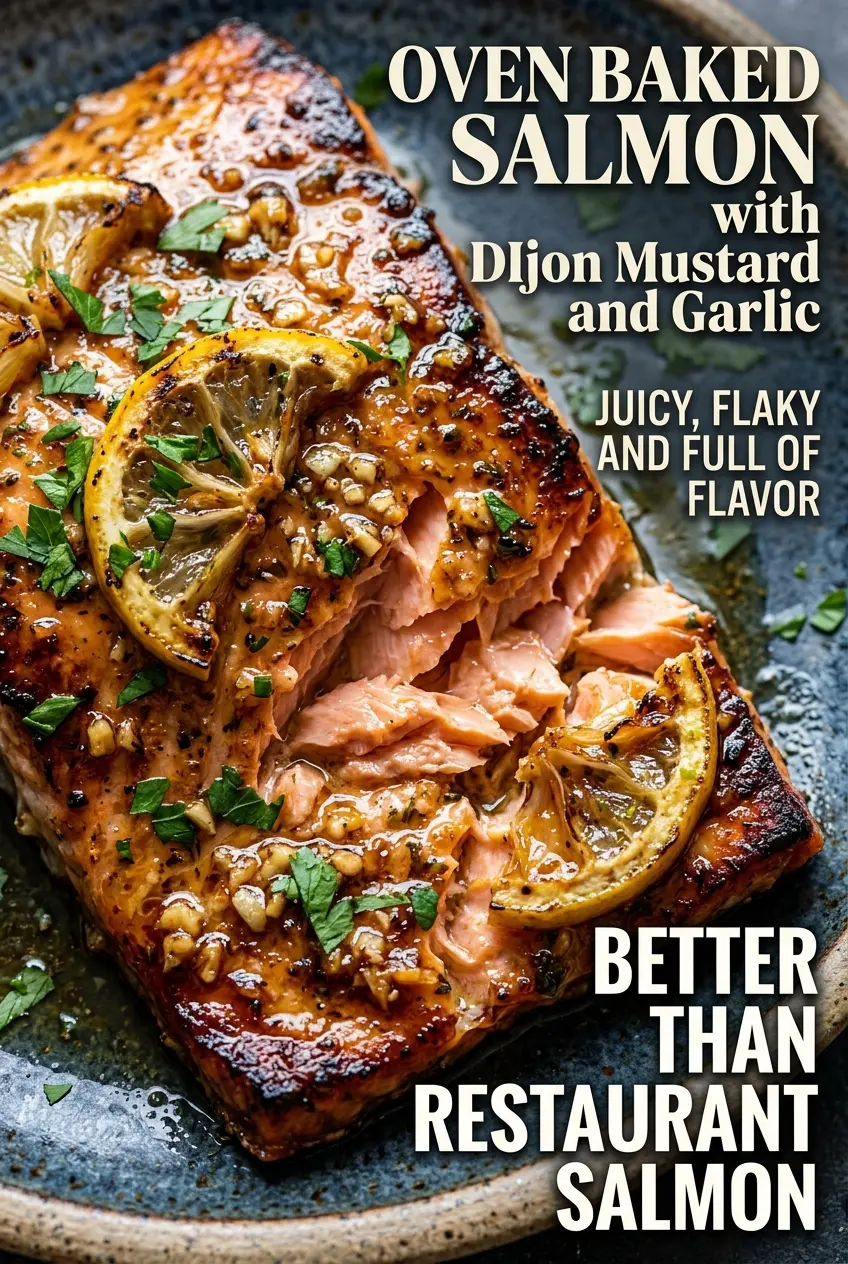
Oven Baked Salmon with Dijon Mustard and Garlic
Ingredients
Equipment
Method
- Preheat the oven to 400°F (200°C). Let it fully come up to temperature before baking for even cooking.
- Line a sheet pan with parchment paper. This prevents sticking and helps the salmon stay tender.
- Whisk together Dijon mustard, garlic, olive oil, lemon juice, honey, paprika, salt, and black pepper in a small bowl. Mix until smooth and evenly colored.
- Place the salmon fillets on the prepared baking sheet. Arrange them in a single layer with space between for proper heat flow.
- Spread the Dijon mixture evenly over each fillet. Cover the top surfaces so the coating bakes into a flavorful crust.
- Bake for 12–15 minutes at 400°F (200°C) until the salmon flakes easily with a fork. The flesh should turn opaque and moist-looking as it finishes.
- Garnish with chopped fresh parsley and lemon slices. Serve immediately while the coating is still aromatic.
- Serve the salmon immediately with vegetables, rice, or a fresh salad. Pairing ideas help balance the Dijon tang and rich salmon flavor.