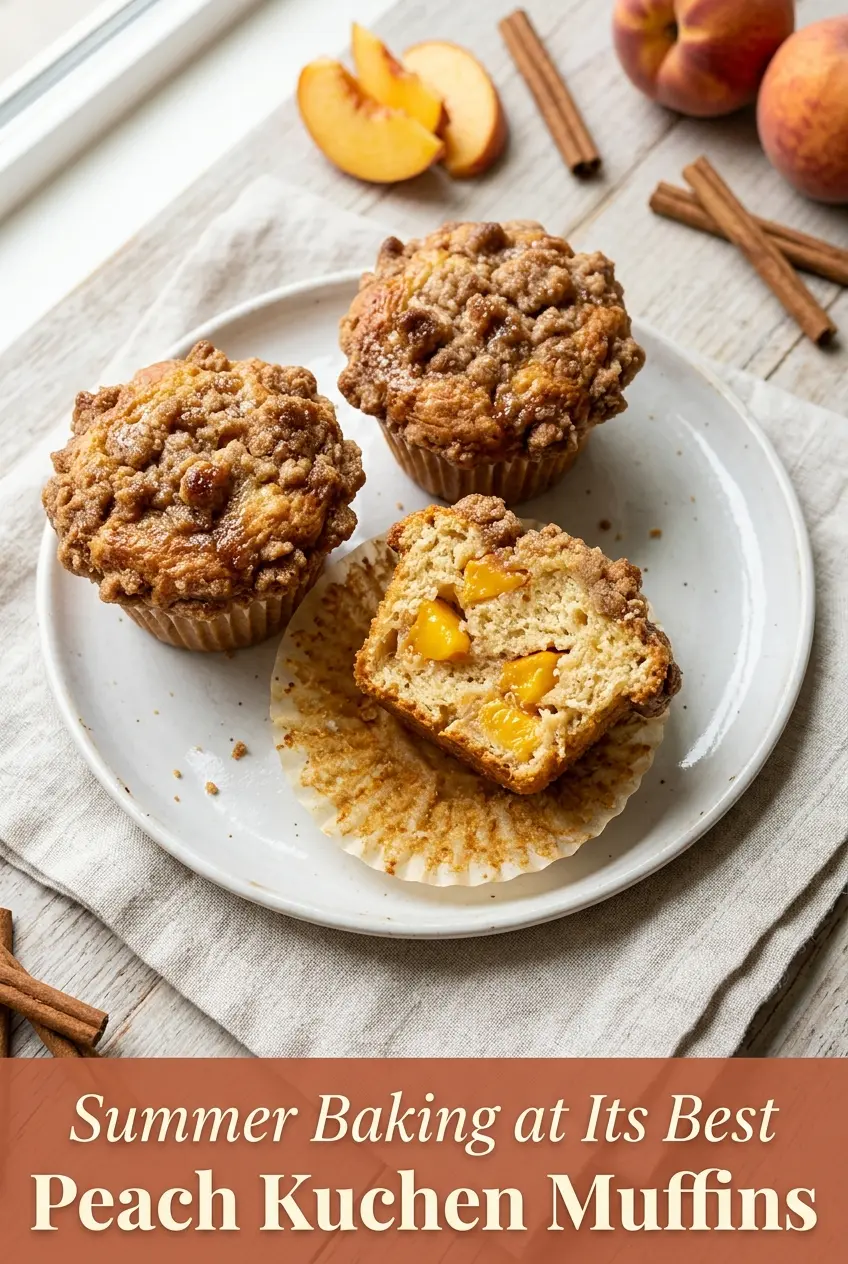
Peach Kuchen Muffins land somewhere between a tender coffee cake and a bakery-style muffin, and that’s exactly why they disappear fast. The crumb stays soft from the sour cream, the peaches turn jammy in the oven, and the cinnamon-sugar topping bakes into a crisp, sandy crown that gives every bite a little crunch. They’re the kind of muffin that feels familiar the first time you make them, like they’ve already earned a permanent spot on the counter.
The trick here is keeping the batter just barely mixed so the muffins stay light instead of dense. Sour cream gives you moisture without making the crumb heavy, and the melted butter keeps the texture rich without needing a mixer. Fresh peaches work best because they hold their shape and bring real fruit flavor, but they need to be diced small enough to spread evenly through the batter. The crumble matters too: cold butter and a quick rub with your fingertips keep it from melting into a paste before it hits the oven.
Below, you’ll find the part that matters most when peaches are juicy, the reason the topping stays crisp, and a few smart ways to adapt these muffins without losing what makes them worth baking.
The crumb topping stayed crisp even after cooling, and the peaches baked into little soft pockets instead of sinking to the bottom. I used very ripe peaches and they came out perfect at 22 minutes.
Keep these Peach Kuchen Muffins on hand for a soft peach-studded bake with that golden cinnamon crumble on top.
The Secret to Muffins That Rise Tall Instead of Turning Heavy
Most peach muffins go wrong in one of two ways: the batter gets overmixed, or the fruit gets folded in too aggressively and breaks the structure. Once flour is wet, it starts building gluten. Stir it too long and the muffins bake up tight instead of tender. The other issue is fruit weight. Big chunks of peach can slide straight to the bottom if the batter is thin or the pieces are too large.
This recipe avoids both problems by keeping the batter thick and the peach pieces small enough to suspend through the crumb. The sour cream gives body, which helps the muffins rise around the fruit instead of collapsing under it. The crumble topping also does more than add texture. It protects the tops from drying out and gives you that kuchen-style finish that makes these feel a little more special than a standard breakfast muffin.
What Each Ingredient Is Actually Doing in This Batch

- All-purpose flour — This gives the muffins their structure and also builds the crumble topping. Cake flour would make them softer, but not sturdy enough to hold the peaches as well.
- Sour cream — This is the ingredient that keeps the crumb plush and moist. Plain yogurt can stand in, but use full-fat yogurt so you don’t lose the same rich texture.
- Melted butter — Melted butter gives a denser, more tender muffin than creamed butter would, which fits this style. Let it cool before mixing so it doesn’t scramble the eggs or thin the batter.
- Fresh peaches — Fresh fruit brings the best texture here because it bakes into soft pockets without watering down the batter. If your peaches are very juicy, dice them small and pat them dry after peeling.
- Cold butter for the crumble — Cold cubes are what keep the topping sandy and crisp instead of pasty. If it warms up too much, chill the bowl for 10 minutes before sprinkling it on.
How to Build the Batter and Keep the Crumble Crisp
Mix the dry ingredients first
Whisk the flour, leaveners, salt, and cinnamon until everything looks evenly combined. That keeps the baking powder from clumping in one pocket and gives the cinnamon a fair shot at flavoring the whole batch. If you see streaks of baking soda after mixing, the batter won’t rise evenly and you’ll get odd little pockets with a bitter edge.
Work the wet ingredients into a smooth base
Whisk the sugar, eggs, melted butter, sour cream, and vanilla until the mixture looks glossy and smooth. You’re looking for a base that feels thick but pourable, not watery. If the butter is too warm, it can leave greasy streaks; let it cool until it’s just barely warm to the touch before using it.
Fold, don’t beat, once the flour goes in
Stir the wet mixture into the dry ingredients only until the flour disappears. A few small streaks are fine because they’ll finish hydrating in the oven. This is the point where people overmix and end up with muffins that bake up tough. Add the peaches last and fold just enough to distribute them without crushing them into the batter.
Top generously and bake until the centers spring back
Divide the batter evenly, then heap the crumble on top rather than sprinkling it lightly. The topping should look shaggy and uneven before it goes into the oven. Bake until the tops are deeply golden and a toothpick comes out clean or with a few moist crumbs. If you pull them too early, the centers stay gummy from the fruit.
Three Ways to Adapt These Muffins Without Losing the Good Part
Make them dairy-free
Swap the butter for a plant-based stick butter and use a thick dairy-free yogurt in place of the sour cream. The crumb will still be tender, though it won’t have quite the same richness, and the topping may brown a little faster, so start checking a minute or two early.
Use frozen peaches when fresh ones aren’t available
Thaw the peaches first, then drain them well and pat them dry before folding them in. Frozen fruit brings more moisture, so skipping the draining step can leave the muffins soggy at the bottom.
Turn them into a gluten-free version
Use a 1:1 gluten-free baking blend that already includes xanthan gum. The texture will be a little more delicate, so let the muffins cool in the pan for the full 5 minutes before moving them to a rack.
Make them a little less sweet
Cut the granulated sugar in the batter by 2 to 3 tablespoons and leave the crumble as written. The muffins will taste a touch more peach-forward, but the topping still gives you enough sweetness to keep the balance right.
Storage and Reheating
- Refrigerator: Keep in an airtight container for up to 4 days. The crumble softens a little, but the muffins stay moist.
- Freezer: Freeze individually wrapped muffins for up to 2 months. Thaw at room temperature so the topping doesn’t turn wet in the microwave.
- Reheating: Warm in a 300°F oven for 6 to 8 minutes. The oven brings back the topping’s texture better than a microwave, which tends to soften the crumble and make the fruit layer steamy.
Answers to the Questions Worth Asking
Peach Kuchen Muffins
Ingredients
Equipment
Method
- Preheat the oven to 375°F (190°C) and line a 12-cup muffin tin with paper liners or grease well with butter to prevent sticking.
- In a small bowl, mix 1/3 cup flour, 1/4 cup granulated sugar, 1/4 cup brown sugar (packed), and 1/2 tsp cinnamon.
- Add cold butter cubes and rub with fingertips until coarse, pea-sized crumbs form, then refrigerate while you make the batter so the topping stays crumbly.
- In a large bowl, whisk 2 cups flour, baking powder, baking soda, salt, and 1 tsp cinnamon evenly.
- In a separate bowl, whisk granulated sugar, eggs, melted and cooled butter, sour cream, and vanilla until smooth and well combined.
- Pour the wet mixture into the dry mixture and fold gently with a spatula until just combined, leaving small lumps and avoiding overmixing for a tender crumb.
- Fold in the diced peaches carefully, distributing them evenly throughout the batter so every muffin has fruit.
- Divide the batter evenly among the 12 muffin cups, filling each about 3/4 full for proper rise.
- Sprinkle the cold crumble topping generously over each muffin so you get a golden top crust.
- Bake for 20–24 minutes at 375°F (190°C) until the tops are golden and a toothpick inserted in the center comes out clean.
- Let the muffins cool in the pan for 5 minutes so they set enough to transfer.
- Transfer to a wire rack and serve warm or at room temperature for best flavor and texture.