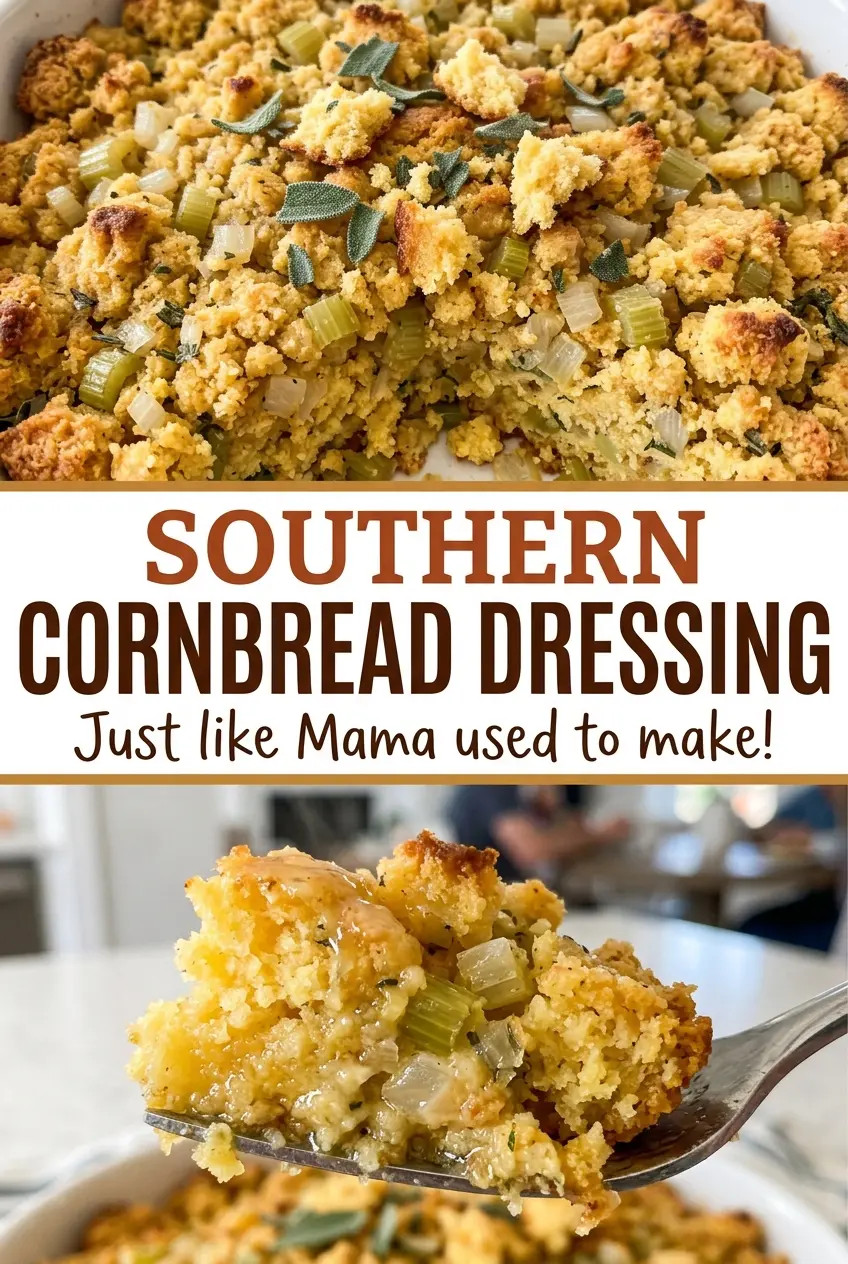
The broth looks like a lot when it first hits the crumbled cornbread and torn sandwich bread. That’s exactly the moment I used to worry I’d made the mixture too wet, but the bread needs to be evenly moistened before it goes into the oven. In this Southern cornbread dressing, that generous pour is what gives each scoop a tender middle beneath the browned top.
I bake the cornbread first, then let it cool before crumbling it with the softer white bread. The two give the dressing a more balanced texture than cornbread alone: tender and cohesive, with enough crumb to hold its shape. Onion and celery soften in butter before they join the bowl, so their flavor carries through without crisp pieces interrupting the dressing. The finished pan comes out browned on top, savory from sage, and soft enough to serve in generous spoonfuls.
Kitchen Note
The 12-inch skillet gives the onion and celery room to soften evenly in the butter. A crowded pan can leave you with crisp bits in the middle of an otherwise tender dressing.
Save this Southern cornbread dressing for a tender, savory holiday-style side with a browned top and a soft center.
Why Southern Dressing Needs an Evenly Damp Crumb Before It Goes in the Oven
A dressing mixture can look wetter in the bowl than you expect, and that’s not a reason to drain off broth or add extra bread. The bread needs contact with the liquid throughout so the baked center doesn’t end up with dry pockets beside soggy ones. Fold gently until the pieces look evenly moistened, rather than stirring hard enough to turn the cornbread into paste.
The texture changes as the dish bakes. Before baking, the bread is soft and yielding; in the oven, the eggs help the mixture set while the top browns. That shift is why the bowl shouldn’t be judged by the finished-dish texture. If you start with a mixture that’s already stiff and crumbly, the center is likely to eat dry after baking.
Keep the two doneness cues in mind rather than relying on color alone: the top should be browned, and the center needs to reach 160°F. Once it comes out of the oven, the dressing gets a short rest before serving, which helps the slices and spoonfuls hold together instead of collapsing into loose crumbs.
What the Cornbread, Sandwich Bread, and Broth Each Contribute

- Yellow cornmeal and all-purpose flour — Cornmeal brings the familiar corn flavor and a slightly grainy crumb, while flour gives the cornbread enough structure to crumble into the dressing. Regular all-purpose flour is the sensible choice here; self-rising flour isn’t a direct swap because the batter already contains leavening.
- Buttermilk — Its gentle tang balances the cornmeal, and its acidity works with the baking soda in the batter. Cultured buttermilk from the dairy case is the most dependable option; ordinary milk won’t bring the same acidity or flavor.
- White sandwich bread — The softer crumb absorbs broth differently from cornbread and helps the baked dressing hold together. Use plain white sandwich bread rather than a strongly flavored or seeded loaf, which would pull the seasoning in another direction.
- Unsalted butter, onion, and celery — Butter carries the aroma of the softened vegetables through the bread, while unsalted butter leaves the seasoning easier to control. Fresh onion and celery are worth using; pre-chopped vegetables are fine if they’re cut small enough to soften evenly.
- Rubbed sage and poultry seasoning — Together they give the dressing its savory, familiar seasoning. Rubbed sage is the right form for this mixture; ground sage is more concentrated and can taste sharp if swapped in without adjustment.
- Eggs and low-sodium chicken broth — The eggs help the center set, and low-sodium broth supplies moisture without making the finished dish too salty. Keep the broth low-sodium if you want the measured kosher salt to stay in balance.
From Skillet Vegetables to a Set, Browned Center
Bake and cool the cornbread
Heat the oven to 400°F. Whisk the cornmeal, flour, sugar, baking powder, and baking soda in one bowl, then whisk the buttermilk, egg, and vegetable oil in another. Stir the wet mixture into the dry ingredients just until no dry streaks remain; overmixing can make the cornbread tough. Pour the batter into a cooking-spray-coated 8-inch square pan and bake for 20–25 minutes, until golden and a toothpick comes out clean, then cool it in the pan for 30 minutes.
Soften the onion and celery
Reduce the oven to 350°F and coat a 9×13-inch baking dish with cooking spray. Melt the butter in a skillet over medium heat, then add the finely chopped onion and celery. Cook them for 8–10 minutes, stirring occasionally, until softened; if they still feel crisp, give them the time they need before taking the pan off the heat. The vegetables should be tender, not browned or crunchy.
Combine the breads and seasonings
Crumble the cooled cornbread into a large bowl, add the torn white bread, and toss the two together. Stir in the softened vegetables, rubbed sage, poultry seasoning, black pepper, and kosher salt so the seasoning is distributed before the liquid goes in. Whisk the eggs into the chicken broth in a separate bowl, then pour it over the bread mixture. Fold until the bread is evenly moistened, taking care not to mash the crumbs.
Bake until the center sets
Transfer the mixture to the prepared baking dish and spread it into an even layer. Bake for 45–55 minutes, watching for a browned top as the center cooks through. The surface can brown before the middle is ready, so check the center with an instant-read thermometer rather than using color as the only cue. Rest the dish for 10 minutes before serving.
Two Ways to Shift the Flavor Without Losing the Dressing
Make it vegetarian with vegetable broth
Replace the chicken broth with the same amount of low-sodium vegetable broth. The dressing keeps its tender, set texture, though the savory taste will be a little less chicken-forward.
Let the sage stand on its own
Leave out the poultry seasoning and keep the rubbed sage, black pepper, and salt. The result has a simpler, more direct sage flavor without changing the soft cornbread-and-bread texture.
Storage and Reheating
- Refrigerator: Cool promptly, cover, and refrigerate within two hours. The dressing keeps for 3–4 days; the top softens as it sits.
- Freezer: It freezes well. Wrap cooled portions airtight and freeze for up to 3 months; thaw overnight in the refrigerator for more even reheating.
- Reheating: Warm portions in a 350°F oven, covered, until hot throughout, then uncover briefly if you’d like to bring back some crispness on top. Reheat leftovers to 165°F, and avoid leaving them in the oven longer than needed or the bread will dry out.
Questions That Come Up Before the Dressing Goes in the Oven
Southern Cornbread Dressing
Ingredients
Equipment
Method
- Preheat the oven to 400°F.
- Whisk the yellow cornmeal, all-purpose flour, sugar, baking powder, and baking soda in a medium bowl.
- Whisk the buttermilk, large egg, and vegetable oil in a second bowl.
- Stir the wet ingredients into the dry ingredients just until no dry streaks remain.
- Coat an 8-inch square baking pan with cooking spray and pour in the batter.
- Bake for 20–25 minutes, until golden and a toothpick comes out clean.
- Cool in the pan for 30 minutes.
- Reduce the oven temperature to 350°F.
- Coat a 9x13-inch baking dish with cooking spray.
- Crumble the cooled cornbread into a large bowl, add the torn white sandwich bread, and toss to combine.
- Melt the unsalted butter in a 12-inch skillet over medium heat.
- Add the yellow onion and celery, and cook for 8–10 minutes, until softened.
- Stir the cooked vegetables, rubbed sage, poultry seasoning, black pepper, and kosher salt into the bread mixture.
- Whisk the eggs into the low-sodium chicken broth.
- Pour the broth mixture over the bread and fold until evenly moistened.
- Transfer the mixture to the prepared baking dish.
- Bake for 45–55 minutes, until browned on top and the center reaches 160°F.
- Rest for 10 minutes before serving.