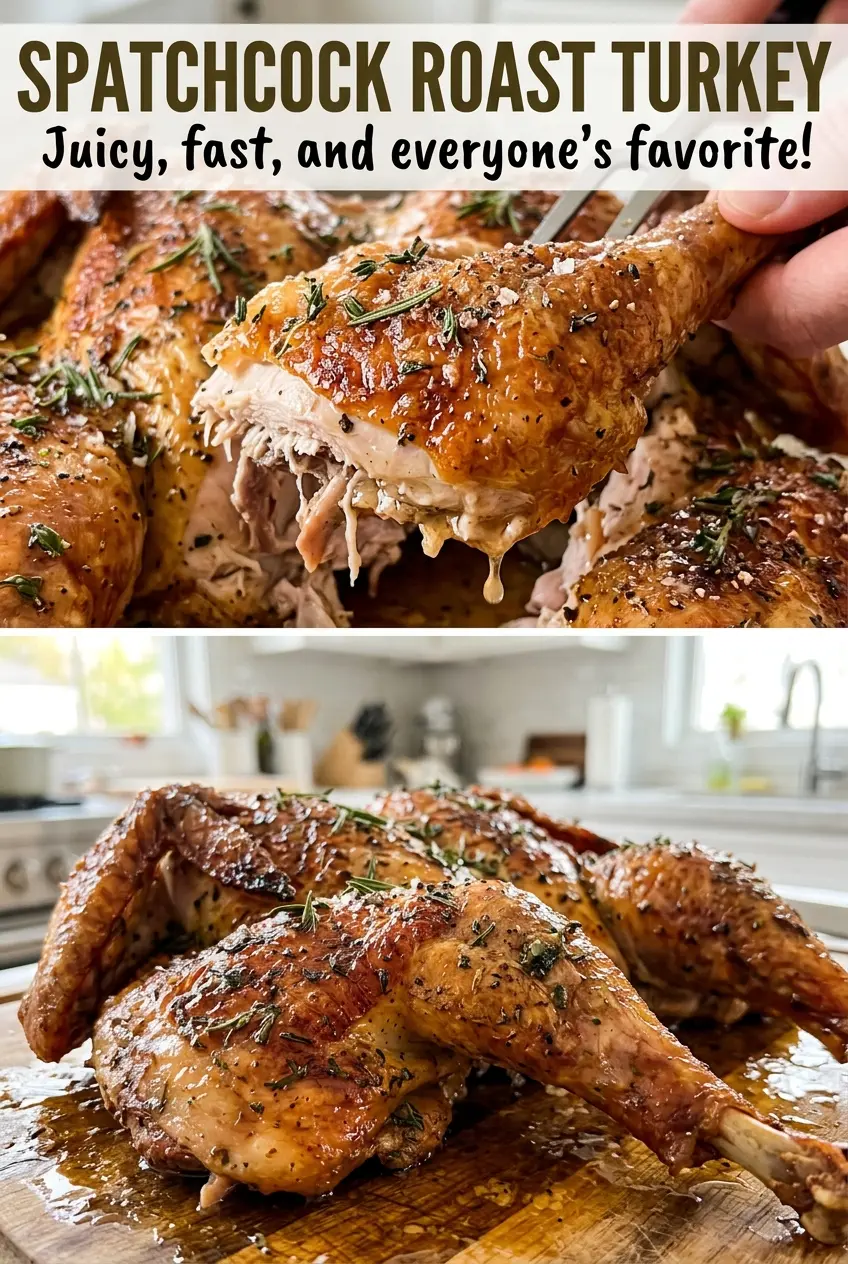
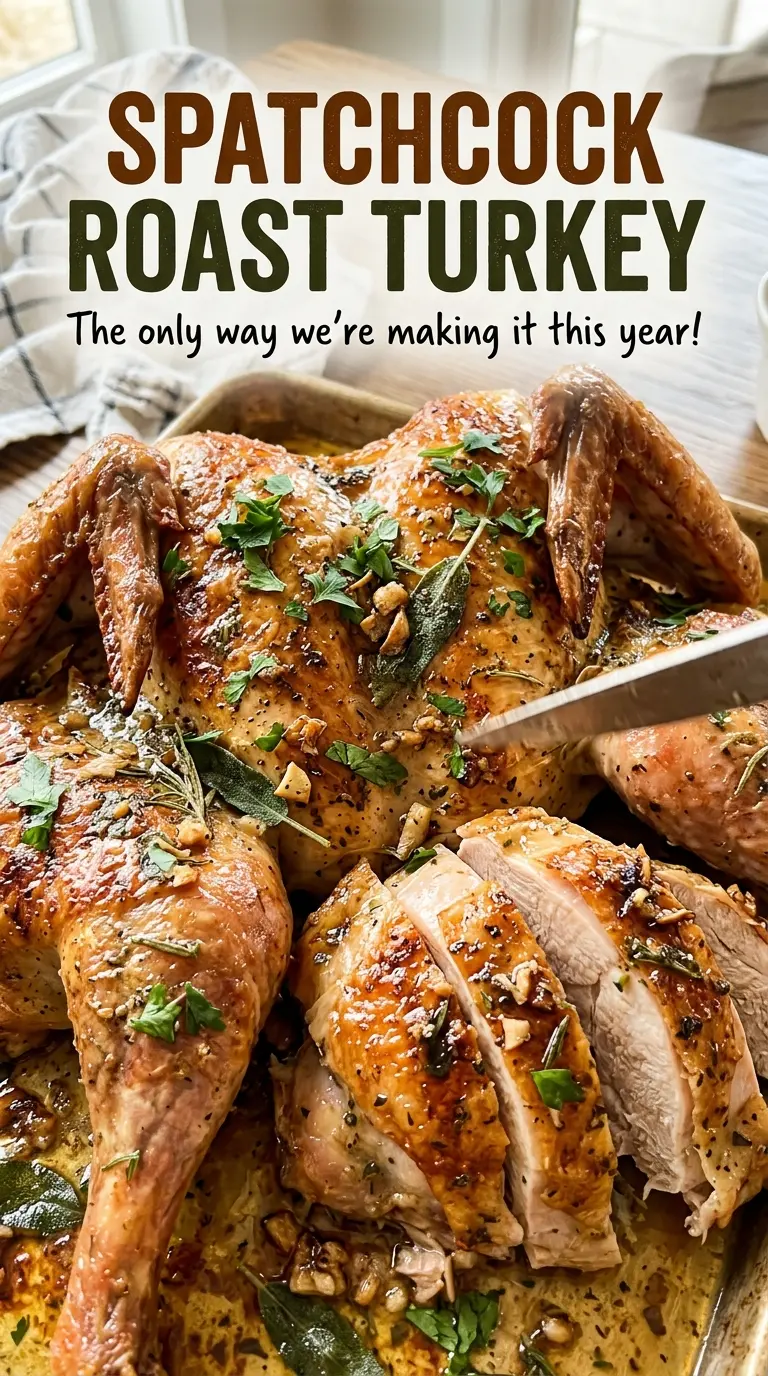
The first thing you notice when a turkey is spatchcocked is how much more manageable it looks on the cutting board: no tall, awkward bird tipping from side to side. I use poultry shears to remove the backbone, then press the breastbone until the turkey lies flat. That shape makes this spatchcock roast turkey a practical way to roast a 12- to 14-pound bird on a sheet pan, with the breast and thighs easy to check as they cook.
Giving the salted turkey time uncovered in the refrigerator is worth planning ahead for. The skin dries while the seasoning has time to work, and the softened herb butter goes beneath the skin instead of sitting in a thick layer on top. A little olive oil on the outside helps the skin brown as the turkey roasts at 425°F. The finished bird comes out fragrant with rosemary and thyme, with crisp-looking skin and plenty of carved turkey for the table.
Kitchen Note
Before I set up the cutting board, I check that the turkey is fully thawed and the neck and giblets are out of the cavity. That small bit of prep keeps the spatchcocking step from turning into a stop-and-start job.
Save this spatchcock roast turkey for a holiday-sized meal with crisp skin and rosemary-thyme butter tucked under the skin.
Why Flattening the Turkey Changes the Roast
A whole turkey is a tall shape, and the breast and thighs don’t sit at the same distance from the heat. The breast is broad and exposed, while the legs tuck closer to the body. Flattening the bird spreads those parts out, so hot oven air has more room to reach around the turkey instead of meeting a compact mound. That change in shape is the reason spatchcocking is more than a shortcut in handling.
It also gives the turkey a broad, stable footprint on the rack, which makes the roast easier to position and rotate. The method doesn’t make every part of the bird identical in thickness, so I still check the breast and the innermost thigh separately rather than guessing by color or relying on the clock alone. For a bird in this recipe’s size range, the result is a straightforward roast with clear doneness checks and an easy-to-carve shape.
Why the Herb Butter Goes Beneath the Skin
- Turkey — A fully thawed 12- to 14-pound bird fits the roasting time and sheet-pan setup here. A standard supermarket turkey is fine; check that its cavity is clear of the neck and giblets before you begin.
- Morton kosher salt — The recipe is measured for this coarse kosher salt, which is why I stick with the named brand rather than swapping in table salt by volume. Even coverage matters, including beneath the skin where your fingers can reach.
- Unsalted butter — Softened butter spreads more easily under the skin than cold butter and lets the rosemary, thyme, and black pepper coat the meat. Unsalted butter keeps the salt level controlled.
- Fresh rosemary and thyme — Freshly chopped herbs give the butter distinct herbal flecks and fragrance. If the herbs are limp or dry, they won’t bring the same fresh aroma; dried herbs also don’t make a direct one-for-one swap in this mixture.
- Olive oil — Brushed over the outside of the skin, it helps the surface roast and brown. The butter belongs underneath the skin; the oil is the simple finish for the exposed skin.
The Four Stages That Keep This Roast on Track
Cut the Backbone and Flatten the Bird
Pat the turkey dry with paper towels, then set it breast-side down on a cutting board. Use poultry shears to cut along both sides of the backbone and remove it. Turn the turkey breast-side up and press firmly on the breastbone until the bird lies flat; if it still arches, press again rather than leaving it perched unevenly.
Salt Both Sides and Give It Time
Rub the Morton kosher salt evenly over both sides of the turkey, then work some beneath the skin wherever you can reach. Set the bird skin-side up on a wire rack over an 18×13-inch rimmed baking sheet. Refrigerate it uncovered for 12 to 24 hours; don’t wrap it during this step.
Spread the Herb Butter Under the Skin
Heat the oven to 425°F while you stir together the softened butter, chopped rosemary, chopped thyme, and black pepper. Carefully loosen the skin enough to spread the butter over the breast and thighs beneath it. Work gently so the skin stays intact, then brush the outside with olive oil.
Roast, Check Both Areas, and Rest
Roast the turkey for 80 to 100 minutes, rotating the baking sheet halfway through. Insert a thermometer into the thickest part of the breast and the innermost part of the thigh, keeping the probe away from bone; both readings should reach 165°F. Move the turkey to a cutting board and leave it uncovered for 30 minutes before carving.
Two Useful Ways to Adapt the Herb Butter
Make the Herb Butter Dairy-Free
Use an equal amount of softened, unsalted dairy-free butter in place of the unsalted butter, and keep the rosemary, thyme, and black pepper in the mixture. Choose a firm dairy-free butter that softens like a baking stick; a soft tub spread can be harder to work beneath the skin and may give a less buttery result.
Let the Turkey Taste More Like Turkey
Leave the rosemary and thyme out of the butter and keep the butter and black pepper. The result is a simpler, less herbal roast that lets the turkey itself come through; the skin still gets its olive-oil brush before roasting.
Storage and Reheating
- Refrigerator: Carve the leftovers and refrigerate them within 2 hours in airtight containers. They keep for 3 to 4 days; the skin will soften after chilling.
- Freezer: Freeze carved turkey in airtight freezer-safe containers or bags for 2 to 6 months. Thaw it in the refrigerator before reheating for more even warming.
- Reheating: Warm only the portion you plan to eat, covered, in the oven or microwave until hot throughout. Reheating uncovered can dry the meat, and repeated warming softens the skin further.
Questions That Come Up While Roasting This Turkey
Spatchcock Roast Turkey
Ingredients
Equipment
Method
- Pat the turkey dry with paper towels.
- Set the turkey breast-side down on a cutting board and use poultry shears to cut along both sides of the backbone; remove the backbone.
- Turn the turkey breast-side up and press firmly on the breastbone until the bird lies flat.
- Rub the salt evenly over both sides of the turkey and beneath the skin where you can reach.
- Set the turkey skin-side up on a wire rack over an 18x13-inch rimmed baking sheet and refrigerate uncovered for 12 to 24 hours.
- Heat the oven to 425°F.
- Stir together the butter, rosemary, thyme, and black pepper.
- Carefully spread the butter mixture beneath the turkey skin over the breast and thighs.
- Brush the skin with the olive oil and roast for 80 to 100 minutes, rotating the pan halfway through, until a thermometer inserted into the thickest part of the breast and the innermost part of the thigh, away from bone, reads 165°F.
- Transfer the turkey to a cutting board and rest uncovered for 30 minutes before carving.