The bread cubes need to feel dry and crisp before broth ever touches them; if they’re still soft in the middle, they soak up liquid unevenly. I learned to give them their full turn in a low oven rather than hoping the final bake will fix damp bread. That little bit of preparation is what gives these stuffing muffins a crisp top without a soggy center.
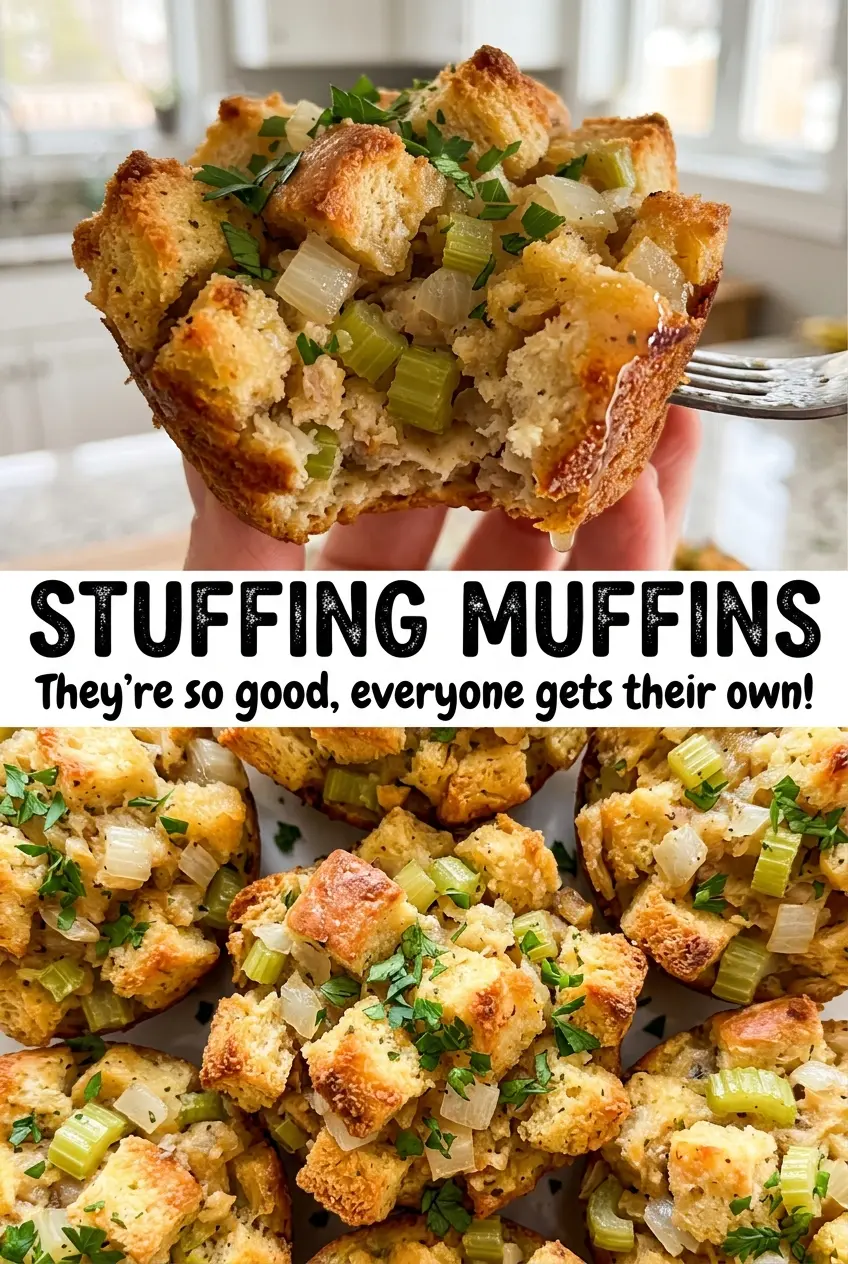
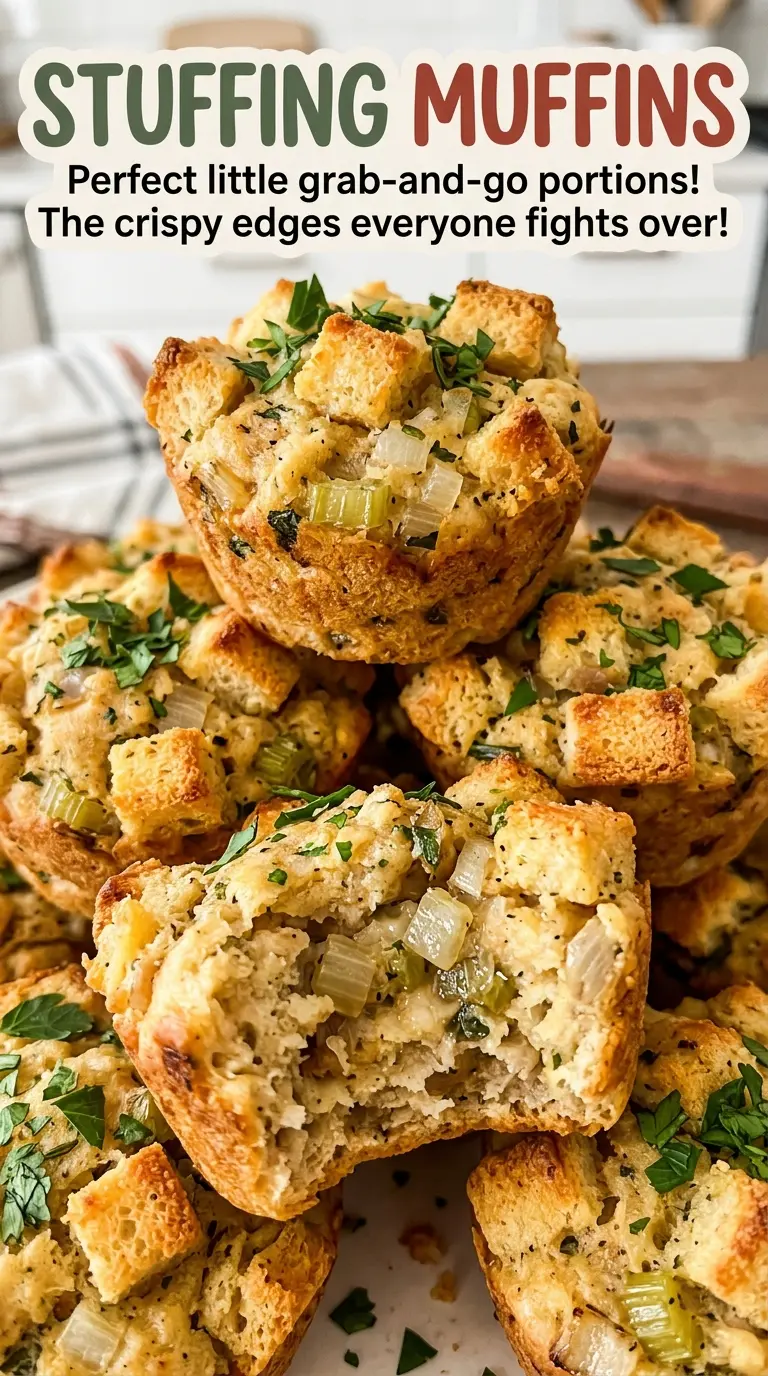
For this version, I cook the onion and celery until they’ve softened, then toss them with the bread, seasoned broth, eggs, and parsley. The mixture goes into a standard 12-cup muffin pan, where each portion gets its own browned edges and holds together neatly when lifted out. After baking, the tops are golden and crisp, while the centers stay moist and savory—just the balance I want from stuffing muffins.
Kitchen Note
Give the muffins 5 minutes in the pan before loosening them. They’re fragile right out of the oven, and that short rest helps each one lift out in a piece.
Save these stuffing muffins for a crisp-topped, individually portioned take on classic savory stuffing.
Why Stuffing Muffins Need a Crisp, Dry Starting Point
A muffin cup has a much higher edge-to-center ratio than a large baking dish. That’s part of the appeal: more of the stuffing gets close to the hot pan and oven air, so the tops and edges can turn crisp while the centers stay tender. But the same shape leaves less room for excess moisture to escape. Bread that’s damp going in can turn soft and heavy in the middle before the tops have time to brown.
Drying the cubes first gives them room to absorb the seasoned broth and egg mixture without collapsing. The aim isn’t to toast them dark; it’s to remove moisture until they’re dry and crisp. Once you add the liquid, toss gently but thoroughly so it reaches the bread evenly. A few dry pockets make crumbly spots, while a puddle of liquid at the bottom of the bowl signals uneven mixing. With crisp cubes and an evenly moistened mixture, the muffin shape gives you distinct portions with a browned top and a cohesive middle.
What the Bread, Broth, and Eggs Each Contribute
- White bread cubes — Plain white bread keeps the flavor familiar and lets the sage and thyme come through. The 1/2-inch pieces give the muffins a substantial bite; very small crumbs would make the mixture dense. Dry the cubes in the oven rather than relying on bread that merely feels a little stale.
- Chicken broth — Low-sodium broth brings savory flavor while leaving the seasoning in your hands. A good everyday carton is fine here; there’s no need for a highly concentrated stock that could overwhelm the herbs.
- Eggs — Whisked into the broth, eggs help bind the bread into portions that can be removed from the pan. They’re doing structural work, not just adding richness, so don’t treat them as an optional garnish ingredient.
- Onion and celery — These provide the soft, savory base and are best finely diced so they’re distributed through each cup. Take the time to soften them in butter; large, firm pieces interrupt the texture of the baked stuffing.
- Sage, thyme, and parsley — Dried sage and thyme season the butter and vegetables, while fresh parsley adds a brighter note to the finished mixture. Choose parsley with fresh green leaves; the dried herbs can be pantry staples.
Drying the Cubes Before Building Each Muffin
Dry the bread until crisp
Heat the oven to 300°F and coat a standard 12-cup muffin pan with cooking spray. Spread the 1/2-inch bread cubes on a rimmed baking sheet and bake for 20 to 25 minutes, until dry and crisp. If the cubes still feel soft, give them the full time rather than moving on early. Transfer them to a large bowl when they’re ready.
Soften the vegetables in butter
Melt the butter in a large skillet over medium heat, then add the finely diced onion and celery. Cook for 8 to 10 minutes, stirring occasionally, until both have softened. If the vegetables still seem firm, keep cooking until that raw crunch is gone. Stir in the dried sage, dried thyme, kosher salt, and black pepper.
Moisten and portion the stuffing
Whisk the chicken broth and eggs together, then pour the mixture over the bread cubes. Add the cooked vegetables and chopped fresh parsley, and toss until the bread is evenly moistened. Divide the mixture among the prepared muffin cups, pressing it firmly into each cup and mounding it slightly. If one cup looks much wetter than the others, toss the bowl again before filling the remaining cups.
Bake for golden tops and set centers
Increase the oven temperature to 375°F and bake the muffins for 25 to 30 minutes. Look for golden, crisp tops, and check that the centers reach 160°F. If the tops are browning before the centers are ready, use the center temperature rather than color alone to judge doneness. Rest the muffins in the pan for 5 minutes, then loosen and remove them.
Two Smart Ways to Adapt These Stuffing Muffins
Make them vegetarian with vegetable broth
Replace the chicken broth with the same amount of low-sodium vegetable broth. The muffins keep their savory, herby character, though the broth may give them a slightly different depth than chicken broth.
Use gluten-free white bread
Swap in 8 cups of 1/2-inch gluten-free white bread cubes and dry them in the same way. Different gluten-free loaves absorb liquid differently, so toss carefully and check that the mixture is evenly moistened before dividing it among the cups.
Storage and Reheating
- Refrigerator: Store cooled muffins in an airtight container for 3 to 4 days. The tops soften as they sit.
- Freezer: Freeze the cooled muffins in an airtight freezer-safe container for up to 2 to 3 months. Thaw them in the refrigerator before reheating.
- Reheating: Warm in a 350°F oven until heated through to 165°F. Avoid reheating until the tops are dark brown; cover loosely if they’re browning too quickly.
Questions That Come Up When Baking Stuffing Muffins
Stuffing Muffins
Ingredients
Equipment
Method
- Heat the oven to 300°F.
- Coat a standard 12-cup muffin pan with nonstick cooking spray.
- Spread the bread cubes on a rimmed baking sheet and bake for 20 to 25 minutes, until dry and crisp.
- Transfer the bread cubes to a large bowl.
- Melt the butter in a large skillet over medium heat.
- Add the onion and celery and cook for 8 to 10 minutes, stirring occasionally, until softened.
- Stir in the sage, thyme, salt, and pepper.
- Whisk the broth and eggs together.
- Pour the broth mixture over the bread.
- Add the cooked vegetables and parsley and toss until evenly moistened.
- Divide the mixture among the muffin cups, pressing it firmly into each and mounding it slightly.
- Increase the oven temperature to 375°F and bake for 25 to 30 minutes, until the tops are golden and crisp and the centers reach 160°F.
- Rest in the pan for 5 minutes.
- Loosen and remove the muffins.