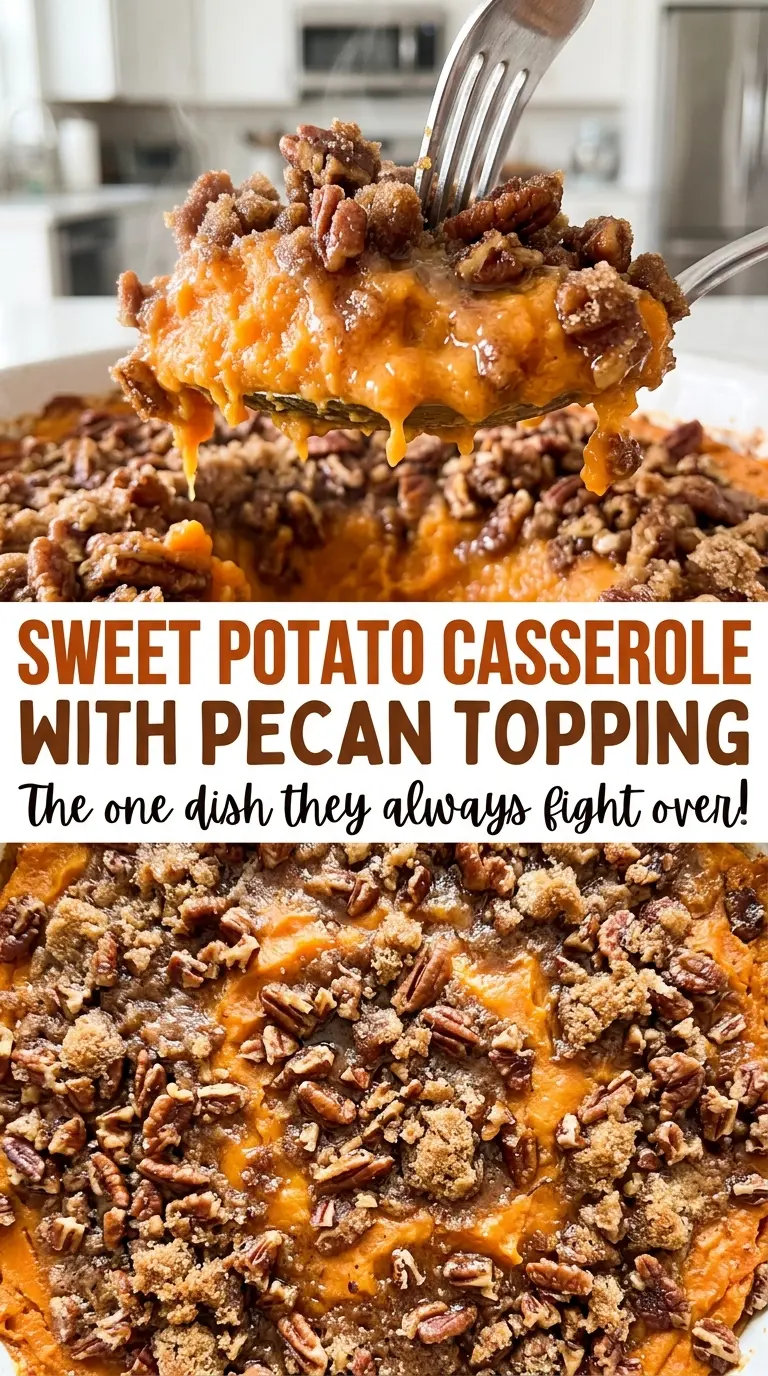
When the sweet potatoes are fork-tender, they mash into a smooth, naturally sweet base; the pecan topping is what gives each serving its contrast. This sweet potato casserole with pecan topping is baked in a 9×13-inch dish, so the filling stays soft beneath a golden, crumbly layer instead of disappearing under a thin crust.
I like that the filling comes together right in the saucepan used for the potatoes. The short cooling pause before adding the eggs matters: it lets the mash lose some of its heat, so the eggs blend in evenly rather than turning into little cooked bits. Then the topping is mixed by hand, which makes it easy to feel when the softened butter has formed the right crumbs. After baking, give the casserole its full rest before serving; the center settles into neat, spoonable portions with a buttery pecan crunch on top.

Kitchen Note
For a crisp, pebbly topping, use your fingertips to work the softened butter through the flour, brown sugar, and pecans. Stop when you have uneven crumbs; if you keep pressing, the mixture starts clumping into a paste instead.
Save this sweet potato casserole with its golden pecan topping for a make-ahead-worthy side with a soft, smooth center and buttery crunch.
Why the Eggs Need a Cooling Pause Before They Go In
Mashed sweet potatoes hold heat for a while, even after the saucepan comes off the burner. If eggs go straight into steaming-hot mash, their proteins can start setting before they’re evenly mixed through the filling. That leaves you with flecks of cooked egg and a less cohesive texture instead of the smooth, tender center this casserole is meant to have.
Let the potato mixture cool for 10 minutes after stirring in the melted butter, sugar, and salt. It should still feel warm, but it won’t be giving off the same burst of steam. Once the milk, eggs, and vanilla are mixed in, spread the filling into the dish without delay so it bakes evenly. This pause doesn’t make the process fussy; it gives the eggs a gentler start and helps the finished casserole hold together when you scoop it.
What the Sweet Potatoes and Pecan Crumble Each Bring
- Sweet potatoes — Fresh sweet potatoes make the base; peeling and cutting them into even pieces helps them become tender at about the same time. Choose firm ones without soft spots. Their natural sweetness and mashable texture are the foundation of the filling, so canned sweet potatoes won’t behave as a direct swap.
- Unsalted butter — Butter has two jobs here: melted butter enriches the filling, while softened butter binds the crumble. Unsalted butter also lets the measured salt stay in control. Use butter that’s genuinely softened for the topping; cold pieces are harder to work into the flour, while melted butter won’t make the same crumbly mixture.
- Whole milk and eggs — Whole milk loosens the mash and adds a little richness, while the eggs help the filling set as it bakes. Use the eggs at room temperature if you happen to have them out, but cold eggs work too; just mix until everything looks even rather than beating air into the filling.
- Vanilla and granulated sugar — Vanilla rounds out the sweetness without competing with the sweet potatoes. Granulated sugar dissolves into the filling, so stir it in while the mash is still warm. There’s no need for an especially expensive vanilla extract in a baked casserole; a standard pure or imitation extract will do the job.
- Pecans, flour, and brown sugar — Chopped pecans give the top its crunch, flour helps hold the topping together, and packed light brown sugar brings a soft caramel note. Fresh-tasting pecans matter most because stale nuts can taste flat or bitter. The flour can be an everyday all-purpose variety; it’s there for structure, not delicate pastry work.
From Fork-Tender Potatoes to a Golden Pecan Lid
Simmer the potatoes until a fork slides through
Heat the oven to 350°F and grease a 9×13-inch baking dish. Peel the sweet potatoes, cut them into 1-inch pieces, and put them in a 6-quart saucepan with cold water to cover by 1 inch. Bring the water to a boil over high heat, then lower the heat to medium and simmer for 15–20 minutes. They’re ready when a fork passes through a piece easily; if the center still feels firm, keep simmering and check again.
Mash, then let the filling cool briefly
Drain the potatoes well and return them to the saucepan. Mash until smooth, then stir in the melted butter, granulated sugar, and salt. Let the mixture cool for 10 minutes before adding the milk, eggs, and vanilla. Mix until evenly combined, then spread the filling in the greased dish; streaks of unmixed egg or vanilla mean it needs another gentle stir.
Work the pecan topping into uneven crumbs
In a medium bowl, combine the flour, packed light brown sugar, and chopped pecans. Add the softened butter and rub it through the mixture with your fingers until crumbs form. A mix of small and larger crumbs gives the baked top some texture. Scatter the topping across the filling so you don’t leave large bare patches.
Bake until golden, then give it a rest
Bake for 30–35 minutes, until the topping is golden and the center reaches 160°F. Check the center rather than judging only by the color of the nuts, since the topping can look ready before the middle has finished baking. Let the casserole rest for 10 minutes before serving. That short pause makes it easier to scoop portions without the filling slumping apart.
Three Changes That Keep the Casserole’s Texture Intact
Use dark brown sugar for a deeper topping
Swap dark brown sugar for the light brown sugar in the topping in the same amount. The extra molasses makes the crumble taste a little richer and more pronounced, while keeping its crisp, sandy texture.
Make it dairy-free with plant-based butter and milk
Replace the butter with dairy-free baking butter and use an equal amount of unsweetened, unflavored plant milk in place of the whole milk. The filling and topping will still bake, though the filling may taste a little less rich. The eggs remain in the recipe, so this change makes it dairy-free, not vegan.
Trade pecans for walnuts
Use chopped walnuts in place of the pecans for a similar crunchy topping with a slightly earthier, more assertive flavor. Keep the nuts chopped so they mix evenly into the flour, brown sugar, and butter.
Storage and Reheating
- Refrigerator: Cover and refrigerate leftovers within 2 hours; keep them for 3–4 days. The pecan topping softens as it sits.
- Freezer: Freeze fully cooled portions in an airtight container for up to 3 months. Thaw overnight in the refrigerator; the topping will be softer than it is fresh from the oven.
- Reheating: Cover the casserole and warm it in a 325°F oven until the center reaches 165°F. For an individual portion, use the microwave in short bursts; overheating can make the filling rubbery.
The Questions That Come Up Before This Casserole Goes in the Oven
Sweet Potato Casserole with Pecan Topping
Ingredients
Equipment
Method
- Preheat the oven to 350°F.
- Grease a 9x13-inch baking dish.
- Peel the sweet potatoes and cut them into 1-inch pieces.
- Place the sweet potato pieces in a 6-quart saucepan.
- Add cold water to cover the sweet potatoes by 1 inch.
- Bring the water to a boil over high heat.
- Reduce the heat to medium and simmer for 15–20 minutes, until the sweet potatoes are fork-tender.
- Drain the sweet potatoes well.
- Return the sweet potatoes to the saucepan and mash until smooth.
- Stir in 1/2 cup melted butter, the granulated sugar, and salt.
- Let the mixture cool for 10 minutes.
- Mix in the milk, eggs, and vanilla until evenly combined.
- Spread the filling in the prepared baking dish.
- In a medium bowl, combine the flour, brown sugar, and pecans.
- Work in the remaining 1/4 cup softened butter with your fingers until crumbly.
- Sprinkle the pecan mixture evenly over the sweet potato filling.
- Bake for 30–35 minutes, until the topping is golden and the center reaches 160°F.
- Let the casserole rest for 10 minutes before serving.