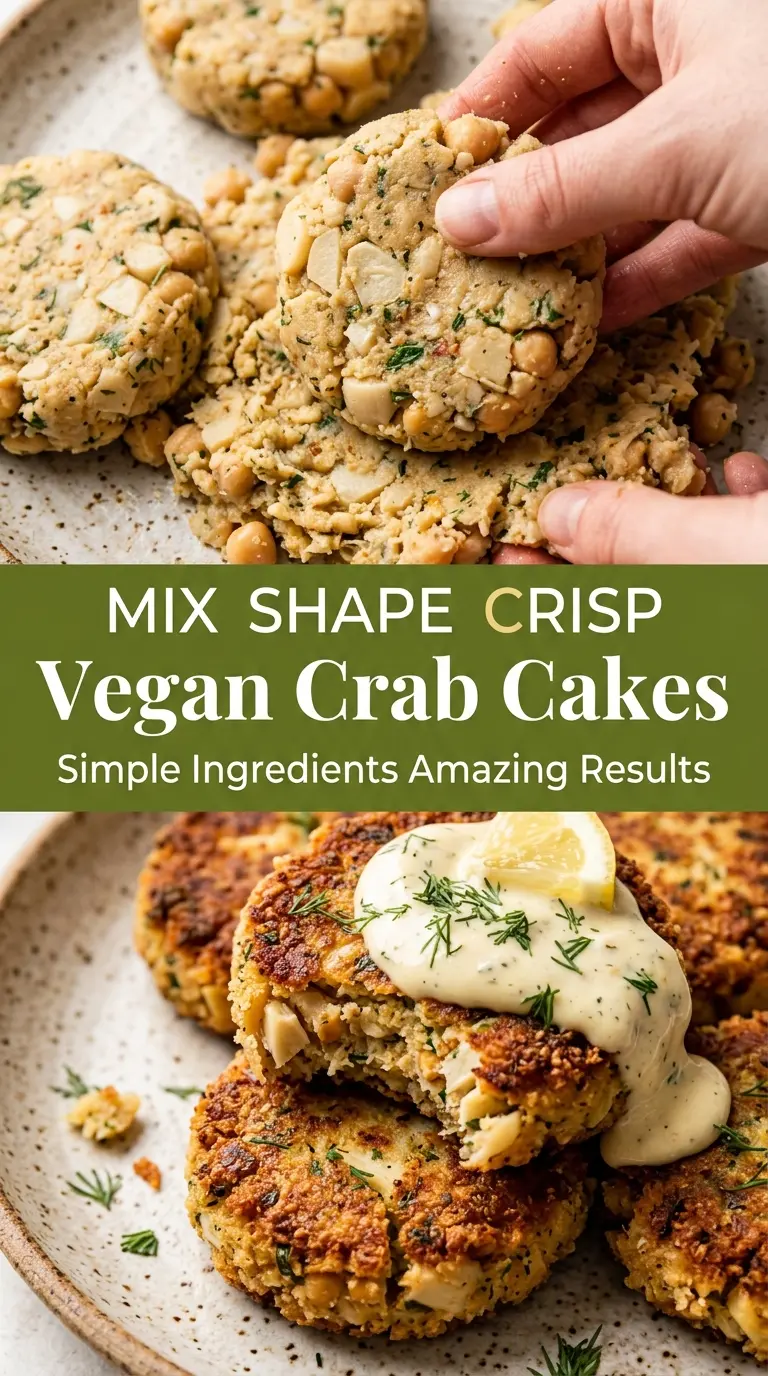
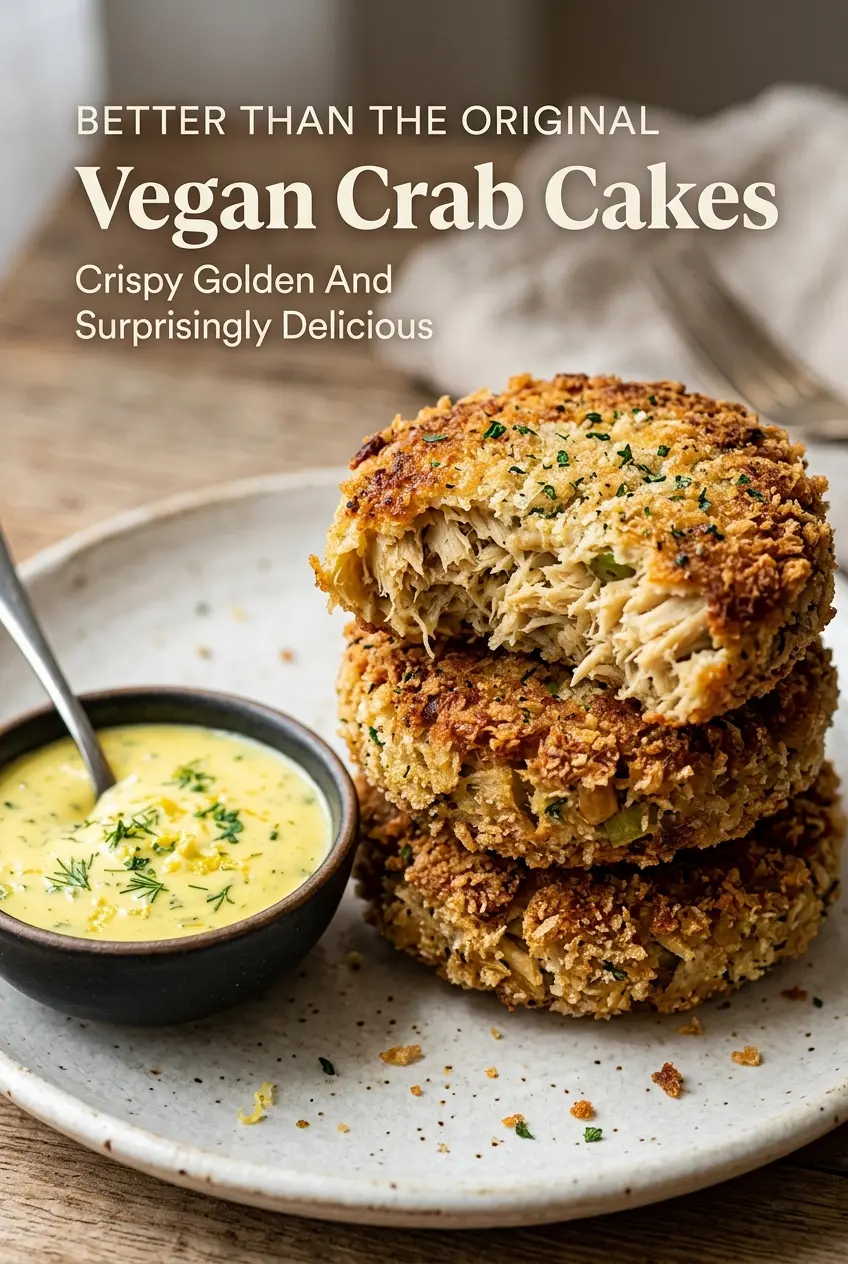
Golden, crisp-edged vegan crab cakes with a tender center are one of those plant-based dishes that actually earns the name on the plate. Hearts of palm bring the flaky, delicate texture, chickpeas give the cakes enough body to hold together, and Old Bay does the heavy lifting on flavor so they taste briny and savory without any seafood at all. The best part is the contrast: a crunchy panko crust on the outside and a soft, seasoned middle that stays intact when you pick it up.
This version works because it treats the filling like a mixture that needs structure, not just flavor. The hearts of palm get shredded instead of chopped, which gives you those crab-like strands, and the chickpeas are only lightly mashed so the cakes don’t turn pasty. A short chill in the fridge matters here too. It firms the mixture enough to coat and pan-fry without losing that clean, crisp edge.
Below, I’ve included the small details that keep these from falling apart in the pan, plus a lemon aioli that sharpens the whole thing. If you’ve had vegetarian cakes go mushy before, the process here will show you exactly where that usually goes wrong.
The panko stayed crisp and the centers held together beautifully after chilling. I served them with the lemon aioli and my husband said they tasted like the real thing, just lighter.
These vegan crab cakes get their best crunch after a short chill, so the panko coating stays put in the skillet.
The Secret to Vegan Crab Cakes That Don’t Fall Apart
The mistake most people make with plant-based crab cakes is turning the mixture into a paste. That’s how you end up with dense little patties that taste fine but eat like mashed potatoes in a crust. Hearts of palm need to stay fibrous, and the chickpeas should be crushed just enough to help bind everything without erasing texture.
The other piece is moisture control. Hearts of palm can hold a lot of liquid, and if you skip the drain-and-shred step, the mixture softens fast. The panko inside the mix helps absorb some of that moisture, but the chill before frying is what gives the cakes enough strength to flip cleanly.
- Hearts of palm — This is the ingredient that gives the cakes their flaky, seafood-like texture. Drain them well, then shred with a fork instead of chopping into even bits.
- Chickpeas — They provide structure and a little creaminess. Lightly mash them so some pieces stay whole; that contrast keeps the cakes from feeling heavy.
- Vegan mayo — This adds richness and helps bind the mixture. A thick, neutral-tasting brand works best here.
- Old Bay seasoning — This is the flavor anchor. If you don’t have it, a mix of celery salt, paprika, and a little cayenne gets you close, but the classic blend is better.
- Panko breadcrumbs — Panko goes inside the mixture and on the outside. Inside, it absorbs excess moisture; outside, it gives you that crisp shell.
What Each Ingredient Is Actually Doing in This Dish
Hearts of palm are the backbone of the recipe. They shred into soft strands that mimic crab better than most vegetables, and they hold their shape better than something wetter like zucchini. If you rinse them, pat them dry before shredding so the mixture doesn’t turn soggy.
Chickpeas keep the patties from crumbling while adding a mild, nutty base. Canned chickpeas work perfectly here, and there’s no reason to cook them from scratch for this dish. The key is not overmashing them. A few whole bits make the texture feel more like a cake and less like a spread.
Vegan mayonnaise and Dijon mustard bring moisture, tang, and a little emulsified richness. Vegan mayo can vary a lot in thickness, so if yours is runny, use a touch less and add another spoonful of panko only if the mixture still feels loose. Dijon sharpens the filling and keeps it from tasting flat.
Old Bay, parsley, green onion, and lemon juice are the seasoning team. Old Bay gives the familiar seafood-style profile, parsley adds freshness, green onion brings bite, and lemon cuts through the richness. Don’t skip the acid. It keeps the cakes from tasting one-note.
Building the Mix, Chilling It, and Frying It Crisp
Shredding and Mashing for the Right Texture
Drain the hearts of palm well, then shred them with a fork until they look fibrous and uneven. Lightly mash the chickpeas in a separate bowl so some pieces are broken down and some stay intact. That mix of textures is what gives the cakes a convincing bite. If everything is crushed too smoothly, the patties lose their shape and fry up dense.
Mixing Until It Holds, Not Until It Smears
Combine the filling gently with the panko, seasoning, herbs, mustard, mayo, and lemon juice. Stop as soon as the mixture starts clumping when pressed. If you overwork it, the chickpeas break down too much and the whole bowl turns soft. The mixture should feel tacky and moldable, not wet or spoonable.
Forming, Coating, and Chilling
Shape the mixture into patties, then coat them lightly with extra panko. That outer layer is what gives you the crisp shell. Refrigerate the cakes for 20 minutes before frying. If you skip that rest, they’ll spread in the pan and the coating can slide off before it sets.
Pan-Frying to a Deep Golden Finish
Heat the olive oil until it shimmers, then add the cakes carefully. They should sizzle as soon as they hit the pan, but the heat shouldn’t be so high that the coating burns before the center warms through. Cook until the first side is deep golden and releases cleanly, then flip once. If they stick, they need another minute. Don’t pry at them early or you’ll tear the crust.
How to Adapt These Vegan Crab Cakes for Different Tables
Gluten-Free Version
Swap the panko for gluten-free panko or crushed gluten-free crackers. You still want something coarse, not fine crumbs, because the larger pieces give you that crisp exterior. The texture stays close to the original as long as the crumb is light and dry.
Oil-Free Baking Method
Bake the patties on a lined sheet at 400°F until the edges firm up and the tops are lightly browned, flipping once halfway through. You won’t get the same skillet crust, but the patties will still hold together and taste clean and savory. A light spray of oil on the outside helps the panko color better.
Make Them More Briny
Add a teaspoon of capers, finely chopped, or a small splash of pickle brine to the mixture. That pushes the flavor closer to classic crab cake territory without making the cakes wet. Go slowly with liquid additions, since even a little extra can make the patties harder to shape.
Storage and Reheating
- Refrigerator: Store cooked crab cakes in an airtight container for up to 4 days. The crust softens a bit, but the flavor stays solid.
- Freezer: Freeze the uncooked patties on a sheet pan, then transfer to a bag once firm. They cook well from frozen with a few extra minutes in the pan.
- Reheating: Reheat in a skillet or oven so the coating crisps back up. The microwave makes the crust limp and can split the patties.
Answers to the Questions Worth Asking
Vegan Crab Cakes
Ingredients
Equipment
Method
- Shred the hearts of palm using a fork until it resembles crab-like strands, then keep the pieces fairly thin for better texture.
- Mash the chickpeas lightly with a fork, leaving some whole pieces so the patties stay tender inside.
- Combine hearts of palm, chickpeas, 1/2 cup panko breadcrumbs, vegan mayonnaise, Dijon mustard, lemon juice, Old Bay seasoning, green onions, fresh parsley, garlic powder, salt, and black pepper in a large bowl.
- Mix everything until the mixture holds together when pressed, adding a little more panko if it seems loose.
- Form the mixture into 8 patties with even thickness so they cook uniformly.
- Coat each patty lightly with the additional panko breadcrumbs so the surface browns and crisps.
- Refrigerate the patties for 20 minutes to firm up before pan-frying.
- Heat olive oil in a skillet over medium heat until shimmering.
- Cook patties for 4–5 minutes per side, flipping once, until the outsides are golden brown and crispy.
- Mix the optional lemon aioli by combining vegan mayonnaise, lemon juice, and Dijon mustard until smooth.
- Serve the vegan crab cakes warm with lemon wedges and the aioli on the side.