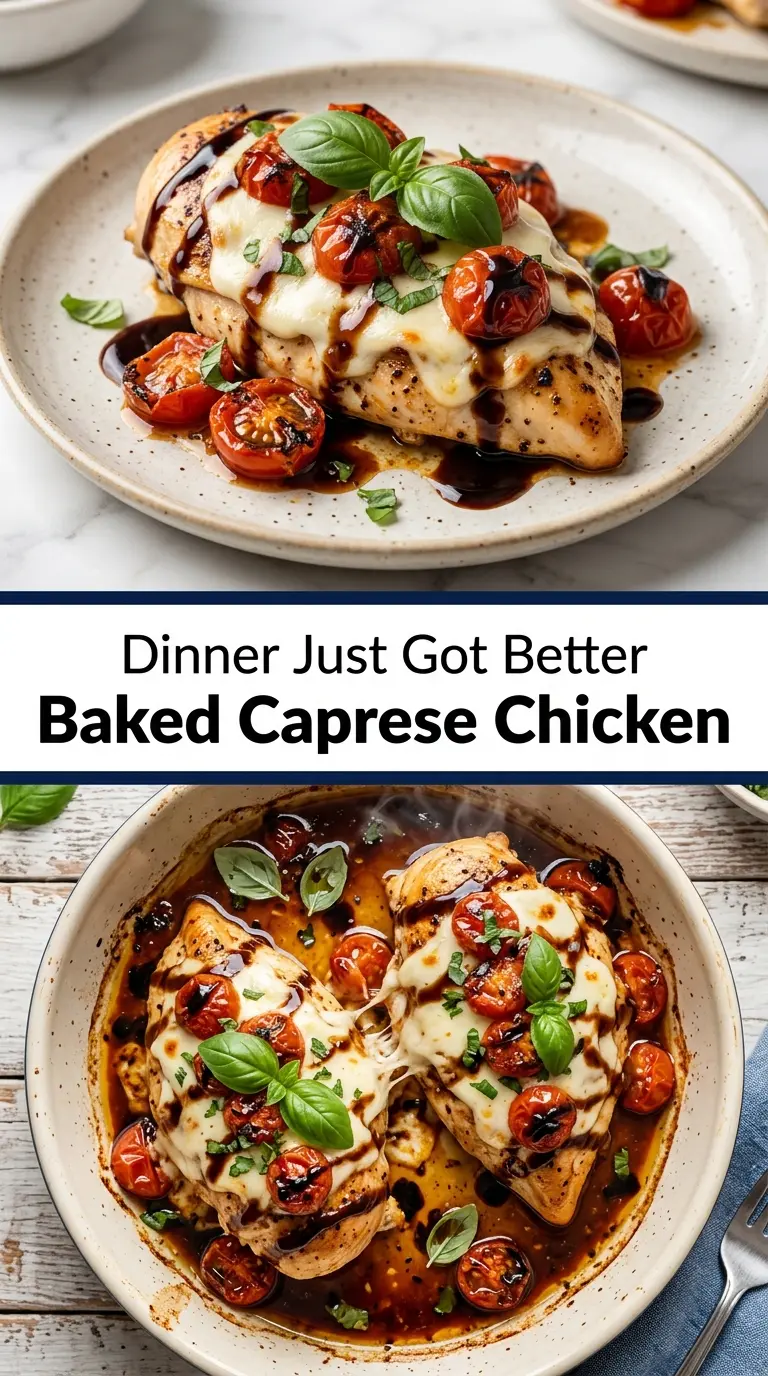
Juicy chicken, melted mozzarella, and ripe tomatoes turn into a skillet-style dinner that lands somewhere between a proper Caprese salad and the kind of baked chicken you’d gladly put on repeat. The best part is how little effort it takes to get there. The chicken stays tender, the cheese melts into the tomatoes instead of sliding off them, and the balsamic glaze gives the whole dish that glossy, sweet-tart finish that makes each bite taste finished, not just assembled.
This version works because the chicken gets a head start on its own before the toppings go on. That keeps the tomatoes from turning watery and gives the mozzarella enough time to melt without overcooking the meat. A dry surface on the chicken helps the seasonings cling and encourages better browning under the cheese and tomatoes, which matters more here than people think.
Below, I’ll walk through the timing that keeps the chicken juicy, the kind of mozzarella that melts cleanly, and a few smart swaps if you need to adjust for what’s in your fridge.
The chicken stayed juicy, the mozzarella melted into the tomatoes without getting rubbery, and the balsamic glaze at the end gave it that sweet tangy finish. I had it on the table in under 40 minutes and my husband asked if we could add it to the regular dinner rotation.
Save this Baked Caprese Chicken for the nights when you want a juicy baked dinner with melted mozzarella, fresh basil, and that glossy balsamic finish.
The Trick to Keeping the Chicken Juicy Under All That Cheese
The biggest mistake with baked Caprese chicken is putting everything on at once and hoping the oven sorts it out. It doesn’t. The tomatoes give off moisture, the mozzarella needs just enough time to melt, and the chicken needs to reach temperature without drying out. Giving the chicken a solo bake first solves the whole problem.
That first stretch in the oven starts the cooking process and lets the exterior set before the toppings go on. Once the tomatoes and cheese are added, the second bake is short enough to melt everything without turning the chicken into cardboard. If your chicken breasts are large and uneven, pound them to a more even thickness so the thinner end doesn’t overcook while the thick end finishes.
What Each Ingredient Is Actually Doing in This Dish
- Chicken breasts — Boneless, skinless chicken breasts keep the dish quick and lean, but thickness matters more than brand. If one side is much thicker, the thin end will dry out before the center is done. Pound them lightly or slice extra-large breasts in half horizontally for more even baking.
- Fresh mozzarella — This is the cheese that gives you the soft, milky melt Caprese needs. Pre-shredded mozzarella won’t behave the same way; it tends to dry out and melt grainy. If you can only find low-moisture mozzarella, slice it thin and expect a firmer finish.
- Roma tomatoes — Roma tomatoes hold their shape better than juicy slicing tomatoes, which keeps the top from turning soggy. Slice them thin enough to heat through quickly, but not so thin they disappear into the cheese.
- Balsamic glaze — The glaze adds sweetness and acidity without flooding the pan. If you only have balsamic vinegar, simmer it until reduced and syrupy before drizzling, or it will taste sharp and thin.
- Fresh basil — Basil goes on after baking so it stays fragrant and bright. If it hits the oven, it turns dark and loses the fresh finish that makes the dish taste like Caprese instead of just chicken with cheese.
Building the Toppings So They Melt, Not Slide
Seasoning the Chicken Properly
Pat the chicken dry before you add oil and spices. Moisture on the surface keeps the seasonings from sticking and blocks browning. The garlic powder, Italian seasoning, onion powder, salt, and pepper should form a thin, even coat — not a crust, just enough to season every bite.
Giving the Chicken a Head Start
Bake the chicken uncovered until it’s mostly cooked through before you add the toppings. At this stage, the surface should look opaque and just beginning to firm up, but the center should still have a little way to go. If you add cheese too early, the top overcooks before the chicken reaches 165°F and the tomatoes release too much liquid.
Finishing Under the Heat
Layer the tomatoes first, then the mozzarella. The tomatoes sit closest to the chicken and help protect the cheese from scorching while they soften. Return the dish to the oven just until the cheese is melted and glossy, with a few browned spots at the edges if your oven runs hot. Drizzle the balsamic glaze after baking so it stays bright and sticky instead of burning.
How to Make It Dairy-Free Without Losing the Shape
Use a dairy-free mozzarella that melts well, not a hard shredded style that turns oily in the oven. You won’t get the same milky finish, but you’ll still keep the Caprese-style layering and the balsamic-basil contrast that makes the dish work.
When You Need a Thicker, More Savory Finish
Add a thin layer of sun-dried tomatoes under the fresh slices. They bring concentrated tomato flavor and a little chew, which balances the soft mozzarella and keeps the dish from tasting too mild.
Making It Work With Chicken Thighs
Boneless, skinless thighs work if you want more forgiveness and richer flavor. They usually need a few extra minutes before the toppings go on, but they stay juicy even if you go a little long in the oven.
Storage and Reheating
- Refrigerator: Store leftovers in an airtight container for up to 3 days. The tomatoes soften a bit, but the flavor holds up well.
- Freezer: Freezing isn’t ideal because the mozzarella and tomatoes change texture after thawing. If you do freeze it, wrap portions tightly and thaw in the fridge before reheating.
- Reheating: Warm in a 325°F oven, covered loosely with foil, until heated through. The oven keeps the chicken from drying out better than the microwave, which can turn the cheese rubbery and the edges tough.
Answers to the Questions Worth Asking
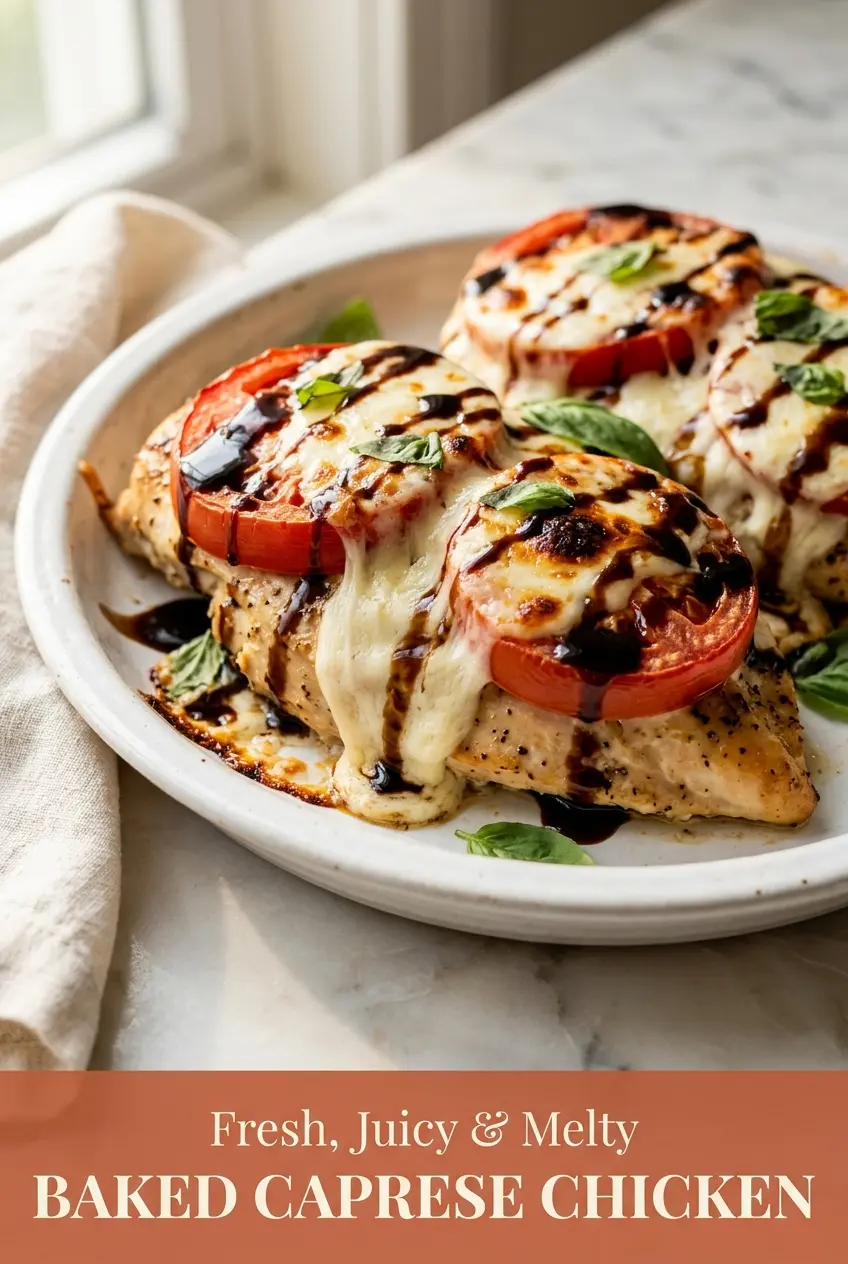
Baked Caprese Chicken
Ingredients
Equipment
Method
- Preheat the oven to 400°F and lightly grease a 9×13 baking dish with olive oil.
- Pat the chicken breasts dry, then rub both sides with 2 tbsp olive oil and season evenly with garlic powder, Italian seasoning, onion powder, salt, and black pepper.
- Arrange the seasoned chicken breasts in the baking dish with space between them.
- Bake uncovered at 400°F for 20 minutes, until the chicken is mostly cooked through.
- Remove the dish and layer the sliced Roma tomatoes and fresh mozzarella on top of each breast.
- Return to the oven and bake an additional 8–10 minutes at 400°F, until the mozzarella is fully melted and bubbly and the internal temperature reaches 165°F.
- Drizzle the balsamic glaze generously over the chicken straight from the oven.
- Top with fresh basil leaves and serve immediately.