The bread is the part that decides whether stuffing turns tender or turns heavy. Cubes that still hold moisture soak up the broth unevenly, and the middle can end up dense before the top has a chance to brown. I dry the bread first, then let the onion, celery, and herbs bring the Thanksgiving smell into the kitchen while the cubes cool.
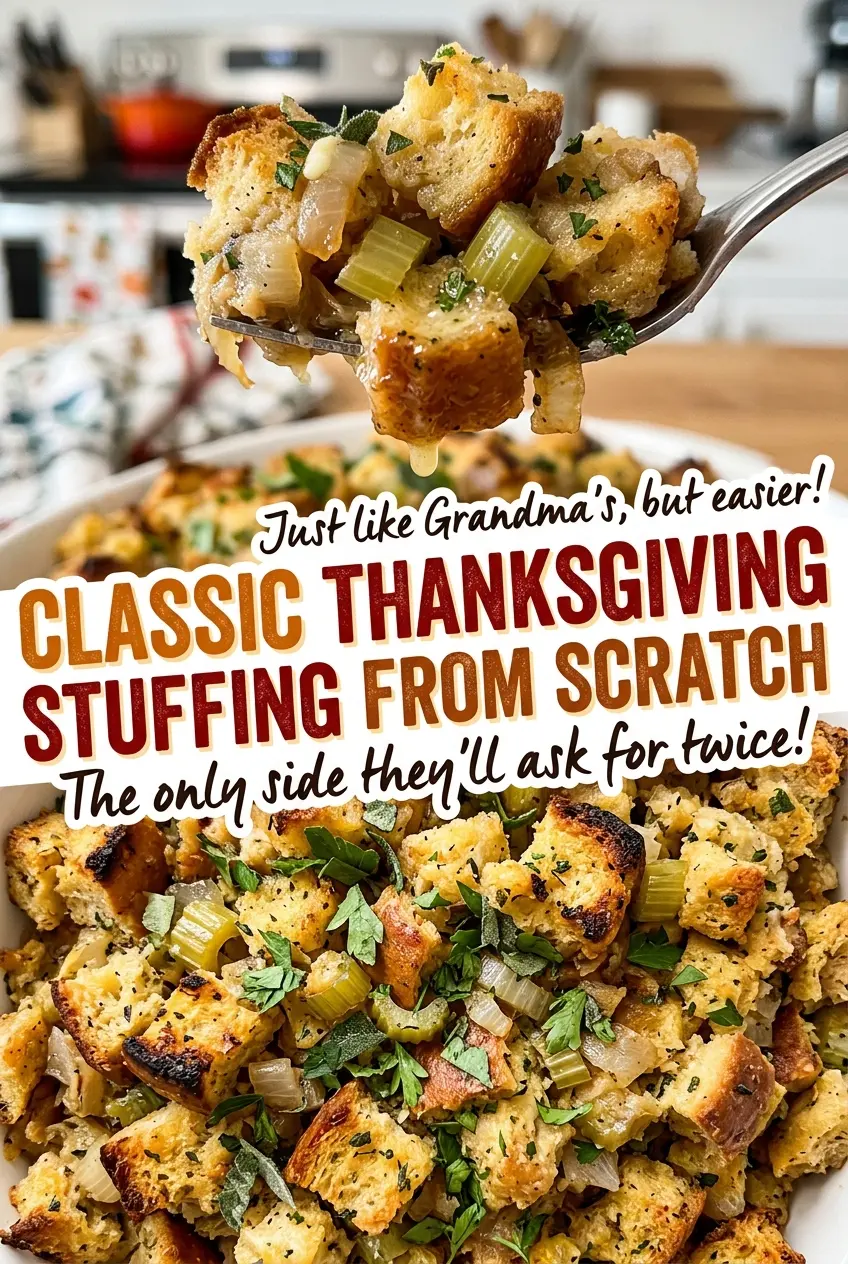
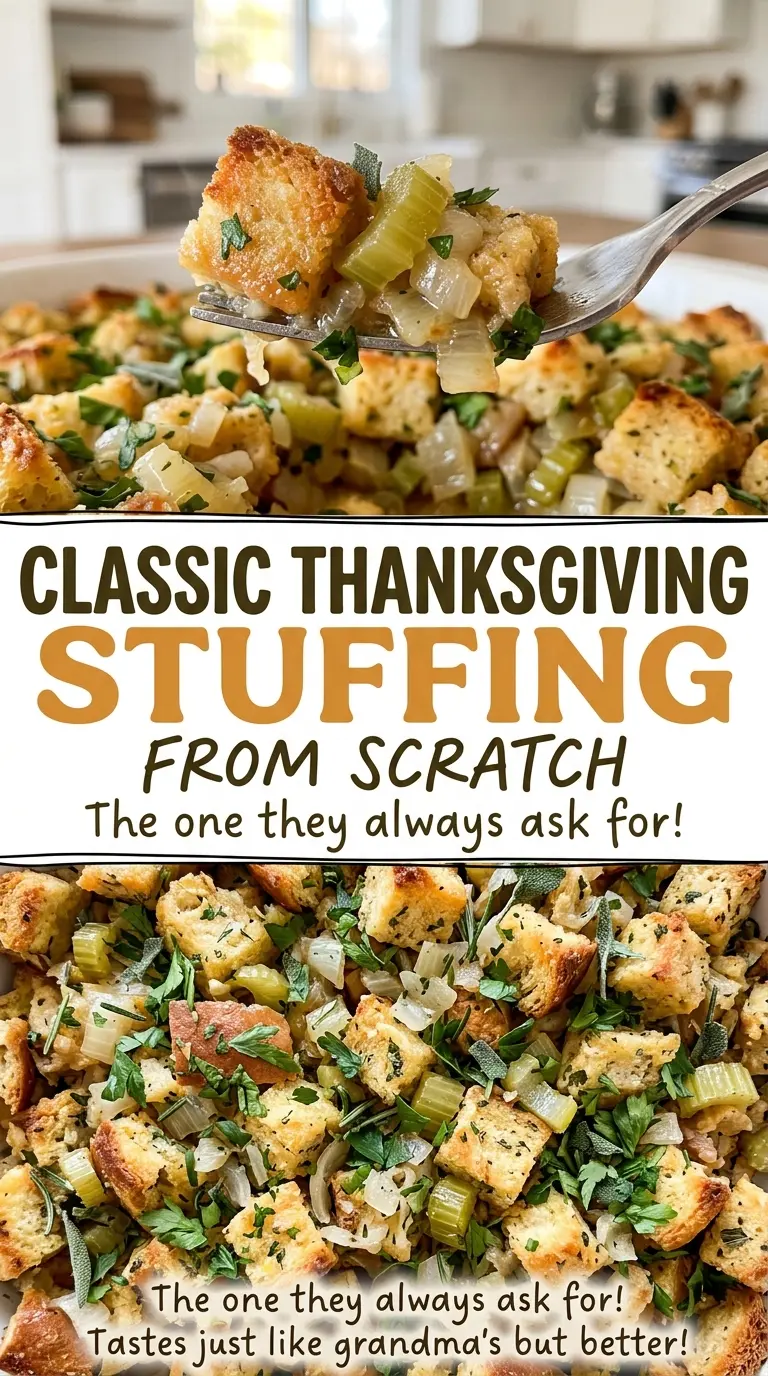
This classic Thanksgiving stuffing from scratch has a soft, savory center and a golden top, with enough structure to scoop neatly from the dish. The broth and eggs moisten and bind the bread, while a covered bake gives the middle time to set before the foil comes off. It’s a simple sequence, but each part has a job—and the finished casserole tastes like stuffing should.
Kitchen Note
Keep the bread cubes close to the same 3/4-inch size. When the pieces are uneven, the small ones can get hard while the larger ones take longer to dry.
Save this classic Thanksgiving stuffing from scratch for its savory herb flavor, tender center, and golden top.
Why Dry Bread Makes a Better Thanksgiving Stuffing
Stuffing needs bread that can take in broth without collapsing. Fresh, soft bread is already holding moisture, so it has less room to absorb the liquid from the vegetables, broth, and eggs. The result can be compressed or gummy in the middle, even when the top looks ready.
Drying the cubes in a low oven solves that problem without turning them into croutons. They should feel dry throughout, but they don’t need to be deeply toasted or browned. Once the broth mixture goes in, the cubes soften from the inside out instead of dissolving at the edges. That gives the casserole a more even texture: moist and held together in the center, with a browned top after the foil comes off.
The balance matters here. The broth supplies moisture, and the eggs help the mixture set as it bakes. Pouring everything over the bread and tossing gently distributes both without crushing the cubes. If you mash or stir aggressively, you lose the distinct pieces that make a good scoop of stuffing feel light rather than pasty.
The Ingredients That Give This Stuffing Its Savory Backbone
- Sturdy white bread — A firm loaf holds its shape better than thin, airy sandwich bread. There’s no need for an expensive bakery loaf; choose one with a close, sturdy crumb that can be cut into even cubes.
- Unsalted butter — Butter carries the flavor of the onion, celery, and dried herbs through the bread. Unsalted butter also leaves the seasoning easier to control, so a standard grocery-store stick works well.
- Yellow onion and celery — Finely chopping both lets them soften evenly and mingle with the bread instead of leaving large, crunchy pieces. Their mild, savory sweetness is the familiar base of this stuffing.
- Dried sage and thyme — Dried herbs are useful here because they bloom briefly in the warm butter and distribute through the vegetables. Check that the herbs still smell fragrant; old, faded jars won’t give the same aroma.
- Fresh parsley — Parsley adds a clean, green note that keeps the dried herbs from tasting heavy. Chop it shortly before using so it stays fresh and bright.
- Low-sodium chicken broth and eggs — Low-sodium broth lets the butter, vegetables, and herbs come through without the finished dish tasting overly salty. The eggs help the moistened bread hold together as it bakes; use large eggs for the intended texture.
Build the Stuffing in Four Stages, from Dry Cubes to Golden Top
Dry the Bread Without Toasting It Brown
Heat the oven to 250°F and spread the bread cubes in a single layer on a rimmed baking sheet. Bake for 30 to 40 minutes, stirring once, until the cubes feel dry; they should not be deeply browned. Move them to a large bowl so they’re ready for the vegetables and liquid. If the cubes still feel soft in the center, give them more time rather than relying on the casserole bake to dry them out.
Soften the Vegetables, Then Wake Up the Herbs
Raise the oven temperature to 350°F and coat a 9×13-inch baking dish with cooking spray. Melt the butter in a 12-inch skillet over medium heat, then add the finely chopped onion and celery. Cook for 8 to 10 minutes, stirring occasionally, until softened; they should look tender, not browned. Stir in the sage, thyme, salt, and pepper for 30 seconds, then add the parsley and scrape the mixture over the bread.
Moisten the Cubes Without Breaking Them
Whisk the broth and eggs together in a medium bowl until blended, then pour the mixture over the bread and vegetables. Toss gently until the cubes are evenly moistened, lifting from the bottom so the herbs and butter don’t stay in one spot. Stop once the liquid is distributed; repeated rough stirring can crush the bread and make the texture dense. The mixture should look moist throughout, not have a puddle of broth sitting at the bottom.
Cover to Set the Center, Then Brown the Top
Transfer the mixture to the prepared dish and cover it tightly with foil. Bake for 30 minutes, then remove the foil and bake for another 20 to 25 minutes, until the top is golden and the center reaches 160°F. The uncovered finish gives the surface time to brown while the middle finishes setting. Let the stuffing rest for 10 minutes before serving so it holds together better when scooped.
Three Useful Ways to Adapt This Thanksgiving Stuffing
Make It Vegetarian with Vegetable Broth
Replace the chicken broth with low-sodium vegetable broth. The bread, butter, eggs, and herbs stay the same, while the broth gives the casserole a slightly lighter, more vegetable-forward savory base.
Use a Sturdy Gluten-Free White Loaf
Choose gluten-free white bread with a firm crumb, cut it into cubes, and dry it in the oven the same way. Gluten-free loaves vary in texture, so judge the cubes by whether they’re dry throughout; the final stuffing may be a little more delicate when scooped.
Try a Dense Whole-Grain Loaf
A sturdy whole-grain loaf gives the stuffing a nuttier, more robust taste. Its denser crumb makes the finished casserole heartier, though the bread’s flavor will compete more with the sage and thyme than mild white bread does.
Storage and Reheating
- Refrigerator: Store leftovers covered or in an airtight container for 3 to 4 days. The bread softens as it sits, so the top won’t stay crisp.
- Freezer: Freeze fully baked, cooled stuffing in airtight portions for up to 3 months. Thaw it in the refrigerator before reheating for more even warming.
- Reheating: Cover the dish with foil and warm it in a 325°F oven until the center reaches 165°F. Reheating uncovered can dry the surface before the middle is hot.
Questions That Come Up When Making Stuffing from Scratch
Classic Thanksgiving Stuffing from Scratch
Ingredients
Equipment
Method
- Heat the oven to 250°F.
- Spread the bread cubes in a single layer on a rimmed baking sheet.
- Bake for 30 to 40 minutes, stirring once, until the cubes are dry; transfer them to a large bowl.
- Raise the oven temperature to 350°F.
- Coat a 9x13-inch baking dish with cooking spray.
- Melt the butter in a 12-inch skillet over medium heat.
- Add the onion and celery and cook for 8 to 10 minutes, stirring occasionally, until softened.
- Stir the sage, thyme, salt, and pepper into the vegetables and cook for 30 seconds.
- Add the parsley and scrape the mixture into the bowl with the bread.
- Whisk the broth and eggs in a medium bowl.
- Pour the broth mixture over the bread mixture and gently toss until evenly moistened.
- Transfer the stuffing to the prepared baking dish and cover tightly with foil.
- Bake for 30 minutes.
- Remove the foil and bake for 20 to 25 minutes, until the top is golden and the center reaches 160°F.
- Let the stuffing rest for 10 minutes before serving.