Crispy Bang Bang Shrimp lands with a shattering crust, juicy shrimp, and that creamy sweet-heat sauce that clings to every ridge instead of sliding off the plate. The magic is in the contrast: the coating fries up light and crackly, then gets hit with a sauce that’s tangy, a little spicy, and just sweet enough to round everything out. It eats like a restaurant appetizer, but it comes together fast enough for a weeknight.
Buttermilk gives the coating something to grab onto, and the cornstarch-heavy dredge is what keeps the crust crisp instead of bready. Frying in batches at 350°F matters more than almost anything else here; if the oil runs too cool, the shrimp soak up grease, and if it runs too hot, the coating browns before the shrimp are cooked through. The sauce is built with mayonnaise, sweet chili sauce, sriracha, honey, and lime juice, which gives you a glossy finish that tastes balanced instead of one-note.
Below, I’ve laid out the exact points where this recipe can go sideways and how to avoid them, plus the swaps that still keep the coating crisp and the sauce punchy. If you’ve ever had bang bang shrimp turn soggy the second the sauce went on, this version fixes that.
The coating came out super crispy and the sauce was the perfect sweet-heat balance. I tossed it right before serving and it stayed crunchy longer than I expected.
Crispy Bang Bang Shrimp is the kind of sweet-spicy appetizer you’ll want on repeat for game day and easy dinners alike.
The Secret to Keeping Bang Bang Shrimp Crispy After the Sauce Goes On
The biggest mistake with bang bang shrimp is treating the sauce and the crust like they can happen on their own timeline. They can’t. The shrimp need to be fried until the coating is set and pale golden, then sauced right before serving so the crust still has some structure left when it hits the table. Let them sit too long in the bowl and you’ll lose the contrast that makes the dish worth making.
The dredge matters just as much as the fry. Cornstarch lightens the coating and helps it stay brittle, while the flour adds enough body that the crust doesn’t turn dusty or fall off in patches. If your last batch of fried shrimp came out heavy, the oil was probably too cool or the bowl got crowded. Frying in a small batch with room around each piece gives you actual crispness instead of pale, oily breading.
What Each Ingredient Is Actually Doing in This Dish
- Shrimp — Large shrimp hold up best here because they stay juicy through frying and don’t disappear under the sauce. Smaller shrimp cook fast, but they’re easier to overcook and can turn rubbery before the coating is fully crisp.
- Buttermilk — This gives the dredge something tacky to cling to and adds a little tenderness to the shrimp surface. Regular milk works in a pinch, but the coating won’t grip quite as well.
- Cornstarch — This is the key to the light, crisp shell. If you swap in all flour, the coating gets heavier and less shattery.
- Mayonnaise — It makes the sauce creamy and stable, so it coats the shrimp instead of running off them. Use a good full-fat mayo for the best texture; light mayo thins the sauce and can taste flat.
- Sweet chili sauce and sriracha — These two do the flavor heavy lifting. Sweet chili sauce brings sweetness and a little garlic, while sriracha adds heat and a sharper edge.
- Lime juice — Even a small squeeze keeps the sauce from tasting one-dimensional. If you skip it, the sauce reads heavier and sweeter.
Frying, Tossing, and Serving Without Losing the Crunch
Building the Buttermilk Base
Let the shrimp sit in the buttermilk for about 15 minutes, no longer than needed. You want a light coating of moisture, not a soaking bath that turns the shrimp soft and makes the breading slide around. When you pull them out, let the excess drip off so the dredge can cling in a thin, even layer.
Making the Coating Stick
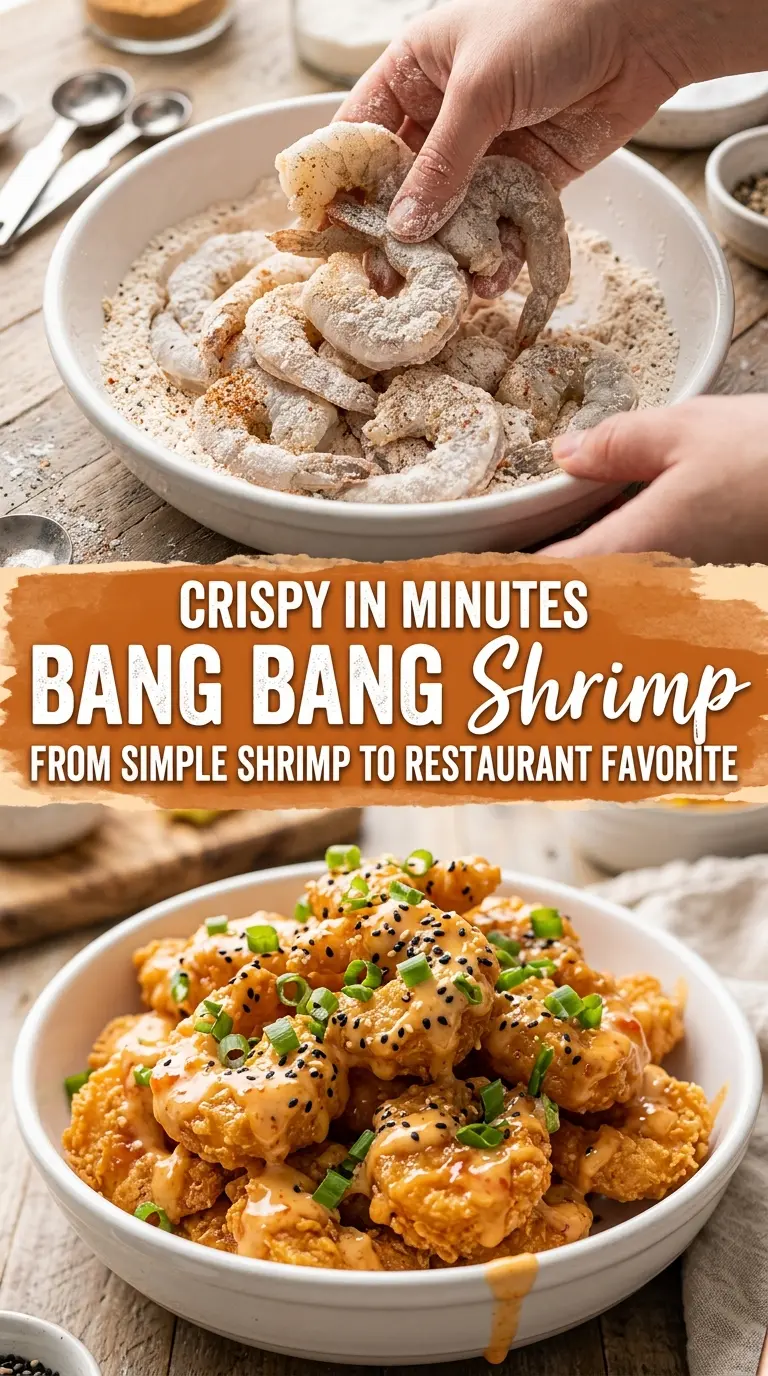
Mix the cornstarch, flour, garlic powder, paprika, and salt in a wide bowl so the shrimp can be dredged without getting clumpy. Press each shrimp into the mixture and give it a little shake to knock off the loose flour; that loose coating burns in the oil and gives you a gritty finish. If the coating looks paste-like instead of dusty and even, the shrimp were too wet when they went in.
Frying to a Pale Golden Crunch
Heat the oil to 350°F and fry the shrimp in small batches. The oil should bubble actively around each piece, but not rage so hard that the coating darkens before the shrimp are done. Two to three minutes is usually enough; the shrimp should turn opaque and curl into a loose C shape. Tight little O-shaped shrimp are overcooked.
Tossing at the Last Second
Drain the fried shrimp on paper towels, then move them to a bowl and drizzle with the bang bang sauce. Toss gently, just enough to coat, because aggressive stirring knocks off the crust you worked for. If you want maximum crunch, spoon the sauce over the shrimp instead of tossing, then finish with green onions and sesame seeds.
How to Adapt This for a Bigger Crowd, Less Heat, or No Dairy
Make it dairy-free
Swap the buttermilk for plain unsweetened dairy-free milk mixed with a teaspoon of lemon juice or vinegar. It won’t thicken quite like buttermilk, but it still gives the coating enough moisture to stick and keeps the shrimp from drying out.
Turn down the heat without losing the sauce
Cut the sriracha in half and add a little more sweet chili sauce if you want the same glossy sauce with a gentler burn. The lime juice still matters here, because it keeps the sweetness from taking over.
Use an air fryer for a lighter finish
You can air fry the coated shrimp at high heat, but the crust will be a little less delicate and more like a thin shell than a true fry. Spray the shrimp lightly with oil so the cornstarch mixture actually browns instead of drying out pale.
Scale it for appetizers
For a party tray, fry the shrimp and keep the sauce on the side until people are ready to eat. That keeps the crust crisp for much longer and lets guests control how saucy each bite gets.
Storage and Reheating
- Refrigerator: Store leftover shrimp and sauce separately for up to 2 days. The shrimp will soften, but keeping the sauce off them slows that down.
- Freezer: The fried shrimp can be frozen, but the texture won’t stay crisp after thawing. Freeze them in a single layer, then reheat from frozen for the best chance at recovering some crunch.
- Reheating: Reheat the shrimp in a hot oven or air fryer until the coating crisps back up. Skip the microwave, which turns the crust soggy and the shrimp chewy.
Answers to the Questions Worth Asking
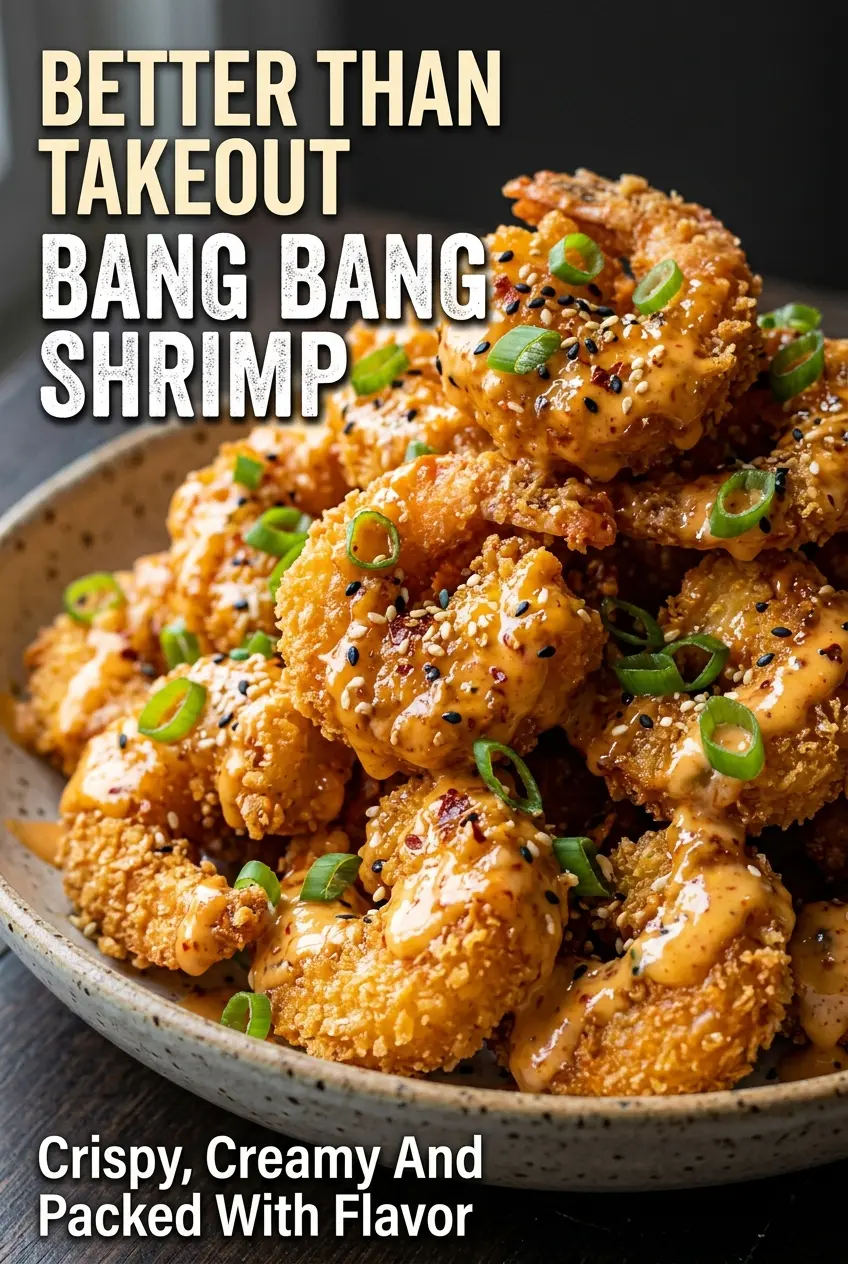
Crispy Bang Bang Shrimp
Ingredients
Equipment
Method
- Place shrimp in a bowl and cover with buttermilk, then let sit at room temperature for 15 minutes.
- In another bowl, combine cornstarch, all-purpose flour, garlic powder, paprika, and salt, stirring to evenly distribute the seasonings.
- In a small bowl, whisk mayonnaise, sweet chili sauce, sriracha, honey, and lime juice until smooth and fully combined.
- Heat vegetable oil in a deep skillet to 350°F (175°C).
- Remove shrimp from buttermilk and coat each piece in the cornstarch-and-flour mixture.
- Fry shrimp in batches for 2–3 minutes at 350°F (175°C) until golden and crispy, stirring gently if needed for even browning.
- Transfer fried shrimp to a paper towel-lined plate to drain.
- Place cooked shrimp in a large bowl and drizzle with Bang Bang sauce.
- Toss shrimp gently to coat, then garnish with chopped green onions and sesame seeds.
- Serve immediately for best crispness.