Blackened salmon earns a spot in the regular dinner rotation because it gives you a deep, smoky crust and a tender, flaky center without needing a long ingredient list or a complicated sauce. The seasoning blooms in the hot pan, the edges get crisp, and the fish stays juicy if you leave it alone long enough to form that crust before flipping.
What makes this version work is the balance between the spice rub and the heat. Paprika brings color and that classic blackened look, while the cayenne stays in the background unless you want more heat. A dry surface matters here; if the salmon goes into the skillet damp, the spices steam instead of toast and the crust turns patchy. A cast iron pan helps, but the real trick is keeping the fish in contact with the heat so it sears instead of slides around.
Below, I’ve broken down the part that matters most — getting the crust right without overcooking the center — plus a few smart swaps for different spice levels and diets.
The seasoning formed a perfect crust and the salmon stayed flaky all the way through. I used a cast iron skillet and the butter at the end made it taste like something from a restaurant.
Save this blackened salmon for a fast dinner with a smoky crust and flaky center.
The Crust Forms Before the Fish Overcooks
The biggest mistake with blackened salmon is treating it like a gentle pan-seared fillet. This dish needs heat, contact, and patience for the first side. If you move the fish too early, the seasoning sticks to the pan instead of the salmon and you lose that dark, flavorful crust that defines the recipe.
Cast iron helps because it holds steady heat, but the pan only works if it’s properly hot before the salmon goes in. You want to hear a strong sizzle the second the fillet lands. If the sound is timid, the pan isn’t ready and the spice mixture will absorb grease before it can toast. The other mistake is overcrowding. Give each fillet room so the skillet stays hot instead of steaming the fish.
What Each Ingredient Is Actually Doing in This Dish
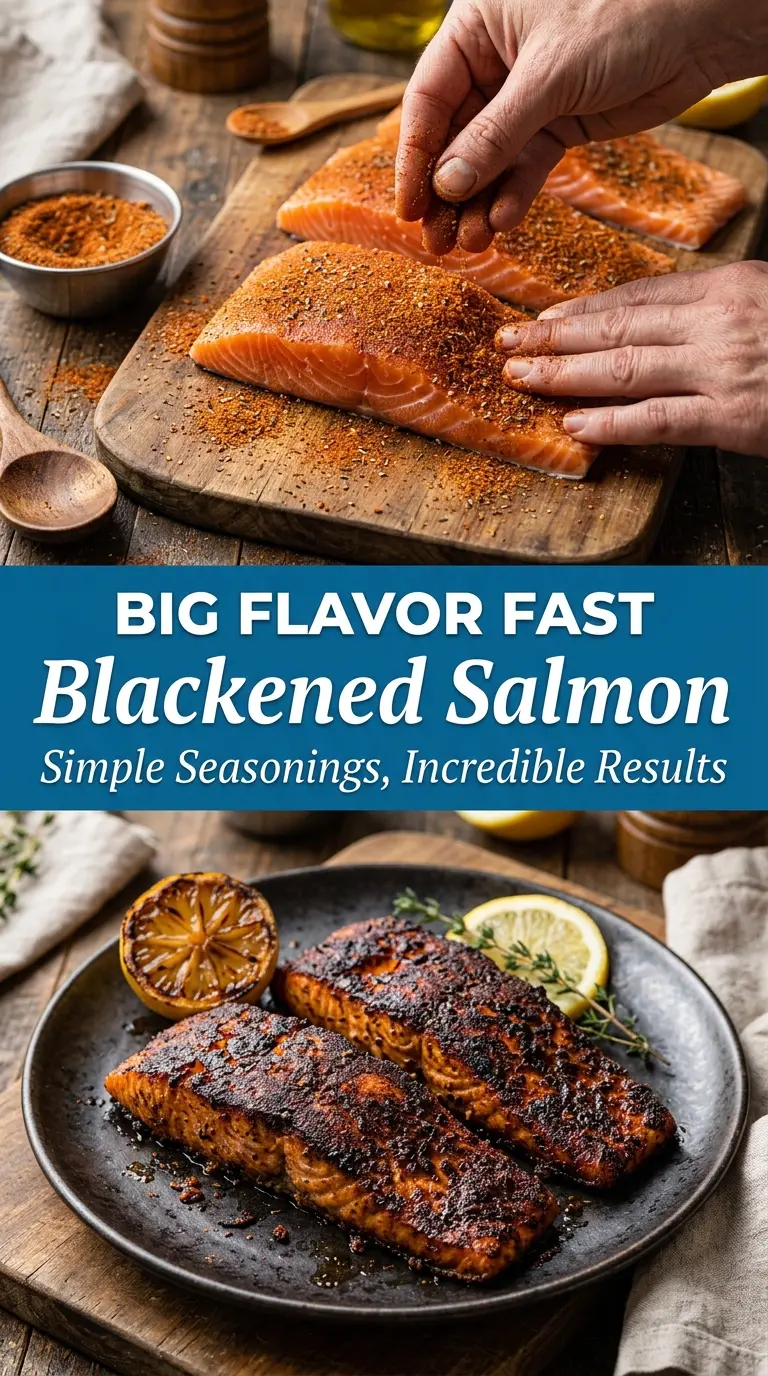
- Salmon fillets — Use fillets that are similar in size so they finish at the same time. Skin-on salmon is my preference because the skin helps protect the fish and gives you a cleaner flip.
- Paprika — This is doing most of the visual work and a lot of the flavor work too. Smoked paprika adds even more depth, but regular paprika gives the classic blackened color and keeps the spice blend balanced.
- Cayenne — This is where the heat lives. If you want a milder result, cut it down to a pinch; if you want the crust to really bite back, keep the full amount.
- Olive oil and butter — The oil helps the seasoning adhere and keeps the fish from sticking. The butter at the end softens the edges of the spice crust and adds a glossy finish, but it goes in late so it doesn’t burn.
- Fresh herbs and lemon — Parsley and lemon don’t just garnish the plate; they reset the richness of the salmon. The lemon brightens the spices, which matters after a hot, smoky sear.
Getting the Seasoning to Stick and the Center to Stay Flaky
Dry the Fish First
Pat the salmon dry with paper towels before anything else. Surface moisture is the enemy of a good crust, because it turns the spice rub damp and prevents it from toasting. A dry fillet also releases more cleanly from the skillet, which matters during that first flip.
Build the Spice Coat
Mix the paprika, garlic powder, onion powder, oregano, thyme, cayenne, salt, and black pepper in a small bowl, then brush the salmon with oil and coat all sides. Press the seasoning on with your fingers so it clings in an even layer. If you just sprinkle it on loosely, it falls off the second the fillet hits the pan.
Let the Pan Do the Work
Heat the skillet over medium-high until it’s properly hot, then add the remaining oil and lay in the salmon. Leave it alone for 4 to 5 minutes. If you try to move it too soon, the crust tears and sticks. When it’s ready, it will release more easily and the bottom will look dark and set.
Finish With Butter and a Gentle Flip
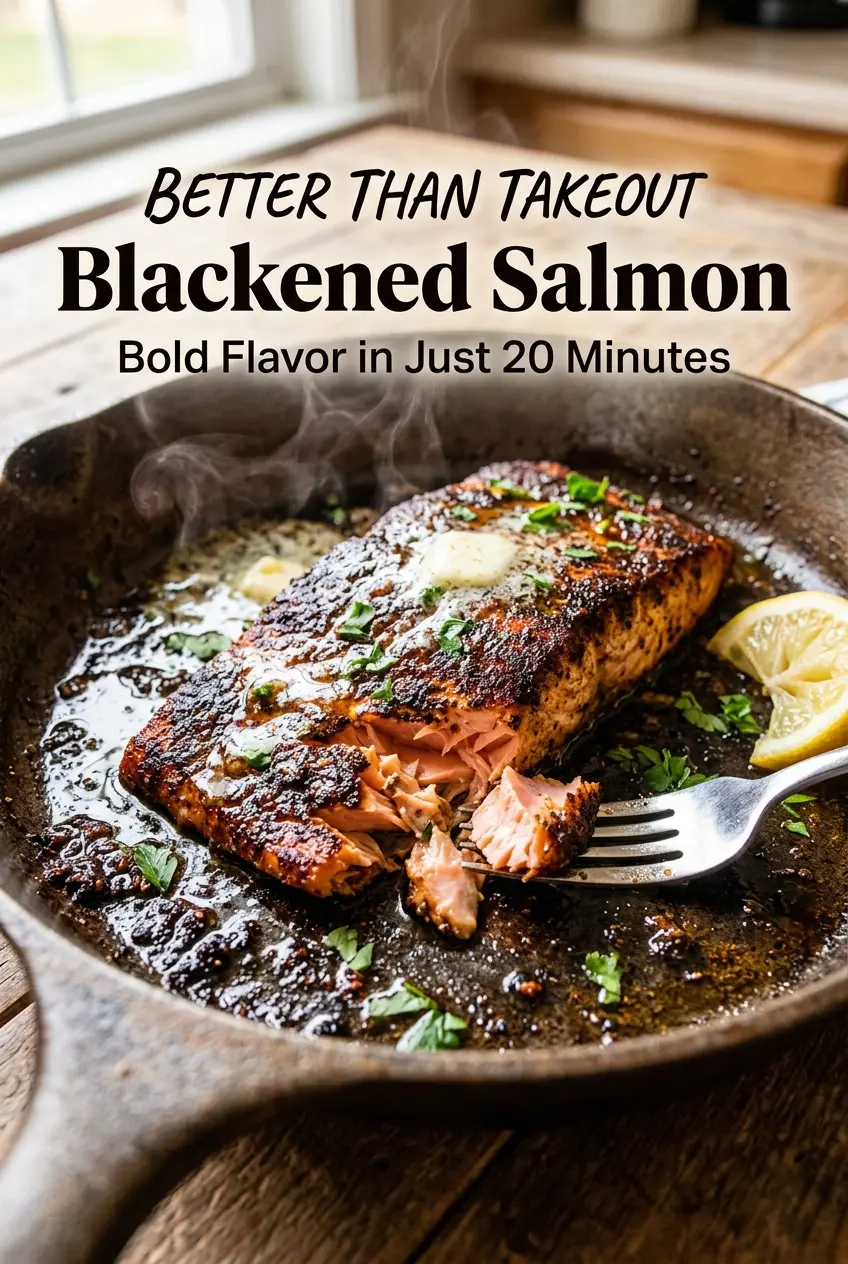
Flip the salmon carefully and cook for another 3 to 4 minutes, then add the butter during the last minute. Spoon the melted butter over the fillets so the top gets a little shine and the spices deepen without scorching. Pull the salmon from the heat when it flakes at the edges but still looks juicy in the center; carryover heat will finish the job.
Three Ways to Make This Blackened Salmon Fit Your Table
Milder Blackened Salmon
Cut the cayenne in half or leave it out entirely if you want the smoky paprika flavor without much heat. The crust will still taste bold, just softer on the finish.
Dairy-Free Version
Skip the butter and finish the fish with an extra drizzle of olive oil and a generous squeeze of lemon. You lose a little richness, but the crust stays crisp and the salmon still tastes balanced.
Using a Different Fish
This seasoning also works on firm fish like mahi mahi or cod, but you’ll need to shorten the cook time for thinner fillets. Delicate fish won’t hold as much spice crust, so keep the heat strong and watch the center closely.
Storage and Reheating
- Refrigerator: Store leftovers in an airtight container for up to 2 days. The crust softens in the fridge, but the flavor holds up.
- Freezer: Salmon can be frozen, but the texture is never as good after thawing. Freeze wrapped tightly for up to 1 month if needed, then thaw in the fridge overnight.
- Reheating: Warm it gently in a 275°F oven until just heated through. High heat dries out the salmon fast and makes the spice coating bitter.
Answers to the Questions Worth Asking
Easy Blackened Salmon Recipe
Ingredients
Equipment
Method
- Pat the salmon fillets dry with paper towels to help the seasoning stick and promote browning.
- In a small bowl, combine paprika, garlic powder, onion powder, dried oregano, dried thyme, cayenne pepper, salt, and black pepper.
- Brush the salmon with olive oil so the spice blend adheres evenly.
- Generously coat all sides of the salmon with the seasoning mixture.
- Heat a cast iron skillet over medium-high heat until hot.
- Add the remaining olive oil to the skillet.
- Place the salmon fillets into the hot skillet and cook for 4–5 minutes without moving, until a dark crust forms.
- Flip the salmon carefully and cook another 3–4 minutes until the center is flaky and the second side is blackened.
- Add the unsalted butter during the last minute of cooking.
- Spoon the melted butter over the salmon to intensify the flavor and shine the crust.
- Remove from heat and garnish with fresh parsley.
- Serve immediately with lemon wedges.