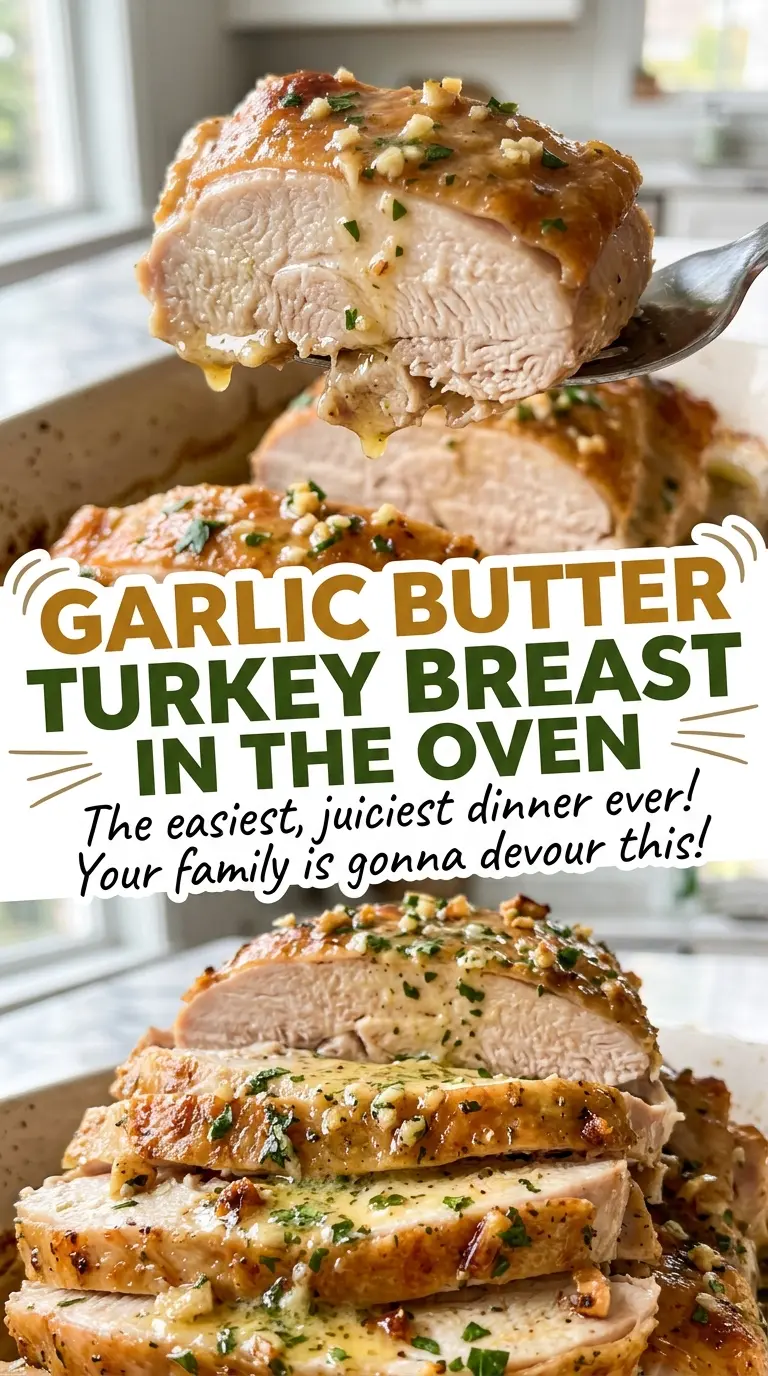
Softened butter should glide under the turkey skin without tearing it; melted butter just runs off before it can do its job. I learned to take a minute with the softened butter and spread it in two places: beneath the skin and over the outside. That gives this garlic butter turkey breast flavor right where each bite needs it.
This is a simple roast built around a thawed, bone-in, skin-on turkey breast and a small bowl of garlic-thyme butter. The oven stays at 350°F, and the turkey cooks until a thermometer reaches the right temperature in the thickest part. Since a 4- to 5-pound breast can take different amounts of time, the thermometer matters more than the clock.
After roasting, the turkey gets a 20-minute rest before carving. That pause is easy to overlook when the skin smells garlicky and the meat is ready to serve, but it gives you time to set out the cutting board and lets the slices come away neatly.

Kitchen Note
The skin can tear if you force your fingers through too quickly. Work it loose gradually, then spread the butter gently instead of pushing hard; keeping that layer intact makes the butter easier to distribute.
Save this garlic butter turkey breast for a roast with tender slices and garlic-thyme butter under the skin.
Why Half the Garlic Butter Belongs Under the Turkey Skin
Butter spread only on top has to work through the skin before it can season the meat. Tucking about half of the garlic-thyme mixture underneath puts it in direct contact with the breast, while the rest flavors the outside. The two placements do different jobs, so keeping the mixture divided is worth the few extra minutes.
That distinction matters with a turkey breast because the meat is lean, and there’s no need to complicate the roast with a separate sauce or a long list of seasonings. The butter carries the garlic, salt, pepper, and thyme in one coating. You get seasoning beneath the skin and a buttery layer over it without adding extra ingredients.
Spread the mixture as evenly as you can rather than leaving one thick mound in a single spot. Don’t scrape it all back into the bowl if the skin doesn’t lift as far as you expect; use what fits comfortably beneath it, then keep the remaining butter on the outside. The goal is even coverage, not forcing the skin farther than it will go.
Why Unsalted Butter and Skin-On Turkey Matter Here
- Unsalted butter — It makes a spreadable base for the garlic and herbs while keeping the seasoning level in your control. Use it softened, not melted; premium butter isn’t necessary, but a spreadable texture is.
- Garlic — Minced cloves distribute through the butter more evenly than large pieces would. Fresh garlic gives the mixture its clear, pungent flavor, so mince it finely enough that you can spread it without dragging clumps across the skin.
- Dried thyme — Dried leaves mix neatly into softened butter and give the roast an herbal note without adding moisture. Check that the jar still smells fragrant; old, faded thyme won’t contribute much.
- Kosher salt and black pepper — They season the butter itself, so each portion carries seasoning with it. Kosher salt is the choice here; finer table salt can taste saltier when swapped by the same volume, so it isn’t a straight measure-for-measure replacement.
- Bone-in, skin-on turkey breast — The skin gives you a surface for the outside butter, and the bone is part of the cut this roasting time is designed around. Buy the specified size and thaw it fully before cooking; a boneless breast needs different timing.
From Softened Garlic Butter to Carved Turkey
Set Up the Roasting Pan
Heat the oven to 350°F and place a rack inside a 9×13-inch roasting pan. Having the rack ready before you handle the turkey keeps the setup simple and gives the breast a stable place to roast. Use a pan that fits the rack, rather than trying to balance the turkey directly on the pan’s rim.
Mix and Spread the Butter
Stir the softened butter with the minced garlic, kosher salt, black pepper, and dried thyme in a small bowl. Carefully loosen the skin over the turkey breast and spread about half of the mixture beneath it. Spread the rest over the skin, aiming for an even coating instead of one heavy patch.
Roast to the Thermometer Reading
Set the turkey breast skin-side up on the rack. Roast it for 1 1/2 to 2 1/4 hours, checking the thickest part with a thermometer and keeping the probe from touching bone. The breast is ready when that reading reaches 165°F. The time range is there because the exact breast and oven can vary; use the temperature reading to decide when to take it out.
Rest Before You Carve
Transfer the roasted breast to a cutting board and tent it loosely with foil. Leave it undisturbed for 20 minutes before carving. Keep the foil loose rather than wrapping the turkey tightly, so the resting step doesn’t trap too much steam against the skin.
Three Simple Ways to Adapt the Garlic Butter
A Dairy-Free Butter Version
Replace the unsalted butter with an equal volume of dairy-free butter sticks, softened, and mix in the same garlic, salt, pepper, and thyme. Stick-style dairy-free butter spreads more like regular butter than a soft tub spread; expect a slightly different richness and browning on the skin.
A Garlic-Free Roast
Leave out the minced garlic and keep the butter, salt, pepper, and dried thyme. The roast will lose the pronounced garlic aroma but keep its buttery, herbal seasoning; the method stays the same.
A Thyme-Free Butter
Omit the dried thyme but keep the garlic, butter, salt, and pepper. This makes the flavor more direct and garlicky, with less of the earthy herbal note, without changing the turkey or roasting approach.
Storage and Reheating
- Refrigerator: Refrigerate leftover turkey within 2 hours and keep it covered for 3 to 4 days. The skin softens once chilled.
- Freezer: Slice or portion the cooled meat into an airtight freezer-safe container or bag and freeze for up to 2 to 3 months for best quality.
- Reheating: Warm slices covered in a 325°F oven until steaming hot, or heat a portion in the microwave in short intervals. Leaving the meat uncovered for a long reheat can dry the edges.
Questions That Come Up Before the Turkey Goes in the Oven
Garlic Butter Turkey Breast in the Oven
Ingredients
Equipment
Method
- Heat the oven to 350°F.
- Set a rack inside a 9x13-inch roasting pan.
- Stir the softened butter, minced garlic, kosher salt, black pepper, and dried thyme together in a small bowl.
- Carefully loosen the skin over the turkey breast and spread about half the butter mixture underneath.
- Spread the rest of the butter mixture over the skin.
- Set the turkey breast skin-side up on the rack.
- Roast for 1 1/2 to 2 1/4 hours, until a thermometer inserted into the thickest part without touching bone reads 165°F.
- Transfer the turkey to a cutting board and tent loosely with foil.
- Rest for 20 minutes before carving.