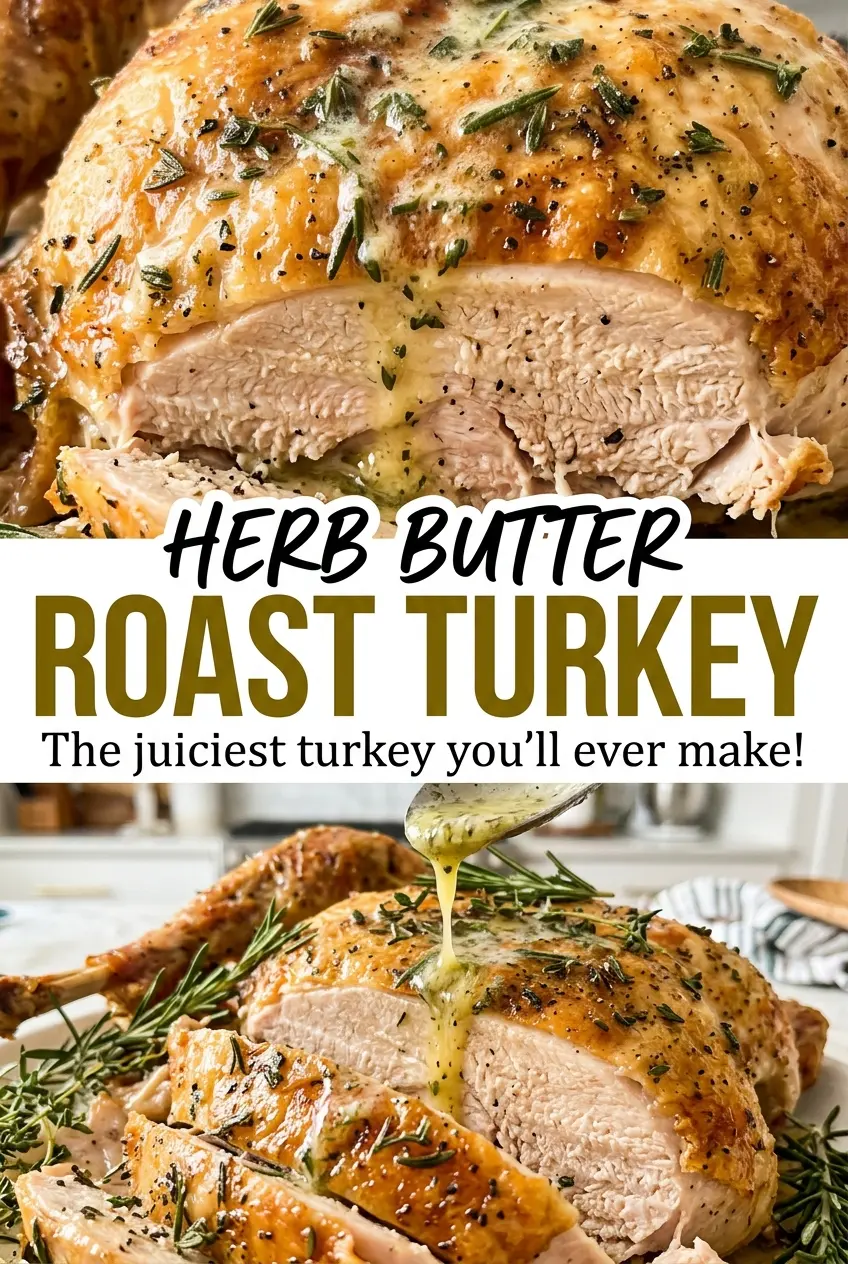
The first thing you notice when this turkey goes into the oven is how much herb butter is tucked beneath the skin, not just painted on top. That matters during a long roast: the butter sits close to the breast and thighs while the skin gets its own coating of garlic, herbs, and lemon zest. I use an unbrined bird so the seasoning stays balanced instead of competing with salt already added during processing.
Fresh parsley, thyme, sage, and rosemary make a savory butter that’s fragrant without leaning too hard on any one herb. The softened butter spreads easily under the skin, and the onion and lemon quarters in the cavity scent the meat as it roasts. A little chicken broth in the pan keeps the bottom from drying out and gives the drippings somewhere to collect.
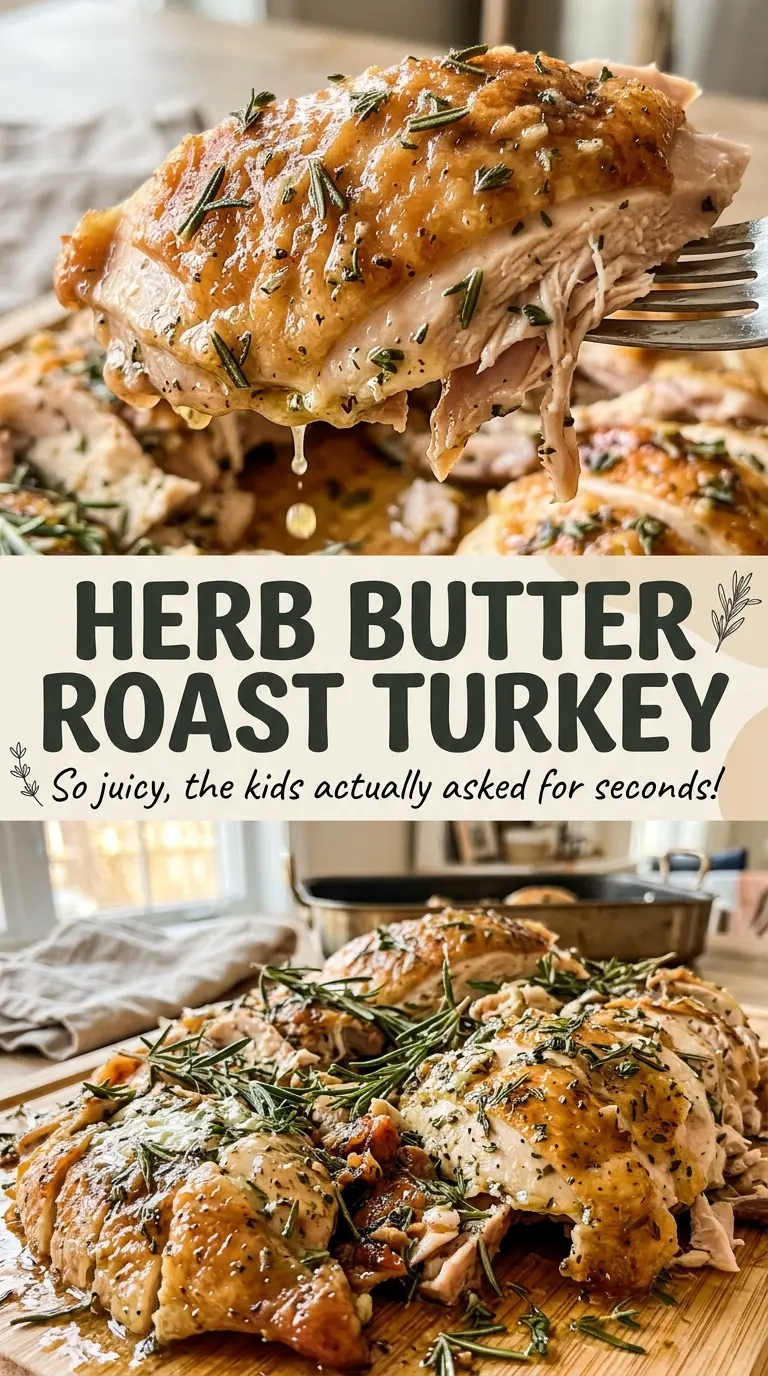
With the oven steady at 325°F and a thermometer guiding the finish, the turkey comes out tender and well seasoned, with a golden, herb-flecked exterior. Give it the full rest before carving, and the platter will be full of juicy slices rather than a puddle of lost juices.
Kitchen Note
Use softened butter, not melted butter. It clings to the meat and spreads under the skin without running straight into the roasting pan.
Save this Herb Butter Roast Turkey for a centerpiece with tender meat, lemon, and a generous layer of fresh herbs under the skin.
Why an Unbrined Turkey Takes This Herb Butter Better
This seasoning is built for an unbrined bird. A turkey that hasn’t already been salted in processing gives the kosher salt in the butter room to season the meat without piling salt on top of salt. That’s especially useful here because the butter goes under the skin, where it sits close to the breast and thighs instead of seasoning only the outside.
There’s a practical difference between an unbrined turkey and one labeled self-basting, enhanced, or injected with a salt solution. Those birds already contain added seasoning and moisture, so using the herb butter unchanged can leave the finished turkey saltier than intended. Check the label before you buy; the package should identify whether the turkey has been treated with a solution.
The recipe also uses unsalted butter, which keeps the seasoning easier to control. You get the full measure of herbs, garlic, and lemon without extra salt hidden in the butter. For a reliably balanced result, start with a fully thawed, unbrined turkey in the listed size range.
What the Fresh Herbs and Lemon Bring to the Butter
- Fresh parsley, thyme, sage, and rosemary — Fresh leaves bring a brighter aroma than dried herbs, and the mix gives the butter both green, gentle notes and a deeper woodsy edge. Bunch herbs from the produce section work well; chop them finely so they distribute through the butter rather than forming clumps. If you’re short on one herb, lean on the other fresh herbs in the mix instead of swapping in dried herbs one-for-one, which can taste much stronger.
- Garlic — Minced garlic spreads its flavor through the butter and mellows as the turkey roasts. Fresh cloves give the cleanest flavor, though pre-minced garlic is a practical shortcut if that’s what you have. Mince it finely so no large pieces are left in the butter.
- Lemon — The zest seasons the butter with fragrant citrus oils, while the quarters go into the cavity with the onion. Use a fresh lemon here; bottled juice won’t replace the zest’s aroma or the whole pieces in the cavity. Zest the lemon before cutting it into quarters.
- Unsalted butter — Standard unsalted butter is just right; there’s no need to seek out a specialty brand. Let it soften until you can stir it easily, but keep it solid enough to hold together. The unsalted kind lets the herbs and measured seasoning stay in charge.
- Yellow onion and low-sodium chicken broth — The onion adds aroma inside the cavity, while the broth sits in the roasting pan beneath the turkey. Carton low-sodium broth is perfectly suitable; its milder salt level keeps the pan liquid from becoming overly salty as it mixes with drippings.
How to Season the Turkey Under the Skin and Roast It Evenly
Mix a Spreadable Herb Butter
Stir the softened butter with the parsley, thyme, sage, rosemary, minced garlic, lemon zest, kosher salt, and pepper in a medium bowl. Keep mixing until the herbs and seasoning look evenly distributed rather than streaked through the butter. If the butter is cold and stiff, it’s harder to combine; if it has melted, it won’t stay in a workable spread. Set it aside while you prepare the bird.
Set Up the Pan and Dry the Bird
Move an oven rack to the lower third and heat the oven to 325°F. Fit a roasting rack inside a 16×13-inch roasting pan, then remove the turkey’s neck and giblets and pat the bird dry with paper towels. Tuck the wing tips beneath the body so they aren’t sticking out from the sides. Dry skin is easier to handle when you loosen it, and a dry surface also keeps the outside butter from sliding off.
Fill the Cavity and Work in the Butter
Put the quartered onion and lemon pieces inside the cavity, then tie the legs loosely with kitchen twine. Set the turkey breast-side up on the rack and gently loosen the skin over the breast and thighs with your fingers. Spread half of the herb butter beneath the skin, taking care not to force your way through a tear, then coat the outside with the remaining butter. Pour the low-sodium chicken broth into the roasting pan, not over the turkey.
Roast to Temperature, Then Let It Rest
Roast for 3 to 3¾ hours, loosely tenting the breast with foil if it browns too quickly. Check the thickest part of the breast and the innermost thigh with a thermometer; both should reach 165°F, and the probe shouldn’t touch bone. If the outside is getting dark before the inside is ready, the loose foil tent protects the breast while the turkey continues to roast. Transfer the bird to a carving board, tent it loosely with foil, and rest it for 30 minutes before carving.
Three Thoughtful Ways to Change the Herb Butter
Make the Butter Dairy-Free
Use the same amount of unsalted dairy-free baking sticks in place of the butter; choose a firm stick-style product rather than a soft tub spread. The herb mixture will still spread beneath the skin, though the turkey may brown a little differently and the buttery flavor will be less rich.
Take the Rosemary Down a Notch
Leave out the rosemary if you prefer a softer, less piney herb flavor, and let the parsley, thyme, and sage carry the butter. The result stays savory and aromatic, just without rosemary’s assertive edge.
Leave Out the Garlic
For a garlic-free version, omit the minced cloves and mix the remaining herb butter as usual. The flavor will be gentler, with the fresh herbs and lemon more noticeable.
Storage and Reheating
- Refrigerator: Carve leftover turkey and refrigerate it in an airtight container within 2 hours. It keeps for 3 to 4 days; the skin will soften once chilled.
- Freezer: Freeze carved portions in airtight freezer-safe packaging for up to 2 to 6 months for best quality. Thaw them in the refrigerator before reheating.
- Reheating: Cover sliced turkey and warm it in the microwave in short intervals until it reaches 165°F. Stop as soon as it’s hot; prolonged heating dries out the lean breast meat.
Questions I Get Asked About This Herb Butter Roast Turkey
Herb Butter Roast Turkey
Ingredients
Equipment
Method
- In a medium bowl, mix the butter, parsley, thyme, sage, rosemary, garlic, lemon zest, salt, and pepper until evenly combined.
- Set an oven rack in the lower third of the oven.
- Heat the oven to 325°F.
- Fit a roasting rack inside a 16x13-inch roasting pan.
- Remove the neck and giblets from the turkey.
- Pat the turkey dry with paper towels.
- Tuck the wing tips under the body.
- Place the onion and lemon quarters in the cavity.
- Tie the legs loosely with kitchen twine.
- Set the turkey breast-side up on the rack.
- Gently loosen the skin over the breast and thighs.
- Spread half the herb butter underneath the skin.
- Spread the remaining butter over the outside.
- Pour the chicken broth into the roasting pan.
- Roast for 3 to 3 3/4 hours, tenting the breast loosely with foil if it browns too quickly, until a thermometer inserted into the thickest part of the breast and the innermost thigh reads 165°F without touching bone.
- Transfer the turkey to a carving board, tent loosely with foil, and rest for 30 minutes before carving.