The first cranberries make a sharp little pop against the pan, then the sound gathers as more berries burst and the orange starts to perfume the kitchen. I watch for that change every time I make homemade cranberry sauce: it’s a better cue than waiting for every berry to disappear.
This version gets its citrus from orange juice and finely grated zest, while the cranberries bring their own tartness and natural body. The sugar dissolves into the liquid before the fruit goes in, so the berries can simmer evenly instead of sitting in a gritty syrup. After a short rest, the sauce turns glossy and spoonable, with enough texture to feel homemade.
Kitchen Note
Take a moment to pick through the cranberries before they hit the pan. A stray stem or soft, damaged berry is easy to miss in the bag but stands out once the sauce cooks down.
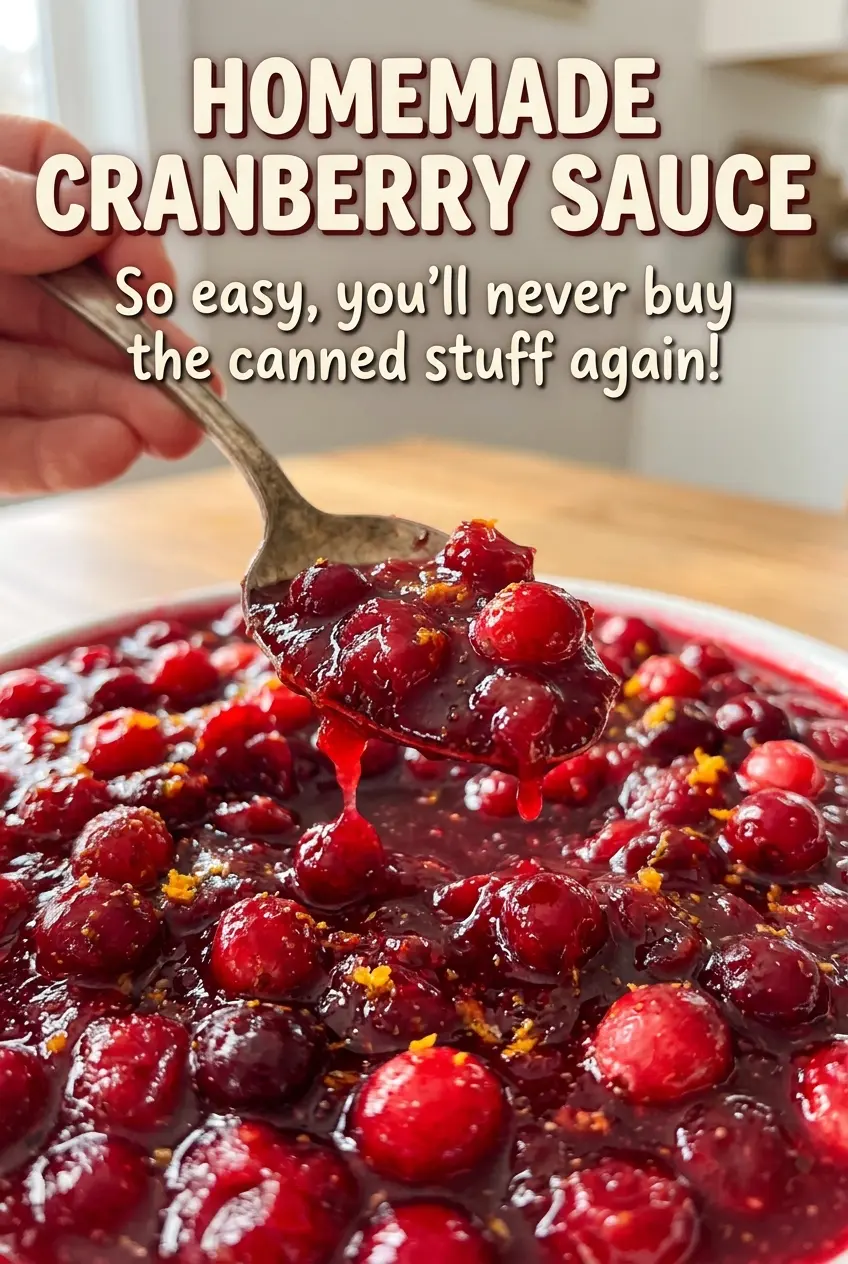
Save this homemade cranberry sauce for a bright, citrusy side with soft berries and a glossy finish.
Why This Sauce Thickens Without a Thickener
Cranberries have natural pectin, the same fruit component that helps jams set. As the berries soften and burst, that pectin joins the sugar and fruit juices to give the sauce body. There’s no need for cornstarch or gelatin, and adding a thickener would make the texture heavier than it needs to be.
The balance of liquid matters here. Orange juice adds citrus flavor, while water keeps the juice from taking over the cranberry taste. The sauce may look loose when it first comes off the stove; cooling gives the berry mixture time to settle into a thicker consistency. That gradual change is part of the recipe, not a sign that it needs more cooking.
Fresh cranberries also vary a little from bag to bag. Some release more juice, and some berries pop faster than others, so judge the simmer by the overall look of the pan: most berries should have burst and the liquid should begin to cling lightly to a spoon.
What the Cranberries, Orange, and Sugar Each Bring
- Fresh cranberries — Choose firm berries with even color; rinse them and pick over the bag before cooking. Frozen cranberries can stand in if fresh ones aren’t available. Use them straight from the freezer and cook to the same visual cues, allowing for a longer simmer if needed.
- Orange juice — Plain bottled orange juice works in place of freshly squeezed juice without changing the recipe’s proportions. Skip sweetened orange drinks, which bring extra sugar and can push the sauce out of balance.
- Orange zest — Finely grated zest carries the fragrant orange oils that juice alone won’t provide. Grate only the orange-colored outer peel; the white pith underneath can taste bitter. A fine rasp grater gives the zest a delicate texture that blends into the sauce.
- Granulated sugar — It softens the berries’ sharp edge and dissolves readily in the liquid. Light brown sugar can replace it in the same amount for a darker sauce with a mellow molasses note, though the orange will taste less crisp.
- Water and kosher salt — Water keeps the citrus from overwhelming the berries, and a small pinch of salt rounds out the tart-sweet balance. Kosher salt is easy to pinch and distribute; if you only have table salt, use less because its finer crystals pack more tightly.
From Simmering Citrus to a Spoonable Sauce
Dissolve the Sugar Before Adding the Berries
Combine the water, orange juice, granulated sugar, and kosher salt in a 2-quart saucepan over medium heat. Stir as the mixture warms so the sugar dissolves instead of collecting on the bottom. Wait for the liquid to reach a simmer before adding the fruit. If you still feel grit when you stir, give the pan another moment; the berries don’t need to go in until the sugar is dissolved.
Let the Cranberries Burst at a Steady Simmer
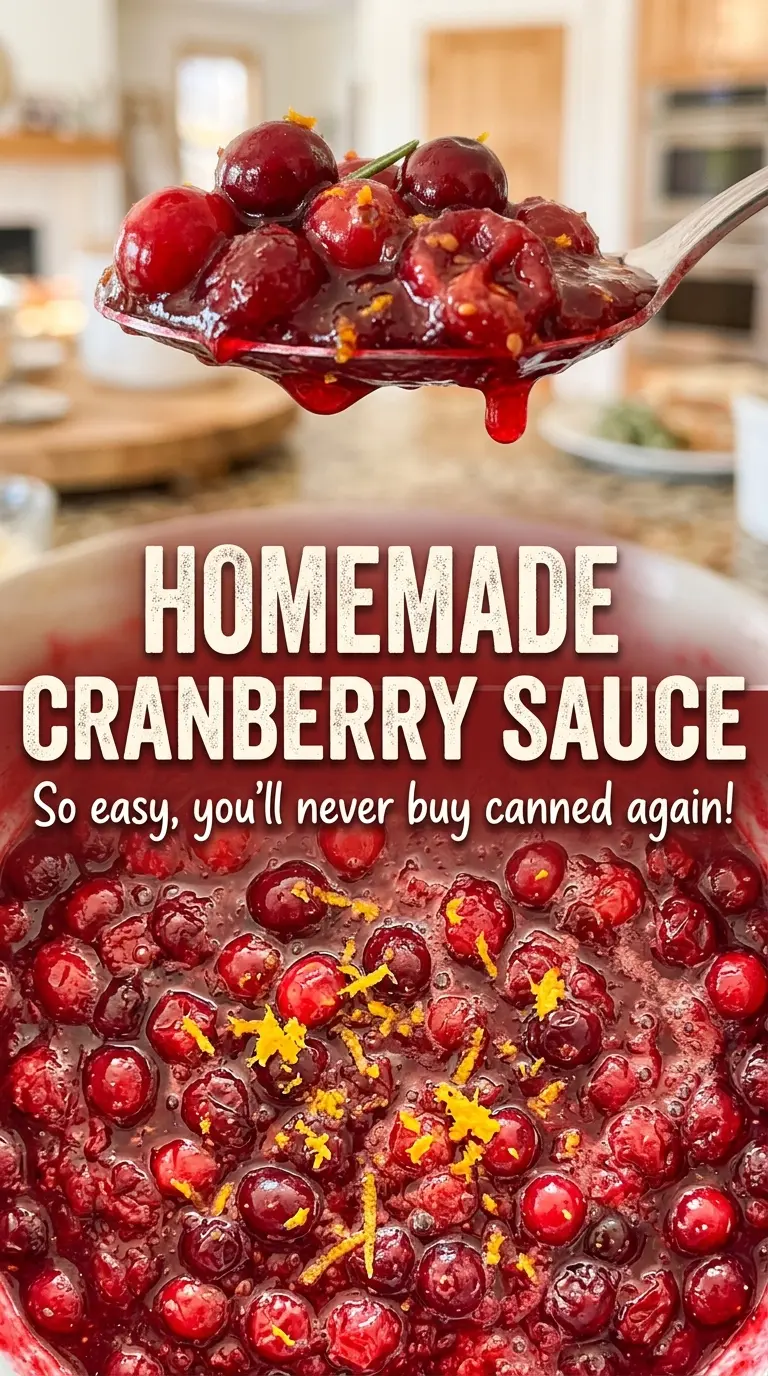
Stir in the rinsed cranberries and finely grated orange zest. Keep the pan at a simmer for 10 to 12 minutes, stirring occasionally so the fruit cooks evenly. You’ll hear berries pop and see the sauce shift from juice with floating fruit to a thicker mixture with softened skins. Most berries should burst, but a few whole ones are welcome; don’t cook the pan dry trying to force every berry open.
Give the Sauce Time to Set
Take the saucepan off the heat once the berries have mostly popped and the sauce has begun to thicken. Let it cool for at least 30 minutes; the consistency continues to develop as the mixture cools. If it still seems thinner than you expected while warm, resist the urge to put it back on the stove immediately. Taste and judge the finished texture after it has had time to rest.
Two Easy Ways to Change the Batch
Make a Half Batch for a Smaller Table
Cut every ingredient amount in half for a smaller yield. Keep the same order of steps and use the same visual cues rather than assuming the smaller quantity will take the full listed simmer time. The sauce still has the same tart cranberry character, just less of it to store.
Blend It Smooth
For a smooth, spoonable finish instead of a berry-studded one, let the cooked sauce cool first, then blend it until the skins are no longer visible. Blending makes the texture more uniform and can make the sauce feel slightly thicker on the spoon. Use a blender carefully with cooled sauce, not steaming-hot liquid.
Storage and Reheating
- Refrigerator: Store covered in the refrigerator and use within 4 days. The sauce firms up when cold, then softens as it sits out briefly.
- Freezer: Freeze in an airtight container for up to 2 to 3 months, leaving a little room at the top. Thaw it in the refrigerator before serving; the texture may be a touch softer after thawing.
- Reheating: Cranberry sauce is usually served chilled or at room temperature. To serve it warm, heat gently in a saucepan over low heat, stirring often; boiling it again can make the berries break down further.
Questions That Come Up With Homemade Cranberry Sauce
Homemade Cranberry Sauce
Ingredients
Equipment
Method
- Combine the water, orange juice, sugar, and salt in a 2-quart saucepan over medium heat, stirring until the sugar dissolves and the mixture comes to a simmer.
- Stir in the cranberries and orange zest.
- Simmer for 10 to 12 minutes, stirring occasionally, until most of the cranberries have popped and the sauce begins to thicken.
- Remove the saucepan from the heat and let the sauce cool for at least 30 minutes; it will thicken further as it cools.