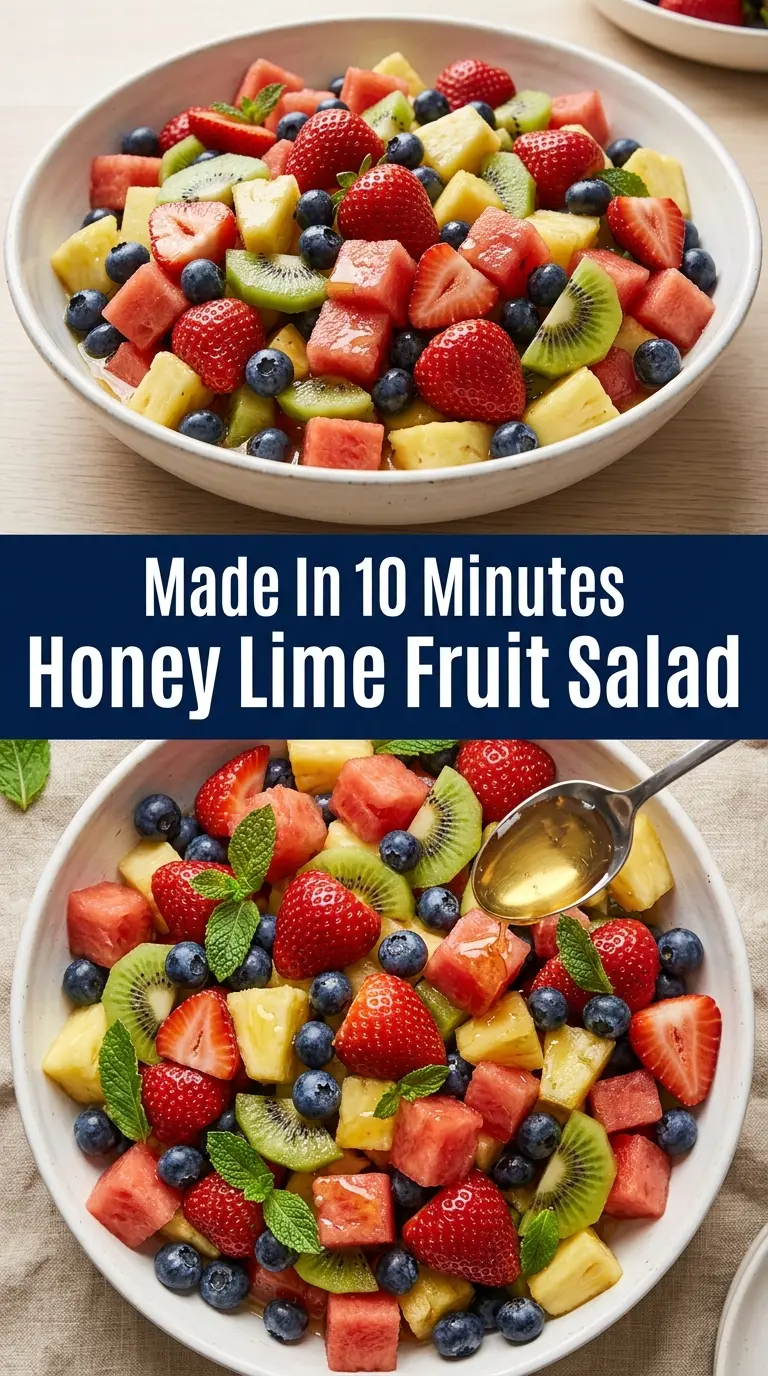
Honey lime fruit salad tastes like the bowl people hover around first at a picnic. The fruit stays bright and juicy, the dressing is light enough to coat without drowning everything, and the mint gives the whole thing a clean finish that keeps it from tasting like plain mixed fruit. What makes this version worth repeating is the balance: enough honey to round out tart berries and kiwi, enough lime to wake up the sweeter fruit, and just enough ginger to add a little warmth if you want it.
The trick is using fruit that’s ripe but still firm. Overripe berries break down fast, and watery fruit turns the dressing thin. Tossing everything gently at the end keeps the bowl pretty and stops the strawberries from staining the whole mix pink. A quick chill helps the flavors settle, but this salad still tastes fresh served right after mixing.
Below, I’ve included the one detail that keeps the fruit from going soft too quickly, plus a few easy swaps if you need to work with what’s in your kitchen.
The honey-lime dressing was perfect — light, not syrupy, and it coated every piece without making the berries mushy. I let it sit for about an hour before dinner and it still looked fresh when we served it.
Save this honey lime fruit salad for the next time you need a colorful side that stays crisp, glossy, and fresh-tasting.
The Secret to Keeping Fruit Salad Bright Instead of Watery
The biggest problem with fruit salad isn’t the fruit itself. It’s the juice. Once cut fruit sits too long, the berries start releasing liquid and the whole bowl turns soft and dull. This version avoids that by using just enough dressing to glaze the fruit instead of soaking it, and by choosing fruits with different textures so the bowl still feels lively after tossing.
Lime juice does more than add flavor here. It sharpens the sweeter fruit and helps the honey taste clean instead of heavy. Mint matters too, but only if you add it at the end. If it sits in the dressing too long, it can darken and lose that fresh, cool finish.
- Strawberries — Halve them so they catch the dressing without collapsing under it.
- Blueberries and grapes — These give the salad some structure. They hold up better than softer berries, which is what keeps the bowl from turning mushy.
- Watermelon — Use firm, chilled cubes. If the melon is already a little soft, the salad will go watery fast.
- Honey — Raw honey gives a round sweetness that simple syrup can’t quite match. If your honey is thick, warm it for a few seconds so it whiskes smoothly with the lime juice.
- Fresh lime juice and zest — Bottled juice tastes flat here. The zest carries the bright citrus aroma that makes the whole salad smell fresh the second you toss it.
- Mint — Tear it by hand instead of chopping it fine. That keeps the leaves from bruising and turning dark in the bowl.
How to Toss the Dressing Without Bruising the Fruit
Mix the dressing first
Whisk the honey, lime juice, lime zest, and ginger in a small bowl until the honey disappears into the liquid. If the honey stays streaky, it won’t coat the fruit evenly and you’ll get sweet spots instead of a balanced bowl. A quick whisk is enough, but if your honey is stiff, let it sit with the lime juice for a minute before whisking again.
Combine the fruit with a light hand
Add the prepared fruit to a large bowl and toss once or twice with a spatula or clean hands. The goal is to move the fruit around, not stir it like batter. Soft berries break when they get overhandled, and once they’re crushed, the bowl starts looking tired fast.
Finish with mint at the end
Drizzle the dressing over the fruit, toss just until everything looks glossy, then scatter the mint on top. Adding the mint last keeps it green and fragrant. If you want the salad colder, chill the fruit first instead of leaving it in the dressing for a long stretch.
Three Smart Ways to Change the Bowl Without Losing the Balance
Make it dairy-free and naturally gluten-free
This recipe already fits both needs as written, which is part of why it works for a crowd. Just check that your honey is pure and your garnishes are fresh, and you’re set. Nothing gets lost in translation because the salad depends on fresh fruit, citrus, and mint rather than packaged ingredients.
Swap the fruit based on what’s ripe
Mango, peaches, blackberries, and pineapple all work well if they’re firm and sweet. Keep at least one sturdier fruit in the mix, like grapes or blueberries, so the bowl doesn’t turn to soft fruit salad soup after a few minutes. Avoid overripe bananas and very juicy pears because they muddy the texture fast.
Use maple syrup instead of honey
Maple syrup works if you don’t want honey, but the flavor shifts from floral to woodsy. Start with a little less than the honey amount, then taste the dressing before adding more, because maple can take over fast. It’s a good swap when you want a vegan version, but the finish won’t taste quite as bright.
Storage and Reheating
- Refrigerator: Best within 24 hours, though it will still taste good for up to 2 days. The berries soften and the bowl gets juicier over time.
- Freezer: Don’t freeze it. The fruit breaks down into a watery, mushy mix once thawed.
- Reheating: Not applicable. If it’s been chilled, let it sit at room temperature for 10 to 15 minutes and give it one gentle toss before serving.
Answers to the Questions Worth Asking
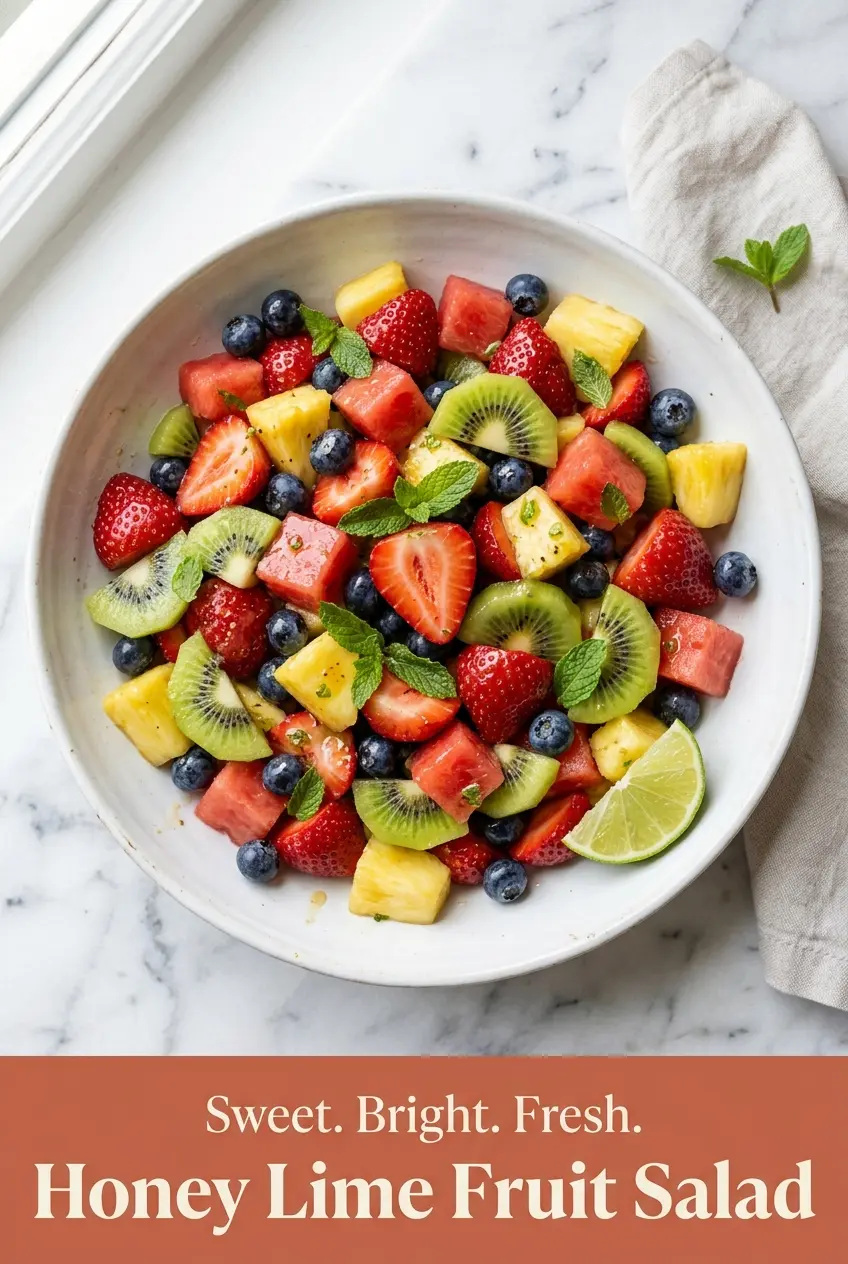
Honey Lime Fruit Salad
Ingredients
Method
- Wash all fruit, hull and halve the strawberries, cube the watermelon, peel and slice the kiwi, and halve the grapes.
- Add all prepared strawberries, blueberries, raspberries, watermelon, pineapple, kiwi, and grapes to a large serving bowl and gently toss to combine.
- In a small bowl, whisk the raw honey, fresh lime juice, lime zest, and ground ginger (if using) until fully blended.
- Drizzle the honey-lime dressing over the fruit, then gently toss to coat every piece without bruising the berries.
- Scatter the fresh mint leaves over the top and serve immediately, or refrigerate up to 2 hours before serving.
- If chilled, toss gently again right before serving to re-distribute the dressing.