The skin is the first clue that a roast turkey is on the right track: it should look dry before it goes into the oven, not damp and slick. I start this Juicy Roast Turkey the day before roasting by salting the bird and leaving it uncovered in the refrigerator. That bit of advance prep gives the seasoning time to work and helps the skin brown as the turkey cooks. Lemon, garlic, thyme, and rosemary go into softened butter, which gets spread both beneath the breast skin and over the outside.
There’s no complicated trussing or frequent basting to keep up with. The turkey roasts on a rack with broth in the pan, and a thermometer—not the clock alone—tells you when the breast and thigh are ready. Plan on a proper rest before carving, too; a whole bird needs a little patience at the end. The result is tender slices, savory pan drippings, and skin with a rich herb-and-lemon aroma.
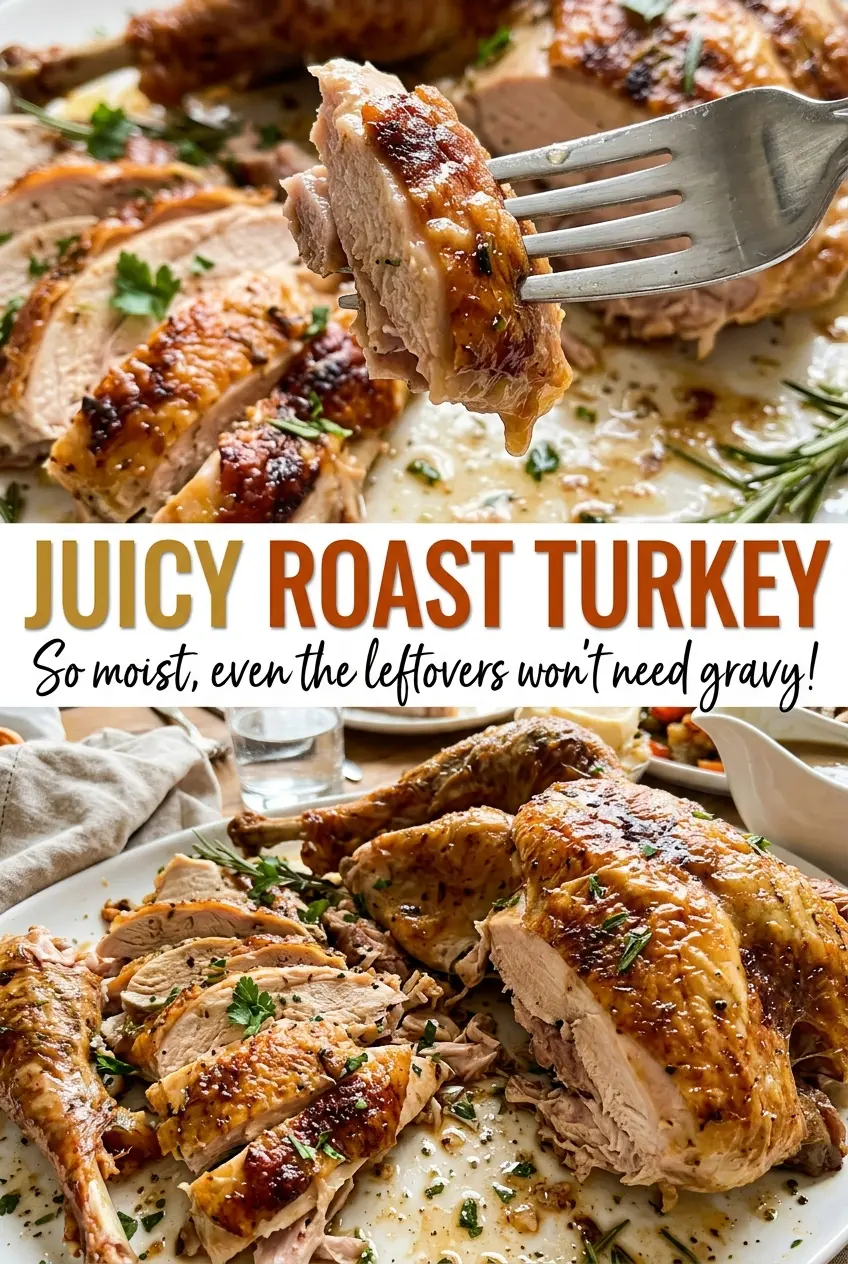
Kitchen Note
Let the turkey rest for the full 30 minutes before carving. Keep the foil loose; a tight cover traps steam against the skin.
Save this Juicy Roast Turkey for its lemon-herb butter, deeply browned skin, and make-ahead salt rest.
Why the Uncovered Salt Rest Helps the Skin Brown
Salting a turkey ahead of roasting does more than season the outside. As the salt sits on the bird, it draws a little moisture to the surface, dissolves into it, and gives the seasoning time to work its way back into the meat. That’s why I don’t treat the salt as a last-minute sprinkle. A turkey that goes straight from seasoning to the oven can taste seasoned on the skin while the meat underneath tastes comparatively plain.
Leaving the salted bird uncovered in the refrigerator also gives the skin a chance to dry. Dry skin browns more readily than a wet surface, which helps you get color without relying on a higher oven temperature. It’s a useful distinction: the goal isn’t to dry out the meat, but to let the exterior lose surface moisture while the turkey stays chilled. If the bird is covered during this rest, condensation can collect on the skin and work against that advantage. Give this step its full window, then use the herb butter to add its aromatic coating just before roasting.
What the Butter, Herbs, and Lemon Each Bring
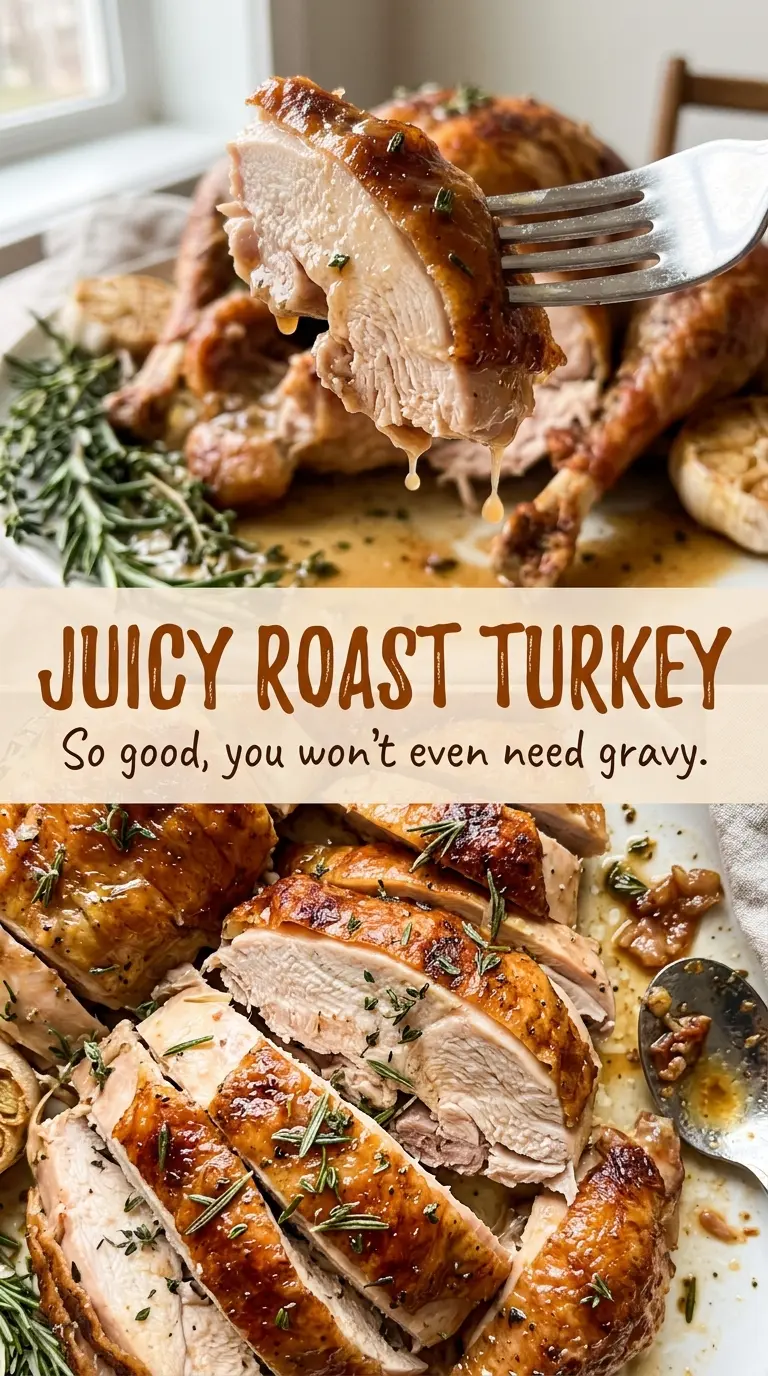
- Whole turkey — A fully thawed bird in the specified size range fits the roasting time and pan setup here. Check the label for added salt or a self-basting solution; an already salted bird can turn out too salty after the skin gets its salt rest. Neck and giblets need to be out before seasoning.
- Morton kosher salt — The recipe is built around this coarse kosher salt, so use it rather than swapping in fine table salt by eye. The crystals are easier to distribute over the skin and inside the cavity.
- Unsalted butter — Softened butter spreads more easily beneath the breast skin than cold butter, and unsalted butter lets the turkey’s seasoning stay in balance. Choose a butter you like the taste of, since it carries the garlic, herbs, and lemon zest.
- Fresh thyme and rosemary — Chopped fresh herbs give the butter their fragrant, green character. Pick bunches with perky leaves and no musty smell; dried herbs don’t behave exactly the same in this soft butter, so I stick with fresh here.
- Garlic, black pepper, and lemon — Minced garlic and pepper round out the herb butter, while the zest brings a clear citrus scent without adding juice to the butter. The quartered lemon goes in the cavity with the onion, so zest the lemon before cutting it.
- Yellow onion and chicken broth — The onion shares the cavity with the lemon, and low-sodium broth goes into the roasting pan. Choosing low-sodium broth keeps the drippings from becoming overly salty as they collect beneath the turkey.
How to Season and Roast the Turkey Without Guessing
Salt the Bird and Let the Skin Dry
Pat the fully thawed turkey dry with paper towels; don’t rinse it. Sprinkle the kosher salt over the skin and inside the cavity, then set the bird breast-side up on a rack in the roasting pan. Refrigerate it uncovered for 12 to 24 hours. The rack keeps the bird raised above the pan rather than sitting directly against its bottom.
Mix the Lemon-Herb Butter
Heat the oven to 325°F and take the turkey out of the refrigerator while the oven heats. Stir the softened butter with the minced garlic, chopped thyme, chopped rosemary, black pepper, and lemon zest until the mixture is evenly combined. Soft butter should spread without running; if it’s melted, it’ll slide off the skin instead of coating it. Quarter the zested lemon for the cavity.
Work the Butter Beneath the Breast Skin
Put the onion and lemon quarters inside the cavity, tuck the wing tips under the body, and tie the legs together with kitchen twine. Gently loosen the breast skin with your fingers, taking care not to tear it, then spread about half the herb butter underneath. Smooth the rest over the outside of the turkey. If the skin resists, ease your fingers farther along before adding butter rather than pushing hard in one spot.
Roast Until Both Checks Reach Temperature
Pour the broth into the roasting pan and roast the turkey uncovered for about 3 to 3½ hours, beginning to check at 2½ hours. If the skin is browning too quickly, tent the bird loosely with foil. Check the thickest part of the breast and the innermost part of the thigh with a thermometer, avoiding bone; both need to read 165°F. Transfer the turkey to a cutting board, tent loosely with foil, and let it rest for 30 minutes before carving.
Three Small Changes for a Different Roast Turkey
Make the Herb Butter Dairy-Free
Replace the softened butter with an equal volume of olive oil, then stir in the garlic, thyme, rosemary, pepper, and lemon zest. The oil won’t cling or taste as rich as butter, but it still carries the herbs and can be spread under and over the skin.
Keep the Butter, Skip the Garlic
Leave out the minced garlic and make the butter with the thyme, rosemary, pepper, and lemon zest. You’ll still get an aromatic, savory coating, with the lemon and fresh herbs more noticeable in each bite.
Use a Thyme-Forward Herb Butter
Omit the rosemary and keep the thyme, garlic, pepper, and lemon zest in the butter. The result is less piney and a little gentler, while keeping the same butter-under-the-skin method.
Storage and Reheating
- Refrigerator: Carve leftovers and refrigerate them in shallow, covered containers within 2 hours. Use within 3 to 4 days; the skin will soften once chilled.
- Freezer: Freeze carved portions in airtight packaging for best quality for 2 to 3 months. Thaw them in the refrigerator before reheating.
- Reheating: Warm slices covered in a 325°F oven with a splash of broth until they reach 165°F. Keep the cover on while they heat so the turkey doesn’t dry out.
Questions That Come Up Before Roasting a Whole Turkey
Juicy Roast Turkey
Ingredients
Equipment
Method
- Pat the turkey dry with paper towels; do not rinse it.
- Sprinkle the salt over the skin and inside the cavity, then set the turkey breast-side up on a rack in a roasting pan and refrigerate uncovered for 12 to 24 hours.
- Heat the oven to 325°F and take the turkey out of the refrigerator while it heats.
- Mix the butter, garlic, thyme, rosemary, pepper, and lemon zest in a small bowl.
- Put the onion and lemon quarters in the cavity.
- Tuck the wing tips under the body and tie the legs together with kitchen twine.
- Gently loosen the breast skin and spread about half the herb butter underneath it, then spread the rest over the skin.
- Pour the broth into the roasting pan and roast uncovered for about 3 to 3 1/2 hours, beginning to check at 2 1/2 hours; tent the turkey loosely with foil if it browns too quickly.
- Check that a thermometer reads 165°F in the thickest part of the breast and the innermost part of the thigh, without touching bone.
- Transfer the turkey to a cutting board, tent loosely with foil, and rest for 30 minutes before carving.