Mississippi Pot Roast turns a plain chuck roast into the kind of tender, shreddable dinner that disappears fast. The beef cooks until it barely needs a fork, and the pan juices pick up just enough tang and richness from the pepperoncini, ranch seasoning, au jus mix, and butter to taste bigger than the ingredient list looks on paper.
What makes this version work is restraint. The roast doesn’t need a pile of extras, and it doesn’t need to be drowned in liquid. The slow cooker traps enough moisture on its own, while the pepperoncini juice and butter melt into the beef drippings and seasoning packets to build a sauce that tastes savory, bright, and deeply beefy without turning muddy. Searing the roast first is worth the extra few minutes because it gives the finished pot more depth and keeps the meat from tasting flat.
Below, I’ve added the small details that matter most: how much liquid you actually need, why the butter goes on top instead of being stirred in, and what to do if you want the roast even more shred-ready for sandwiches or bowls.
The roast shredded apart with almost no effort, and the pepperoncini juice gave the gravy this tangy kick that kept it from tasting heavy. I served it over mashed potatoes and the sauce soaked in perfectly.
Love the tangy, fall-apart texture of Mississippi Pot Roast? Save it to Pinterest for the nights when you want a low-effort slow cooker dinner that tastes like you spent all day on it.
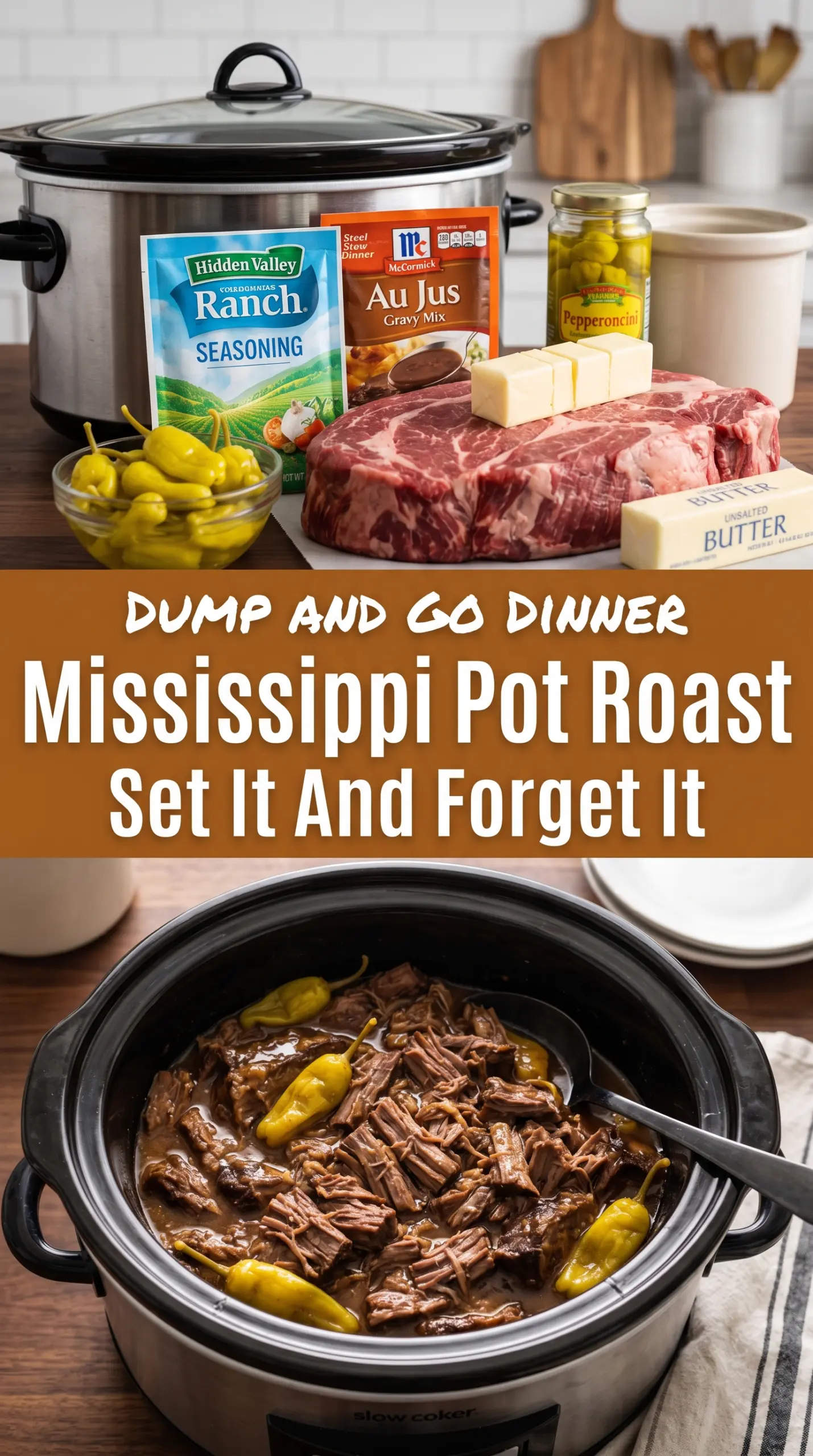
The Reason the Gravy Stays Bold Instead of Watery
The mistake that flattens a lot of slow cooker pot roasts is too much liquid. The chuck roast releases a lot of moisture as it cooks, and the butter plus pepperoncini juice are enough to season and enrich those drippings without turning the whole pot into soup. If you add extra broth because it looks sparse at the start, you’ll end up with a thin sauce that never gets that concentrated, spoon-coating finish.
The other thing that matters is the seasoning packets going directly on the meat. They dissolve into the surface juices and sink into the roast as it cooks, which gives you better coverage than stirring everything together at the bottom. The pepperoncini don’t make the roast spicy; they add a clean, briny lift that cuts through the richness and keeps every bite from feeling heavy.
- Chuck roast — This cut has enough marbling to break down into tender strands over a long cook. Leaner roasts dry out before they get this soft.
- Ranch seasoning mix — It brings garlic, onion, herbs, and salt in one hit. A homemade substitute works in a pinch, but the packet gives you the specific savory edge people expect from Mississippi Pot Roast.
- Au jus gravy mix — This is what gives the cooking liquid that beefy, concentrated base. If you swap in regular gravy mix, the sauce gets thicker and less savory.
- Pepperoncini peppers and juice — The peppers add tang, and the juice seasons the roast from the inside of the pot. Banana pepper brine can work if that’s what you have, but it tastes a little sweeter and less sharp.
- Butter — It melts slowly over the top and enriches the whole pot without needing to be stirred in. Salted butter works too; just expect the finished sauce to taste a little more seasoned.
The Order That Gets You Tender Beef Without Babying It
Searing the Roast First
Heat the olive oil in a large skillet until it shimmers, then lay the chuck roast in and leave it alone long enough to build a brown crust. If the meat sticks at first, it usually means it is not ready to turn yet. You want a deep brown surface, not a pale gray exterior, because that crust becomes the base of the finished flavor. Crowding the pan or rushing this step leaves you with steamed meat instead of seared meat.
Loading the Slow Cooker
Move the roast into the slow cooker and scatter the seasoning packets over the top so they can melt into the meat as it cooks. Add the pepperoncini around the roast, then pour in the juice. The butter goes on top so it can melt down through the seasonings instead of disappearing into the bottom of the pot. Resist the urge to stir everything at this point; the roast needs the lid on and steady heat, not constant handling.
Cooking Until It Pulls Apart
Cook on LOW for 8 hours for the most forgiving texture, or HIGH for about 5 hours if you need it sooner. The roast is ready when it gives no resistance to a fork and starts to fall apart at the edges. If it still slices neatly, it needs more time. A tough roast at the end usually means it was undercooked, not overcooked, so keep going until the collagen has fully softened.
Shredding and Letting the Juices Coat Everything
Pull the roast apart right in the slow cooker with two forks, then stir the meat back through the cooking liquid. This is where the dish gets its best texture, because the shredded beef soaks up the seasoned drippings instead of sitting dry on a plate. If the sauce looks thin, let it sit with the lid off for a few minutes after shredding so it can tighten slightly. Serve it while the meat is still glossy and hot.
How to Adapt Mississippi Pot Roast for Different Meals and Diets
Make It Dairy-Free
Swap the butter for a dairy-free butter stick or use beef tallow if you want a richer finish. The flavor stays close to the original, though dairy-free butter usually gives a slightly cleaner finish and tallow tastes more savory.
Skip the Sear When Time Is Tight
You can put the roast straight into the slow cooker if you need to save time, and it will still turn out tender. The tradeoff is less browned flavor in the sauce, so the final pot tastes a little softer and less layered.
Stretch It for Sandwiches or Bowls
If you want more servings, shred the roast and add a splash of the cooking juices, then serve it on rolls, mashed potatoes, rice, or noodles. The meat carries the flavor well, so the extra starch just gives you a better way to catch the gravy.
Use a Different Pepper Brine
Banana pepper juice works if you’re out of pepperoncini, but the flavor is a little sweeter and less sharp. Start with less and taste the sauce after cooking, because the brine can be softer and you may want an extra pinch of salt to bring it back into balance.
Storage and Reheating
- Refrigerator: Store leftovers in an airtight container for up to 4 days. The flavors deepen overnight, and the sauce thickens as it chills.
- Freezer: It freezes well for up to 3 months. Freeze the shredded beef with plenty of juices so it doesn’t dry out when reheated.
- Reheating: Warm it gently on the stove or in the microwave with a splash of the reserved juices. High heat dries out the shredded beef and makes the sauce separate.
Answers to the Questions Worth Asking
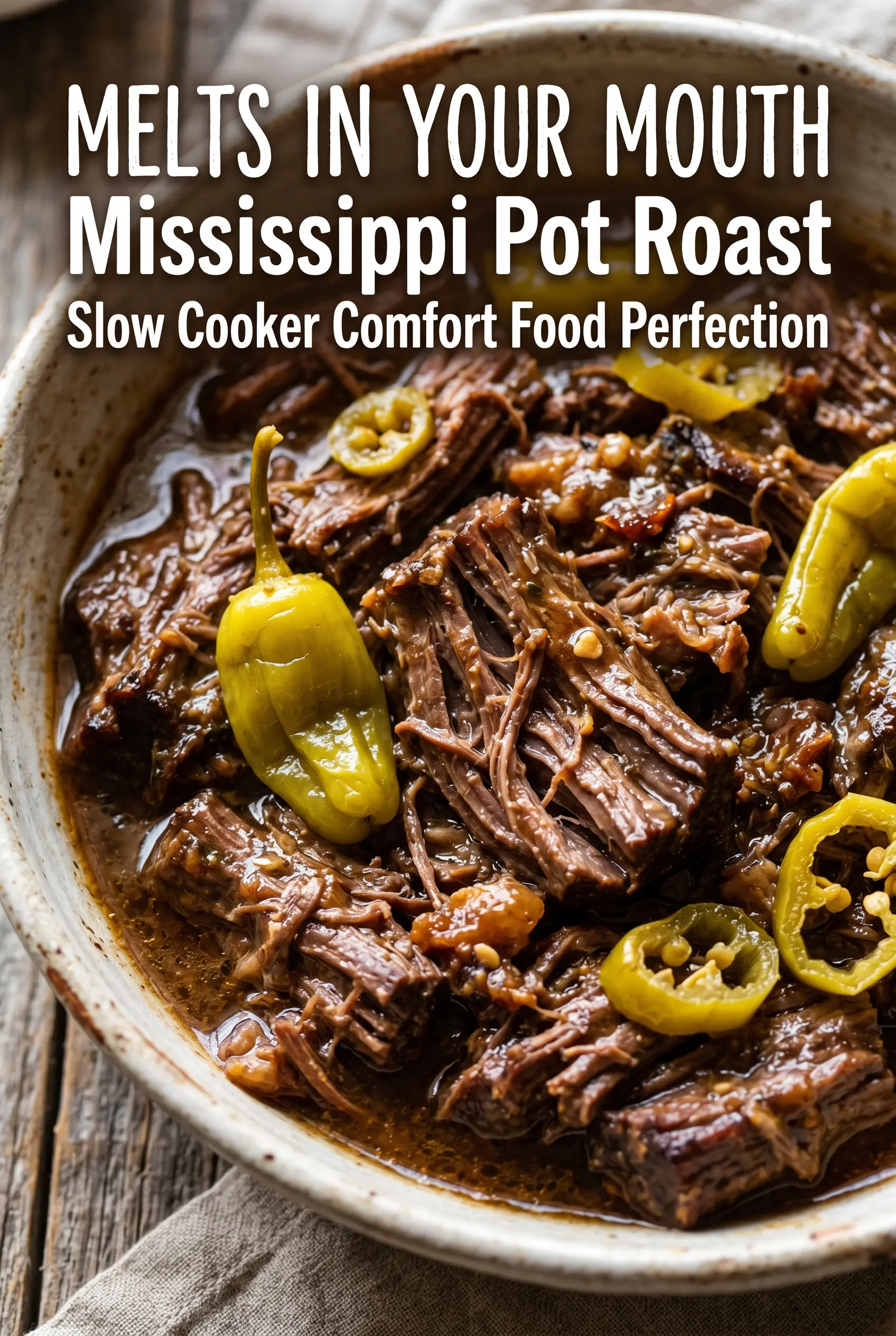
Mississippi Pot Roast
Ingredients
Equipment
Method
- Heat the olive oil in a large skillet over medium-high heat until shimmering. Sear the chuck roast for 2–3 minutes per side until browned, using a visible crust as your cue.
- Transfer the browned chuck roast to a slow cooker (or Dutch oven set for low/slow cooking). Sprinkle the ranch seasoning and au jus gravy mix evenly over the roast.
- Add the pepperoncini peppers around the meat in the slow cooker so they sit partially against the roast. Pour the pepperoncini juice into the slow cooker around the roast.
- Place the unsalted butter on top of the roast. Cover and cook on LOW for 8 hours or HIGH for 5 hours.
- Shred the roast with two forks directly in the slow cooker. Stir the meat into the flavorful juices until evenly coated.
- Serve the Mississippi pot roast over mashed potatoes, rice, noodles, or sandwich rolls. Spoon the pepperoncini-ranch au jus over the top for a glossy finish.