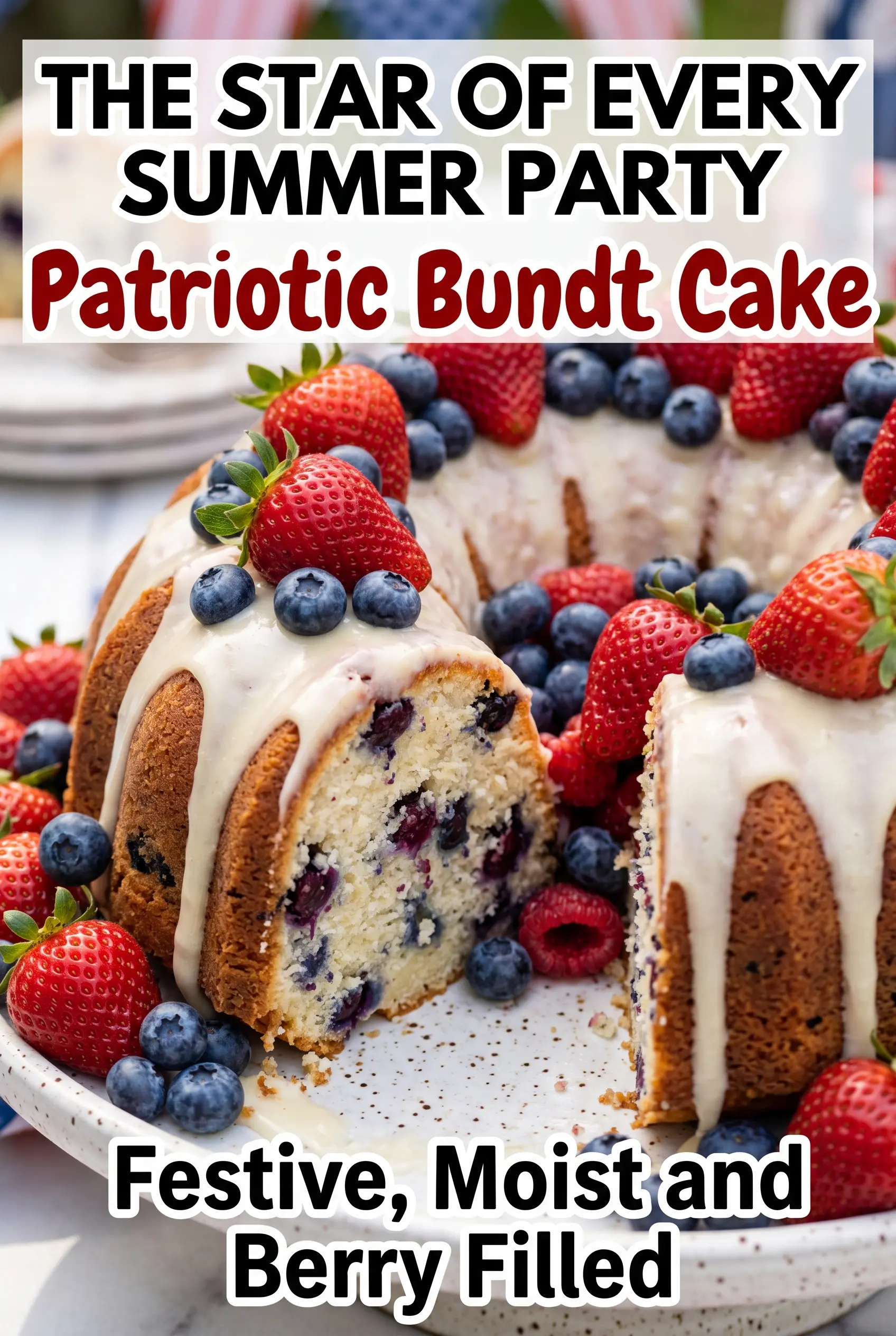
Moist vanilla Bundt cake, a smooth sweet glaze, and a crown of fresh strawberries and blueberries make this the kind of dessert people remember after the plates are cleared. The cake slices cleanly, stays tender for days, and gives you that classic celebration look without relying on food coloring or fussy decoration. The berries do the work visually, while the vanilla glaze ties everything together with a simple, clean finish.
What makes this version dependable is the batter structure. Sour cream brings richness and keeps the crumb soft, while milk loosens the batter just enough so the cake bakes up evenly in a Bundt pan instead of drying out at the edges. The butter and sugar need a full beat until pale and fluffy; that step traps air and gives the cake lift before the leaveners even start working.
Below, you’ll find the trick to getting the cake out of the pan in one piece, how to glaze it without losing that neat Bundt shape, and a few smart ways to adapt it for different gatherings.
The crumb stayed so soft, and the glaze set just enough that the berries didn’t slide off when I sliced it. I served it chilled the next day and it was even better.
Save this berry-topped Bundt cake for a celebration dessert that looks festive without extra decorating work.
The Pan Release That Saves the Whole Cake
A Bundt cake can bake perfectly and still fail at the flip. The problem is usually in the valleys and ridges of the pan, where butter alone leaves thin spots and the cake clings as it cools. Grease every curve, dust it with flour, then tap out the excess so the coating is even and dry instead of patchy and heavy.
Cooling matters just as much as prep. Fifteen minutes in the pan is the sweet spot here: long enough for the cake to firm up, not so long that steam turns the crust sticky and traps it in the mold. If it won’t release cleanly after that rest, give the pan a gentle shake and a firm tap before inverting it.
What the Sour Cream and Milk Are Doing in the Batter
Sour cream is the ingredient that keeps this cake plush without making it dense. Its fat content softens the crumb, and its acidity helps the baking soda do its job. Full-fat sour cream gives the best texture; lighter versions can work, but the cake won’t be quite as tender.
Milk is there to loosen the batter after the sour cream adds richness. Use whole milk if you have it, because the extra fat helps the batter bake evenly. If you only have 2% milk, the cake still works. Don’t swap in a thinner dairy like skim and expect the same moist crumb.
- Butter — Softened butter needs to be beaten with the sugar until the mixture looks pale and almost fluffy. That’s where a lot of the structure comes from.
- Vanilla extract — This cake depends on vanilla for its flavor base, so use the good stuff if you have it. The glaze needs it too, or it tastes flat.
- Fresh berries — Add them only after the glaze has started to set on the cake. If the glaze is too wet, the berries slide and stain the white finish.
- Powdered sugar — Sift it if yours is lumpy. Grainy glaze usually means the sugar wasn’t broken up before mixing.
Building a Tender Bundt Without a Dry Edge
Whipping the Butter and Sugar
Beat the butter and sugar until the mixture is light in color and looks airy, not dense and greasy. That takes a few minutes longer than most people think, and it matters because this is where the cake gets lift. If the butter is too cold, the mixture will look sandy and never fully fluff.
Adding the Eggs One at a Time
Work each egg in before adding the next. This keeps the batter smooth and prevents it from looking curdled. If the batter does split a little, it usually comes back together when the flour goes in, so don’t chase perfect smoothness at this stage.
Alternating the Dry Ingredients and Dairy
Add the flour mixture in batches, alternating with the sour cream and milk. This keeps the batter from tightening up and overmixing, which is what gives Bundt cakes a tough crumb. Stop mixing as soon as the last streaks of flour disappear; overbeaten batter bakes up heavy and can tunnel through the center.
Baking Until the Crumb Springs Back
Bake until a toothpick comes out clean and the top springs back when lightly pressed. The edges should pull a little from the pan, and the kitchen will smell deeply buttery and vanilla-sweet. If the top browns too fast before the center sets, tent the pan loosely with foil for the last 10 to 15 minutes.
Glazing and Decorating
Let the cake cool completely before adding the glaze, or it will disappear into the crumb instead of sitting on top. Whisk the glaze until smooth and pourable, then drizzle it in slow ribbons so it gathers in the grooves. Add the berries after the glaze has had a minute to settle, and tuck in mint at the end if you want a fresher look.
Three Ways to Make It Fit the Table You’re Setting
Make it dairy-free
Swap the butter for a solid dairy-free baking stick, use an unsweetened plain plant-based yogurt in place of the sour cream, and choose an unsweetened non-dairy milk. The cake will still be tender, though it loses a little of the classic dairy richness that makes the crumb extra plush.
Make it gluten-free
Use a 1:1 gluten-free baking blend that already contains xanthan gum. The texture will be a little more delicate, so let the cake cool fully before unmolding it. Cutting it too early makes gluten-free cakes crumble at the edges.
Swap the berries for a different finish
Raspberries or blackberries work when strawberries aren’t at their best. Keep the fruit fresh rather than frozen so the glaze stays clean. Frozen berries bleed as they thaw and turn the top of the cake muddy.
Storage and Reheating
- Refrigerator: Store covered for up to 4 days. The berries are best added close to serving because they soften in the fridge.
- Freezer: Freeze the plain cake, without glaze or berries, wrapped tightly for up to 2 months. Thaw it overnight in the refrigerator before decorating.
- Reheating: Bring slices to room temperature, or warm them for 10 to 15 seconds in the microwave. Too much heat melts the glaze and makes the crumb feel gummy.
Answers to the Questions Worth Asking
Patriotic Bundt Cake with Fresh Berries and Vanilla Glaze
Ingredients
Equipment
Method
- Preheat the oven to 350°F (175°C) and position a rack in the center. Grease and flour a 10-inch Bundt pan.
- Whisk together all-purpose flour, baking powder, baking soda, and salt in a mixing bowl. Mix until the dry ingredients are evenly combined.
- Beat unsalted butter and granulated sugar until light and fluffy in a large mixing bowl. This should look paler and slightly airy.
- Add the large eggs one at a time, mixing well after each addition. Stop to scrape the bowl if needed so the batter stays smooth.
- Mix in vanilla extract until the batter is uniform. The batter should be creamy and well blended.
- Alternate adding the flour mixture and sour cream with milk until just combined. Mix gently to avoid overworking the batter.
- Pour the batter into the prepared Bundt pan and spread it level. Bake for 45–55 minutes until a toothpick comes out clean.
- Cool the cake in the pan for 15 minutes. Transfer to a wire rack to finish cooling completely.
- Whisk powdered sugar, milk, and vanilla extract until smooth. Adjust with a tiny splash more milk if needed for a pourable consistency.
- Drizzle the glaze over the cooled cake. Let the glaze set for a few minutes before adding fruit.
- Decorate with sliced fresh strawberries and fresh blueberries before serving. Add fresh mint leaves if using, for a fresh green accent.