Soft cinnamon rolls and juicy peaches belong together in a way that feels a little indulgent and completely worth the effort. The dough bakes up tender and fluffy, while the peach filling melts into the spirals and leaves little pockets of syrupy fruit in every slice. The crumble on top gives these rolls that cobbler feel without turning them heavy, and the brown sugar glaze finishes them with just enough sweetness to pull everything together.
What makes this version work is balance. Fresh peaches bring moisture and a bright fruit flavor, but they need brown sugar and cinnamon to keep the filling from tasting flat. The crumble matters too, because it soaks up a bit of the fruit juices as the rolls bake and helps keep the centers from getting soggy. If you’ve ever had fruit-filled rolls leak all over the pan or bake up dense in the middle, the fix is in the filling control and the second rise.
Below, I’ll walk you through the part that matters most: how to keep the peaches juicy without flooding the dough, how to roll the log tight enough for good spirals, and what to watch for when the rolls come out of the oven so the glaze melts into every warm ridge.
The peach filling stayed right inside the rolls and the crumble gave them that cobbler top I was hoping for. Mine baked in 30 minutes and the glaze sank into the warm swirls perfectly.
Save these peach cobbler cinnamon rolls for the morning you want soft spirals, juicy peaches, and a brown sugar glaze that melts right into the warm dough.

The Trick to Keeping Peach Filling Inside the Rolls
Fruit-filled rolls fail for one of two reasons: the filling is too wet, or the log isn’t rolled tightly enough. Peaches release juice as they sit with sugar, and that juice will slide straight out of the seam if you pile it on without thinking about the texture first. The goal here is not a dry filling. It’s a thick, spoonable layer that stays where you spread it.
Brown sugar helps pull moisture from the peaches, and cinnamon plus nutmeg keep the filling tasting rounded instead of candy-sweet. Softened butter on the dough gives the fruit something to cling to, while the crumble acts like a little sponge for the extra juices. If your peaches are especially ripe, dice them smaller so they distribute evenly and don’t punch holes through the dough when you roll it up.
- Fresh peaches — Use ripe but not collapsing fruit. If they’re very juicy, drain off a spoonful or two of liquid before spreading the filling.
- Brown sugar — This melts into the peaches and creates the syrupy texture you want. Dark brown sugar will give you a deeper molasses note; light brown sugar keeps it cleaner and brighter.
- Cold butter in the crumble — Cold butter is what gives the topping those sandy, nubby bits instead of a paste. If it warms up too much, the crumble turns greasy and disappears into the filling.
- Active dry yeast — The dough depends on proper blooming. If the milk is too hot, the yeast dies; if it’s too cool, the rise crawls. Aim for warm, not steamy.
Building the Spiral So the Rolls Bake Up Tall and Tender
Bloom the yeast first
Stir the yeast into warm milk with the sugar and wait until it looks foamy on top. That foam tells you the yeast is active and ready to lift the dough. If nothing happens after 10 minutes, start over with fresh yeast and check that your milk isn’t hot enough to scald it. A dead bloom gives you heavy rolls before you even begin.
Mix and knead until the dough turns smooth
Add the butter, egg, salt, and flour, then knead until the dough feels soft and elastic, about 8 to 10 minutes. It should still feel slightly tacky, but it shouldn’t stick to your hands in a thick smear. If you add too much flour here, the rolls bake up dry and bready instead of plush. Let the dough rise until doubled so the texture has enough air to stretch around the filling.
Spread, roll, and cut with confidence
Roll the dough into a large rectangle and spread the softened butter all the way to the edges. Spoon on the peaches, then scatter the crumble over the top before rolling from the long side into a tight log. A loose roll leaves gaps that uncoil in the oven; a tight roll gives you clean spirals. Use a sharp knife or unflavored dental floss to cut 12 even rolls without squashing the layers.
Watch the bake, not just the clock
After the second rise, bake until the tops are golden and the center rolls no longer look doughy in the middle. The edges should feel set, and the filling should bubble slightly around the sides. If the top browns too quickly, tent loosely with foil for the last few minutes. Pull them at the point where they look done and still feel soft, because they keep cooking in the pan.
Make Them Lighter With a Simple Dairy-Free Swap
Use plant-based butter in both the dough and the crumble, and swap the milk for an unsweetened non-dairy milk with a little fat, like oat milk. The rolls still bake up tender, though the glaze may need an extra teaspoon of milk to drizzle smoothly. The flavor stays close to the original because the peaches and cinnamon do most of the work.
Use Frozen Peaches When Fresh Aren’t in Season
Thaw the peaches first and drain them well before mixing with the brown sugar and spices. Frozen peaches usually release more liquid, so this step keeps the filling from leaking out of the dough. The texture is a little softer than fresh, but the rolls still bake with good fruit pockets and a strong peach flavor.
Turn Them Into a Smaller-Batch Brunch Bake
Cut the rolled log into 9 larger rolls and bake them in a smaller dish for a thicker, more bakery-style result. They’ll need a few extra minutes in the oven, but the centers stay extra plush and the glaze settles into deeper swirls. This version works well when you want a richer dessert-style serving.
Storage and Reheating
- Refrigerator: Store covered for up to 4 days. The rolls soften a bit as the peach filling settles in, but they still reheat well.
- Freezer: Freeze baked rolls without glaze for up to 2 months. Wrap them tightly, then thaw overnight in the fridge before reheating.
- Reheating: Warm individual rolls in the microwave for 20 to 30 seconds or cover a pan in a 300°F oven until heated through. Don’t blast them too long or the dough turns chewy and the glaze gets sticky instead of glossy.
Questions I Get Asked About This Recipe
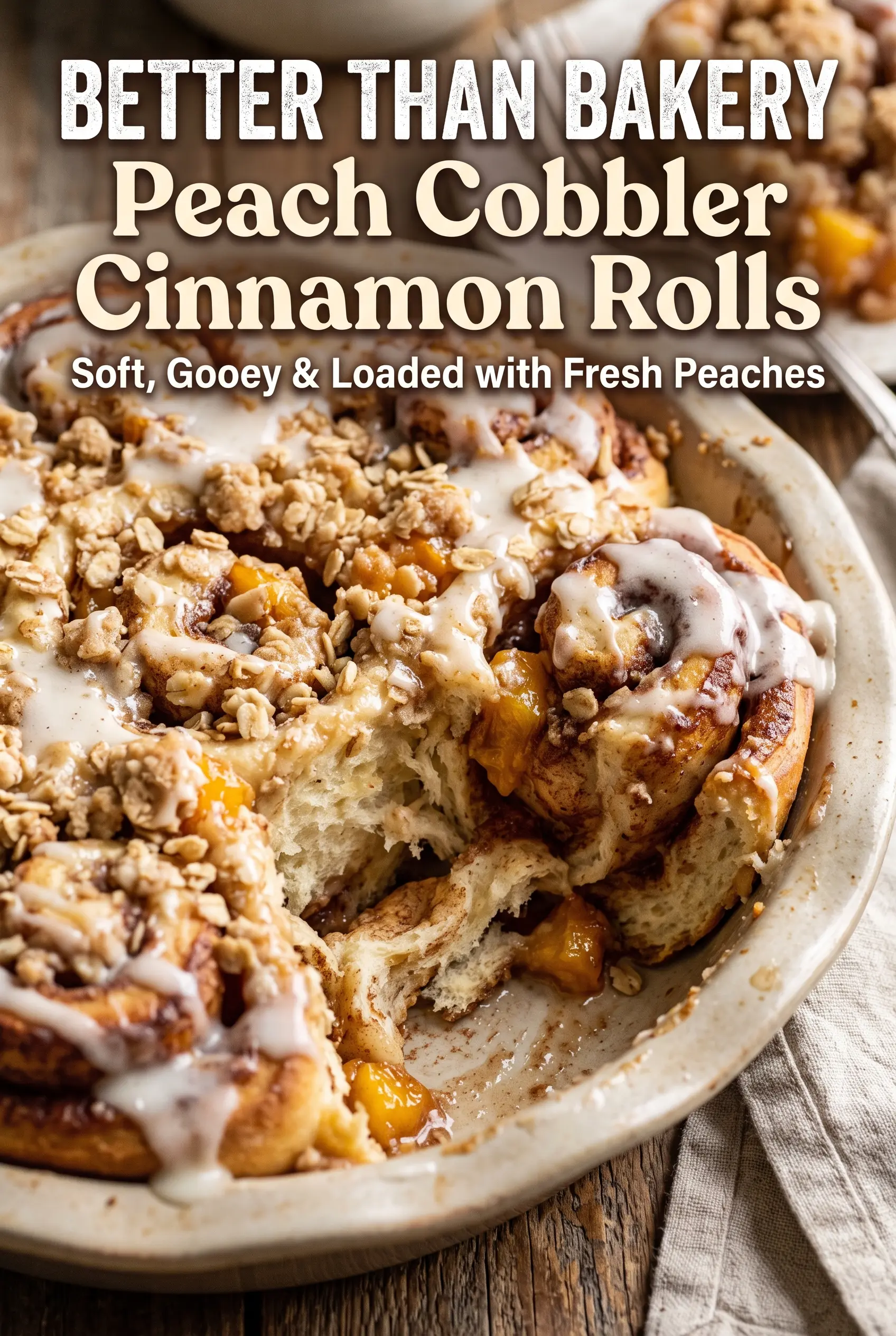
Peach Cobbler Cinnamon Rolls with Brown Sugar Glaze
Ingredients
Equipment
Method
- Dissolve active dry yeast in warm milk with granulated sugar for 5–10 minutes, until foamy. You should see bubbles along the surface indicating the yeast is active.
- Mix in melted unsalted butter, large egg, salt, and all-purpose flour to form a soft dough. Stop mixing once no dry flour remains.
- Knead the dough for 8–10 minutes until smooth. The dough should feel elastic and look slightly glossy.
- Let the dough rise for about 1 hour until doubled in size. It should puff up and spring back slowly when pressed.
- Mix diced fresh peaches with brown sugar, ground cinnamon, nutmeg, and vanilla extract. Stir until the peaches look juicy and evenly coated.
- Prepare the cobbler crumble by rubbing together all-purpose flour, brown sugar, cold butter, and cinnamon. Stop when it becomes uneven, crumbly clusters.
- Roll the risen dough into a large rectangle. Stretch gently so it stays even in thickness.
- Spread softened unsalted butter over the dough. Cover the surface in a thin, even layer.
- Evenly distribute the peach mixture over the dough. Leave a small border so filling doesn’t leak out while rolling.
- Sprinkle the crumble topping evenly over the peaches. Make sure crumbs reach the edges of the filling area.
- Roll tightly and cut into 12 rolls. Use a gentle sawing motion to keep layers intact.
- Arrange the rolls in a greased baking dish. Space them so they can expand without touching too tightly.
- Let the rolls rise 30–40 minutes. They should look puffy and fill the dish slightly.
- Bake at 350°F (175°C) for 28–32 minutes until golden. The tops should be browned and the center should look set.
- Whisk powdered sugar with milk and vanilla extract until smooth. Adjust with a tiny splash of milk if needed for a pourable consistency.
- Drizzle the glaze generously over the warm cinnamon rolls. Let it melt into the layers for a glossy finish.