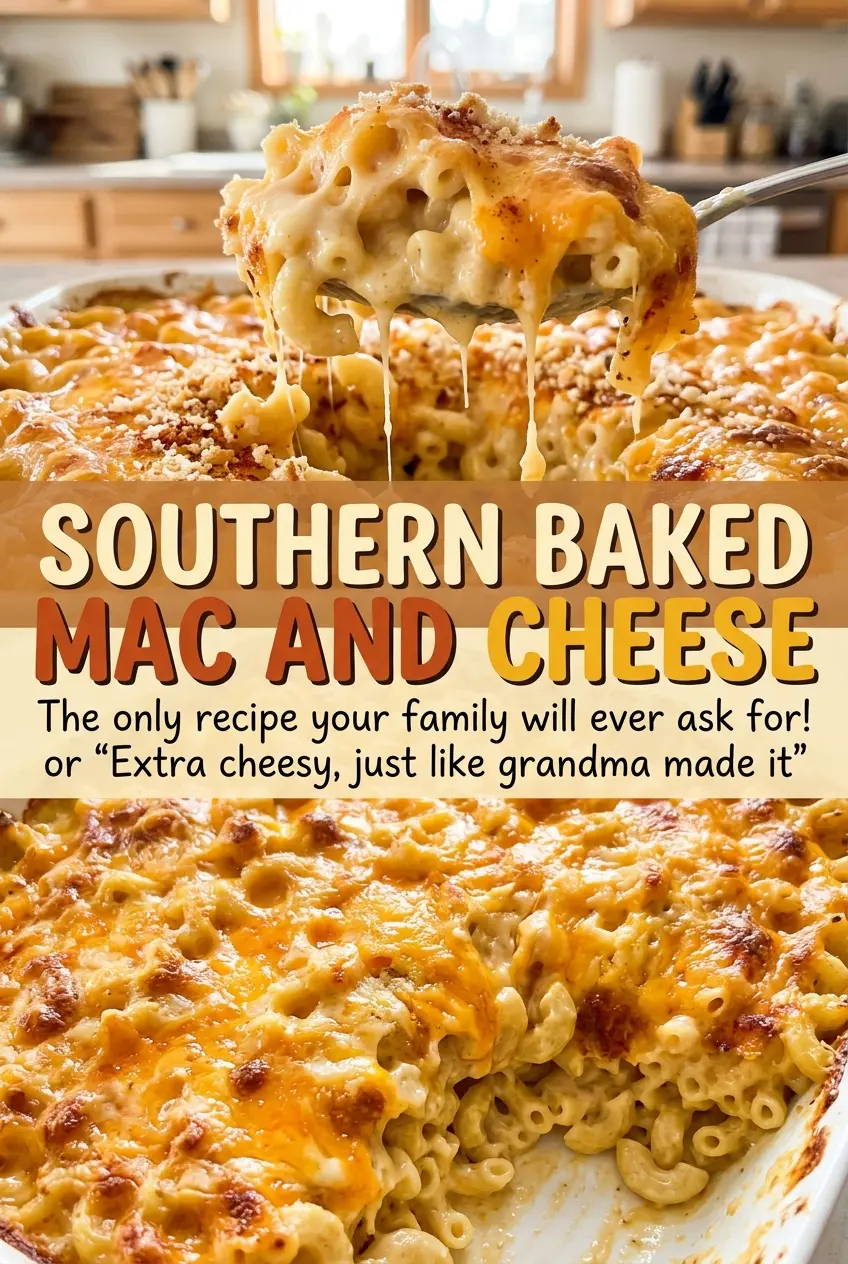
The first thing I watch for is the sauce bubbling gently at the edges of the dish while the top turns just lightly golden. Pull it at that point, and the macaroni stays tender instead of baking into a dry, firm block. That’s the balance I want from Southern baked mac and cheese: a set top, creamy pasta underneath, and enough structure to serve neat portions after a short rest.
The sauce starts with a butter-and-flour base, then whole milk and evaporated milk give it body before the cheeses go in. I cook the macaroni just shy of al dente because it has more time in the oven. Sharp cheddar brings the main cheesy bite, Monterey Jack melts into the sauce, and Colby Jack makes a mild, golden topping. Each layer has a job, and together they make a casserole that feels rich without losing its shape.
Give the finished dish its full rest before serving. The bubbling edges settle, the sauce clings to the elbows, and each scoop holds together with a soft, creamy middle.
Kitchen Note
Drain the macaroni thoroughly before it goes into the sauce. I give the colander a good shake so leftover pasta water doesn’t thin the cheese sauce at the last minute.
Save this Southern baked mac and cheese for the next time you want a golden top and a creamy cheddar sauce that holds together on the plate.
Why the Cheese Goes In After the Pan Leaves the Burner
A smooth cheese sauce depends on more than getting the flour whisked into the milk. Once cheese gets too much direct heat, its proteins can tighten and separate from the fat, leaving the sauce grainy or oily. That’s why I build the sauce first, then take the saucepan off the heat before adding the cheese.
The sauce will still be hot enough to melt freshly shredded cheddar and Monterey Jack. Stir in a handful at a time and let each addition melt before adding more. If the cheese isn’t melting smoothly, don’t put the pan back over high heat; keep stirring off the burner and give it a moment. The finished sauce should look glossy and even, not stringy or speckled with little clumps. This small shift in timing protects the texture of the whole casserole, since the sauce coats every elbow before it goes into the oven.
What the Three Cheeses Bring to This Baked Mac
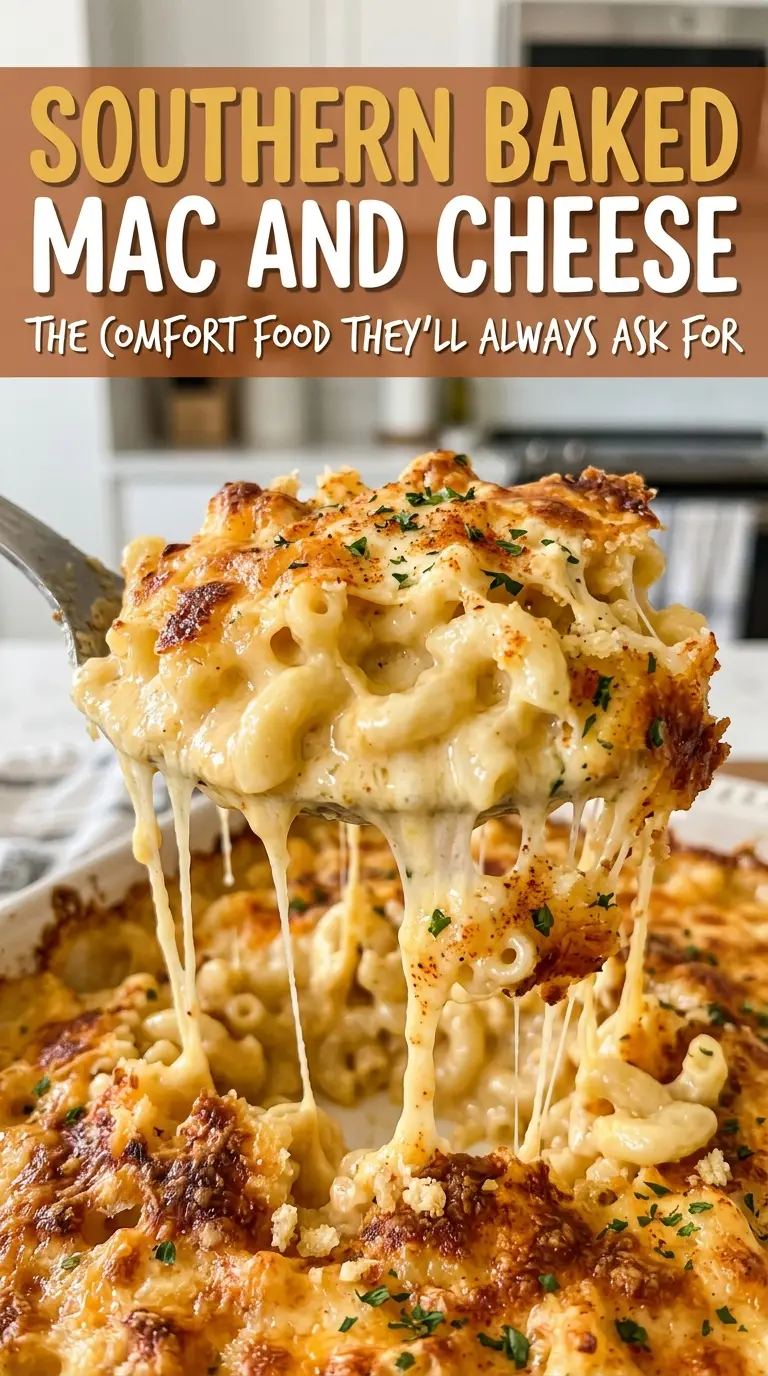
- Elbow macaroni — The curved shape catches sauce inside and around each piece, so the casserole eats creamy throughout. Keep an eye on the package timing when you cook it; the pasta needs to enter the oven a little firm rather than fully soft.
- Whole milk and evaporated milk — Whole milk loosens the roux into a pourable sauce, while evaporated milk adds concentrated milk solids and a fuller body. Use both for the balance this casserole needs; low-fat milk alone won’t give the same richness.
- Sharp cheddar — This is the most assertive cheese in the sauce, so its flavor carries through the milk and pasta. Freshly shredded cheese melts more evenly than a bagged, pre-shredded blend, which often contains anti-caking ingredients.
- Monterey Jack — Jack is mild and melts readily, softening the sharp cheddar’s edge without taking over. A fresh block is fine here; there’s no need to seek out an expensive specialty cheese.
- Colby Jack — The topping melts into a mild, even layer with a little color. Shred it yourself for the smoothest melt, and spread it evenly so there aren’t bare patches across the top.
- Butter, flour, dry mustard, and paprika — Butter and flour build the sauce’s base, while dry mustard adds a subtle savory note and paprika brings gentle warmth and color. Regular pantry versions work well; the flour should be all-purpose so the sauce thickens as expected.
Building the Sauce and Baking Without Drying the Pasta
Cook the Elbows Just Short of Al Dente
Bring a large pot of water to a boil, add the tablespoon of kosher salt and the elbow macaroni, and cook it for one minute less than the package directions for al dente. The elbows should still have a little firmness when you bite one. They’ll soften further in the oven, so fully tender pasta at this stage can turn mushy in the casserole. Drain the macaroni well.
Cook the Flour Base Until Smooth
Set the oven to 350°F and coat a 9×13-inch baking dish with nonstick cooking spray. Melt the butter in a large saucepan over medium heat, then whisk in the flour, dry mustard, paprika, black pepper, and remaining kosher salt. Keep whisking for one minute; the mixture should look smooth and smell lightly toasted, with no dry pockets of flour. If it catches on the bottom, lower the heat while you keep whisking.
Thicken the Milk Before Adding Cheese
Gradually whisk in the whole milk and evaporated milk until the mixture is smooth. Cook over medium heat, whisking often, for five to seven minutes. Watch for the sauce to thicken enough to coat the back of a spoon; a watery sauce at this point won’t cling well to the macaroni. Keep the whisk moving around the edges of the pan, where the sauce can thicken first.
Fold, Top, and Bake Until the Edges Bubble
Remove the saucepan from the heat and stir in the cheddar and Monterey Jack by handfuls until the sauce is melted and smooth. Fold in the drained macaroni, transfer everything to the prepared dish, and sprinkle the Colby Jack evenly over the surface. Bake uncovered for 20 to 25 minutes, until the top is melted and lightly golden and the sauce bubbles at the edges. Rest the dish for 10 minutes before serving so the sauce settles around the pasta.
Cheese Swaps That Keep the Casserole on Track
A sharper cheese note on top
For a more cheddar-forward finish, use some of the freshly shredded sharp cheddar as the topping instead of the Colby Jack, keeping the total cheese amount the same. The top will taste sharper and less mild; keep enough Monterey Jack in the sauce for its easy melt.
A softer, milder cheese finish
You can use Monterey Jack in place of the Colby Jack on top, using the same amount. It melts into a softer, milder covering, though the top won’t have quite the same golden color. Keep the cheddar and Jack in the sauce so the casserole still has its creamy, savory base.
Gluten-free limitations
This ingredient list isn’t gluten-free: both the elbow macaroni and all-purpose flour contain wheat. Changing only the pasta wouldn’t make the casserole gluten-free because the roux still uses flour, so I don’t treat that as a simple swap.
Storage and Reheating
- Refrigerator: Refrigerate leftovers within 2 hours in a covered container and eat within 3 to 4 days. The pasta will absorb some sauce as it sits, so the leftovers will be firmer than the freshly baked casserole.
- Freezer: Freeze tightly covered portions for up to 2 months for best quality. Thaw them in the refrigerator; the sauce may be a little less smooth after freezing.
- Reheating: Reheat covered portions gently in the microwave or oven until the center reaches 165°F. Avoid heating uncovered for a long stretch, which can dry the pasta and tighten the sauce.
Questions That Come Up Before the First Bite
Southern Baked Mac and Cheese
Ingredients
Equipment
Method
- Heat the oven to 350°F.
- Coat a 9x13-inch baking dish with nonstick cooking spray.
- Bring a large pot of water to a boil.
- Add 1 tablespoon of the salt and the macaroni, and cook 1 minute less than the package directions for al dente.
- Drain the macaroni well.
- Melt the butter in a large saucepan over medium heat.
- Whisk in the flour, dry mustard, paprika, black pepper, and remaining 1/2 teaspoon salt, and cook, whisking constantly, for 1 minute.
- Gradually whisk in the whole milk and evaporated milk until smooth.
- Cook, whisking often, for 5 to 7 minutes, until the sauce thickens enough to coat the back of a spoon.
- Remove the saucepan from the heat and stir in the cheddar and Monterey Jack by handfuls until melted and smooth.
- Stir the drained macaroni into the cheese sauce.
- Transfer the mixture to the prepared dish.
- Sprinkle the Colby Jack evenly over the top.
- Bake uncovered for 20 to 25 minutes, until the top is melted and lightly golden and the sauce bubbles at the edges.
- Rest for 10 minutes before serving.