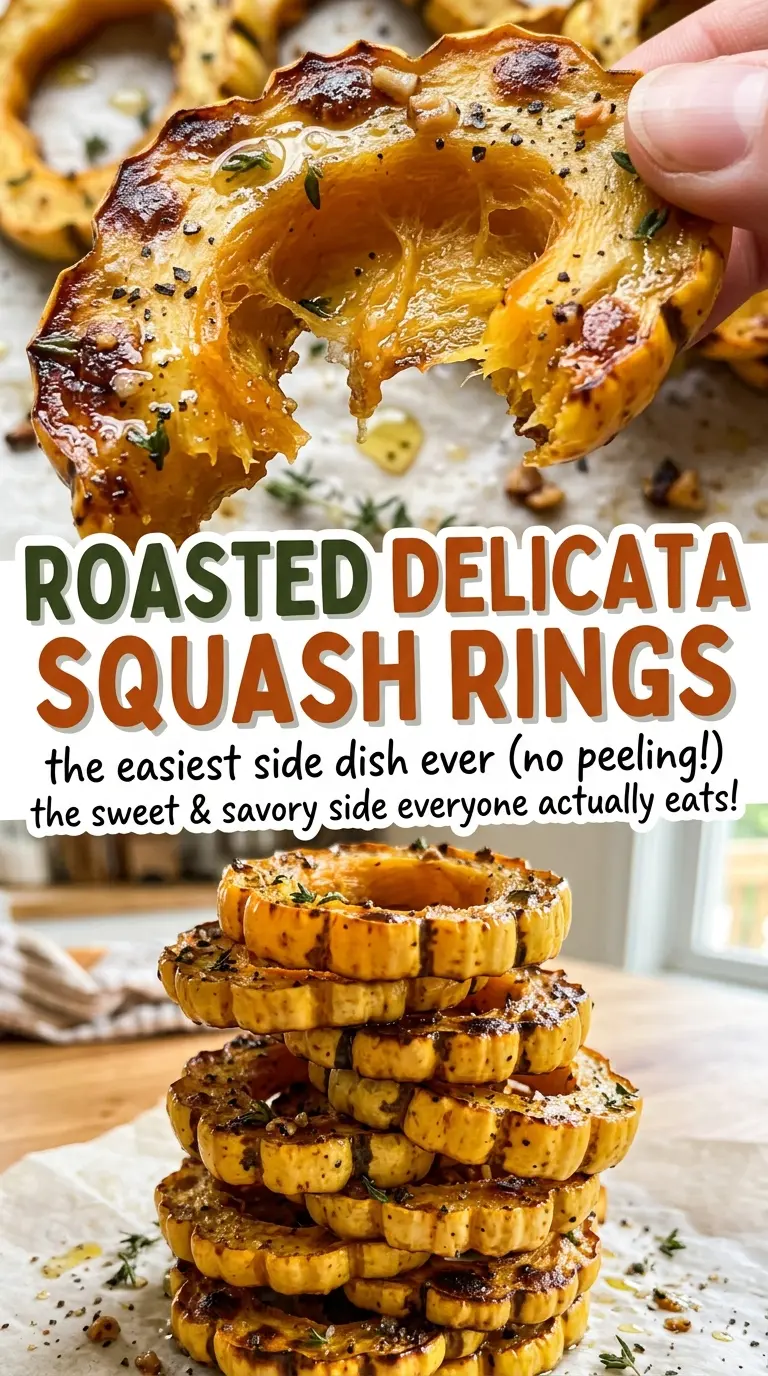
The cut edges start to brown before the centers lose their bite, and that’s exactly what I want from delicata squash. The first time I made rings, I cut them unevenly; the skinny pieces went soft while the thick ones were still firm. Now I keep the slices close in thickness, and these roasted delicata squash rings come out tender with browned rims and a little peppery warmth.
Drying the squash after rinsing helps the olive oil cling instead of sliding off with extra water. A light, even coating is all you need: too much oil can leave the rings greasy rather than roasted. Leave the skin on, trim the ends, and scrape the stringy centers clean before seasoning.
The rings are easy to serve straight from the pan, and the mild squash flavor lets the browned edges stand out. I like how the center holes and curved edges turn each slice into its own little roasted bite, with no peeling or complicated prep in the way.

Kitchen Note
Scrape the stringy centers right down to the firm flesh, not just the loose seeds. Any threads left behind hold moisture and make the centers harder to cleanly turn once the squash softens.
Save these roasted delicata squash rings for an easy vegetable side with browned edges, tender centers, and just enough pepper.
Why Rings Brown Differently Than Squash Wedges
A ring has two curved edges to brown—the outside rim and the edge around the seed cavity—while a thick wedge has fewer exposed cut surfaces. That extra edge gives you more of the toasted, caramelized squash flavor in each bite. The open center also lets hot air reach the inner curve instead of leaving a solid chunk of squash in the middle.
Keeping the rings an even thickness matters more than making them perfectly round. A slightly irregular slice roasts just fine; a thin slice beside a much thicker one is what causes uneven tenderness. Delicata’s small seed cavity makes crosswise rings practical, and the consistent shape means the pieces can share one pan without turning the recipe into a juggling act.
Spacing matters for the same reason. When rings sit in a single layer with a little room around them, moisture can escape and the exposed edges roast instead of steaming. If the pan is crowded, the squash will still soften, but you’ll get less browning and a softer surface.
What the Squash, Oil, and Pepper Bring to the Pan
- Delicata squash — Choose squash that feels firm, with intact skin and no soft spots. The skin is thin and edible after roasting, so there’s no need to peel it. If you need an oil alternative, avocado oil works in the same amount, though it has a more neutral taste than olive oil.
- Olive oil — It helps the salt and pepper cling and encourages the cut surfaces to brown. A basic, fresh olive oil is a good fit here; there’s no need to use an expensive finishing oil because the squash roasts at high heat.
- Black pepper — Pepper gives the naturally mild squash a gentle savory edge. Use pepper that smells fresh when you open the container; stale pepper contributes little, and there’s no need to add extra seasoning for the rings to taste complete.
The finished dish is already dairy-free, gluten-free, and vegan, so it doesn’t need a special ingredient swap for those tables. Keep the oil coating light and even; that’s what helps the simple seasoning taste balanced rather than oily or concentrated in a few spots.
From Clean Slices to Browned, Tender Rings
Trim and Cut Even Rings
Heat the oven to 425°F and line an 18×13-inch rimmed baking sheet with parchment paper. Rinse and dry the squash, trim off both ends, then cut crosswise into 1/2-inch rings. Scrape out the seeds and stringy centers, keeping the slices intact as you work.
Coat Without Leaving Puddles
Toss the rings with the olive oil, kosher salt, and black pepper until the surfaces look lightly and evenly coated. If oil gathers at the bottom of the bowl, toss once more before transferring the squash. Arrange the pieces in a single layer on the prepared sheet so they have room to roast.
Roast Until the Edges Turn Golden
Roast for 20 to 25 minutes, turning the rings halfway through. The squash should feel tender when pierced, with browned edges and a little color on the cut surfaces. If one ring is smaller than the rest, check it as you turn the panful; it may finish a little ahead of a thicker piece.
Two Easy Ways to Change the Shape or Finish
Make smaller half-moon bites
Cut the prepared rings in half to make half-moons before tossing them with the oil and seasonings. Roast them at the same temperature and within the same 20-to-25-minute window, turning halfway; the smaller pieces are easier to serve in a bowl but won’t have the full ring shape.
Turn the roasted rings into a rough mash
Roast the rings until tender, then mash them with a fork while they’re warm. The result is a rustic, naturally sweet squash mash with browned bits mixed through, rather than individual slices. It’s a useful change of format when you want the squash to sit neatly alongside the rest of a plate.
Storage and Reheating
- Refrigerator: Store cooled leftovers in an airtight container for 3 to 4 days. The rings soften as they sit, but they’ll still taste good.
- Freezer: They freeze safely, though the texture softens further after thawing. Freeze in a single layer until firm, then transfer to a freezer-safe container for up to 2 months.
- Reheating: Spread the rings on parchment and warm them in a 425°F oven until hot. Avoid stacking them or microwaving for too long, which makes the softened squash even softer.
Questions That Come Up Before the First Pan
Roasted Delicata Squash Rings
Ingredients
Equipment
Method
- Preheat the oven to 425°F.
- Line an 18x13-inch rimmed baking sheet with parchment paper.
- Rinse and dry the squash.
- Trim off the ends.
- Cut crosswise into 1/2-inch rings.
- Scrape out the seeds and stringy centers.
- Toss the squash rings with the olive oil, kosher salt, and black pepper until evenly coated.
- Arrange the squash rings in a single layer on the prepared baking sheet.
- Roast for 20 to 25 minutes, turning the rings halfway through, until tender and browned at the edges.